
Repotrectinib Receives FDA Approval for ROS1-Mutated Lung Cancer

In this article
For locally advanced or metastatic ROS1 mutation-positive non-small cell lung cancer (NSCLC), the drug repotrectinib (Augtyro, Bristol-Myers Squibb) received US Food and Drug Administration (FDA) approval on 15 November 2023.
This is the first approval covering ROS1-positive NSCLC previously treated with a ROS1 tyrosine kinase inhibitor (TKI)—the first FDA approval also covering TKI-naive patients, who have not received these medicines.
What Is Repotrectinib and How Does It Work?
Repotrectinib is a “next-generation” tyrosine kinase inhibitor (TKI) used in ROS1-positive and NTRK fusion-positive cancers. It blocks proteins driving cancer cell growth and proliferation. One is ROS1 tyrosine kinase; inhibiting it can stop or slow cancer growth. “Next-generation” means its molecular structure improves on earlier TKIs, potentially offering greater effectiveness or fewer adverse effects. It is also designed to act against resistant cancer cells, targeting tumours resistant to earlier TKIs.
The Importance of ROS1 in Lung Cancer
In lung cancer, ROS1 translocations / gene fusions occur in 1% of cases. Translocations occur when a gene segment separates and enters another gene in the DNA, creating a fusion gene and a fusion protein. In lung cancer-associated ROS1 fusion, the separated segment enters another part of the same gene. A fusion in the ROS1 gene makes the resulting tyrosine kinase receptor fusion protein continuously active, signalling ongoing cancer cell growth and proliferation.
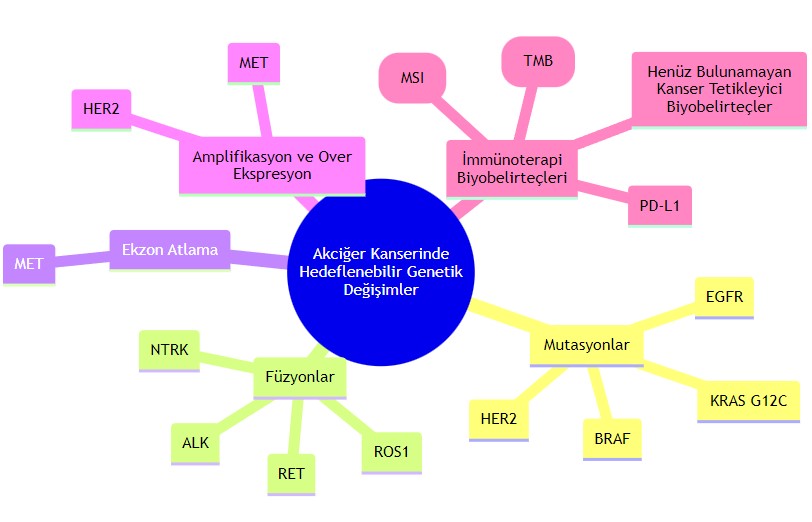
The following summarises targetable genetic alterations and biomarkers that may predict treatment response in lung cancer:
FDA Approval Based on the TRIDENT-1 Study
Approval was based on a global, multicentre study in locally advanced or metastatic ROS1-positive NSCLC, using a single-arm, open-label, multicohort clinical trial design: TRIDENT-1.
Efficacy was assessed in 71 ROS1 TKI-naive patients with one previous line of platinum-based chemotherapy and/or immunotherapy, and 56 patients with 1 prior ROS1 TKI but no platinum-based chemotherapy or immunotherapy.
The main efficacy outcomes were overall response rate and response duration.
- In the previously untreated group, the overall response rate was 79% (95% CI: 68, 88); in patients previously treated with a ROS1 inhibitor, it was 38% (95% CI: 25, 52).
- For the respective groups, median response duration was 34.1 months (95% CI: 25.6, not evaluable) and 14.8 months (95% CI: 7.6, not evaluable).
Responses occurred in patients with measurable brain metastases and those developing resistance mutations after TKI therapy.
The most common adverse effects (>20%) were dizziness, taste disturbance, peripheral neuropathy, constipation, shortness of breath, ataxia, fatigue, cognitive disorders and muscle weakness.
The recommended repotrectinib dose is 160 mg orally once daily, with or without food, for 14 days, then increased to 160 mg twice daily until progression or unacceptable toxicity.
Sources
Was this article helpful?
Your feedback helps us improve our content.




Reader comments
Share your comment
Your name and comment are published only after administrator approval. Your email address is never shown to visitors.
Be the first to comment.