
The Dispute over Priority for Ether – Modern Medicine's Most Tragic Series of Biographies

In this article
A Patient Sedated in Boston on 16 October 1846, Four Competing Inventors, and a Patent Scandal
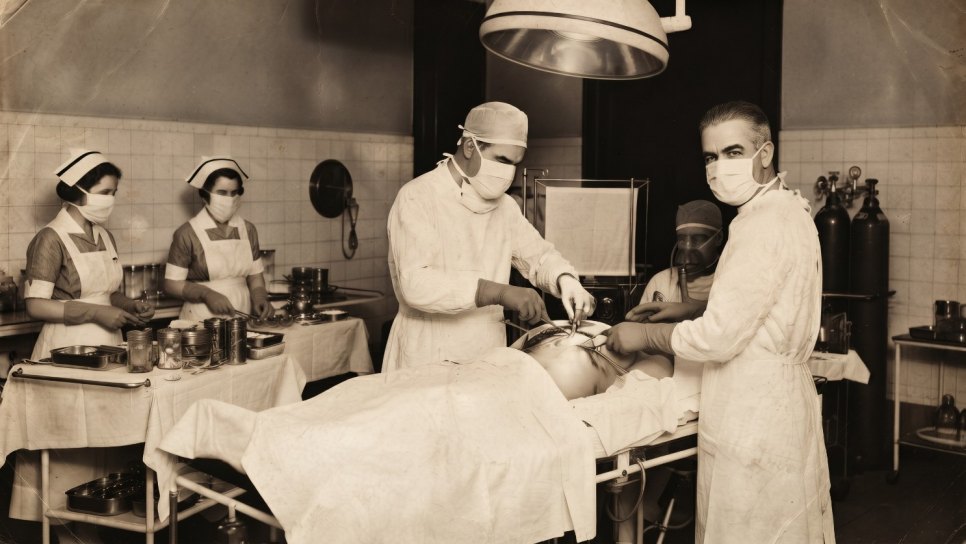
On Friday morning, 16 October 1846, in the amphitheater at Massachusetts General Hospital in Boston — in the hemispherical, domed operating room known today as the Ether Dome — a Boston house painter named Edward Gilbert Abbotthad a vascular tumor removed from his neck through a three-inch incision. The surgeon was Dr. John Collins Warren; the person administering the ether was a local dentist named William T.G. Morton. Throughout the entire operation, the patient made not a single sound; when he awoke, he did not remember what had happened. Warren turned to the skeptical physicians and students seated in the amphitheater and uttered one of the most frequently quoted sentences in the history of modern medicine: "Gentlemen, this is no humbug." ("Gentlemen, this is no humbug.") Medical historians called this day "Ether Day"; and the 17 October 1846 issue of Scientific Americanpublished the world's first national news report introducing anesthesia. Had the story ended here, it would have been an unblemished history. But it did not. Because precisely four years, six months, and sixteen days beforeMorton's performance at MGH, in the small town of Jefferson, Georgia, a rural physician named Dr. Crawford W. Long had painlessly removed a cystic tumor from the neck of a student named James Venable after rendering him unconscious with ether vapor. 30 March 1842. And two years before Morton's MGH demonstration, in December 1844, the Hartford dentist Horace Wells had his own molar extracted painlessly under the influence of nitrous oxide (laughing gas). And the person who suggested that Morton use ether was the Boston chemist and physicist Charles T. Jackson. Four men, four claims of "I discovered it," a patent (No. 4848, 12 November 1846), a proposed prize of 200.000 dollarssubmitted to the United States Congress but never awarded, decades of courtroom battles, damage to professional reputations, and tragic endings that consumed three of the four men. In this article, we will examine the shadows behind the brilliant story of anesthesia's birth — the most tragic series of biographies in the history of modern medicine.
A gallery of inventors: four Americans, four claims
Crawford Williamson Long
Horace Wells
William Thomas Green Morton
Charles Thomas Jackson
A rural physician and his seven years of silence
Crawford Long's story portrays the typical medical practice of rural America in the middle of century 19. After receiving his MD degree from the University of Pennsylvania in 1839, he spent 18 months on surgical rotations at Bellevue Hospital in New York; he then returned to his home state of Georgia and opened a small practice in Jefferson, Jackson County, in 1841. The town had 700 inhabitants; his office also became a social center where the men of the town gathered.
A popular form of entertainment among young Americans of the period was the ether frolic and the nitrous oxide party. People who inhaled ether or nitrous oxide laughed and danced; some fell from chairs and suffered bruises, yet felt no pain. Long himself was a regular at these parties; after falling one night, he was surprised to see bruises on his arms the next day — because he did not remember the fall, and it had not hurt when he fell.
This observation led him to a hypothesis: if ether temporarily eliminates pain, could it be used during surgery?
Crawford Long's office · The true first day of modern anesthesiology
Patient: James M. Venable, a student aged 21. Two cystic vascular tumors in his neck; both require surgical removal. Venable fears surgery and has postponed the operation for years. Long offers Venable a trial of ether — the fee is 2 dollars.
Venable agrees. Long holds a towel saturated with sulfuric ether over the patient's face. After a few minutes, Venable loses consciousness. Long makes an incision with a scalpel and removes the first cyst. The entire operation takes a few minutes. When Venable wakes up, "Doctor, when will you begin?" he asks.
Three witnesses confirm the event. Over the next four years, Long uses ether in at least nine more cases — other surgical excisions, a finger amputation, and even his wife Caroline's second delivery in 1845. Successful in every case.
But Long does not publish. Why? Because, as a small-town physician, he does not trust his own observations; he thinks, "perhaps there are other factors"; he wants to wait for more cases, and he does not know how to reach the scientific community. He has no connections with the major medical journals in Boston and New York.
Long remained silent — for a total of seven years. This silence would be the sole reason he lost recognition of his priority.
A dentist, a laughing-gas show, and a molar
Horace Wells was a Hartford dentist born in 1815 (the same year as Crawford Long). He had received his dental training in Boston; he opened a practice in Hartford in 1836. In 1843, he went to Boston and entered a brief partnership with a young dentist named William T.G. Morton ; the partnership lasted six months and made no profit. Morton stayed in Boston, and Wells returned to Hartford. This partnership would sow the seeds of the dispute a decade later.
On Tuesday evening, 10 December 1844, Wells and his wife Elizabeth attended a Grand Exhibitionat Hartford's Union Hall. Onstage was the traveling showman Gardner Quincy Colton ; a failed medical student, Colton earned his living by giving public demonstrations of "laughing gas" — nitrous oxide (N₂O). Volunteers were called to the stage, inhaled the gas, and then entertained the audience by dancing, laughing, and even wrestling with one another.
One volunteer who took the stage that night was a shop assistant named Samuel Cooley . Under the influence of the gas, he tried to jump over a bench as he left the stage; he badly injured his leg and made it bleed. But when he was injured, he felt no pain at all — Wells witnessed this from among the audience.
Wells's own molar · The moment of modern dental anesthesia's birth
Wells did not sleep all night. Toward morning, he made a decision: his own molar was decayed and needed to be removed. If nitrous oxide prevented surgical pain, he would test it in his own mouth.
In the morning, he summoned Colton to his office; he also called his colleague and friend Dr. John Mankey Riggs(Riggs would later become one of the founders of periodontology). Colton administered nitrous oxide to Wells's face from the gas balloon he had brought; Wells lost consciousness. Riggs quickly extracted Wells's decayed molar.
Wells woke up. He saw the bloody tooth. His mouth did not hurt. "This is a new era in anesthesia!" or, in the popularly reported version, "A new era in tooth-pulling!" he exclaimed. His famous statement: "Not even as much as the prick of a pin."
The following weeks were triumphant for Wells. He introduced nitrous oxide to dentists and physicians in Hartford and performed painless tooth extractions in fifteen patients. One of the final links in this story reached Boston — his former partner Morton heard about it there and invited Wells to Massachusetts General Hospitalfor a public demonstration. Wells accepted.
In January 1845, Wells traveled to Boston. Before Warren's surgical students at MGH, he extracted a medical student's molar under the influence of nitrous oxide. But he made a mistake: he stopped the gas too soon and did not administer it long enough. Before the patient was fully unconscious, Wells began to pull the tooth; the patient cried out in pain. The students and physicians watching shouted: "Humbug! Fraud!" Wells returned to Hartford with his professional reputation shattered.
In fact, the patient would later say, "I felt a little, but I did not even remember it". The gas had worked, but not completely. That single minute's mistake ended Wells's entire career.
William Morton's performance: triumph and a patent
After Wells's failure in 1845, Morton's Boston career took a different turn. He had begun taking chemistry lessons from Charles T. Jackson in the spring of 1844; Jackson was a Harvard Medical School graduate and a Paris-trained chemist, physicist, and geologist. During the lessons, Jackson discussed ether's neurological effects — particularly indirect nerve blockade. When he came to Morton's office on the morning of 30 September 1846, he offered a more specific recommendation: use pure sulfuric ether for localized pain in dental patients.
That same evening — Wednesday, 30 September 1846 — Morton painlessly extracted a molar from a music teacher named Eben Frost using ether. Frost's written testimony would later appear in the press as an advertisement. This is the first successfully documented case in modern dental anesthesia practice.
Morton acted quickly. He sent a written proposal to Dr. John Collins Warren at MGH: "I have discovered a new compound; it eliminates pain during surgery; I suggest that you test it in a public case." Warren agreed.
Edward Gilbert Abbott · Excision of a neck tumor · "Gentlemen, this is no humbug"
Patient: Edward Gilbert Abbott, aged 24, a Boston house painter. A vascular tumor three inches long in the submandibular region on the left side of his neck. Surgery is necessary.
The crowd gathered in the amphitheater: students, physicians, and hospital administrators from Boston's medical community. All are skeptical. They know of Wells's failure in 1845; they are wary of what is called the "Yankee gas trick".
Morton was late — ten minutes late, because a glass globe + sponge system of his own design (Morton's ether inhaler) was being prepared at the last minute. Tension is rising in the room. Warren looked at his watch: "I suppose Dr. Morton is busy."
Morton arrived. He administered ether to Abbott. Within a few minutes, Abbott lost consciousness. Warren raised the scalpel and made the incision. He removed the tumor. The operation took about five minutes. Abbott made no sound.
Abbott woke up. They asked, "What did you feel?" "As if they scratched my neck. There was no pain."
Warren turned to the students and physicians in the amphitheater: "Gentlemen, this is no humbug." ("Gentlemen, this is no humbug.") The room quietly emptied. Modern anesthesiology had begun.
The 17 October 1846 issue of the Boston Daily Journal reported the news; on the same day, Scientific American published the national report. News of the operation crossed the Atlantic by steamship; two months later, in mid-December, it reached London. On 21 December 1846, Robert Liston (day 77) would perform Britain's first operation under ether anesthesia.
Morton's great ethical error
Following his success on 16 October 1846, Morton made an unexpected decision: to patent his discovery. He patented it, rather than ether directly, under the name "Letheon" — a mixture of ether + orange oil (Patent No. 4848, 12 November 1846). The patent application was structured to give Jackson a 10% royalty share.
This move caused a scandal in Boston's medical community. Physicians said he had departed from Hippocratic ethics; patenting a medical compound and licensing its use to other physicians would obstruct the sharing of a universal pain reliever. Boston's leading physicians condemned Morton; MGH surgeons refused to use Letheon; the patent soon became practically meaningless because everyone realized that "Letheon" was pure ether.
⚖ PATENT NO. 4848 — ETHICAL COLLAPSE
Morton's patent application is seen as one of the turning points in the history of medical ethics. The patent's practical collapse took minutes — chemists' analyses had already identified ether as a pure compound — but the damage was permanent. From that day on, Morton's career began to drag through patent litigation, congressional lobbying, spurious publications, and a quagmire of debt.
This case remains one of the points of origin of the principle in modern medical ethics that "not every compound that meets a widespread clinical need can be patented". Today's drug patents are far more complex and regulated; but Morton's Letheon mistake played a clear role in establishing the expectation within Western medical culture that a medical discovery should be a public good.
Long's seven years of silence were broken
In December 1846, the Medical Examinerpublished an editorial describing Morton's patent and his "discovery." The article eventually reached Georgia and Crawford Long's office. Long froze as he read the journal: someone else was announcing Long's own practice from 1842 as his own discovery.
But Long was still slow to act. He waited another two years. Then, in December 1849, he presented his findings at a meeting of the Medical College of Georgia in Augusta, Georgia (later Georgia Health Sciences University); that same month, he published a lengthy article in the Southern Medical and Surgical Journal. He included written testimonies from James Venable and his other patients.
This article, which established chronological priority seven years later, also marked the start of an enduring academic dispute. During Long's lifetime, the dispute was not resolved in his favor — Long wanted no money, only recognition, but that recognition never came either. When Charles Jackson visited Athens in 1854, he told Long: "You have priority in time; but we have priority in publication." This sentence encapsulates the politics of modern science: who published first, rather than who did it first.
The prize that was never awarded
In 1847, Boston physicians and surgeons submitted a petition to the United States Congress: a federal prize should be awarded to the true inventor of surgical anesthesia. The petition came to nothing. Morton applied individually to Congress himself; he requested 200.000 dollars — an enormous sum at the time, equivalent to 7-8 million dollars today.
Two separate bills were submitted over three congressional terms; neither passed. There was no agreement about who should receive the award: Morton? Jackson? Wells's widow Elizabeth? Long? Their supporters all lobbied in the corridors of Congress, disparaging one another. The dispute over scientific priority became a political impasse and ended without rewarding any side.
The most tragic series of biographies in the history of modern medicine
The thirty years following the discovery of anesthesia were a period of devastation for three of the four inventors. Four tragedies, in four different forms:
📜 THE INVENTORS' FOUR ENDINGS
- Horace Wells — 24 January 1848, suicide, aged 33. Three years of professional decline in Hartford after the MGH failure in 1845. He moved to New York in the winter of 1847-48; while experimenting with sulfuric acid and other chemicals, he became addicted to chloroform. On 21 January 1848, he threw sulfuric acid at two women (while experiencing chloroform-induced hallucinations); he was arrested. In New York's Tombs prison, on 24 January 1848, he inhaled chloroform and severed his femoral artery with a razor. His wife Elizabeth had arrived in New York that day; she found her husband's body. It was two years after Ether Day.
- William T.G. Morton — 15 July 1868, cerebral occlusion, aged 48. The patent scandal, congressional lobbying battles, damage to his reputation in court; bankruptcy. He barely supported his wife and five children. His Massachusetts farm went to the bank. On a hot July afternoon, he traveled to New York on business; experiencing a hypertensive crisis, he got out of his carriage in Manhattan near Central Park, plunged face-first into a city pond in distress from the heat, and was taken out unconscious; two days later, at St. Luke's Hospital, he died from cerebral occlusion.
- Charles T. Jackson — 28 August 1880, McLean Asylum, aged 75. A man who fought for three separate claims of scientific priority — the telegraph (Samuel Morse), geology (William Beaumont), and anesthesia (Morton). A mental breakdown in 1873; according to the story, he suffered a crisis at Morton's grave in Mount Auburn Cemetery. He spent his remaining seven years at Somerville McLean Asylum(now McLean Hospital in Belmont, MA). He died in a state of clouded consciousness.
- Crawford W. Long — 16 June 1878, stroke while attending a delivery, aged 62. Half a century of rural medical practice in Athens, Georgia. An upright, dignified, quiet life. After his 1849 article, Long's priority gradually gained recognition within the American medical community; surgeons such as Joseph M. Marion Sims published in his favor. He suffered a stroke while attending a delivery; he said, "Attend to the child first, then the mother" and died beside his patient. Mother and child survived. The only peaceful ending among the four.
🗿 BOSTON PUBLIC GARDEN — ETHER MONUMENT (1868)
In 1868 — the year of Morton's death — at the Beacon Street entrance to Boston Public Garden, the world's first public monument to a medical discovery was erected. Known as the Ether Monument, it is a granite column 12 meters tall, with four relief panels and a figure of the "Good Samaritan" at the top.
The monument's distinguishing feature is this: it bears no inventor's name. The donors — led by Boston merchant Thomas Lee — could not reach a consensus: Morton, Jackson, Wells, or Long? The monument was erected without naming anyone. It was both a generous and a wise decision: "We honor the discovery of anesthesia, rather than its discoverer." They left the inventors to history's judgment.
The monument still stands today. Oliver Wendell Holmes Sr. — the Boston physician who proposed the term "anesthesia" in 1846 — suggested this epigraph for the monument: "To God, who bestowed deliverance from pain upon humanity."
The arrival of news of anesthesia in Ottoman medicine
After the events of 16 October 1846, ether anesthesia took two months to cross the Atlantic (Liston, London, 21 December 1846); spreading to Europe's other major capitals took another three to six months; and the news took approximately a year and a half to reach Istanbul. Tıphane-i Âmire (day 75) — the modern Ottoman medical school opened by Mustafa Behçet Efendi on 14 March 1827 — was regularly following European medical journals in the spring of 1848; news of ether and chloroform was discussed at Tıphane's scientific meetings.
In Istanbul, the first documented operation under ether anesthesia was performed in late 1847 ; the surgeon was most likely Tıphane-i Âmire's senior Austrian instructor, Dr. Karl Ambros Bernard . Anesthesia was first mentioned in the Turkish-language press in early 1848. Within a few years, ether entered routine practice in Galatasaray Sultanisi's medical departments and in military hospitals.
The founding figure of modern Turkish surgery, Cemil Topuzlu Paşa (1866-1958) (day 92), was born 20 years after Ether Day. While training in Paris during the 1880s, he learned modern surgical practice, including the routine use of ether and chloroform; later, after working in Berlin and Vienna and returning to Turkey, he brought Liston's anatomical speed + Lister's antisepsis + Morton-Long-Wells's anesthesia — all three — to the medical school. The general anesthesia administered to every patient in modern Turkish surgical practice today traces its roots to the Boston demonstration of 16 October 1846.
🔗 INTERSECTING LINES IN THE HISTORY OF ANESTHESIA
🔍 INFORMATION VERIFIED IN THIS ARTICLE
- Crawford W. Long: Born 1 November 1815, Danielsville, GA — died 16 June 1878, Athens, GA. Excision of James Venable's cystic neck tumor on 30 March 1842, Jefferson, GA. University of Pennsylvania MD, 1839; specialist training at Bellevue Hospital. Publication in 1849 in the Southern Medical and Surgical Journal .
- Horace Wells: Born 21 January 1815, Hartford, VT — died 24 January 1848, Tombs prison, New York (suicide). Gardner Quincy Colton's presentation at Hartford Union Hall on 10 December 1844; extraction of his own molar on 11 December 1844 (Dr. John M. Riggs). Failed demonstration at MGH in January 1845.
- William T.G. Morton: Born 9 August 1819, Charlton, MA — died 15 July 1868, New York City. Dental anesthesia with ether for Eben Frost on 30 September 1846; Edward Gilbert Abbott, MGH Ether Day, 16 October 1846; Patent No. 4848 (Letheon), 12 November 1846. Wells's former partner (1843); Jackson's chemistry student (1844).
- Charles T. Jackson: Born 21 June 1805, Plymouth, MA — died 28 August 1880, McLean Asylum, Somerville, MA. Harvard MD, training in Paris. Priority disputes over the telegraph with Morse, geology with Beaumont, and anesthesia with Morton.
- Edward Gilbert Abbott: A Boston house painter aged 24, with a submandibular vascular tumor in his neck.
- John Collins Warren: Chief surgeon at MGH, the operating surgeon on 16 October 1846. The quotation "Gentlemen, this is no humbug".
- Patent No. 4848: 12 November 1846, "Letheon" (ether + orange oil). Practical collapse followed immediately.
- The congressional prize of 200.000 $: Proposed during three separate congressional terms; none passed. The Boston physicians' petition of 1847 came to nothing.
- Boston Public Garden Ether Monument: 1868, Beacon Street entrance, 12 meters of granite, an anonymous design. Donated by Thomas Lee.
- Oliver Wendell Holmes Sr.: Proposed the term "anesthesia" in 1846.
- 30 March, Doctors' Day: Local declaration in Winder, GA, in 1933; officially recognized nationally by President George H.W. Bush in 1991.
- James Young Simpson: Discovery of chloroform in Edinburgh in 1847.
- Karl Ambros Bernard: The senior Austrian instructor at Tıphane-i Âmire; the first operation with ether in Istanbul in 1847-48.
James Young Simpson and Chloroform — Edinburgh, 1847, a Dinner-Party Experiment and the Birth of Obstetric Anesthesia
As news of ether spread from America to Britain and Europe, the Edinburgh obstetrician Sir James Young Simpson (1811-1870) observed ether's practical disadvantages (slow action, lingering odor, postoperative nausea) and sought an alternative. On the evening of 4 November 1847, during a dinner party at his home at 52 Queen Street, Edinburgh, he tested three chemicals on his guests and himself. The third — chloroform — rendered them all unconscious at once. When Simpson awoke, medical history had changed around him. Tomorrow, we will examine this story in full — including Queen Victoria's use of chloroform at the birth of Prince Leopold in 1853 and the breaking of the taboo surrounding obstetric anesthesia.
Author's note: The Crawford Long quotation in this article is a conceptual adaptation compiled from his 1849 article in the Southern Medical and Surgical Journal ; the original English text is available in the Linda Hall Library and Smithsonian archives. Horace Wells's tragic suicide is one of the most harrowing biographical moments in the history of anesthesia; today, the Wells monument in Hartford's Bushnell Park symbolizes his posthumous professional rehabilitation. Morton's gravestone in Massachusetts bears an epitaph written by his friend Henry Jacob Bigelow: "Inventor and Revealer of Anaesthetic Inhalation — by whom pain in surgery was averted and annulled — since whom Science has control of pain." This sentence establishes priority unequivocally — but does not end the dispute. Day 89 will cover ether's chemistry and pharmacology, day 92 the modern Turkish surgical tradition through Cemil Topuzlu Paşa, and day 110 William Halsted's radical mastectomy in detail.
Sources and Further Reading
- Long CW. An account of the first use of sulphuric ether by inhalation as an anaesthetic in surgical operations. Southern Medical and Surgical Journal, December 1849;5:705-713. (The foundational article in which Long published his cases from 1842.)
- Bigelow HJ. Insensibility during surgical operations produced by inhalation. Boston Medical and Surgical Journal 1846;35:309-317. (The first medical publication on Morton's Ether Day demonstration.)
- Welch WH. A consideration of the introduction of surgical anaesthesia: an address delivered at the Massachusetts General Hospital on the 62nd anniversary of Ether Day. The Boston Medical and Surgical Journal 1908;159:309-321. (Welch's definitive retrospective assessment of 16 October 1908.)
- Sims JM. The discovery of anaesthesia. The Virginia Medical Monthly 1877;4:81-100. (The article that first brought Long's priority to national attention in 1877.)
- Fenster JM. Ether Day: The Strange Tale of America's Greatest Medical Discovery and the Haunted Men Who Made It. New York: HarperCollins, 2001. (The most comprehensive modern compilation of the four inventors' story.)
- Hektoen International. The "Ether Controversy". 2021. (A summary compilation of the dispute over priority for anesthesia.)
- New Georgia Encyclopedia. Crawford Long (1815-1878). (The official biographical source on Long.)
- Linda Hall Library. Crawford Long, Horace Wells, Ether Dome — Scientist of the Day biography series, 2023-2025. (An academic biographical summary.)
- Smithsonian National Museum of American History. Morton Family Collection (NMAH.AC.0118). (Morton's personal archive; letters, patent records, and court documents.)
- Pernick MS. A Calculus of Suffering: Pain, Professionalism, and Anesthesia in Nineteenth-Century America. New York: Columbia University Press, 1985. (A classic sociological analysis of the history of anesthesia in America.)
- Wolfe RJ. Tarnished Idol: William Thomas Green Morton and the Introduction of Surgical Anesthesia. San Anselmo, CA: Norman Publishing, 2001. (The most comprehensive biography of Morton's personal and ethical downfall.)
- Massachusetts General Hospital Archives. Ether Dome historical records, October 16, 1846 operation log. Boston, MA. (MGH records of the operation on 16 October 1846.)
- Turkish Society of Anesthesiology and Reanimation (TARD). Türkiye'de anestezi tarihi — Tıphane-i Âmire'den Cumhuriyet dönemine. Ankara: TARD publications, 2018 compilation.
This article is day 78 of the History of Cancer in 365 Days Series. The dispute over priority for anesthesia constitutes one of the most tragic series of biographies in the history of modern medicine: four Americans, four claims of "I discovered it," decades of legal proceedings, a congressional prize of 200.000 dollars that was never awarded, and tragic endings that consumed three of the four men. Crawford Long's priority on 30 March 1842 is accepted today as the academic consensus; but in popular historical memory, Ether Day on 16 October 1846, together with William Morton, is remembered as modern anesthesia's symbolic birthday. This contradiction is one of the fundamental lessons of modern scientific history, illustrating the complexity of "scientific priority" — who published first, who first documented it in the public eye, and who first received international recognition, rather than who did it first. The process of international recognition for Y. İzzettin Barış's mesothelioma-erionite research in Cappadocia, and the story of Karain village (to be covered in later days), offer another warning against the risk of a single center monopolizing this priority. Astley Cooper on day 76, Robert Liston on day 77, and priority for anesthesia on day 78 — together they form modern surgery's triangle of "anatomy + speed + freedom from pain"; tomorrow, the story of James Young Simpson and chloroform will add a fourth side (obstetric anesthesia + breaking a taboo). All historical and biographical data have been verified against Welch 1908, Fenster 2001, Wolfe 2001, the Smithsonian Morton Collection, the Linda Hall Library biography series, and Long's original publication in the Southern Medical and Surgical Journal in 1849. This article takes a popular historical perspective; it does not provide medical treatment guidance.
Was this article helpful?
Your feedback helps us improve our content.


Reader comments
Share your comment
Your name and comment are published only after administrator approval. Your email address is never shown to visitors.
Be the first to comment.