
What Are Trace Elements? Their Role in Health and Disease

In this article
Elements occur in different forms in nature and are very important for the body’s various functions. Trace elements are essential to cellular function at biological, chemical and molecular levels. They play critical roles in cellular chemical events, mediating vital biochemical reactions as cofactors for many enzymes. They also act as atomic centers stabilizing the molecular structures of enzymes and proteins. Some are called trace elements and control important biological processes by binding molecules in cell membrane receptor regions or changing membrane structure to prevent particular molecules from entering cells.
Called "trace" because their quantities are very small, these elements are important for stabilizing cellular structures. Their deficiency may stimulate alternative cellular pathways and cause disease.
We have known about the roles of elements in the human body for less than 100 years. An estimated 98% of human body mass consists of nine nonmetallic elements.

Four "major / measurable" electrolytes—sodium, magnesium, potassium and calcium—make up approximately 1.89% of the body, while the remaining 0.02%, or 8.6 grams, consists of trace elements. These small fractions have a major effect on all bodily functions.
Most elements mediate vital reactions as cofactors or catalysts (accelerators of chemical reactions) for many enzymes. Enzymes and proteins also act as stabilizing centers for bodily structures. Metal accumulation or deficiency may stimulate alternative pathways producing disease.
Abnormal interactions among trace elements may also cause many nutritional disorders.
Trace elements also means "elements toxic to living organisms when their levels increase." Elements such as iron, zinc and selenium are essential enzyme components.
Iron participates in oxygen binding, transport and release. Some trace elements control important biological processes in forming proteins involved in life processes.
Elements in the human body are examined in these classes:
- Four fundamental organic elements: H (hydrogen), C (carbon), N (nitrogen), O (oxygen)
- Measurable elements: Na (sodium), Mg (magnesium), K (potassium), Ca (calcium), P (phosphorus), S (sulfur), Cl (chlorine)
- Essential trace elements: Mn (manganese), Fe (iron), Co (cobalt), Ni (nickel), Cu (copper), Zn (zinc), Mo (molybdenum), Se (selenium), I (iodine)
- Elements found in humans but with biochemical functions not yet clearly defined: Li (lithium), V (vanadium), Cr (chromium), B (boron), F (fluorine), Si (silicon), As (arsenic)
Biological Classification of Trace Elements
Various authors have proposed classifications of elements considered necessary for normal growth and development.
The classification proposed by Frieden (1981), dividing elements by tissue quantities into micro, trace and ultratrace elements, is:
- Essential trace elements: boron, cobalt, copper, iodine, iron, manganese, molybdenum and zinc.
- Possibly essential trace elements: chromium, fluorine, nickel, selenium and vanadium.
- Physically supportive trace elements: bromine, lithium, silicon, tin and titanium.
Categorical Classification of Trace Elements
At least 29 types of elements, including metals and nonmetals, have been observed in the adult body. These 29 elements can broadly be divided into five main groups:
- Group I: These are fundamental components of macromolecules such as carbohydrates, proteins and lipids: carbon, hydrogen, oxygen and nitrogen.
- Group II: These nutritionally important minerals are also called major or macroelements. Adults require more than 100 mg daily. Their deficiency can generally be fatal unless appropriately addressed. They include sodium, potassium, chloride, calcium, phosphorus, magnesium and sulfur.
- Group III: These are essential trace elements. An element is called a trace element when the daily requirement is below 100 mg and deficiency causes disease and may be fatal. They include copper, iron, zinc, chromium, cobalt, iodine, molybdenum and selenium. Iodine is a nonmetal; the others are metals.
- Group IV: These are additional / other trace elements with unclear, possibly important roles: cadmium, nickel, silica, tin, vanadium and aluminum.
- Group V: This metal group is nonessential and may produce toxicity. It has no known function in the body: gold, mercury, cyanide and lead.
Trace Elements in the Human Enzyme System

Copper (Cu)
Copper has a major metabolic role because it enables many critical enzymes to function properly. Copper toxicity in plants is very rare compared with deficiency. Main sources include liver, shellfish, dried fruit, milk and dairy products, sunflower seeds, oysters, sesame seeds, tahini and sun-dried tomatoes. Average plant metal content is generally 4 to 20 mg per dry weight. An average adult weighing 70 kg contains approximately 100 mg of copper. Daily requirement is approximately 2-5 mg; 50% is absorbed from the gastrointestinal tract, with the remainder excreted through bile and kidneys.
Copper in human blood is mainly distributed between erythrocytes and plasma. Of copper, 60% occurs in erythrocytes as the copper-zinc metalloenzyme superoxide dismutase. The remaining 40% binds loosely to other proteins and amino acids.
Copper has selected biochemical functions in hemoglobin (Hb) synthesis, connective tissue metabolism and bone development. The tryptophan amino acid is synthesized in copper’s presence. Copper as ceruloplasmin also helps transport iron into cells.
Copper deficiency: Prolonged copper deficiency, particularly during active growth, leads to anemia, growth retardation, defective keratinization and hair pigmentation, hypothermia, intellectual impairment, skeletal changes and degenerative changes in aortic elastin.
Copper excess: Excess copper from diet or other sources may cause nausea, vomiting, diarrhea, excessive sweating and kidney dysfunction.
Blood copper rises in myocardial infarction (heart attack), leukemia, solid tumors, infections, liver cirrhosis, thyrotoxicosis and hemochromatosis. Lower levels occur with nephrotic syndrome, Kwashiorkor, Wilson disease, severe diarrhea and vomiting. Prolonged high intake increases copper percentages in serum and tissues, causing oxidative stress and affecting several immune functions. Reduced levels are observed in a few cancers, mostly rapidly spreading or metastatic tumors.

Iron (Fe)
Iron is abundant throughout the Earth’s crust and obtained from plant and animal sources. Acidity increases ionic solubility, so acidic foods such as lemon or orange juice enhance absorption. Total bodily iron is 3-5 grams; 75% is in blood and the rest in bone marrow, liver and muscles. Iron occurs in 2 forms: heme and nonheme. Heme iron is in hemoglobin, myoglobin and cytochrome, while iron-related enzymes include cytochrome A, B, C, F 450, cytochrome C reductase, catalases, peroxidases, xanthine oxidases, tryptophan pyrrolase, succinate dehydrogenase, glucose 6 phosphate dehydrogenase, sucrogen dehydrogenase and choline dehydrogenase. Daily requirements of 1-2 mg can be supplied by food containing 20 mg. Folates and oxalates reduce gastrointestinal absorption. Iron is absorbed as needed, and its transport form is known as ferritin. Iron metabolism is unique because it maintains homeostasis (cellular metabolic balance). Absorption increases when bodily stores are depleted.
Iron deficiency: Deficiency of such an important metal may cause serious disorders, foremost iron deficiency anemia. Fatigue, epithelial atrophy, irritability, inattention, fatigue and forgetfulness characterize it. Iron deficiency may lead to heart failure.
Anemia is the second leading cause of maternal death in India and developing countries. Of these deaths, 20% are directly linked to anemia deficiency, and 50% of all maternal deaths are thought associated with it.
Iron excess: What happens when too much iron accumulates? Excessive increases cause nausea, vomiting and diarrhea with hepatic damage. Liver failure, diabetes, testicular atrophy, arthritis, cardiomyopathy, peripheral neuropathy and hyperpigmentation occur.
There are very few genetic diseases related to iron. One involves an abnormal gene on the short arm of chromosome 6, linked to the human leukocyte antigen-A locus.
Cancer and iron have been examined in few studies: Head and neck cancer patients showed decreasing blood iron concentrations with tumor progression, suggesting a possible follow-up tool. Studies also suggest iron plays a role in esophageal cancer development.
Oral submucous fibrosis , a premalignant oral lesion (noncancerous but potentially malignant), shows significantly reduced hemoglobin and iron levels.

Zinc (Zn)
Zinc is a ubiquitous amphoteric metal, ionizing in acidic or alkaline forms. An average adult contains 2-3 gr of zinc, with 99% intracellular and the remainder in plasma. Average daily requirement is 15-20 mg. Approximately 2-5 mg / day is excreted through the pancreas and intestine. Other routes include renal proximal tubular cells and sweat glands.
Plasma zinc falls in pregnancy, dehydration, heart attack, infections and cancer. Cellular and tissue zinc function depends on metalloproteinases associated with reproductive, neurological, immune, dermatological and gastrointestinal systems. Zinc is necessary for many functions, including normal spermatogenesis, sperm genomic integrity, organogenesis, neurotransmitter function, thymus development, proper epithelialization in wound healing, taste, and pancreatic and gastric enzyme secretion.
Enzymes most dependent on zinc include alkaline phosphatases, alcohol dehydrogenase, carbonic anhydrase, glutamate and lactase dehydrogenase, and RNA polymerases.
Zinc deficiency: Deficiency manifestations include acidosis, blockage of protein biosynthesis, transmutation reactions, cellular destruction blocked by superoxide radicals, and compromised energy metabolism. Zinc is important in cell proliferation, differentiation and metabolic activity. These modifications occur in the presence of many zinc-binding proteins.
The genetic disorder of zinc metabolism is acrodermatitis enteropathica, an autosomal recessive defect causing inadequate intestinal absorption. Zinc also supports normal growth and development in pregnancy, childhood and adolescence, and plays an important role in mammalian cell proliferation, differentiation and metabolism.
Various extracellular signals, such as redox stress, cytokines and growth factors, stimulate zinc release from metallothionein. Zinc then binds and activates metal-responsive transcription factors. H-Ras-activating mutations are oncogenic in most cells and cause malignant transformation; zinc inhibits this Ras signaling pathway.

Chromium (Kr)
The word chromium derives from Greek, where chroma means "color." Its full name is chromium acetylacetonate.
An average adult contains 0.006 grams of chromium, with a daily requirement of approximately 0.005 mg. It is needed for glucose tolerance factor biosynthesis. Deficiency impairs glucose tolerance; toxicity (excess) causes kidney failure, dermatitis and lung cancer .
Whole grains, legumes, spices and processed meats are rich sources. Dairy products and most fruits and vegetables contain little. Meat, chicken and fish contain approximately 2.2 μg (micrograms), among the poorest sources. Some spices such as black pepper contain high levels.
Chromium is released mainly in urine, with small quantities in hair, sweat and bile. After absorption, its main excretion route is feces.
Chromium, primarily when inhaled in large quantities over prolonged periods occupationally, is carcinogenic. Lung cancer in smokers and nonsmokers, and some gastrointestinal and central nervous system cancers, have occurred following exposure to 6-valent chromium. Recent data show mouse skin tumors following chronic drinking-water exposure to 6-valent chromium combined with solar ultraviolet light.
Chromium deficiency is difficult to document because blood levels are very low. Tissue levels are 10 times higher.
Chromium supplementation has been investigated in specific diabetic subgroups. Long exposure causes chronic skin ulcers, and acute irritant dermatitis has been reported in exposed workers. Chromium is considered a risk factor for oral squamous cell carcinoma (head and neck cancer). Many chemicals, including welding fumes, metal dust and irritant gases, contain chromium. Stainless-steel welding is associated with increased laryngeal and pharyngeal cancer risk through exposure to hexavalent chromium.
Cobalt (Co)
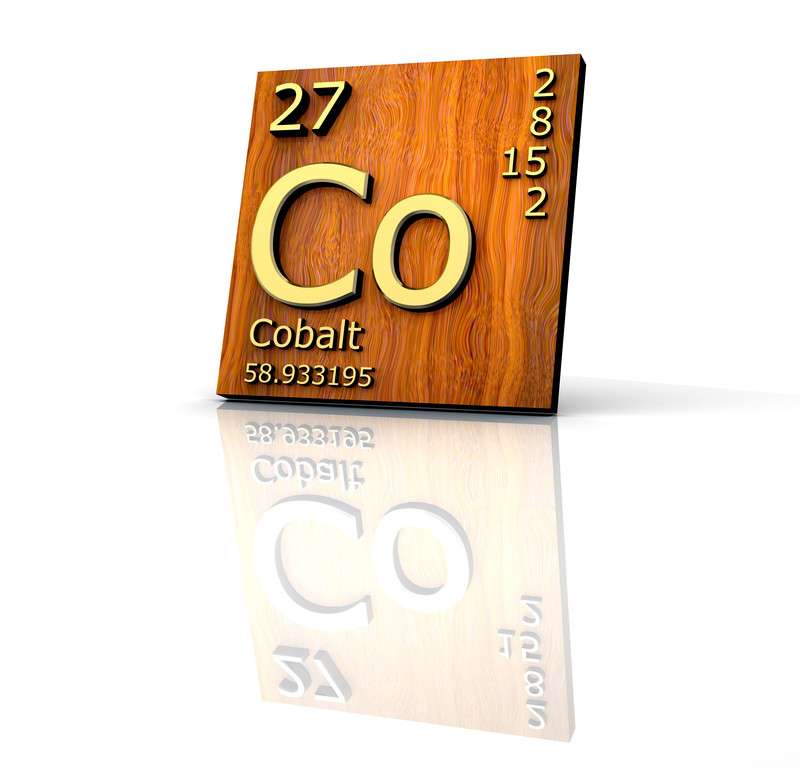
Average adult daily cobalt requirement is 0.0001 mg. An average adult contains approximately 1.1 g. Cobalt is a component of vitamin B12 . It inhibits thyroid iodine uptake, controls transfer of enzymes such as homocysteine methyltransferase and participates in methionine metabolism.
Cobalt deficiency: causes cardiomyopathy, congestive heart failure, pericardial effusion, polycythemia and thyroid enlargement.
Most cobalt production involves its metallic form for cobalt superalloys. "Hard metal" refers to compounds with tungsten carbide, combined in matrices of cobalt (5-20%) and nickel (0-5%), with tungsten carbide at 80-95%.
Diet is the main source for the general population. Meat, liver, kidneys, oysters and milk contain cobalt. Ocean fish and sea vegetables contain it, while land vegetables contain very little.
Cobalt compounds are absorbed orally, by inhalation and through skin. Gastrointestinal absorption depends on dose: very small doses around a few µg / kg are almost completely absorbed, while larger doses are absorbed less. Normal body levels are 80-300 mcg. Cobalt is stored in erythrocytes, plasma, liver, kidneys, spleen and pancreas. It has both beneficial and harmful effects. It is beneficial as a component of vitamin B12 essential for health. Deficiency reduces B12 availability and may cause fatigue, digestive disorders and neuromuscular problems. Cobalt is excreted in urine and feces. Most is rapidly excreted regardless of exposure route—inhalation, injection or ingestion.

Manganese (Mn)
Food manganese content varies greatly. It is highest in nuts, grains and cereals and lowest in meat, poultry and seafood. Instant coffee and tea have relatively high concentrations. An average adult contains 15 mg, with a daily requirement of approximately 2-5 mg.
Manganese activates enzymes. Mitochondria-rich tissues and pigments (such as retina and dark skin) tend to have high concentrations. Bone, liver, pancreas and kidneys generally have higher levels than other tissues. Bone is the largest tissue store.
Manganese deficiency: causes bleeding disorders through increased prothrombin time, while
Manganese excess: accumulating over a long period causes anorexia, apathy, headache, leg cramps, speech disorders, encephalitis and Parkinson-like syndromes. Psychosis may also occur.

Selenium (Se)
The relationship between selenium and oral cancers is not fully understood, but some evidence links selenium and Keshan syndrome.
Blood selenium is low in some pathological conditions such as colon, stomach and pancreatic cancer and cirrhosis. Increased intake may cause Keshan syndrome. Clinically, Keshan disease presents with acute and chronic cardiogenic shock, enlarged heart, congestive heart failure and cardiac arrhythmia.
- Selenium and Cancer (Detailed)

Fluorine (F)
Fluorine is the lightest element in Group VII of the periodic table, with atomic number 9. It plays an important role in hard tissues such as bone and teeth, helps produce denser bone, and fluoride has been proposed as an osteoporosis treatment. With calcium it is thought to stimulate osteoblastic (bone-forming) activity. Deficiency increases dental caries and may cause osteoporosis. High levels cause fluorosis (bone disease) and tooth staining. The orally lethal fluoride quantity is considered 35-70 mg F / kg body weight.
Acute toxicity symptoms appear rapidly after excessive intake: widespread abdominal pain, diarrhea, vomiting, excessive salivation and thirst. Chronic toxicity arises from prolonged ingestion of smaller quantities in drinking water. Daily drinking-water exposure above 8 ppm for many years may cause skeletal and dental fluorosis. Severe cases generally occur only in warm climates with very high drinking-water fluoride. Chronic toxicity gradually increases bone density; joints stiffen and pain may occur.

Iodine (I)
Iodine is vital at every life stage, most critically fetal life and early childhood. It is an essential component of thyroid hormones thyroxine (T4 tetraiodothyronine) and (T3 triiodothyronine) and also important for parathyroid function.
Iodine also supports general growth and development. Its metabolic role means deficiency symptoms may be wide-ranging.
Severe iodine deficiency generally causes goiter, a thyroid dysfunction.
Symptoms include extreme fatigue, slowed physical and mental processes, weight gain, facial puffiness, constipation and lethargy.
Excess iodine load is also adverse but less common. Organically bound iodine is excreted in urine. For example, when healthy people consume 1-5 mg through seaweed, all is excreted within 48 hours. Only very high organic iodine doses from seaweed may harm thyroid function. Excess iodine may cause chronic thyroiditis, Hashimoto thyroiditis, hyperthyroidism and thyrotoxicosis, and even increase thyroid cancer risk.
- What Is Iodine Deficiency? Symptoms, Treatment and Its Relationship with Breast Cancer
Techniques for Detecting Trace Elements
Recently, trace element content of nutrients and tissues has attracted researchers’ interest. Such measurements require sensitive, accurate analytical methods beyond standard laboratory techniques. Most trace elements are estimated through colorimetric and spectrographic analysis.
- Atomic absorption spectrometry
- Emission spectroscopy methods
- Neutron activation analysis
- Electrochemical methods
- Isotope dilution mass spectrometry
- Atomic X-ray fluorescence spectroscopy
In conclusion, understanding interactions between trace elements and metals helps clarify disease causes, enables rapid diagnosis and supports effective treatments. However, as shown, "excess" of almost all these elements also causes serious problems. We therefore do not recommend vitamin or mineral supplements unless their necessity is medically proven.
*
- Vitamin and Mineral Supplements – What Doctors and Users Should Know
Sources
Was this article helpful?
Your feedback helps us improve our content.




Reader comments
Share your comment
Your name and comment are published only after administrator approval. Your email address is never shown to visitors.
Be the first to comment.