
Bedsores: What You Need to Know About Decubitus Ulcers
What is a bedsore? Images of bedsores by stage. Bedsore healing time and treatment. What helps bedsores heal?

In this article
What Is a Bedsore or Decubitus Ulcer?
A decubitus ulcer is also known as a pressure ulcer, pressure sore, or bedsore. It refers to an open wound on a patient’s skin. Decubitus ulcers usually occur on the skin over bony areas. The most common sites for decubitus ulcers are:
- the hips
- the back
- the ankles
- the buttocks
This condition is common among people who:
- are older
- have reduced mobility
- spend long periods in bed or a wheelchair
- cannot move certain parts of their body without assistance
- have sensitive or fragile skin
Bedsores can be treated, but chronic, deep ulcers can be difficult to treat. Healing depends on several factors, including the particular appearance, underlying medical conditions, and the stage of the ulcer.
What Are the Symptoms of Bedsores?
Each stage of a bedsore has different symptoms. Depending on its appearance, a patient may have any of the following:
- skin discoloration
- pain in the affected area
- infection
- an opening in the skin
- skin that is softer or firmer than the surrounding skin
What Are the Stages of Bedsores?
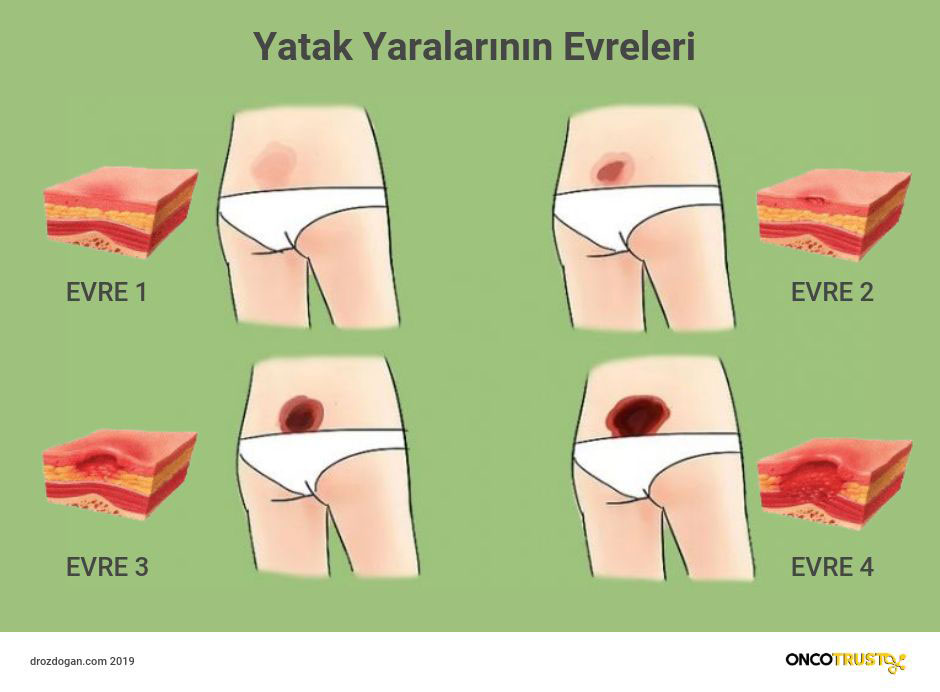
Decubitus ulcers develop in stages. A staging process helps healthcare professionals diagnose and treat you.
Stage 1
The skin is not open and remains intact, but its color has changed. If you have fair skin, the area may appear red. If you have dark skin, the discoloration may range from blue to purple. The area may also be slightly warmer than normal skin and may swell.
Stage 2
An opening develops in the skin, with a shallow ulcer or erosion. A fluid-filled blister may also be present.
Stage 3
The ulcer extends deeper into the skin. It affects the fat layer and looks like a crater.
Stage 4
At this stage, multiple layers are affected, including your muscles and bones.
Unstageable
Eschar is a dark, hard plaque that makes a full assessment and staging difficult. Further visualization or surgical assessment of the area is needed to determine the ulcer’s full extent. The ulcer may also contain discolored tissue debris known as slough (yellow, tan, green, or brown), which makes a complete assessment difficult.
What Causes Bedsores?
Factors such as prolonged pressure, moist skin, poor blood circulation, and poor nutrition are the main causes of bedsores. Lying on a particular part of your body for a long time can cause your skin to break down. Areas around the hips, heels, and tailbone are especially vulnerable to pressure sores.
Along with excessive moisture, skin irritants such as urine and feces resulting from poor hygiene can contribute to bedsores. Sheets underneath a person confined to bed can also contribute through friction.
Who Is at Risk of Bedsores?
There are several risk factors for decubitus ulcers:
- You may be at risk if you cannot move or change your position on your own while lying in bed or sitting in a wheelchair.
- If you are an older adult, your skin may be more fragile and sensitive, which can put you at greater risk.
- Poor eating habits or not getting enough nutrients in your diet (especially protein) can affect the condition of your skin and increase your risk.
- Conditions such as diabetes can restrict your blood circulation, leading to tissue damage in your skin and increasing your risk.
How Are Bedsores Diagnosed?
The healthcare professional who first notices the condition may refer you to a wound care team of doctors, specialists, and nurses experienced in treating pressure sores (such as teams inpalliative care, plastic surgery, oncology, and intensive care). The team may assess your ulcer based on several factors, including:
- the size and depth of your ulcer
- the types of tissue directly affected by the ulcer, such as skin, muscle, or bone
- the color of the skin affected by the ulcer
- the amount of tissue death caused by the ulcer
- the condition of the ulcer, such as the presence of infection, a strong odor, and bleeding
The healthcare professional may take fluid and tissue samples from your decubitus ulcer. They may also look for bacterial growth and signs of cancer.
Bedsore Treatment
Your treatment depends on the stage and condition of your ulcer. Treatment may include:
- medications
- local wound care and creams, including recommendations for special dressings
- lifestyle changes such as frequent repositioning, using special cushions, and making healthy food choices
- a protein-rich diet
- treatment of any existing infection
- surgery
Antibacterial medications can treat infection. You may also take medication to relieve or reduce any discomfort.
Your doctor may recommend a procedure called debridement to remove dead or infected tissue.
Keeping the decubitus area clean, dry, and free from irritants is important to promote healing.
Relieving pressure and frequently changing position are very important in treating a decubitus ulcer. Reducing friction at the wound site is also important.
The healthcare team may change your wound dressings frequently.
Some treatments are more important for advanced ulcers (such as surgical debridement and negative-pressure wound therapy for stage 3 and 4 ulcers), but all ulcers can benefit from general treatment strategies such as keeping the area clean and reducing friction and moisture. Relieving pressure, repositioning the patient frequently, and providing a good protein-rich diet improve outcomes.
Your specific treatment strategy depends on several factors, and your doctor will discuss with you what may be best for your ulcer.
Final Notes
Your healing process depends on the stage of your bedsore. The earlier it is diagnosed, the sooner treatment and healing can begin.
Your doctor may recommend changing your diet. Advanced-stage bedsores generally require more aggressive treatments and longer healing times.
Sources
health.harvard.edu/a_to_z/bedsores-decubitus-ulcers-a-to-z
2. Gould L, et al. (2015). Wound healing society 2015 update on guidelines for pressure ulcers.
3. Mayo Clinic Staff. (2018). Bedsores (pressure ulcers).
mayoclinic.org/diseases-conditions/bed-sores/symptoms-causes/syc-20355893
4. Pressure sores. (2019).
medlineplus.gov/pressuresores.html
Was this article helpful?
Your feedback helps us improve our content.




Reader comments
Share your comment
Your name and comment are published only after administrator approval. Your email address is never shown to visitors.
Be the first to comment.