
Covid-19 Recovery and Time to Death: In Mild, Moderate and Severe Disease

In this article
The course of Covid-19, caused by the SARS-CoV-2 virus, can differ from person to person. Some people recover without showing symptoms (asymptomatic), while others become so ill that they need to be intubated because of the severity of their illness.
how many days covid-19 lasts: time to intubation and death
Broadly, we can examine the course of Covid-19 in 4 categories:
- Mild Covid-19
- Moderate Covid-19
- Severe Covid-19
- Critical Covid-19
There is no clear answer to how many days it takes patients to recover from their condition. Depending on how severely a person experiences Covid-19, the answer can range from 2 weeks to 8 weeks for recovery.
How Many Days Does Recovery From Mild and Moderate Covid-19 Take?
Having a mild case of Covid-19 does not mean you will have no symptoms or feel very well. You may feel unwell and experience the commonly observed symptoms of Covid-19. However, the condition is mild enough not to require hospitalization. You can overcome the illness by resting at home and taking your medication.
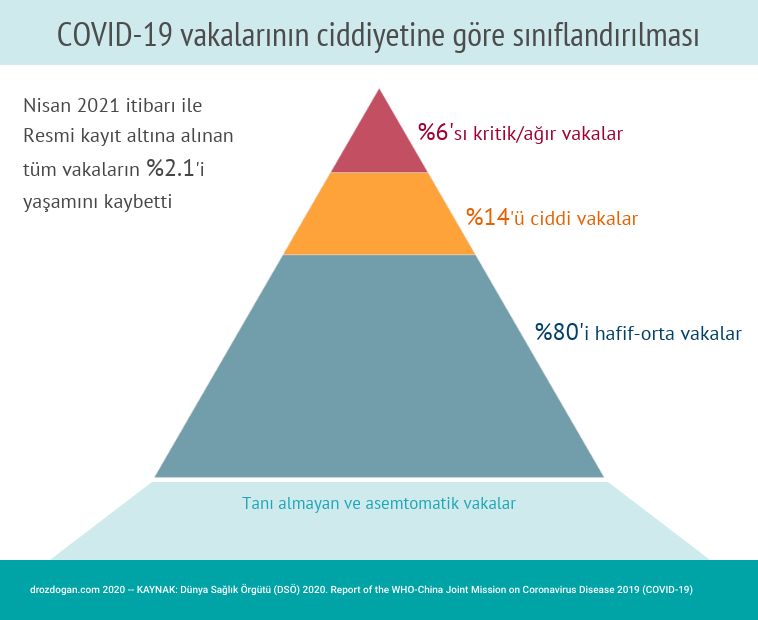
According to initial research, recovery from mild covid-19 can take approximately 10-14 days , although this can vary from person to person depending on factors such as age and general health.
According to the US Centers for Disease Control and Prevention (US-CDC), you should not end your self-isolation at home until the following criteria are met:
- No fever during 24 hours without taking fever-reducing medication
- Symptoms have resolved and you feel better
- At least 10 days have passed since your symptoms began
How Many Days Does It Take for Severe Covid-19 to Improve or Worsen?
Some people with novel coronavirus disease may experience it more severely than others. The lungs may be damaged, breathing may become difficult, and a complication called Acute Respiratory Distress Syndrome (ARDS) may occur. Patients with breathing difficulties must be hospitalized and receive respiratory support.
Depending on age and general health, recovery from the illness may take 2 weeks or longer. Recovery from severe Covid-19 generally takes longer than 2 weeks, and the condition may become much more serious.
How Many Days Does an Intubated Covid-19 Patient Take to Recover?
In critical cases of Covid-19 that are not easily overcome, patients need to stay in intensive care units. In this severe form of the illness, the virus reaching the lungs and/or an abnormal immune response to the virus prevents the person from breathing properly.
The course of serious cases generally progresses to pneumonia about five days after the first symptoms, and to severe hypoxemia (low oxygen in the tissues) and intensive care admission within 7 – 12 days.
When a person's lungs reach the point of being unable to supply the oxygen the body needs or remove carbon dioxide, intubation will be required. Intubation helps oxygen enter the body and carbon dioxide leave it.

- Related topic: What Is Intubation? Why and How Is It Performed? Its Importance for COVID-19
In the course of Covid-19, the time until intubation is needed and the length of time a person remains intubated differ from person to person.
Some patients remain intubated for one or two days, while others need intubation for weeks. However, the shorter the time a person is intubated, the better, because prolonged intubation can cause complications such as narrowing of the airways or the lungs becoming more dependent on oxygen support.
Patients who do not improve within several weeks despite intubation, or who are not expected to recover soon because of serious lung damage, undergo a procedure called tracheostomy. This involves making an opening in the throat to facilitate breathing. Tracheostomy does not affect how long a person stays in intensive care, but it may help reduce risks associated with intubation complications.
- Related topic: Is High-Dose Vitamin C Effective in Treating Covid-19 Patients in Intensive Care?
The Course Leading to Death in a Patient Intubated for Severe Covid-19
Richard Watkins, an infectious disease specialist at Northeast Ohio Medical School, says: “Many people generally see intubation as a harbinger of death, but this is not true. Most patients intubated because of Covid-19 survive.”
A case review published in JAMA reported that 24.5% of 1151 intubated patients died in its findings!
Although the percentage may seem high, this means that 3/4 of patients survived. Similarly, in another case review published in Critical Care Medicine, researchers reported that approximately 36% of 165 intubated patients died.
Another study examined whether there was a relationship between time to intubation and mortality (death rate), using data from five hospitals in New York. For Covid-19 patients who went on to be intubated, the median time between hospital admission and intubation was found to be 2.3 days.

Figure-1: The relationship between time from hospital admission to intubation (days) and mortality during hospitalization.
Another study conducted in China examined how the full courses of Covid-19 were related to death and survival. In this analysis based on data from the start of the pandemic, it should be borne in mind that the time between symptoms and a positive PCR test was not the same as it is now. In January 2020, this period was approximately 8 days, falling to 3 days in February. It has now shortened to 24 hours or even 3-6 hours. This contributes to early Covid-19 diagnosis and prevention of transmission. Early intervention will also affect death and intubation rates.
These data showed that severe and critical Covid-19, including hypoxia, developed within a median of 1 week from the onset of illness. In other words, if Covid-19 is going to become serious in a patient, this generally becomes apparent within 1 week. Among fatal cases, the average time from symptom onset was reported to vary between 2 and 8 weeks.

Figure-2: Shows the course of death and survival according to disease severity, based on February 2020 data.
Another comprehensive study in the US state of Florida showed that mortality (death) rates in serious illness were significantly lower than thought (in earlier Wuhan and New York analyses, mortality rates in serious illness had been recorded as 52% and 88%, respectively).
Table-1: Intensive care unit outcomes and estimated mortality in COVID-19 patients.
|
Outcomes |
Number (and percentages – %) |
|
Patient dispositions |
131 |
|
11 (8.4%) |
|
60 (45.8%) |
|
32 (24.4%) |
|
2 (1.5%) |
|
26 (19.8%) |
|
Overall hospital mortality among intensive care unit patients |
19.8% |
|
Hospital mortality among intensive care unit patients – Excluding patients still hospitalized |
21.6% |
|
Mortality associated with mechanical ventilation |
23.8% |
|
Mortality associated with mechanical ventilation – Excluding patients still hospitalized |
26.5% |
Because earlier studies had shown higher mortality among African Americans, the researchers in this study suggested that the lower mortality rate might be associated with the origins of the cases included and with the younger age group. However, observing low mortality in China, Italy and other European countries without a large population of African origin led to the view that survival may vary with certain patient demographics.
Table-2: Factors that may be associated with survival and death.
|
Patient characteristics (number (%) or median) |
Total number of patients 131 |
Number of surviving patients 104 |
Number of deaths 27 |
|
Age |
61 (49.5 – 71.5) |
60 (49 – 69) |
69.5 (62 – 80) |
|
18 - < 55 |
41 (31.3%) |
38 (36.2%) |
3 (11.5%) |
|
55 – 64 |
36 (27.5%) |
31 (29.5%) |
5 (19.2%) |
|
65 – 74 |
34 (26.0%) |
26 (24.8%) |
8 (30.8%) |
|
≥ 75 |
20 (15.3%) |
10 (9.5%) |
10 (38.5%) |
|
Sex |
|||
|
Male |
46 (35.1%) |
35 (33.7%) |
11 (40.7%) |
|
Female |
85 (64.9%) |
69 (66.3%) |
16 (59.3%) |
|
Ethnic origin |
|||
|
African American |
15 (11.5%) |
12 (11.5%) |
3 (11.1%) |
|
Caucasian |
59 (45%) |
45 (43.3%) |
14 (51.9%) |
|
Other |
57 (43.5%) |
47 (45.2%) |
10 (37%) |
|
Body mass index (VKI) |
|||
|
≤ 25 |
40 (30%) |
33 (31.4%) |
7 (26.9%) |
|
≥ 40 |
7 (5.3%) |
5 (4.8%) |
2 (7.7%) |
|
Comorbidity |
|||
|
Diabetes |
54 (41.2%) |
39 (37.1%) |
15 (57.7%) |
|
Hypertension |
84 (64.1%) |
65 (61.9%) |
19 (73.1%) |
|
Cerebrovascular disease |
7 (5.3%) |
4 (3.8%) |
3 (11.5%) |
|
Heart failure |
12 (9.2%) |
4 (3.8%) |
8 (30.8%) |
|
Chronic kidney disease stage ≥ 3 |
14 (10.7%) |
5 (4.8%) |
9 (34.6%) |
|
Dementia |
10 (7.6%) |
5 (4.8%) |
5 (19.2%) |
|
Malignant tumor |
9 (6.9%) |
9 (8.6%) |
|
|
Smoking history |
|||
|
Smoker |
23 (17.6%) |
16 (15.2%) |
7 (26.9%) |
|
Nonsmoker |
35 (26.7%) |
83 (80.6%) |
17 (65.4%) |
Sources
2. Choudhury, S. (2021, Apr 25). If you have mild COVID-19, here’s how you can recover at home. India Times: https://timesofindia.indiatimes.com/
3. Coronavirus Recovery. Web MD: https://www.webmd.com/
4. Hyman, J. B. (2020). Timing of Intubation and In-Hospital Mortality in Patients With Coronavirus Disease 2019. Critical CAre Explorations: https://journals.lww.com/
5. Meng, L. (2020, Mar 26). Intubation and Ventilation amid the COVID-19 Outbreak. Anesthesiology: https://alatorax.org
6. Miller, K. (2020, Jul 20). What Is Intubation, Exactly? Why Ventilators Are Necessary for Some COVID-19 Patients. Prevention: https://www.prevention.com/
7. Oliveira, E. (2021, Mar 25). ICU outcomes and survival in patients with severe COVID-19 in the largest health care system in central Florida. Plos One: https://journals.plos.org/
8. Report of the WHO-China Joint Mission (2020).
Was this article helpful?
Your feedback helps us improve our content.


Reader comments
Share your comment
Your name and comment are published only after administrator approval. Your email address is never shown to visitors.
Be the first to comment.