
Maria Theresa, Gerard van Swieten and the Birth of Modern Pathology at the Habsburg Court

In this article
The Silent Illness of Palaces
On 29 November 1780, in Vienna, on a bed in the private apartments of Schönbrunn Palace, a sixty-three-year-old woman took her last breath. Around her were her surviving children, except her youngest daughter, Marie Antoinette — who had married and gone to Versailles thirteen years earlier — and the court physician Anton von Störck, who had followed her for many years. Her illness had been progressing for weeks: severe coughing fits, a constant sensation of suffocation, edema and exhaustion. In the final report, the physician wrote: “obstruction arising from the lungs, the final stage of a catarrh that has persisted for years.” The diagnostic language was historically restrained, because the dying woman was not merely a hospital patient — she was the ruler of Austria, Hungary and Bohemia, Holy Roman Empress, mother of sixteen children, the last member of the direct Habsburg line: Empress Maria Theresa. The court physicians did not perform an autopsy on the empress's body after her death — it was taboo for them. Thus, the first question that comes to the modern reader's mind — was this illness cancer? — has remained unanswered for 244 years. Today's article tells a larger story surrounding this unanswered question: the language of silence with which the Habsburg court approached illness, the limitations of court medicine in that era and — paradoxically — how steps taken during this same empress's reign became the birth certificate of European pathology in the 19th century.
For the true irony of history lies here: the autopsy that could not be performed on Maria Theresa's own body had, as the result of a decree signed during her reign, become mandatory for every hospital death in Austria. In other words, the empress's approach to government had opened her own taboo to the public, subjected public life to science and presented it as an example to the world. This contradiction is one of the most vivid depictions of the Enlightenment's internal conflict with the court. As a result of that contradiction, 65 years after her death, the groundwork was laid for Carl von Rokitansky to perform thirty thousand autopsies at Vienna General Hospital — the greatest center of cancer pathology in the 19th century was born there.
From the Pragmatic Sanction to a Forty-Year Reign
Maria Theresa was born on 13 May 1717 at the Hofburg Palace in Vienna, the capital of the Habsburg dynasty. Her father, Holy Roman Emperor Charles VI, had no son and, through decades of diplomatic effort, persuaded the European states to accept the Pragmatische Sanktion (Pragmatic Sanction, 1713), which would allow the throne to pass to a woman. This legal maneuver opened the path to the throne for Maria Theresa while she was still a child. When her father suddenly died on 20 October 1740, the 23-year-old woman took charge of the Habsburg lands and a vast empire extending across Hungary, Bohemia, Austria, the Netherlands, Lombardy and Tuscany.
Immediately after her accession, King Frederick the Great of Prussia refused to recognize the Pragmatic Sanction and invaded Silesia — the beginning of the War of the Austrian Succession (1740-1748). Maria Theresa waged this war, gave birth to 16 children during her marriage (six died before reaching 17) and carried out fundamental reforms of the empire's finances, army, education and healthcare system. In 1745, her husband, Francis Stephen, was elected Holy Roman Emperor (meaning Maria Theresa held the title “Empress” through her husband; on her own thrones she was the sovereign — a pragmatic arrangement). When Francis died suddenly in 1765, Maria Theresa dressed in black and continued to mourn for 15 years until her death. Her son Joseph II became co-ruler with her, but the principal authority always remained with his mother.
After her death, King Frederick the Great of Prussia — her rival, whom she had faced in three wars over the years — said of her: “She honored her throne and her sex; although I fought against her, I never regarded her as an enemy.” These are among the most respectful words recorded in history between two rival sovereigns of 18th-century Europe.
THE HABSBURG DYNASTY AND THE SHADOW OF ILLNESS
In the 18th-century Habsburg family, illness was part of both politics and court etiquette. Maria Theresa's uncle, Emperor Joseph I, died of smallpox in 1711; her father, Charles VI, died suddenly at 55 in 1740 — according to widespread belief, from poisoning after eating wild mushrooms; her mother, Elisabeth Christine, died at 59 in 1750 after a prolonged illness (court records note “a growing hardness in the internal organs,” interpreted from a contemporary perspective as possible uterine or cervical cancer); her daughter, Maria Josepha, died of smallpox at 16 in 1767; her son, Joseph II, died at 48 in 1790 with lung and pharyngeal problems (tuberculosis is the prevailing view in modern paleopathological discussion, although suspicion of laryngeal/pharyngeal malignancy also appears in the literature); and, best known of all — her youngest daughter, Marie Antoinette, was executed by guillotine in Paris at 37 in 1793. Illness and violence overlapped in every generation of the Habsburg dynasty.
Gerard van Swieten: The Physician Who Brought the Enlightenment into the Court
The transformative figure in Maria Theresa's medical decisions was not a Habsburg, but a Dutchman. Gerard van Swieten (1700-1772) trained at Leiden University, which stood at the pinnacle of 18th-century European medicine, and had been the closest student of Hermann Boerhaave (1668-1738) for many years. Boerhaave was the most famous physician of his time; he introduced “bedside teaching” into clinical medicine and is the intellectual forefather of modern medical education. Van Swieten had both adopted his method and rewritten it in his own words.
In 1745, Maria Theresa brought van Swieten from the Netherlands to Vienna as her personal physician. There was a political reason for this: the local physicians of the Habsburg court (most still rooted in the Galenic tradition of half a century earlier) were backward in the empress's eyes. Van Swieten was the man who would bring Boerhaave's Enlightenment clinic to the Habsburg court. After arriving, he did three things:
First, he served the empress as chief physician . When Maria Theresa contracted smallpox in 1767, he was the physician who contributed most to her survival. Second, he directed the reform of the University of Vienna's Faculty of Medicine: a new curriculum, clinical training, bedside teaching and a modern library. As a result of this reform, Vienna became one of Europe's centers of medical education in the second half of the 18th century. Third, and most importantly for the history of oncology, he persuaded Maria Theresa to sign a decree in 1761 — the year Morgagni's De Sedibus was published.
📜 THE 1761 DECREE: MANDATORY AUTOPSY FOR EVERY HOSPITAL DEATH
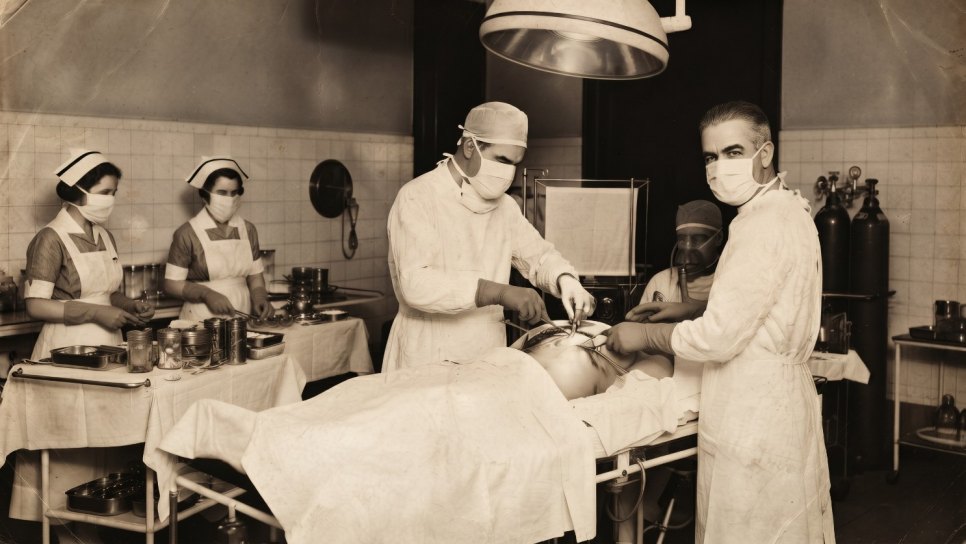
At van Swieten's suggestion, Maria Theresa signed a decree in the hospitals of the Austrian Empire requiring every patient death to be followed by an autopsy . This decree was the first legal regulation of such scope in the world at that time. Its stated purpose was to understand the high infant mortality rate, particularly in Graz ; however, because the decree covered all patient deaths, its practical impact was much greater: within a generation, Austria became Europe's center of pathological anatomy. Autopsies became standard hospital procedures; tissue specimens were collected; clinical–autopsy correlation (the question “what did the patient feel while alive, and what did we find after death?”) became systematic throughout the Habsburg territories. Without this decree, could Carl von Rokitansky have written the “Pathologist's Bible” in the 19th century from 30.000 autopsies (Handbuch der pathologischen Anatomie, 1842-1846)? It is doubtful.
The irony is this: the institutional change initiated by van Swieten could never be applied to the body of the empress whom he personally served. Under court etiquette, the sovereign's body was sacred; cutting it open — especially the empress's body — was unthinkable. Yet, for the rest of the country, Europe's most comprehensive autopsy decree bore her signature. The court's enlightenment took place on a street outside the court.
From the Smallpox Nightmare of 1767 to November 1780
Maria Theresa's medical history reached a sharp turning point in 1767. That year, two members of her family at the Habsburg court — her daughter-in-law, Empress Maria Josepha, and her daughter, Maria Josepha — died of smallpox. Maria Theresa contracted it herself. She survived, but the court physicians described it as “something very close to a miracle.” After that illness, the empress gained weight rapidly, dyspnea (shortness of breath) became pronounced and her former energy was replaced by constant fatigue. This was a marked physical decline for a woman of only 50.
During the thirteen years between 1767 and 1780, Maria Theresa lived with a chronic respiratory illness. The most frequently repeated phrases in the court records were “catarrhal cold", "mucus accumulation in the lungs", "productive cough", "a sensation of suffocation when lying down (orthopnea).” From a contemporary perspective, the most likely explanation of this picture is a combination of chronic bronchitis and obesity-related right heart failure; however, the possibilities of pulmonary tuberculosis or — less likely, but not excludable — a primary lung malignancy also arise occasionally in contemporary paleopathological discussion.
On the morning of Wednesday, 29 November 1780, Maria Theresa died at Schönbrunn Palace at 63. Court physician Anton von Störck (himself van Swieten's student, who had become chief court physician after his death) recorded “obstruction arising from the lungs and heart failure” on the death certificate. No autopsy was performed. Her body was placed in the coffin in the Imperial Crypt of the Capuchin Church (Kapuzinergruft) — beside her husband, Francis Stephen, in the tomb on which she had arranged for her own epitaph to be inscribed during her lifetime.
The Ghost of a 244-Year Medical Secret
The three possibilities most often put forward in modern paleopathological literature as the cause of Maria Theresa's death are:
- Chronic obstructive pulmonary disease (COPD) + obesity + right heart failure: In the 18th-century Viennese court, coal was burned for central heating, filling rooms with smoke and soot; in addition, Maria Theresa lived with excess weight for years, and candles were a significant source of pollution in enclosed palace apartments. The combination of these three factors is consistent with modern COPD and cor pulmonale (right heart failure). This is the consensus view.
- Pulmonary tuberculosis: In the 18th century, much of Europe's population had latent infection with the tuberculosis bacillus. Even the court environment could not escape this infection (her son Joseph II would die of probable tuberculosis 10 years later). Maria Theresa's long-standing productive cough and the tendency toward weight loss that became more apparent in her final months could be consistent with tuberculosis.
- Primary lung cancer: Low probability. She did not use tobacco (royal women did not take snuff); however, coal smoke and candle soot in indoor air are associated with a slight increase in lung cancer risk in modern epidemiological studies. The combination of “edema,” “suffocation” and “severe cough” in the court records could be interpreted as a paraneoplastic presentation. But without an autopsy, this diagnosis cannot be confirmed.
From the perspective of cancer history, none of these three possibilities is certain. What matters is this: the diagnosis has remained uncertain because no autopsy was performed. This uncertainty is a structural feature of court medicine in that era — the sovereign's body was shielded from pathological examination for political reasons, making courts “black holes” of medical knowledge for centuries. While public hospitals supplied science with data through routine autopsies, courts kept their doors closed.
Lady Mary Montagu, Maria Theresa and the Inoculation That Came from Istanbul
Here we build a bridge that connects to the series' long chain and is particularly meaningful for Turkish readers. After Maria Theresa survived smallpox in 1767, grieving the losses in her family, she asked van Swieten: “Is there a way to prevent this disease?” Van Swieten answered that there was, and that the answer came from the Ottoman Empire .
Variolation — the method of taking a small amount from a smallpox patient's purulent scab and transferring it to a healthy person to produce a mild infection and confer immunity — originated in China in the 16th century and spread westward through India and Anatolia. In early 18th-century Istanbul, it was widely practiced in folk medicine within Greek and Armenian medical traditions. Lady Mary Wortley Montagu, the wife of Britain's ambassador to the Ottoman Empire in Istanbul in 1717-1718, learned this practice from Turkish physicians and midwives and had it performed on her son; she then introduced it to Europe after returning to London. The first trials in Britain took place in 1721; by the 1740s, the practice had spread controversially across Europe.
In 1768 — exactly 50 years after Lady Montagu's observations in Istanbul — Maria Theresa permitted the children of the Habsburg court to undergo variolation by the Dutch physician Jan Ingen-Housz . This marked the beginning of the first state-supported inoculation program in the Austrian Empire. Over the next ten years, thousands of children in Habsburg territories were inoculated by variolation; smallpox mortality fell dramatically. This practice is the direct predecessor of modern vaccination — 30 years later, Edward Jenner's vaccination using cowpox (vaccinia) would develop as a safer version of variolation.
The meaning of this bridge: China → India → Ottoman Istanbul → Lady Montagu → Britain → Europe → the Habsburg court → the Austrian population → universal acceptance of modern vaccination. One link in this chain for today's Turkish-speaking world is this: the practical knowledge of Turkish midwives in Istanbul was one of the sources of public health reform in 18th-century Europe. Maria Theresa's decision in 1768 was one of the first moments when that practical knowledge became European state policy.
From the Autopsy Decree of 1761 to Rokitansky's 30.000 Cases
When Maria Theresa died in 1780, her decree of 1761 had not yet shown its full impact — autopsy practice was becoming established in the Austrian Empire's hospitals, but it was still in the accumulation phase. Accumulation truly began during the reign of her son Joseph II (1780-1790), with the opening of the Allgemeines Krankenhaus (Vienna General Hospital): 16 August 1784, the largest general hospital the world had yet seen, with 2.000 beds, systematic clinical records and mandatory autopsy procedures. The son institutionalized what the mother had begun.
Over the next half-century, Vienna became the center of European pathological anatomy. Carl von Rokitansky (1804-1878) worked for thirty-one years, from 1844 to 1875, at the pathology institute of Vienna General Hospital; he is reported to have performed thirty thousand autopsies and personally supervised more than seventy thousand. His three-volume work, published in 1842-1846, Handbuch der pathologischen Anatomie , formed the backbone of 19th-century pathology literature. Its importance for cancer is immense: systematic macroscopic descriptions of tumors of the stomach, lung, breast, prostate, liver, kidney, brain and lymphatic system, maps of their anatomical distribution, patterns of metastasis and clinical correlations — all accumulated in Rokitansky's notes.
Famous figures who worked or trained in Rokitansky's Vienna included Josef Skoda (one of the founders of percussion and auscultation), Ignaz Semmelweis (who would discover here in the 1840s the effect of handwashing on puerperal fever — Day 85 of the series), Ferdinand von Hebra (the father of modern dermatology) and, indirectly, Rudolf Virchow (who learned from the Vienna school's methods despite working in Berlin). In other words, a generation of the most crucial figures in 19th-century European medicine emerged as an extension of Maria Theresa's decree of 1761.
🏛️ FROM MARIA THERESA TO MODERN PATHOLOGY — THE INSTITUTIONAL CHAIN
Mother and Daughter: Two Tragedies, Two Histories
When Maria Theresa died on 29 November 1780, her youngest daughter, Marie Antoinette, was 25, lived at Versailles, had given birth to three children and sat as Queen of France at the heart of a monarchy that would fall a century later. The final letter between mother and daughter was written two weeks before the death; in it, Maria Theresa spoke of difficulty breathing, loneliness and the exhaustion of the 15 years since her husband's death.
Maria Theresa did not witness the French Revolution — the Bastille would fall 9 years after her death (14 July 1789), and Marie Antoinette would be executed by guillotine 13 years later (16 October 1793). The mother's biological illness is uncertain; the daughter's political end is definite. Sent to Versailles at 14 as part of the diplomatic calculations of the Habsburg–Bourbon marriage, this child died at 37 in Paris's Place de la Révolution, 13 years after her mother's death.
The bridge between the stories of mother and daughter is also meaningful for the history of oncology: the bodily health of women at 18th-century courts was the sphere in which the era's medical limitations were most rigidly enforced. Maria Theresa's illness was not documented, autopsied or put into words. During Marie Antoinette's months in the Conciergerie after her arrest, findings interpreted by some modern historians as “vaginal bleeding, anemia and physical collapse” were likewise not recorded, because, as a political prisoner, she was no longer granted access to a physician. These two royal women, one in a palace and the other in a prison, fell at opposite ends of the era's medical limitations. This parallel is another facet of the “problem of undocumented royal illness” in cancer history.
🔍 A BRIEF FACT-CHECK NOTE
- Maria Theresa's birth and death: 13 May 1717, Vienna — 29 November 1780, Schönbrunn Palace, aged 63
- Reign: 1740-1780, forty years; the Habsburg dynasty's only female sovereign in the direct line
- Husband: Francis Stephen I (1708-1765), Holy Roman Emperor 1745-1765
- Number of children: 16; 6 died before reaching 17
- Final illness: Onset on 24 November 1780, death on 29 November 1780 — severe cough, dyspnea and edema
- Court physician: Anton von Störck (1731-1803), van Swieten's student and successor
- Autopsy: Not performed (in accordance with court etiquette)
- Gerard van Swieten: 1700, Leiden — 1772, Vienna; Boerhaave's student; arrived in Vienna in 1745; architect of the mandatory autopsy decree of 1761
- Variolation program: 1768, performed on the children of the Habsburg court by Jan Ingen-Housz; follows the Lady Mary Montagu chain through the Ottoman Empire/Istanbul
- Carl von Rokitansky: 1804-1878; pathology institute of Vienna General Hospital 1844-1875; an estimated 30.000 autopsies personally performed and 70.000 supervised
Frances Burney's Letter: Witnessing a Mastectomy Without Anesthesia, Paris 1812
From the palace to the public, from royalty to literature... Tomorrow, we will encounter the 11-page letter that English novelist Frances Burney wrote to her sister Esther about the mastectomy she underwent in Paris in September 1811. One of the most harrowing first-person documents in medical history: a detailed account, in the patient's own words, of surgery performed without anesthesia. Unlike Maria Theresa's courtly silence, Frances Burney was no ordinary woman — she wrote. What she wrote is the only patient testimony of mastectomy practice at the end of the 18th century that remains readable today.
Author's note: The assessment of the “possibility of cancer” in Maria Theresa's illness in this article is a historical and speculative reading; a definitive diagnosis is impossible because no autopsy was performed. Modern paleopathological literature predominantly reflects a consensus of chronic lung disease + right heart failure; the possibility of a primary lung malignancy is low but has not been excluded. Discussions of suspected cancer in connection with the deaths of dynasty members Joseph II (1790) and Elisabeth Christine (1750) appear in contemporary historical literature, but none is supported by an autopsy document. This article stays within that sensitive boundary.
Sources and Further Reading
- Stollberg-Rilinger B. Maria Theresia: Die Kaiserin in ihrer Zeit. München: C.H. Beck, 2017. (Modern reference biography; the principal source for the van Swieten relationship and the historical background of the decree of 1761.)
- Ingrao CW. The Habsburg Monarchy, 1618-1815. Cambridge: Cambridge University Press, 2nd ed., 2000. (Standard reference for the history of Habsburg rule.)
- Lesky E. The Vienna Medical School of the 19th Century. Baltimore: Johns Hopkins University Press, 1976. (History of the institutional chain extending from Maria Theresa's reforms to Rokitansky.)
- Karenberg A, Hort I. Medicine at the court of the Habsburg emperors: physicians, patients, and political consequences (1500-1918). Journal of Medical Biography 2009;17(1):14-19.
- Berghoff E. Entwicklungsgeschichte des medizinischen Weltbildes. Vienna: Wilhelm Maudrich, 1947. (The transfer of the van Swieten and Boerhaave tradition to the Habsburg court.)
- Esparza J. The illness of empress Maria Theresa as a trigger for the adoption of variolation in Austria (1768). Vaccine 2025 (in press). doi:10.1016/j.vaccine.2025.05.50X (History of the variolation program and its Ottoman connection.)
- Belofsky N. Strange Medicine: A Shocking History of Real Medical Practices Through the Ages. New York: Penguin Books, 2013. (Popular-academic reference for 18th-century court medicine.)
- Long ER. A History of Pathology. New York: Dover Publications, 1965. (Classic reference on the history of pathology for Rokitansky and the Vienna school.)
- La Rocheterie M de. La Vie de Marie-Antoinette, 2 volumes. Paris: Plon, 1890. (A contemporary account of Maria Theresa's final hours based on court documents.)
- Buklijaš T. Cultures of death and politics of corpse supply: Anatomy in Vienna, 1848-1914. Bulletin of the History of Medicine 2008;82(3):570-607. (The evolution of Vienna's autopsy culture from the 18th-century decree to 19th-century institutionalization.)
- Bjelovučić Kopilović Z, Fatović-Ferenčić S. The dawn of modern pathology: when, where, how, and why. Acta Medico-Historica Adriatica 2015;13(1):15-26. (The place of Maria Theresa's autopsy decree in the history of pathology.)
This article is Day 70 of the Cancer History in 365 Days Series; it is also a thematic feature on 18th-century court medicine and the institutional establishment of modern pathology. The birth of the 19th-century Vienna School of Pathology as an extension of Maria Theresa's decree of 1761, Rokitansky and the subsequent generation of Virchow will be explored on Days 87 and 88 of the series. Tomorrow, Day 71, continues with Frances Burney's letter about her Paris mastectomy in 1811 — an example of the transition from courtly silence to public testimony. The article is written from a popular historical perspective; it contains no guidance on medical treatment.
Was this article helpful?
Your feedback helps us improve our content.


Reader comments
Share your comment
Your name and comment are published only after administrator approval. Your email address is never shown to visitors.
Be the first to comment.