
Medical History's Greatest Invention: The Stethoscope

In this article
“It was 1816. A young, somewhat overweight woman presented with chest tightness. Her general symptoms suggested heart failure…” Rene Theophile Hyacinthe Laënnec (1781-1826) was a French physician. In 1816, he invented the stethoscope, one of humanity's most important discoveries. Using it, he studied heart and lung sounds and made diagnoses.
Laënnec later published his pioneering work listening to bodily sounds in De L'auscultation Mediate, describing many lung diseases for the first time and becoming known as the father of clinical auscultation. On a cool September morning in 1816, Dr. Laënnec, aged 35, walked through the Louvre courtyard in Paris and noticed two children signaling to each other with a long wooden stick and a needle. One held an ear to its opening while the other scratched the far end; sound was amplified at the listener's end. Years later, he would recount in De L'auscultation Mediate how this incident inspired his invention.
A young overweight woman with general heart disease symptoms sought out Dr. Laënnec. Until then, doctors listened by placing an ear directly against the chest, but neither her weight nor sex made this appropriate. Embarrassed and unsure what to do, he listened to her complaints while wondering how to hear her heart. Remembering the children's game, he rolled paper into a tube, placed it on her chest over the heart and listened at the other end. He could hear more comfortably, opening the way to a major medical invention. The paper roll was later redesigned as a hollow wooden cylinder and named the stethoscope as the new instrument.

Laënnec later planned 3 steps: first investigating and clarifying chest diseases; second concentrating on bronchial, lung and pleural diseases; and third studying diseases of the heart and its extensions, describing and classifying many for the first time.
Stethos (chest) and skopein (to look), the Greek words forming stethoscope, named the device Rene Laënnec invented in 1816 at Paris's Necker-Enfants Malades Hospital. It listens to sounds produced within the body. Physical examination by listening is called “auscultation”. The instrument has a diaphragm at the bottom, a tube in the middle and earpieces at the top. Placed on the patient, the diaphragm vibrates with bodily sounds. Acoustic pressure waves travel along the tube to the listener's ears and spread there. It acts exactly as a mechanical amplifier.
The first model was a wooden tube with one outlet, later developed into its current form. Laënnec's first true wooden stethoscope remained in use until rubber tubing developed in the latter half of the 19. century. A bell was later added behind the diaphragm. Light skin contact with the bell detects low-frequency sounds, while firm diaphragm contact detects high frequencies. Many changes followed: two outlets and two or three heads for bell and diaphragm. Rappaport and Sprague invented the double-sided stethoscope in the early 20. century. New techniques produced electronic and differential models able to listen to 2 sides of the chest.
Types of Stethoscope
There are several types. These are;
- Acoustic stethoscope
- Electronic stethoscope
- Fetal stethoscope
- Doppler stethoscope
- 3D (3-dimensional)-printed models.
Acoustic stethoscope
Acoustic stethoscopeare the conventional stethoscopes described and are the most frequently used type. Only trained specialists can interpret them.
Electronic stethoscope
Electronic stethoscopes can provide interpreted data. Microphones are used: a sensor receives sound, an amplifier boosts the signal and a processor produces output. Computer-analyzed electronic stethoscopes can thus identify disease-related sounds or innocent murmurs. Some models can record, an important feature. Recordings can be played on computers, phones or music players, creating wider telemedicine possibilities.
Fetal stethoscope
Fetal stethoscope is an acoustic type formerly called a fetoscope. Also called the Pinard stethoscope, it is trumpet-shaped and used to hear fetal heart sounds in pregnant women. Its shape accommodates the enlarged abdominal surface.
Doppler stethoscope
Doppler stethoscope is an electronic device measuring ultrasound wave reflections from organs. It detects moving objects in the heart. Recently it has enabled auscultation of adult valve movements and blood flow. Doppler and conventional auscultation differ physically and may complement each other. Doppler stethoscopes were recently developed to allow auscultation in noisy military environments.
3D (3-dimensional)-Printed Stethoscope Models
3D-printed, meaning 3-dimensional-printed stethoscopesare somewhat different. As we know, 3-dimensional printers now affect every area of life and make it easier. Through a recent open-source project, Dr. Tarek Loubani aims to deliver low-cost stethoscopes to areas under blockade and fire. Using 3-dimensional printed parts, he makes a plastic but functional, non-toy stethoscope, seeking to fill vital medical equipment shortages and meet basic needs.
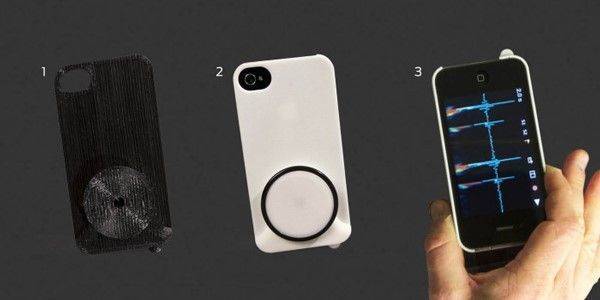
Another 3-dimensional stethoscope was made by 15-year-old Suman Mulumudi in the United States. The teenager, whose father is a cardiologist, used a 3-dimensional printer to produce a stethoscope-shaped phone case and developed a system recording these waves on the phone.
Final Words; The stethoscope may be the only instrument all doctors share. It is one of medicine's strongest symbols; no other symbol defines doctors so well. It symbolizes trust and has become a valued emblem hanging around the neck. This miraculous invention born from difficulty illustrates medical history's important place, with every element profoundly affecting human life. Its story is a small, beautiful example of contributions to medicine.
Sources
2- "Rene Theophile Hyacinthe Laënnec (1781–1826): The Man Behind the Stethoscope". PubMed Central (PMC). Retrieved24 September 2015.
3- https://www.ncbi.nlm.nih.gov/pubmed/23117017
4- https://github.com/GliaX/Stethoscope
5- https://www.stratoscientific.com/
Was this article helpful?
Your feedback helps us improve our content.




Reader comments
Share your comment
Your name and comment are published only after administrator approval. Your email address is never shown to visitors.
Be the first to comment.