
One of the oldest diseases: cancer and its brief history

In this article
“The better we understand cancer, the better our efforts will be understood and yield results.”
An invitation to a historical journey
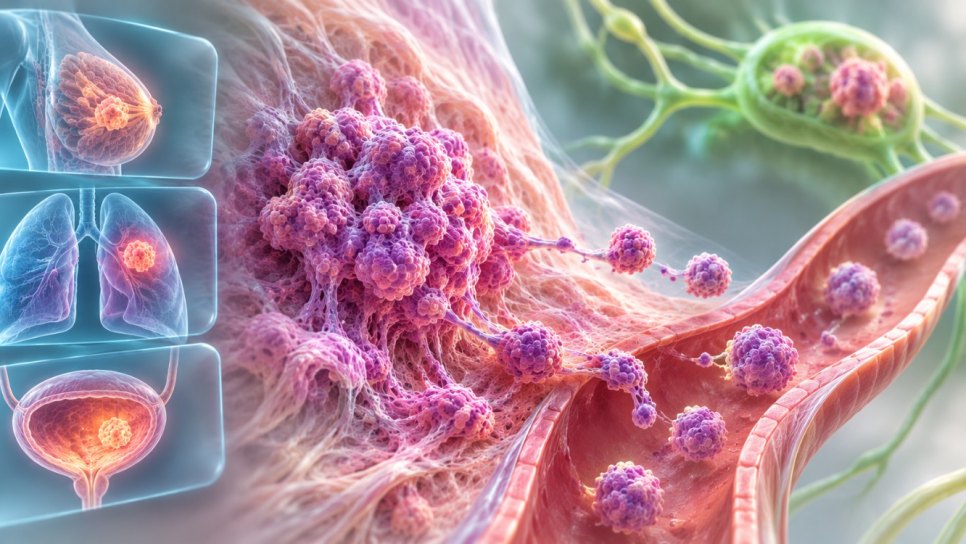
As a global community, we are pursuing and working to end cancer more than ever before, and we will not stop until cancer becomes a treatable disease. In this detailed infographic prepared for you, we have compiled the facts behind the misconception that cancer is a modern-age disease and the current state of treatments.
The first evidence of cancer cells
Research conducted in 2003 found evidence of cancer cells, such as hemangiomas and metastatic cancers, in dinosaur fossils.
Traces of cancer in mummies
Fossilized bone tumors, the first evidence of cancer in humans, are found in ancient Egyptian mummies and manuscripts. Traces of osteosarcoma (bone cancer) have been seen in mummies.
The Code of Hammurabi
Among history’s oldest laws, a standard fee of ten shekels was set for surgically removing tumors, together with penalties for failure.
“The disease cannot be cured”
The earliest written cancer records described breast cancer surgery but stated that “if the breast cannot be touched, the disease cannot be cured”.
Hippocrates and humoral pathology
Hippocrates was the first to distinguish benign from malignant tumors.
Medieval treatments
Cauterization was used for small tumors; arsenic-containing pastes, herbal medicines and symbolic jewelry were used for extensive cancers.
Tobacco reaches Europe
Christopher Columbus returned with tobacco leaves. Crew members seen smoking were imprisoned on the grounds that “the devil had entered them”.
The beginning of autopsies
Autopsies led to a better understanding of cancers of internal organs.
Invention of the microscope
Zacharias Janssen discovered the compound microscope, opening the door to cellular examination.
Risky operations
Difficult breast cancer operations, including lymph node removal and total mastectomy, began to be attempted without anesthesia or antisepsis.
The tobacco–cancer relationship (first publication)
Dr. John Hill published “Cautions Against the Immoderate Use of Snuff”, establishing a link between tobacco and cancer.
The term “metastasis”
Joseph Recamier introduced the term “metastasis” to describe cancer spreading from its primary site to distant locations.
Cellular pathology and “leukemia”
Rudolph Virchow established that all cells arise from other cells and became the first person to use the term “leukemia”.
Discovery of X-rays
Wilhelm Konrad Roentgen discovered X-rays, opening the way to radiation treatment.
Dr. Cemil Topuzlu’s revolution
Dr. Cemil Topuzlu, the founder of Turkish surgery, presented the arterial suturing technique he developed in breast cancer surgery to the world at the Moscow Surgical Congress.
Radiotherapy
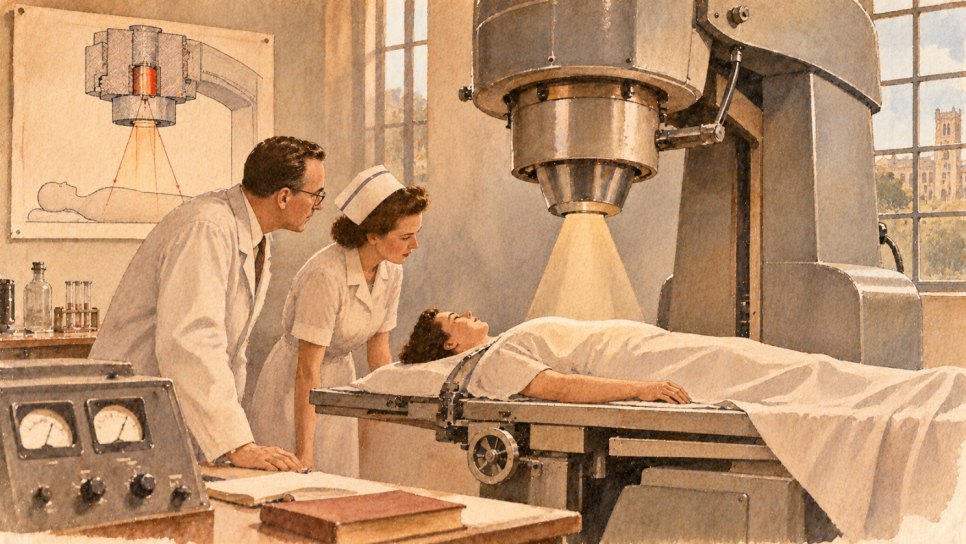
Treatment using radiation to kill cancer cells was developed.
Marie Curie and the Nobel Prize
Marie Curie received a second Nobel Prize, in Chemistry, for her work on radioactivity.
The Pap smear test
George Papanicolaou revolutionized cervical cancer diagnosis by developing the Pap test.
From mustard gas to chemotherapy
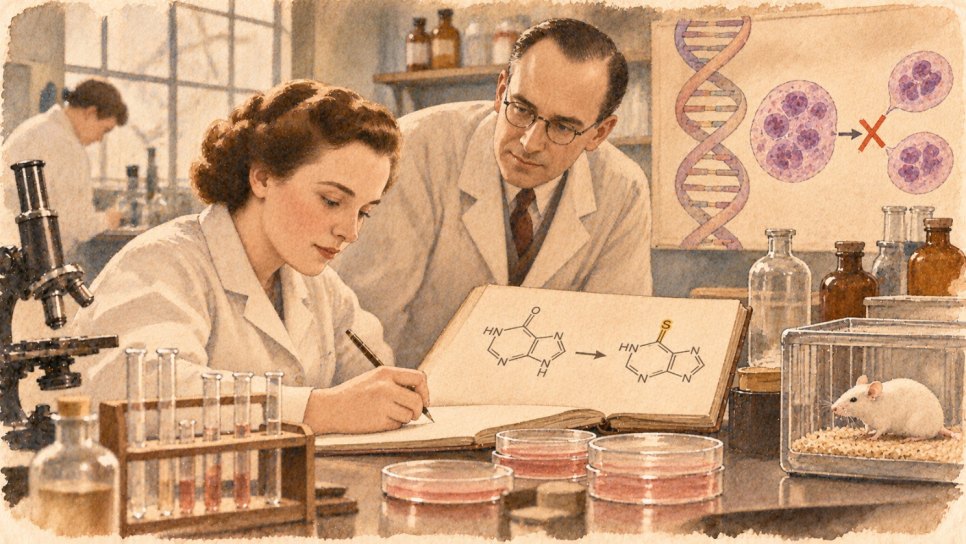
The wartime discovery that nitrogen mustard gas shrank lymph nodes ushered in the era of treating cancer with drugs (chemotherapy).
Childhood leukemia
Sidney Farber used folic acid derivatives to stop leukemia in children.
The first complete recovery (cure)
Multidrug chemotherapy was shown to almost completely eliminate deaths in metastatic testicular cancer.
The structure of DNA
Watson and Crick’s deciphering of the DNA helix laid the foundations for genetic research.
Bone marrow transplantation
Dr. E. Donnall Thomas pioneered human bone marrow transplantation and received the Nobel Prize in 1990.
The BRCA1 gene
BRCA1, a gene predisposing to breast and ovarian cancer, was discovered.
Targeted drug: trastuzumab
Approval of the first targeted “smart drug” for Her2-positive breast cancer was a triumph of biotechnology.
The hallmarks of cancer
Douglas Hanahan and Robert Weinberg’s article “The Hallmarks of Cancer” described cancer’s 6 basic characteristics, later expanded to 10, revolutionizing the understanding of its biology.
Imatinib (Gleevec)
A targeted drug in pill form that targets cancer cells entered use, radically transforming treatment of CML (chronic myeloid leukemia).
The Human Genome Project
The entire human genome was mapped. Genetic abnormalities, the fundamental cause of cancer, were understood, paving the way for targeted therapies.
Oncotype DX and adjuvant treatment
Genetic tests such as Oncotype DX began to be used to determine who would benefit from chemotherapy. The benefit of preventive chemotherapy following surgery was demonstrated in lung and pancreatic cancers.
The Cancer Genome Atlas (TCGA)
The enormous “The Cancer Genome Atlas” project was launched to catalog genetic mutations responsible for cancer.
HPV vaccine
The first HPV vaccine to prevent infections causing cervical cancer was approved.
Genetic subtypes
TCGA results began to identify genetic subtypes of stomach, brain (GBM) and other cancers.
Immunotherapy (ipilimumab)
Immune checkpoint regulators emerged. Beginning with melanoma treatment, this process ushered in a new era in cancer treatment.
CDK 4/6 inhibitors
Targeted drugs such as palbociclib, which revolutionized breast cancer treatment, were approved. Around the same time, PD-1/PD-L1 inhibitors began to become routine in many cancers.
Liquid biopsy
For the first time, a test to detect tumor DNA in blood rather than taking a tissue sample (liquid biopsy) was approved, for an EGFR mutation.
PARP inhibitors and biosimilars
The first PARP inhibitor (olaparib) for ovarian cancer was approved. The first “biosimilar” drugs also entered use in cancer treatment.
Tissue-agnostic approval
The first drug approval based on the cancer’s genetic structure (MSH-H), rather than the organ in which it occurs, was granted.
Larotrectinib
It became the first targeted drug approved completely independently of the organ where the cancer originated. Gardasil 9 HPV vaccine was also approved up to age 45.
Chemotherapy-free regimens
Chemotherapy-free targeted drug combinations (Obinutuzumab + Ibrutinib) were approved for leukemia and lymphoma. Immunotherapy combinations became standard in kidney cancer.
New biomarkers (TMB-H)
Tissue-agnostic drug approval was granted for cancers with high tumor mutational burden (TMB). New targeted drugs were approved for pancreatic and triple-negative breast cancer.
A mutation catalog
The TCGA Mutation Catalog, the greatest guide for future treatments, was completed. We are now in the era of treatment tailored to each patient: precision medicine.
Sources
Was this article helpful?
Your feedback helps us improve our content.
Reader comments
Share your comment
Your name and comment are published only after administrator approval. Your email address is never shown to visitors.
Be the first to comment.