
Primary Peritoneal Cancer: Is the Treatment the Same Even Though It Is Not Ovarian Cancer?
In this article
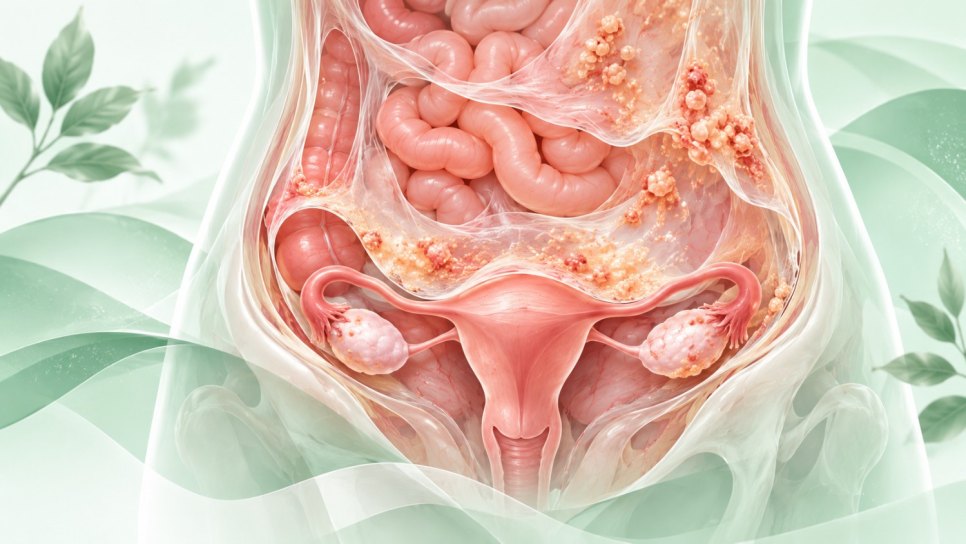
Primary peritoneal cancer (PPC) is a rare cancer that starts in the cells of the peritoneum, the thin lining of the abdominal cavity, and looks like epithelial ovarian cancer under the microscope. Although the ovaries are usually only minimally involved, treatment follows the same approach as for advanced epithelial ovarian cancer: removal of visible disease by surgery where possible, platinum-based chemotherapy and, in suitable patients, targeted maintenance therapy. Symptoms are vague (bloating, abdominal pain, feeling full quickly) and, according to the sources, almost all patients are at stage III or IV at diagnosis. This article is not for diagnosing yourself, but for understanding why the condition is handled “like ovarian cancer” and what to ask your doctor: talk with a team of gynecologic oncology specialists about your BRCA status and your treatment plan.
Who is this article for? Patients diagnosed with primary peritoneal cancer and their relatives, people being investigated for widespread abdominal fluid (ascites) or vague abdominal symptoms, people with a BRCA change whose ovaries have been removed, and health professionals who are curious about the topic. This article is not medical advice; no diagnosis should be made, no treatment decision taken and no treatment already started changed on the basis of this text. Only the doctors who follow you can assess what applies to you.
What is primary peritoneal cancer?
The National Cancer Institute (NCI) defines primary peritoneal cancer as a cancer that forms in the peritoneum and has not spread there from elsewhere in the body. That is what “primary” means: the disease starts in the peritoneum’s own cells. The same source states that the cancer forms in the same type of tissue as epithelial ovarian cancer and fallopian tube cancer and is treated the same way. Cancer Research UK (CRUK) writes that most PPCs are thought to begin in cells at the end of the fallopian tube and then spread to the surface of the peritoneum; the cells resemble high grade serous cancer, the most common type of ovarian cancer.
| Frequency | We did not find a clear frequency figure in the sources we reviewed; the cancer is described as “rare” |
| Who gets it | Mostly women; it is very rare in men. According to CRUK, most patients are over 60 at diagnosis |
| Origin | Most are thought to start in cells at the end of the fallopian tube and spread to the peritoneal surface |
| Cell type | Mostly high grade serous carcinoma |
| Stage | Staged with the same system as ovarian cancer; according to the sources, almost all patients are stage III or IV at diagnosis |
| Ovaries | Usually only minimally involved; it can also occur in people whose ovaries have been removed |
Disease that spreads to the lining of the abdomen from another organ (for example the bowel) is a different situation and is not the subject of this article.
How is it different from ovarian cancer?
It is often hard to tell them apart under the microscope, so the distinction rests mainly on how much the ovaries are involved. According to the Gynecologic Oncology Group (GOG) criteria, in PPC both ovaries are of normal size or enlarged by benign changes, the tumor outside the ovaries is larger than the tumor on the ovarian surface, the tumor in the ovary is either absent or no more than 5 × 5 mm, and the microscopic appearance of the tumor is similar or identical to serous adenocarcinoma of the ovary. The differences that stand out in the sources are these:
| Feature | Primary peritoneal cancer | Epithelial ovarian cancer |
|---|---|---|
| Ovarian involvement | Usually only minimal; the tumor is mainly outside the ovaries | Tumor is present in the ovary |
| Cell type | Mostly high grade serous | The most common type is high grade serous |
| Stage | Early stages are almost nonexistent; most patients are stage III or IV at diagnosis | Early stages are also seen |
| Symptoms | Vague; very similar to ovarian cancer | Vague; very similar to PPC |
| Treatment | Approach for advanced epithelial ovarian cancer | Surgery and platinum-based chemotherapy according to stage |
| Definitive distinction | Surgery and pathology; the diagnosis can occasionally remain uncertain even after surgery | Surgery and pathology |
Short answer: if it is not ovarian cancer, is the treatment still the same?
- Largely yes. The NCI states that PPC forms in the same type of tissue and is treated the same way; since 2000, fallopian tube and primary peritoneal cancers have usually been included in ovarian cancer clinical trials.
- There is one practical difference: in a single-center comparison, only 4.3% of PPC patients had cytoreduction at the first operation (46.1% in ovarian cancer), so chemotherapy before surgery comes up more often.
- Genetic results (BRCA) influence the choice of maintenance therapy, so what decides treatment is the features of the tumor, not the name of the disease.
What are the symptoms?
PPC may cause no symptoms early on, and when symptoms appear the disease has often advanced. The NCI and CRUK list the following:
- Abdominal swelling, fullness or a feeling of pressure
- Pain in the abdomen or pelvis
- Bloating, gas, constipation or diarrhea, that is, a change in bowel habits
- Feeling full quickly, loss of appetite, nausea or vomiting
- A sudden or frequent urge to urinate
- Fluid in the abdomen (ascites) and the swelling it causes
These symptoms can have many other causes. According to one source, vaginal bleeding is uncommon in PPC.
When should you seek care?
- If symptoms such as abdominal swelling, pain or feeling full quickly get worse or do not go away, see a doctor (NCI).
- If you carry a BRCA1 or BRCA2 change, even when your ovaries were removed to reduce risk, tell your doctor about persistent abdominal or pelvic pain and bloating; there is no effective screening method for these people (FORCE).
How is it diagnosed?
The same tests are used as for ovarian cancer (CRUK). The definitive diagnosis is usually made by pathological examination during or after surgery.
- Examination and imaging: Pelvic examination, ultrasound, CT and MRI; PET if needed. When there is fluid in the abdomen, CT is usually the first imaging step (Foundation for Women’s Cancer).
- Blood tests: CA-125 is the most common; HE4 is a newer option. CA-125 can also rise in other conditions such as endometriosis, so it does not establish the diagnosis on its own (NCI).
- Ascitic fluid: Fluid can be drained by paracentesis; however, this procedure carries a risk of seeding cancer cells into the abdominal wall (Foundation for Women’s Cancer).
- Biopsy and surgery: The biopsy is usually taken during the operation in which the tumor is removed (NCI). The diagnosis can occasionally remain uncertain even after surgery.
- Pathology and genetic testing: The cell type of the tumor is determined; BRCA1/BRCA2 changes are a factor that affects both prognosis and treatment options (NCI).
With this information the disease is staged by the same FIGO system as ovarian cancer, and the treatment plan is made by a multidisciplinary team.
What are the treatment steps?
The general approach described in the sources is the same as for advanced epithelial ovarian cancer; every patient’s plan is different and depends on how widespread the disease is, general condition and genetic results:
- Step 1, surgery: The aim is to remove as much of the visible tumor as possible (cytoreduction). The uterus, ovaries, fallopian tubes and omentum are usually removed, and sometimes part of the bowel as well (CRUK). “Optimal” cytoreduction is defined as leaving tumor smaller than 1 cm behind (Foundation for Women’s Cancer).
- Step 2, chemotherapy: A platinum drug (cisplatin or carboplatin) and a taxane; usually every 3 weeks, 6 cycles in total. Chemotherapy can be given before surgery, during surgery (HIPEC) or after it, or alone when surgery is not possible (CRUK). Intraperitoneal chemotherapy, which delivers the drug directly into the abdomen, is an option only after optimal cytoreduction.
- Step 3, targeted therapy: Bevacizumab can be used with chemotherapy; PARP inhibitors (olaparib, rucaparib, niraparib) are used after chemotherapy, alone or as maintenance therapy (NCI).
- Step 4, support and follow-up: Radiotherapy is rarely used, mainly for small areas of recurrence or to reduce symptoms. Symptom control is provided for problems such as pain and ascites (CRUK). In the first 3 years check-ups are every 2–4 months (Foundation for Women’s Cancer).
When the disease is widespread and all the tumor cannot be removed at the first operation, chemotherapy is given first, followed by interval surgery. In a randomized study of 670 patients with stage IIIC/IV ovarian, tubal or peritoneal carcinoma, interval surgery was not inferior to primary surgery for overall survival (HR 0.98 for risk of loss of life; 90% CI 0.84–1.13); the rate of leaving 1 cm or less of tumor behind was 41.6% after primary surgery and 80.6% after interval surgery. In the same study, removal of all visible disease, at whichever stage the operation was done, was the strongest independent predictor of overall survival.
Maintenance therapy for people with a BRCA change
In the SOLO-1 trial, 391 patients with newly diagnosed advanced (FIGO stage III–IV) high grade serous or endometrioid ovarian, primary peritoneal or fallopian tube cancer, with a BRCA1/2 change and a complete or partial response to platinum-based first chemotherapy, were randomized 2:1 to olaparib (260 patients) or placebo (131 patients). At a median follow-up of 41 months, the risk of disease progression or loss of life was 70% lower with olaparib. The US Food and Drug Administration (FDA) approved olaparib on December 19, 2018 as maintenance therapy for adults with advanced epithelial ovarian, fallopian tube or primary peritoneal cancer who carry a deleterious or suspected deleterious germline or somatic BRCA change and who have a complete or partial response to first platinum-based treatment. Overall survival data were not yet mature in that analysis.
Limits of the evidence. The randomized trials we could find study “ovarian, fallopian tube and peritoneal cancer” together or ovarian cancer alone; we did not find a randomized trial dedicated to primary peritoneal cancer patients alone. In the abstract of a HIPEC trial (245 patients; stage III epithelial ovarian cancer), adding HIPEC to surgery raised median recurrence-free survival from 10.7 to 14.2 months (HR 0.66; 95% CI 0.50–0.87) and median overall survival from 33.9 to 45.7 months (HR 0.67; 95% CI 0.48–0.94); the rate of grade 3–4 adverse events was 25% in the surgery-only arm and 27% in the HIPEC arm. The abstract does not state whether primary peritoneal cancer was included, so we do not treat these results as directly applicable to PPC. SOLO-1 covers only patients with a BRCA change.
Inherited risk and BRCA
The NCI states that about 20% of ovarian cancers are hereditary; fallopian tube and peritoneal cancers can also be caused by certain inherited gene changes. In women at risk, removing healthy ovaries (risk-reducing oophorectomy) greatly lowers the risk of ovarian cancer; however, the peritoneal risk is not reduced to zero. In one study, 2 of 259 women (0.8%) who had bilateral prophylactic oophorectomy later developed papillary serous peritoneal carcinoma.
A more recent analysis (Narod et al., JNCI 2024; we report it through the FORCE summary) covered 6,310 women followed for about eight years in 83 clinics in 12 countries, and 55 of them developed peritoneal cancer. The annual and 20-year risks were reported as follows:
| Gene | Annual risk | 20-year risk |
|---|---|---|
| BRCA1 | 0.14% | 2.7% |
| BRCA2 | 0.06% | 0.9% |
According to the same summary, no peritoneal cancers occurred in BRCA1 carriers who had surgery before age 35 or in BRCA2 carriers who had surgery before age 45. The age for risk-reducing surgery is usually given as 35–40 for BRCA1 and 40–45 for BRCA2. This information rests on a single secondary source; genetic counseling and your doctor are essential for your personal plan.
Survival and comparison with ovarian cancer
Disease-specific survival figures are limited and conflicting. In a retrospective study (Klin Onkol 2022) comparing 69 patients with high grade serous stage III/IV PPC and 151 with epithelial ovarian cancer, followed in a single tertiary gynecologic oncology center from 2010 to 2020, PPC patients more often presented with poor performance status, a shorter interval from symptoms to treatment and large-volume ascites.
First operation and recurrence rates
Cytoreduction at the first operation and recurrence rate (%)
High grade serous stage III/IV; 69 patients with primary peritoneal cancer and 151 with epithelial ovarian cancer; single center, 2010–2020.
The recurrence difference is p=0.041; the first-cytoreduction difference is p<0.001. Bar lengths are drawn relative to the highest value.
In the same study, median progression-free survival was shorter in PPC, while overall survival was similar:
| Measure | Primary peritoneal cancer | Epithelial ovarian cancer |
|---|---|---|
| Progression-free survival | 18 months (95% CI 15–20) | 23 months (95% CI 17–28); p=0.034 |
| Overall survival | 44 months | 48 months; p=0.696 |
The authors describe PPC as an aggressive disease with shorter progression-free survival than ovarian cancer and note that, because of large-volume carcinomatosis, the first operation is often not possible, which is why chemotherapy before surgery is a pragmatic approach. In the same study, extraperitoneal disease and interval cytoreduction were associated with shorter progression-free survival, and suboptimal cytoreduction and adjuvant chemotherapy starting more than 6 weeks after surgery with shorter overall survival. In an older, small Korean series (22 patients, 1993–2007), median overall survival was reported as 23.1 months and the response rate to first platinum treatment as 79%; because the series differ so much in period and patient selection, we do not give a single “average”.
Six common misunderstandings:
- “If the ovaries have been removed, peritoneal cancer cannot occur.” No. It can also occur in people whose ovaries have been removed; in BRCA carriers the risk falls but does not reach zero.
- “Primary peritoneal cancer is cancer that has spread from another organ.” No. “Primary” means the cancer started in the peritoneum’s own cells.
- “If the ovaries are not involved, ovarian cancer treatment is not used.” No. Treatment follows the approach for advanced epithelial ovarian cancer.
- “It has an early stage.” According to the sources, almost all patients are stage III or IV at diagnosis.
- “If CA-125 is high, the diagnosis is certain.” No. CA-125 also rises in other conditions; the diagnosis is made by pathology.
- “Survival is the same as ovarian cancer (or very different).” The evidence is single-center and retrospective: overall survival was similar, and progression-free survival was shorter in PPC.
Questions you can ask your oncologist
If you have been diagnosed with primary peritoneal cancer or are being investigated for it, you can ask:
- Do I meet the definition criteria (state of the ovaries, cell type)? What is my pathology result?
- What stage is my disease and where has it spread?
- Will we start with surgery, or with chemotherapy before surgery? What was this choice based on?
- Have my BRCA1/BRCA2 and other genetic tests been done? How do the results change the choice of maintenance therapy?
- Is bevacizumab or a PARP inhibitor an option for me?
- Is HIPEC or intraperitoneal chemotherapy suitable for me, or is it still at the research stage?
- Is genetic counseling needed for my family members? Is there a clinical trial that suits me?
The situation in Türkiye. For this article we did not check the frequency of PPC in Türkiye, access to gynecologic oncology centers, reimbursement for BRCA testing and PARP inhibitors, or access to clinical trials; we made no assumptions on these points. For the contribution of molecular tests to treatment choice, see our article on next-generation sequencing (NGS) (in Turkish), and for one way to reach new treatments, our article on taking part in clinical trials (in Turkish).
DROZDOGAN Academy Commentary
Primary peritoneal cancer has a different name but behaves and is treated largely like ovarian cancer. The most important practical point for patients is that what determines treatment is the features of the tumor (cell type, stage, BRCA status, whether it can be removed by surgery), not the name.
⚡ Why it matters
Because PPC is rare and its symptoms are vague, most patients are diagnosed at an advanced stage. That it can appear even in someone whose ovaries were removed can lead to a false sense of security, such as “it does not apply to me because I do not have ovarian cancer.” This assessment is ours.
✅ What is well supported
That PPC is classified together with epithelial ovarian and fallopian tube cancers, on the basis of shared origin and similar treatment, is consistent across several sources. Platinum-based chemotherapy after surgery and olaparib maintenance for people with a BRCA change (SOLO-1; primary peritoneal cancer is named explicitly in the FDA indication) are a well-defined approach.
⚠️ What is weakly supported
We found no randomized trial specific to PPC; the survival comparison is single-center and retrospective. We found no frequency figure. The risk of peritoneal cancer after risk-reducing surgery is reported from a single secondary source. The abstract of the HIPEC trial does not state whether primary peritoneal cancer was included.
🩺 Practical meaning for patient and doctor
Learning the genetic results of the tumor early after diagnosis influences the choice of maintenance therapy. In BRCA carriers, abdominal symptoms that persist after the ovaries have been removed should be taken seriously. The treatment plan, including the choice between first surgery and chemotherapy before surgery, should be made by a team led by a gynecologic oncology specialist.
❓ Open questions
Is there really a PPC-specific difference in treatment response and survival, or does it come from patient features? What is the place of HIPEC in PPC? How should maintenance therapy be chosen in patients without a BRCA change? The answers to these questions are not in the sources of this article.
Conclusion: Primary peritoneal cancer is a rare cancer that starts in the peritoneum’s own cells and is stage III–IV at diagnosis in most patients; although the ovaries are usually only minimally involved, treatment follows the approach for advanced epithelial ovarian cancer. Surgery, platinum-based chemotherapy and, in suitable patients, targeted maintenance therapy are the main steps. If abdominal swelling, pain or feeling full quickly persists, see a doctor, especially if you are a BRCA carrier, even if your ovaries have been removed.
Frequently asked questions
- What is primary peritoneal cancer?
- A rare cancer that starts in the cells of the peritoneum, the lining of the abdominal cavity, and has not spread from elsewhere. Under the microscope it mostly resembles high grade serous ovarian cancer.
- If it is not ovarian cancer, is the treatment still the same?
- Largely yes. The sources state that PPC is treated in the same way as epithelial ovarian cancer and fallopian tube cancer, with surgery, platinum-based chemotherapy and, in suitable patients, targeted therapy.
- Can it occur in someone whose ovaries have been removed?
- Yes. Peritoneal cancer can develop even when the ovaries have been removed. In BRCA carriers, the 20-year risk after risk-reducing surgery has been reported as 2.7% for BRCA1 and 0.9% for BRCA2 (a single secondary source).
- What are the symptoms?
- Abdominal swelling or fullness, abdominal and pelvic pain, bloating, a change in bowel habits, feeling full quickly, nausea and an increased urge to urinate. Symptoms are vague and can also be due to other diseases.
- How is it diagnosed?
- Imaging (ultrasound, CT, MRI) and blood tests such as CA-125 give guidance; the definitive diagnosis is made by pathology, most often on a sample taken during surgery. The diagnosis can occasionally remain uncertain even after surgery.
- Is surgery or chemotherapy done first?
- If the tumor is thought to be completely removable, surgery comes first; if it is too widespread, chemotherapy followed by interval surgery may be used. In a randomized study, interval surgery was not inferior to primary surgery for survival. In a single-center PPC series, only 4.3% of patients could have the first operation.
- Is survival the same as for ovarian cancer?
- In a single-center comparison, median overall survival was similar (44 and 48 months), while progression-free survival was shorter in PPC (18 and 23 months). These figures are not a personal prediction.
Glossary
- Primary peritoneal cancer (PPC)
- Cancer that starts in the cells of the peritoneum and has not spread from elsewhere.
- Peritoneum
- The thin lining of the abdominal cavity that also covers the organs.
- High grade serous carcinoma
- The most common, fast-growing cell type in ovarian, fallopian tube and peritoneal cancers.
- Cytoreduction (debulking)
- An operation that removes as much of the visible tumor as possible.
- Interval cytoreduction
- Cytoreduction surgery done after a few cycles of chemotherapy.
- Neoadjuvant chemotherapy
- Chemotherapy given before surgery.
- HIPEC
- Delivery of heated chemotherapy into the abdominal cavity during surgery.
- Intraperitoneal chemotherapy
- Delivery of the drug directly into the abdominal cavity through a thin tube.
- PARP inhibitor
- A group of drugs that block DNA repair in cancer cells (olaparib, rucaparib, niraparib).
- BRCA1/BRCA2
- Genes involved in DNA repair, whose changes raise the risk of breast and ovarian cancer.
Transparency note. Verified: definition, origin, symptoms, diagnostic tests and basic treatment approach (NCI patient version and health professional version; Cancer Research UK; Foundation for Women’s Cancer); GOG diagnostic criteria (from the table of a case report, secondary citation); comparison of PPC and ovarian cancer (Dahiya et al., Klin Onkol 2022, abstract only); interval surgery trial (Vergote et al., NEJM 2010, abstract only); HIPEC trial (NEJM 2018, abstract only); SOLO-1 (NEJM 2018, abstract) and the FDA approval page; risk of peritoneal cancer after risk-reducing surgery (Narod et al., JNCI 2024, reported through the FORCE summary); the older Korean series (Cancer Res Treat 2007, abstract). Secondary citation only: the full texts of the NCCN and ESMO-ESGO guidelines could not be accessed; we therefore did not report guideline recommendations under their own names. Not written because unverified: a frequency (incidence) figure; detailed drug regimens and doses; PRIMA and other niraparib data; treatment details for recurrent disease; practice in Türkiye; overlap with existing articles on drozdogan.com (not checked). Small inconsistencies: CRUK states that PPC is always stage III or IV, the Foundation for Women’s Cancer states that almost all patients are stage III or higher, and the NCI’s staging section names primary peritoneal cancer in the stage II definition; we therefore used the phrase “almost all patients.” Because the country is not stated in the abstract of the comparison study, we wrote “single center.” The abstract of the HIPEC trial does not state whether PPC was included. Assessments and comments belong to this article. This article is not medical advice; no diagnosis should be made and no treatment decision taken on the basis of this text.
References
- National Cancer Institute. Ovarian, Fallopian Tube, and Primary Peritoneal Cancer Treatment (PDQ), patient version. cancer.gov
- National Cancer Institute. Ovarian Epithelial, Fallopian Tube, and Primary Peritoneal Cancer Treatment (PDQ), health professional version. cancer.gov
- Cancer Research UK. Primary peritoneal cancer. cancerresearchuk.org
- Foundation for Women’s Cancer. Primary peritoneal cancer (PPC). foundationforwomenscancer.org
- Diagnostic criteria for primary peritoneal cancer (GOG), Table 2. Surg Case Rep. 2020. surgicalcasereports.springeropen.com
- Dahiya A, et al. Primary peritoneal carcinoma and ovarian carcinoma – a ten-year comparative analysis. Klin Onkol. 2022;35(1):63–71. linkos.cz
- Vergote I, et al. Neoadjuvant chemotherapy or primary surgery in stage IIIC or IV ovarian cancer. N Engl J Med. 2010. iris.uniroma1.it
- Hyperthermic intraperitoneal chemotherapy in ovarian cancer. N Engl J Med. 2018. pure.prinsesmaximacentrum.nl
- Maintenance olaparib in patients with newly diagnosed advanced ovarian cancer (SOLO1). N Engl J Med. 2018. pubmed.ncbi.nlm.nih.gov
- U.S. Food and Drug Administration. FDA approves olaparib for first-line maintenance treatment of BRCA-mutated advanced ovarian cancer. 2018. fda.gov
- FORCE (Facing Our Risk of Cancer Empowered). Peritoneal cancer after RRSO; Narod SA, et al. J Natl Cancer Inst. 2024;116(11):1753–1760. facingourrisk.org
- Clinical characteristics of primary peritoneal carcinoma. Cancer Res Treat. 2007;39(2):65–68. e-crt.org
Was this article helpful?
Your feedback helps us improve our content.



