
Seven Men in Black, a Wine Cordial, and Twenty Minutes of Screaming

In this article
Frances Burney's Letter about 30 September 1811 and a First-Person Account of Surgery without Anesthesia
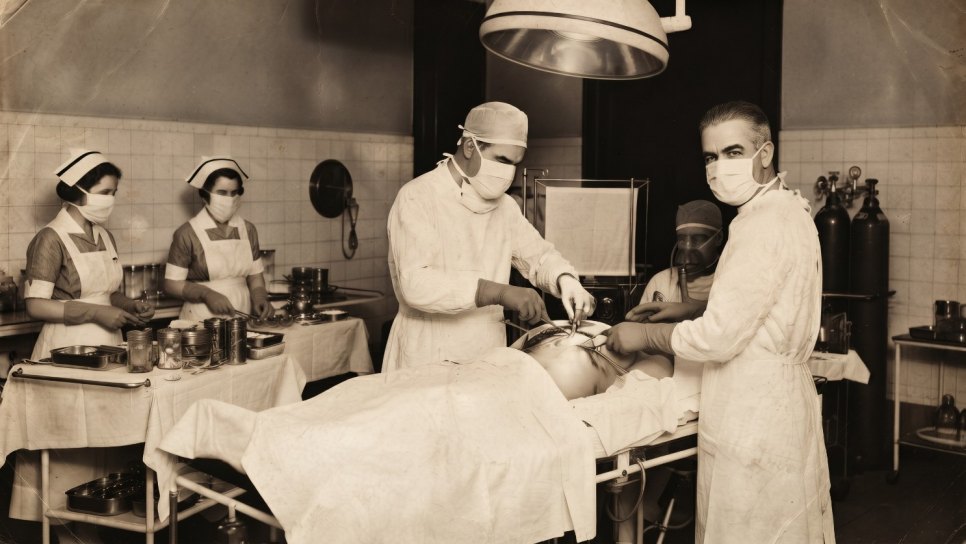
On Monday morning, 30 September 1811, in an apartment on Rue de Miromesnil in Paris, a fifty-nine-year-old woman waited in her own bedroom for seven men dressed in black to arrive. There was no anesthesia — Ether Day in Boston was 35 years away, chloroform in Edinburgh 36 years away. There was no asepsis — Lister's carbolic acid was 56 years away. There were no antibiotics — penicillin's discovery was 117 years away. The only thing she was given for pain relief was a small glass of wine cordial. That morning, Frances Burney — one of Europe's most famous women novelists, the writer Virginia Woolf would later call the "mother of English fiction" — underwent surgery to remove the tumor in her right breast while fully conscious. The operation lasted about twenty minutes. Burney screamed from the beginning of the operation to the end and never lost consciousness. Six months later, on 22 March 1812, in a letter of approximately twelve pages to her sister Esther — a letter she would complete by repeatedly revising it over the following four months — she wrote down everything she had experienced. Today, this letter is the most harrowing first-person document in medical history: a testimony to surgery without anesthesia, a cancer diagnosis, the process of receiving bad news, the female patient–male physician relationship, and the thin line between dying and living, recorded by a patient — by a writer — the only detailed account recorded in this way. Today's article tells the story of that letter and the woman who wrote it.
Novelist, Servant at the Queen's Court, an Englishwoman in Napoleonic France
Frances Burney was born on 13 June 1752 in King's Lynn, in Norfolk, England. Her father, Charles Burney, was one of the leading musicologists and physicians of the period; a contemporary of Bach, Handel, Haydn, and Mozart, he had written the first major general narrative of European music history. Her mother, Esther Sleepe, died when Frances was only ten. Frances grew up amid the conversations of central figures of the 18th-century English Enlightenment, such as Samuel Johnson, Joshua Reynolds, and David Garrick, who visited their home as family friends. She began writing at a young age, starting her diary at sixteen — a diary she would keep for seventy years until her death, and which would become one of the most detailed historical sources on late 18th- and early 19th-century English life for modern readers.
Her first novel, Evelina, was published anonymously in 1778, when she was 26; it was a great success, and was followed by Cecilia (1782) and Camilla (1796). Jane Austen took the title of her own Pride and Prejudicefrom Burney's Cecilia; Austen's letters refer to Burney as "my favorite author." For five years, between 1786-1791, she served at court as Queen Charlotte's (wife of George III) Keeper of the Robes — there she closely observed the royal illness that lasted for years and George III's mental health crisis.
In 1793, she married a French exile and former officer in Napoleon's army, Alexandre-Jean-Baptiste Piochard d'Arblay . She would subsequently also be known as "Madame d'Arblay." In 1801, they returned to Napoleonic France; Frances made a life in Paris with their son Alexander. In the autumn of 1810 — when she was 58 — she began to feel pain in her right breast. This was the beginning of the story.
From Autumn 1810 to September 1811: Diagnosis, Denial, Acceptance
In her letter, Burney describes the first signs of the illness in detail: "In August 1810, a small pain in my breast began to trouble me." At first the pain was mild and intermittent; it intensified over the following weeks, but she describes it as "not sharp, but heavy". Her husband Alexandre had persistently urged her to call a physician, but Burney initially resisted. "I thought his fears groundless," she writes in the letter — "I now recount this false confidence so that it may serve as a warning, my dear Esther, to my sisters and nieces, should similar sensations arouse a similar alarm." These sentences were written in 1812, yet they carry an insight that could still be used in 21st-century breast cancer awareness campaigns.
Throughout the autumn, at her husband's insistence, Burney consulted physicians. First the family friend Dr. Jouart, then her husband's old friend Antoine Dubois — one of the most famous surgeons in Paris at the time, the physician overseeing the pregnancy of Emperor Napoleon's second wife, Empress Marie-Louise . Dubois examined Burney and proposed a treatment protocol, but the symptoms continued to progress. Dubois's court duties (Marie-Louise gave birth to Napoleon's son Napoleon II on 20 March 1811) prevented him from attending to Burney for an extended period. Her husband therefore called in another specialist: Baron Dominique-Jean Larrey.
BARON DOMINIQUE-JEAN LARREY (1766-1842) — NAPOLEON'S CHIEF SURGEON
The surgeon who directed Burney's operation was no ordinary physician. Dominique-Jean Larrey was chief surgeon to Napoleon's Imperial Guard; on every front of the Napoleonic wars, from the Egyptian campaign (1798-1801) to the Russian campaign (1812) and Waterloo (1815), he had served; to evacuate wounded soldiers quickly, he had invented the ambulance volante ("flying ambulance") system — the ancestor of modern military and civilian ambulance systems. He also systematized the concept of triage: assessing the wounded according to medical urgency rather than social status.
Napoleon said of him: "The most virtuous man I have ever known." Today, Larrey's name is among the 660 names engraved on the Arc de Triomphe in Paris — alongside army generals, as a physician rather than a combatant on the battlefield. Larrey was 45 when he examined Burney, and his experience was immense, but when caring for her he was not a warrior; he was a hesitant man. In her letter, Burney calls him "the most respectable, uniquely excellent person I have encountered".
Larrey followed Burney's condition from March 1811 onward. For months, he tried to postpone the decision to operate; he recommended medical treatments, diet, and bed rest. Unable to decide on surgery by himself, he called in France's foremost anatomist, Dr. Ribe, and another specialist, Dr. Moreau, for second and third opinions. The three physicians assessed Burney together and reached a consensus in September 1811: surgery was necessary. When Larrey brought the decision to Burney — according to her account — he told her "with tears in his eyes".
"Seven Men in Black" and Twenty Minutes
Burney's letter recounts, in extraordinary detail, the hours before the day of the operation, the physicians' arrival, the preparation of the room, and everything that happened afterward. On the morning of the operation, Larrey knocked at the door; Burney understood immediately.
📅 30 SEPTEMBER 1811 — THE TIMELINE DESCRIBED IN BURNEY'S LETTER
22 March 1812 – Summer 1812: A Letter Begun Six Months Later
After the operation, Burney waited six months to recover. The date on which she began writing the letter was 22 March 1812. She did not write it in a single sitting; over the next four months, she repeatedly continued, stopped, reviewed, erased, and rewrote it. When she finished, she had a manuscript of approximately 12 pages — about 7.000 (seven thousand) words in a modern edition. At the beginning of the letter, she added the note: "Account from Paris of a terrible operation — 1812" ("An Account of a Terrible Operation from Paris — 1812").
The letter was not published during her lifetime. Burney intended it as a private family document, available to her sister Esther and within the family. But when Burney died in 1840 at the age of 87, her diary and letters remained; the edition published between 1842-1846, Diary and Letters of Madame d'Arblay (7 volumes), included selected passages, but the full text of the mastectomy letter was not published until 1975 in the scholarly critical edition prepared by Joyce Hemlow.
Today, the original letter is preserved in the Berg Collection of the New York Public Library, among Burney's other papers. In 2018, the British Library published selected passages from the letter in its publicly accessible online collection. Anyone who reads it can hear what happened on Rue de Miromesnil in Paris 213 years ago directly in the voice of the woman who lived through that day.
When I felt the instrument scraping into me again — against the direction of the vein, if I may put it that way — the flesh resisted with such force that it tired the surgeon's hand and pushed it back; he had to change from right to left — then, indeed, I thought I was dying. I did not try to renew my screams — I could not; I was so weak.
Oh, my dear Esther! — if only I could tell you what extraordinary things I have lived through! — but it is impossible to find all the words for this memory. Frances Burney, Letter to Her Sister Esther Burney, 22 March – June 1812 (adapted translation, Berg Collection, NYPL)
The Birth Certificate of Patient Testimony
Burney's letter is unique in medical history in several respects:
First, it is the first detailed account of surgery without anesthesia documented by a patient . Before modern surgery began with William Morton's ether anesthesia in Boston in 1846, all major operations in European and American hospitals were performed under the conditions Burney experienced. Surgeons' records (speed, technique, outcome) were plentiful; patients' records were almost nonexistent. Burney's letter is the only substantial answer to the modern patient's question, "What is it like to experience an operation?". In medical history, this is the birth certificate of the patient's voice.
Second, it offers an early portrait of the asymmetry in the patient–physician relationship. In her letter, Burney describes in detail how the physicians intervened in her decision-making, how they downplayed her fears, but also how they treated her with affection and patience. Larrey conveying the decision to operate "with tears in his eyes," Dubois's statement, "You must expect to suffer; I do not wish to deceive you", and Ribe's strange attempts at encouragement, such as "Do not be afraid to scream; your husband told me about the woman screaming in childbirth, and I am glad" — all let us see early examples of modern patient communication pedagogy .
Third, it reveals the limits of a female patient's bodily agency (that is, her right to make decisions about her own body). Burney is 59, an adult woman, a writer, and famous worldwide — yet she does not agree to surgery without the insistence of her husband, physicians, and sister; the decision-making process takes months; on the day of surgery she is given approximately two hours' notice. In the absence of the 21st-century concept of informed consent, a female patient's decisions about her body were the product of collective negotiation between family and physicians.
Fourth, when read clinically, the letter sheds light on the technical details of breast cancer surgery at the time. As modern historian Zoe Copeman has shown, Dubois's "line – cross – circle" sign was a silent signaling system used in Parisian surgery of the period for extirpation (wide excision) — to allow surgeons to communicate without frightening the patient. Larrey and Dubois were contemporary practitioners, 54 years later, of Le Dran's 1757 surgical algorithm, which we discussed yesterday: Le Dran's principle of a "stepwise approach"was being applied in real life to a female patient by Paris's most famous surgeons in 1811.
🩺 A CLINICAL READING: WAS THIS REALLY CANCER?
A disputed question among modern medical historians: was Burney's tumor truly malignant? The symptoms Burney describes in her letter — a hardening, slowly growing breast mass, painful but not sharply so — are most likely consistent, in a modern reading, with invasive ductal carcinoma (IDC). However, Burney living for another 29 years after the operation and dying at 87 without recurrence gives rise to two possible explanations:
(1) The tumor was indeed malignant but localized (that is, confined to the breast, without lymph node involvement); surgery was performed with a wide margin, and a fully curative resection was achieved. This is an 1811 example of the 21st-century scenario of "localized breast cancer detected at an early stage." (2) The tumor was not malignant — it was a large fibroadenoma or another benign mass; surgery was unnecessary but did not kill the patient. Both possibilities are discussed in modern paleopathological literature; although there is no consensus, most commentators prefer option (1), because surgeons of the period were relatively experienced in diagnosis and their error rate was low. The conclusion: Burney may have lived for another 29 years because she probably had breast cancer, was diagnosed at a localized stage, and achieved a complete cure through mastectomy without anesthesia.
From 1811 to 1840: Continuing to Write
Burney recovered quickly after the operation. Bed rest throughout 1812 was followed by a gradual return to her former life at home; in the autumn of the same year, the Napoleonic wars forced her to return from France to England with her husband and son. In 1814, she published her fifth and final novel, The Wanderer; critics received it coolly, but sales were good. Her husband Alexandre died in 1818. In 1832 — when she was 80 — she published a three-volume biography of her father, Memoirs of Doctor Burney. Her only son, Alexander, died in 1837 at the age of 43.
Frances Burney died in Bath on 6 January 1840 at the age of 87. The cause of death was recorded as "old age" — no breast cancer recurrence, no other cancer. Her grave is in Walcot Cemetery in Bath; she lies with her husband Alexandre and son Alexander.
The period from the 1811 operation to her death, 28 years and 3 months, is extraordinary for breast cancer surgery of the time. For comparison: in the early 19th century, the great majority of women undergoing breast cancer surgery died within 5 years of recurrence or postoperative complications. Burney lived far beyond that statistic — and continued writing throughout those 29 years.
The First Voice of Patient Advocacy in the 19th Century
After its publication in 1975, Burney's letter became a turning point for modern feminist medical historians. Audre Lorde's The Cancer Journals (1980), Rose Kushner's breast cancer activism in the 1970s, Susan Sontag's Illness as Metaphor(1978), Christopher Hitchens's Mortality(2012), Paul Kalanithi's When Breath Becomes Air(2016) — all are continuations of the tradition Frances Burney opened in 1812: the patient speaks in their own words. This tradition is one of the philosophical foundations of modern oncology ethics (informed consent, shared decision-making, and patient-centered care).
There are signs of this line of development in Turkey, too. In Turkish literature, Hüsamettin Bozok's cancer narratives (1980s), Tezer Özlü's illness diaries, the cancer-related passages in Oğuz Atay's Tutunamayanlar, and Cemil Meriç's diaries from his final years offer Turkish-speaking readers examples of their own tradition of patient testimony. Beyond its words, the spirit of Burney's letter is universal.
🔍 A BRIEF FACT-CHECK NOTE
- Frances Burney's birth and death: 13 June 1752, King's Lynn, Norfolk — 6 January 1840, Bath, at the age of 87
- Husband: Alexandre-Jean-Baptiste Piochard d'Arblay (1754-1818), French officer; married in 1793
- Published novels: Evelina (1778), Cecilia (1782), Camilla (1796), The Wanderer (1814)
- Court position: 1786-1791, Queen Charlotte's Keeper of the Robes
- First breast symptoms: August 1810
- Diagnostic period: From September–October 1810 to September 1811, approximately one year
- Date of surgery: Monday, 30 September 1811, Paris, her own apartment on Rue de Miromesnil
- Surgeon: Baron Dominique-Jean Larrey (Napoleon's chief surgeon, 1766-1842)
- Consulting physicians: Antoine Dubois (Empress Marie-Louise's physician), Dr. Ribe (anatomist), Dr. Moreau
- Total number of physicians in the room: 7 ("seven men in black")
- Anesthesia: None — only a glass of wine cordial
- Duration of the operation: Approximately 20 minutes
- Writing of the letter: 22 March – June 1812, completed over four months
- Length of the letter: Approximately 12 pages, ~7.000 (seven thousand) words
- Location of the letter: New York Public Library, Henry W. and Albert A. Berg Collection
- Complete scholarly edition: Joyce Hemlow (ed.), The Journals and Letters of Fanny Burney volume 6, Oxford 1975
- Survival after surgery: 28 years and 3 months (without recurrence)
Napoleon Bonaparte's Gastric Cancer and a Hereditary Suspicion in the Bonaparte Family (1821 St. Helena)
From the Napoleonic Paris we saw in Frances Burney's letter, we now move to that same emperor's deathbed. The autopsy report of Napoleon, who died at 51 on the island of St. Helena on 5 May 1821 — a document from the same era as breast cancer surgery, kept in exceptional detail for the medical practice of the time — describes a "scirrhous tumor" in the pyloric region. The deaths of his father Carlo Bonaparte, his sister Pauline, and his brother Lucien from similar illnesses gave rise to the hypothesis of hereditary gastric cancer (a CDH1 mutation) in modern molecular paleopathology. Tomorrow we examine an emperor's autopsy and a family's biological fate.
Author's note: The excerpts from Burney's letter in this article were adapted into Turkish from the published English edition of the original manuscript held in the New York Public Library's Berg Collection (Joyce Hemlow, ed., The Journals and Letters of Fanny Burney, volume 6, Oxford University Press 1975). Burney did not use the term "mastectomy"; she used "terrible operation" ("a dreadful operation") and "breast operation" ("an operation on the breast"). The term "mastectomy" is used in this article for modern readers, but historically it is an anachronistic choice. The histopathological nature of Burney's tumor is unknown because there is no autopsy or biopsy document; a modern reading points toward the conjecture of "probable localized invasive ductal carcinoma," but this is not certain.
Sources and Further Reading
- Hemlow J (ed). The Journals and Letters of Fanny Burney (Madame d'Arblay), Volume VI: France 1803-1812. Oxford: Clarendon Press, 1975. (The first complete scholarly edition of the letter; letter No. 595, pp. 596-616.)
- Burney F. Account from Paris of a terrible operation - 1812. Letter to Esther Burney, 22 March - June 1812. Berg Collection, New York Public Library, New York.
- Brock CH. Frances Burney and the Doctors. Cambridge: Cambridge University Press, 2019. (The most comprehensive modern monograph on Burney's medical life; Chapter 5, titled "A Mastectomy: 1811.")
- Copeman Z. Women of the Enlightenment taking charge of their breast cancer awareness — the case of Frances Burney. The Warburg Institute Blog, October 2024.
- Epstein J. Writing the unspeakable: Fanny Burney's mastectomy and the fictive body. Representations 1986;16:131-166. (A classic analysis of the letter from the perspective of feminist literary and medical studies.)
- Doyle S. "You must expect to suffer": Mme d'Arblay and surgery before the advent of anesthesia. British Columbia Medical Journal 2013;55(5):247-249.
- Larrey DJ. Memoirs of military surgery, and campaigns of the French armies. Translated by Richard Willmott Hall. Baltimore: Joseph Cushing, 1814. (Larrey's own surgical memoirs of the Egyptian, Russian, and other campaigns.)
- Skinner P. Frances Burney's mastectomy: a contemporary patient's account. Journal of the Royal Society of Medicine 1992;85(8):507-509.
- Olsen K. Daily Life in 18th-Century England. Westport: Greenwood Press, 1999. (The sociocultural context of English medical practice in the late 18th and early 19th centuries.)
- de Moulin D. A Short History of Breast Cancer. Boston: Martinus Nijhoff, 1983. (The context of the breast cancer surgical tradition in Burney's era, from Le Dran to Halsted.)
- Woolf V. The Common Reader: Second Series. London: Hogarth Press, 1932. (The essay "Madame d'Arblay"; Virginia Woolf's assessment of Burney as the "mother of English fiction.")
This article is day 71 of The History of Cancer in 365 Days Series. The end of surgery without anesthesia will be covered on days 82 (Crawford Long, 1842) and 83 (William Morton, 16 October 1846, "Ether Day"); the modern tradition of patient testimony will return in the context of day 116 (Tolstoy, The Death of Ivan Ilyich, 1886), day 169 (Rose Kushner), day 234 (Susan Sontag), and day 235 (a thematic dossier on modern cancer literature). Frances Burney's letter about 1811 is the founding link of this long chain in the early 19th century. The article was prepared from a historical perspective for a general audience; it contains no medical treatment guidance.
Was this article helpful?
Your feedback helps us improve our content.



Reader comments
Share your comment
Your name and comment are published only after administrator approval. Your email address is never shown to visitors.
Be the first to comment.