
The 2018 Nobel Prize in Medicine Goes to James Allison and Tasuku Honjo for Cancer Immunotherapy Research

In this article
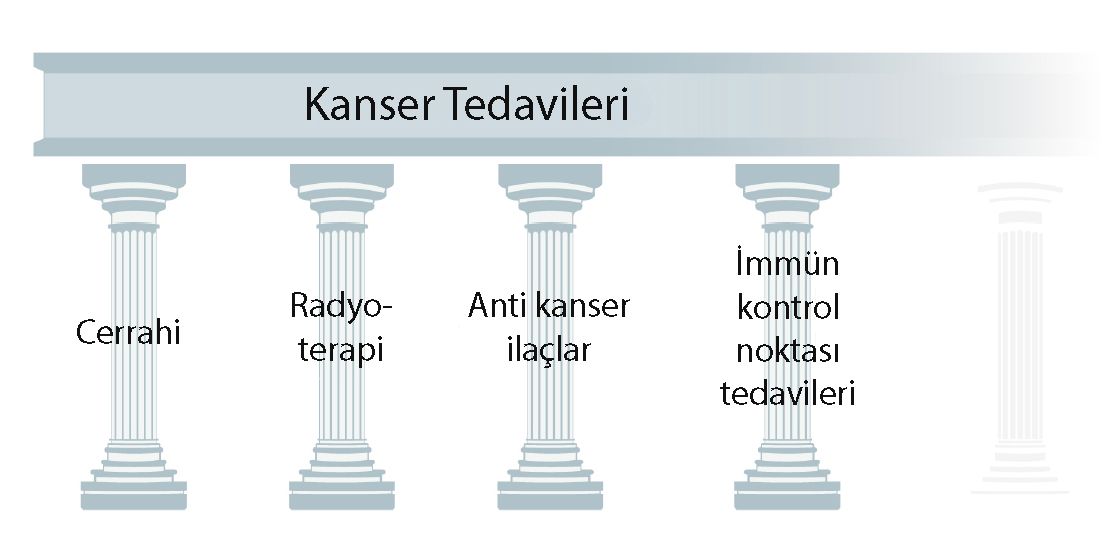
Cancer treatments used to rest on three pillars; now they rest on four and are much more effective. Since the 1950s, for approximately 70 years, cancer treatments had relied only on surgery, radiotherapy and anticancer drugs (chemotherapy and targeted molecules); they have now been joined by immune checkpoint inhibitors , a new generation of immunotherapies .
Considered the world's most prestigious scientific award, the Nobel Prize in Medicine or Physiology was awarded on 1 October 2018. Japanese scientist Tasuku Honjo and American scientist James P. Allison discovered ways for the immune systemto attack cancer cells effectively, through immune checkpoint inhibitors, earning them the 2018 Nobel Prize in Medicine or Physiology. This discovery led to effective treatments for many cancers, particularly the aggressive skin cancer malignant melanoma and lung cancer, using immunotherapy drugs.
The immune system can normally find and destroy damaged and foreign cells. However, one of cancer's 10 known hallmarksis cancer cells' development of ways to protect themselves from immune attacks. Normal cells carry molecules on their surfaces to protect against immune attacks. The immune system's fighter T cells recognize these molecules and do not attack normal cells. By carrying the same molecules, cancer cells appear to T cells as a false friend and thus evade the immune system. In the 1990s, Allison discovered the first of these molecules (CTLA-4). Allison also designed inhibitors targeting this protein and demonstrated anticancer effects in mouse models. Independently of Dr. Allison, Japanese scientist Tasuku Honjo, in 1992, discovered the second checkpoint molecule (PD-1). Of these checkpoints, CTLA4 is likened to a car's handbrake and PD-1 to its foot brake (shown in yellow in the article image); the monoclonal antibody drugs developed against them are immune checkpoint inhibitors (shown in green in the article image).
The work of the two scientists led to the birth of cancer immunotherapy , an entirely new concept in cancer treatment. These treatments produced significant increases in patients' survival.

- Related Topic: All Types of Cancer Immunotherapy (Detailed)
Two lives dedicated to science
Dr. Allison was born in 1948 in Texas, United States, and completed his doctorate in immunology. He currently works as director of immunotherapy at MD Anderson Cancer Center. Dr. Allison describes himself simply as a scientist. He says he was not initially looking for a cancer treatment but trying to understand how T cells work. He also says that, after witnessing the difficulties his mother and brother faced during cancer treatment, he began thinking that his own work might become a new cancer treatment.
Dr. Allison, "I want all cancer patients to know this. We are making progress in cancer treatment."
Dr. Allison is also interested in music. In a band of immunologists and oncologists called "The Checkpoints" he plays the harmonica.

Sharing the 2018 Nobel Prize in Medicine, Dr. Tasuku Honjo was born in 1942 in Kyoto, Japan, and completed his doctorate in medical chemistry. Since 1984, he has been a professor of molecular immunology at Kyoto University.
Dr. Honjo is originally a medical school graduate, a physician. Losing a much-loved classmate to stomach cancer during medical training led him toward cancer research. His discovery of the second checkpoint enabled checkpoint inhibitors to be developed, providing successful treatments for patients with lung, kidney, lymphatic and skin cancers. Despite side effects and not working in every patient, checkpoint inhibitors have revolutionized cancer treatment. D
r. Honjo's research led to a drug used to treat former United States President Jimmy Carter. In 2015, Jimmy Carter had been diagnosed with skin cancer, malignant melanoma, with brain metastasis . After 1 year of this medicine's use, the tumor was reported to have responded completely to treatment.
After news of the prize, Honjo expressed his views as follows:
"I want to continue research. Immunotherapy will continue to treat more cancer patients successfully."
Dr. Honjo also describes an interesting memory:
"While on the golf course, a player approached me and said: I am a lung cancer patient being treated with the drug developed thanks to your discovery. Thanks to you, I can play golf again. Thank you."
Dr. Honjo says hearing these words was more gratifying than any award.
Dr. Honjo and Dr. Allison will share the 775 million pound prize awarded by the Nobel committee. For the first time, a cancer treatment received a Nobel Prize. Science continues bringing benefits to human life. Thousands of scientists worldwide are striving to develop effective cancer treatments.
*
Below, James P. Allisonappears in concert performances by a band consisting entirely of doctors and scientists working on cancer immunotherapy, The Checkpoints (the checkpoint), whose performances are included here.
Related Topics
Why Was the 2017 Nobel Prize in Medicine Again Awarded for Circadian Rhythm?
The 2016 Nobel Prize in Medicine Was Awarded to Yoshinori Ohsumi for His Work on Autophagy
The Work That Earned Aziz Sancar the Nobel Prize: Mechanistic Repair of DNA
Sources
nobelprize.org/prizes/medicine/2018/press-release/
Was this article helpful?
Your feedback helps us improve our content.




Reader comments
Share your comment
Your name and comment are published only after administrator approval. Your email address is never shown to visitors.
Be the first to comment.