
The Owl Hidden in the Dark: Medieval Surgeon John of Arderne and the Birth of Palliative Care

In this article
Day 39 (Cancer History in 365 Days Series)
Imagine a surgeon who, in the brutal medical environment of the 14th century, had the courage to set aside his scalpel and say, "If we cannot defeat the disease, let us relieve the suffering."
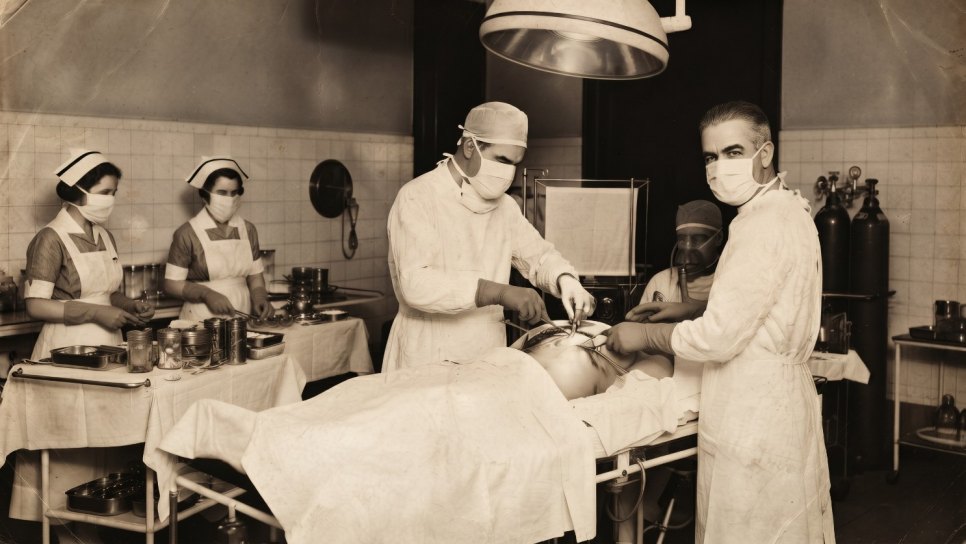
In medieval Europe, surgery was a painful and often fatal craft, usually practiced on battlefields without anesthesia or antisepsis. Surgeons generally cut away any mass brutally or cauterized it with hot iron. But in England in the 14th century, a figure emerged who changed this dark picture and entered history as much through his pen—and compassion—as through his scalpel: John of Arderne (1307–1392).
Regarded as the father of English surgery, Arderne was known for his skill in treating anal fistulas caused by the long hours knights spent on horseback. Yet in his masterpiece written in the 1370s, “Practica of fistula in ano” , he included an entirely different detail that would be written in golden letters in the history of oncology: Cancer of the rectum (the final part of the large intestine).
The power of metaphor: "Bubo" (owl)
In his work, Arderne named rectal cancer "Bubo" (Latin for owl), using a surprising and poetic metaphor in medical literature. Why? He explained it in his own words:
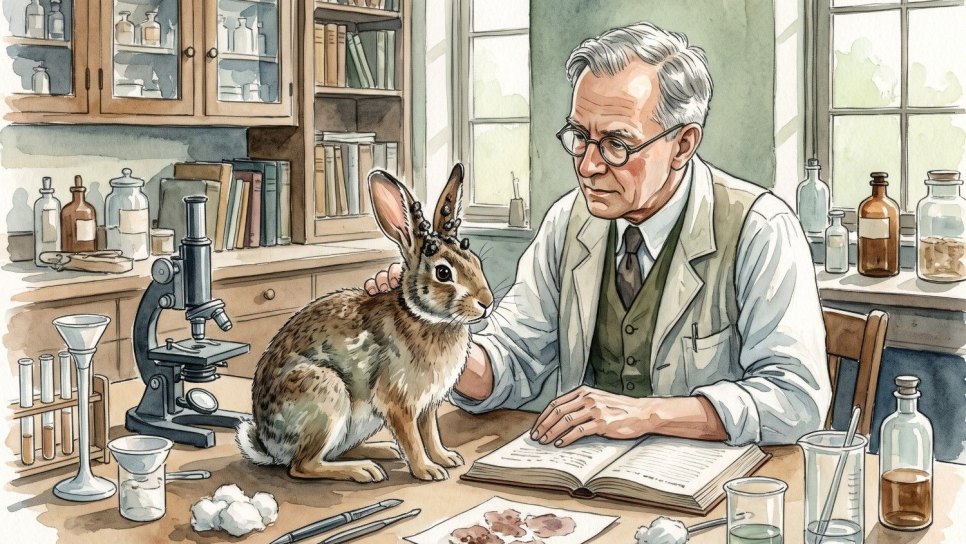
The original manuscripts contained small owl figures he had drawn beside the lines describing this disease.
Diagnosis: the truth seen by the fingers
The diagnostic method he described was the digital examination (digital rectal examination) that forms the basis of modern proctology: "The physician should insert a finger into the patient's anus. If something as hard as stone is found inside, and this hardness prevents the patient from passing stool, it is certainly a bubo."
"Primum non nocere": knowing where to stop
But what made John of Arderne a true medical legend was not just his accurate diagnosis; it was knowing "where he should stop" as a physician. While charlatans of the time promised desperate patients they would cut out every kind of tumor, leaving them to die in terrible pain, Arderne openly wrote that advanced rectal cancer was inoperable under the conditions of that era. He warned his colleagues:
"Do not intervene excessively in this disease. No treatment performed by human hands can cure it; do not cut the mass with your scalpel and cause the patient more pain."
A palliative care protocol in the Middle Ages
Instead, he offered one of the oldest known "Palliative Care" protocols (relieving and supportive treatment) for cancer patients in human history. His aim was not to eliminate the disease, but to relieve the patient's suffering and allow their final days to be spent with human dignity.
Arderne's prescription
- To relieve pain: He recommended preparing sponges with herbal painkillers such as opium, hemlock and henbane.
- To ease obstruction: He advised special olive-oil enemas and soothing ointments to alleviate bowel obstruction.
DROZDOGAN Academy Commentary
Treating the "patient," not the disease, is the foundation of compassionate oncology practice. In modern medicine there is sometimes a fine line between "doing everything possible" and "preserving the patient's quality of life." Arderne's decision not to touch the "owl in the dark" with a blade is a magnificent example of medicine's most fundamental principle, "Primum non nocere" (First, do no harm).The roots of the quality-of-life-focused approaches we now value at least as much as chemotherapy in advanced cancers reach back 650 years to this wise surgeon.
Sources
- 1. Arderne, J. (1376). Treatises of fistula in ano, haemorrhoids, and clysters (Translation and Compilation: D'Arcy Power, Early English Text Society, 1910).
- 2. Van der Sluis, F. J. (2012). Risk estimation in colorectal cancer surgery (Chapter 1: History of Rectal Cancer), University of Groningen.
- 3. Pearn, J. (2012). "Master John of Arderne (1307-1380): a founder of modern surgery". ANZ Journal of Surgery, 82(1-2), 46-51.
Was this article helpful?
Your feedback helps us improve our content.


Reader comments
Share your comment
Your name and comment are published only after administrator approval. Your email address is never shown to visitors.
Be the first to comment.