
What Is Proton Therapy? Is It More Effective Than Other Radiotherapy Methods?

In this article
Proton therapy centers are multiplying worldwide despite questions about advantages over conventional radiotherapy.
Proton therapy claims to deliver radiation very precisely to tumors while maximally protecting nearby healthy tissues. However, high cost and limited scientific evidence of superiority keep it controversial and experimental for many cancers. Before reviewing studies, let us briefly discuss how radiation treatments work and their types.
Radiotherapy uses high-energy rays or radiation obtained by accelerating atomic particles to damage and kill cancer cells. Radiation kills by damaging genetic material.
Today, used concurrently with chemotherapy or alone, radiotherapycan be delivered externally or internally.
External radiotherapy is delivered from outside without contact. Types include:
- Intensity-modulated radiotherapy (IMRT)
- Proton therapy
- Conventional radiation treatment
Internal radiotherapyplaces radioactive material near or inside the tumor; brachytherapy is an example.
Conventional radiation treatmentincludes intensity-modulated and photon therapy. Photon therapy uses radiation beams. IMRT aims to deliver the maximum dose to tumors. The beam is divided and delivered from various body locations to intersect at the tumor, maximizing its exposure.
What Is Proton Therapy?
A protonis a particle forming an atom. In proton therapy, this atomic particle produces radioactive radiation to kill cancer cells. Radiation quantity and precise placement can be adjusted more accurately.
IMRT's advantage is reaching even irregular tumor corners, but nearby structures also receive substantial radiation, particularly the heart and lungs. Cardiac damage and radiation pneumonitis (lung inflammation) can therefore occur. Proton therapy is claimed to cause less heart and lung damage than IMRT; however, these claims of fewer side effects have not been clearly demonstrated, and proton therapy is not free of side effects.
This article evaluates its advantages and disadvantages.
Which Cancers Are Treated with Proton Therapy?
Almost all conditions where benefit or advantages have been demonstrated are rare tumors, mostly in children.
Clinical superiority over photons has been clearly established in certain pediatric cancers. Some advantages also exist in adults with uveal (eye) melanoma, skull-base sarcomas (soft tissue tumors) and spinal cancers.
Proton therapy is also used in early lung, prostate and esophageal cancers, but existing data show no advantage over other radiation techniques. Additional studies continue to define its role in other cancers.
It is increasingly popular in developed countries and very expensive. Pros, cons and differences remain under investigation. At the 2016 American Society of Clinical Oncology (ASCO) annual meeting, 2 noteworthy comparisons with other radiotherapies were presented.
1. Study
Locally advanced non-small cell lung cancer patients were studied to compare proton therapy and IMRT. The 255 patients were divided into homogeneous and heterogeneous groups.
The homogeneous group contained two subgroups with similar characteristics such as age and stage. One received IMRT and the other proton therapy, with higher radiation doses in the proton subgroup. Results favored the IMRT group. Proton patients had higher radiation pneumonitis and recurrence rates within 12 months, and pneumonitis developed sooner. In conclusion, %60 of post-treatment side effects occurred in proton therapy patients.
The heterogeneous group was also divided into IMRT and proton subgroups. IMRT patients were younger and had more advanced disease. Proton patients had lower lung capacity. In conclusion, post-treatment side effects were approximately equal in this group too.
Combining both groups' data showed no difference between IMRT and proton therapy.
2. Study
Between 2004–2012, patients treated for non-small cell lung cancer (stages 1–4), totaling 140.383, were studied. Proton and photon recipients were compared. Overall, %59 had stage 2–3 disease. Their 5-year survival was %22.3 with protons and %15 with conventional radiation. In this study of 140 thousand patients, proton therapy in stage 2–3 non-small cell lung cancer did not increase survival according to the findings.
In conclusion, proton therapystill does not significantly improve radiation pneumonitis, local recurrence or survival rates. It was successful compared with photons in certain lung cancer stages, but superiority over IMRT in survival remains unproven. Surrounding tissues suffer less damage, but expected improvement rates are not achieved.
At present, proton therapy should remain in clinical trials and experimental use. Like drugs approved only after lengthy processes, this technology should not be fully adopted until benefits are established. Radiation and medical oncologists have major responsibilities in appropriate treatment selection and planning.
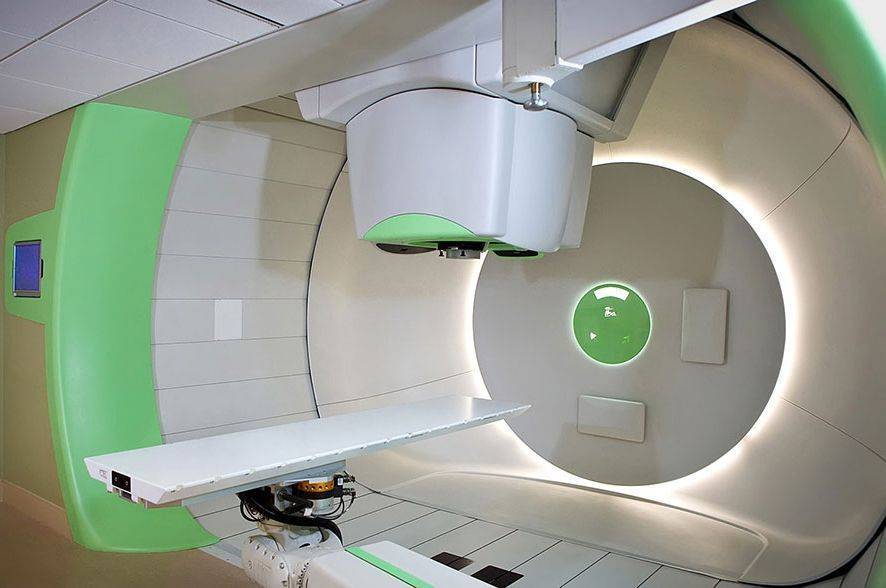
Proton Therapy Centers Worldwide
The United States has the most centers; their number rose from the 2013 total of 11 to the 2017 total of 28. Another 23 are under construction or development.
However, proton centers may be experiencing, Lancet Oncologyaccording to an article published on 12 July 2018, "growing pains". Authors reported patient demand below expectations at some centers and financial losses or missed targets at several. For example, the Scripps Proton Therapy Center in San Diego, California, declared bankruptcy.
Virginia's Hampton University Proton Therapy Institute reportedly had losses for the past 5 years and lost 3 million dollars in its latest financial year.
Nevertheless, center numbers worldwide continue rising.
Despite struggles in the United States market, proton-beam centers are increasing globally.
According to the nonprofit Particle Therapy Co-operative Group, 63 facilities operate worldwide, with 32 under construction and 16 being planned. Argentina and Australia will soon join, eventually bringing centers to every continent except Antarctica.
An estimated 165.000 patients with various cancers have received proton therapy worldwide. Research & Markets estimates a multibillion-dollar industry by 2024. In Europe, between 2010 and 2017, proton treatment applications increased more than 3-fold.
Europe uses proton therapy principally for solid cancers, including brain, spinal, prostate and stomach cancers. Germany, Italy, Sweden, France, Denmark, the Netherlands, Switzerland, Russia, Spain, the United Kingdom, Norway and Belgium are building or planning centers. Research & Markets predicts continued European market growth through 2024.
Approximately % 60 of the world population lives in Asia, accounting for roughly half the global cancer burden. Center numbers in its market are expected to grow by double digits from 2018 to 2024. Japan currently has the most Asian centers, while China, Singapore, Thailand and South Korea are building or planning facilities.
In the Middle East/North Africa, a center opened in Saudi Arabia and another is under construction in the United Arab Emirates. Egypt plans one at Cairo's Children's Cancer Hospital Foundation, and Israel announced plans to finalize a center. Israel's Health Ministry estimates that, including 150 children, approximately 250 patients annually will receive treatment there. Construction will cost approximately 60 million dollars, with another 6 million required to operate it.
Some countries opening centers are motivated by the need to send even small numbers of patients abroad, including Australia. Whether national public health systems will pay for this expensive treatment at new centers remains unclear.
Despite financial difficulties, the United States is expected to seek continued market dominance. Canada shows little interest in expanding capacity. It has one proton facility in Vancouver, British Columbia (BC), a notable research center. This particle accelerator center is an internationally leading subatomic physics facility. Treatment there is very limited, only 10 patients annually.
Operating since 1995, it treats only choroidal melanoma behind the eye, a type of malignant melanoma skin cancer. Canada diagnoses approximately 40 such patients annually; around 30 receive brachytherapy (internal radiotherapy), while large tumors or critical cases such as optic nerve compression are referred for proton therapy.
A Market Still Attracting Interest
Center numbers increase worldwide despite unclear superiority over conventional radiation in either tumor shrinkage or fewer side effects. Proton therapy represents only %1 of external radiotherapy systems.
In 2017, approximately % 0.1 of cancer patients received it. By 2022, estimates project per 10 million people only 0,5 proton treatment rooms and, per 10 million, approximately 20 conventional radiotherapy systems worldwide.
By 2030, even if the projected 900 to 1300 treatment rooms are built, only %6 to %7 of cancer patients would have access.
Sources
Bayesian randomized trial comparing intensity modulated radiation therapy versus passively scattered proton therapy for locally advanced non-small cell lung cancer.
J Clin Oncol 34, 2016 (suppl; abstr 8500)
2. Madhusmita Behera et al.
National Cancer Data Base analysis of proton versus photon radiotherapy in non-small cell lung cancer (NSCLC).
J Clin Oncol 34, 2016 (suppl; abstr 8501)
3. Roxanne Nelson.
Proton-Beam Therapy: Snags in US but Expanding Globally.
Medscape Medical Oncology News - 03 August 2018.
4. Bryant Furlow.
Growing pains for US proton therapy.
The Lancet Oncology - 12 July 2018
Was this article helpful?
Your feedback helps us improve our content.




Reader comments
Share your comment
Your name and comment are published only after administrator approval. Your email address is never shown to visitors.
Be the first to comment.