
Cemiplimab and Platinum Chemotherapy Receive FDA Approval for First-Line Lung Cancer Treatment

In this article
For advanced non-small cell lung cancer (NSCLC) without EGFR, ALK or ROS1 mutations, the combination of platinum-based chemotherapy and cemiplimab-rwlc (Libtayo, Regeneron Pharmaceuticals, Inc.) immunotherapy received FDA (US Food and Drug Administration) approval on 8 November 2022.
Cemiplimab’s 4th FDA Approval
Cemiplimab, an anti-PD-1 immunotherapy, had previously received FDA approval for squamous cell skin cancer in 2018, basal cell skin cancer in 2021 and, also in 2021, first-line treatment of non-small cell lung cancer with PD-L1 TPS>=50% .
The 4th First-Line Immunotherapy–Chemotherapy Approval in NSCLC
This became the 4th immunotherapy–chemotherapy combination approved for first-line advanced NSCLC regardless of PD-L1. Pembrolizumab, atezolizumab and nivolumab–ipilimumab immunotherapies had previously been approved with platinum-based chemotherapy for patients in this setting.
FDA Approval Based on Study 16113
Cemiplimab efficacy was evaluated in Study 16113, a randomised, multicentre, multinational, double-blind, active-controlled trial in 466 patients with advanced NSCLC who had not received systemic treatment. Patients were randomised 2:1 to cemiplimab-rwlc plus platinum-based chemotherapy every 3 weeks for 4 cycles, followed by cemiplimab-rwlc and maintenance chemotherapy, or placebo plus platinum-based chemotherapy every 3 weeks for 4 cycles, followed by placebo and maintenance treatment.
The main efficacy outcome was overall survival. Additional outcomes were progression-free survival and overall response rate, assessed by blinded independent central review.
Results
- Cemiplimab plus platinum-based chemotherapy significantly improved overall survival, both statistically and clinically, compared with placebo plus chemotherapy: risk of death fell by 29% (hazard ratio [HR] 0.71 [95% CI: 0.53, 0.93], two-sided p-value = 0.0140).
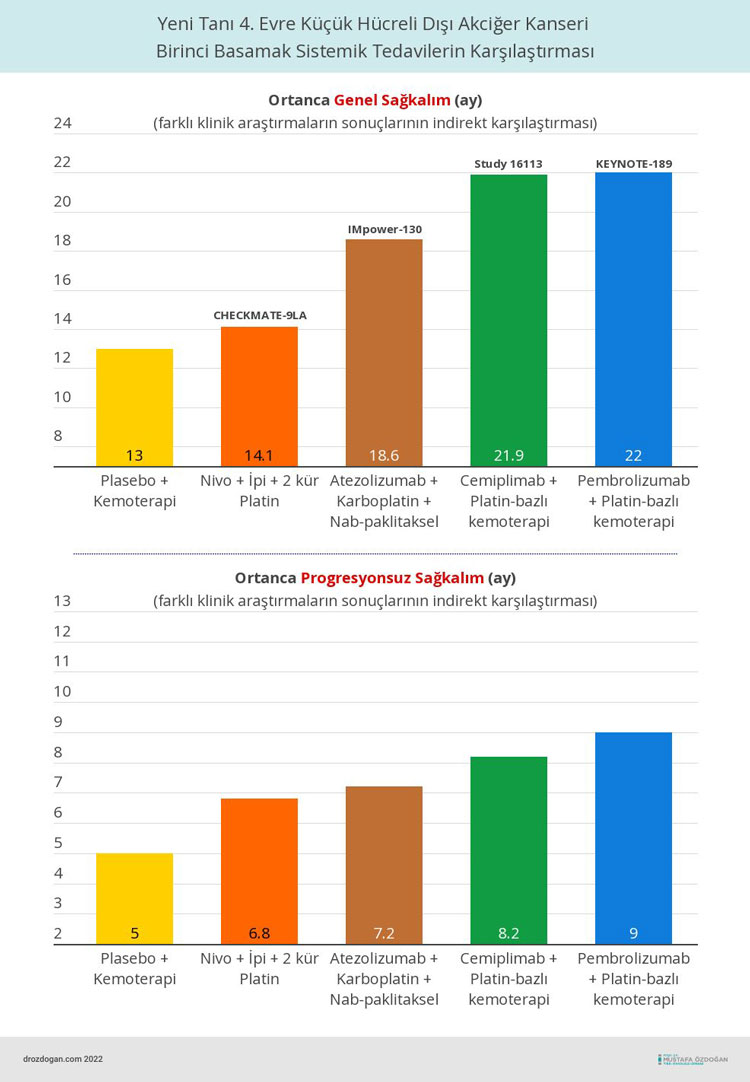
- Median overall survival was 21.9 months (95% CI: 15.5, not evaluable) in the cemiplimab plus chemotherapy arm and 13 months (95% CI: 11.9, 16.1) in the placebo plus chemotherapy arm.
- Median progression-free survival was 8.2 months (95% CI: 6.4, 9.3) with cemiplimab plus chemotherapy and 5 months (95% CI: 4.3, 6.2) with placebo plus chemotherapy (HR 0.56; 95% CI: 0.44, 0.70, p<0.0001).
- Overall response rate in the immunotherapy arm was 43% (95% CI: 38, 49), compared with 23% (95% CI: 16, 30) in the comparator arm.
The most common (≥15%) adverse effects were alopecia (hair loss), musculoskeletal pain, nausea, fatigue, peripheral neuropathy (nerve damage in the extremities) and reduced appetite.
The recommended cemiplimab-rwlc dose is 350 mg IV every 3 weeks.
*
Below, a comparison of preferred initial treatments for previously untreated advanced non-small cell lung cancer can be seen.
Sources
Was this article helpful?
Your feedback helps us improve our content.




Reader comments
Share your comment
Your name and comment are published only after administrator approval. Your email address is never shown to visitors.
Be the first to comment.