Fibre in the Stone: Erionite, Mesothelioma and Dr. İzzettin Barış in Cappadocia (1975-1978)
In this article
Fibre in the Stone: Erionite, Mesothelioma and Dr. İzzettin Barış in Cappadocia (1975-1978)
On Day 163 we watched magnetic resonance look inside the body without radiation, and I wrote openly that I could not verify a Turkish link. Today it is the reverse: a verified Turkish story that entered the world literature. On Day 138 I described Wagner's work on asbestos and mesothelioma in the Cape province. Today the link to the same cancer is rebuilt, this time through a volcanic stone in a village wall and a family's pedigree. As I promised in yesterday's tomorrow box, I checked the dates, village names and publication details against sources; what could not be verified is marked separately below.
A disease that looked like tuberculosis
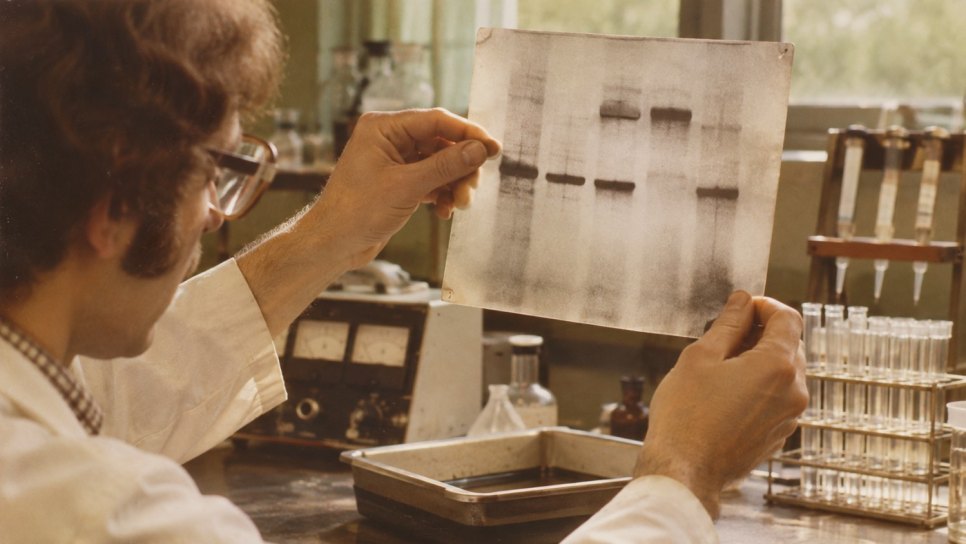
According to Emri's review in the Annals of Translational Medicine, İzzettin Barış left military medicine in 1969 and became head of the chest diseases chair at Hacettepe University; earlier he had treated mesothelioma in sailors at the Naval Hospital. The same review says that from 1969 until the mid-1980s his team surveyed almost every village in central Anatolia for asbestos, pleural plaques and mesothelioma. A caution is needed here: the review's author is a colleague of Barış. Part of the evidence is the account of someone inside the events.
According to the same account, the first field trip, in October 1973, went to Mihalıççık, with about 5,000 people. The team reviewed 3,880 chest films and found pleural plaques in about 10% and mesothelioma in six people. Many illnesses earlier called "tuberculosis" turned out to be plaques. Mesothelioma is a cancer of the membrane around the lung (the pleura) and, less often, of the membrane lining the abdomen; the cause being sought was asbestos. The road to Karain ran through that search.
Two hundred chest films in Karain
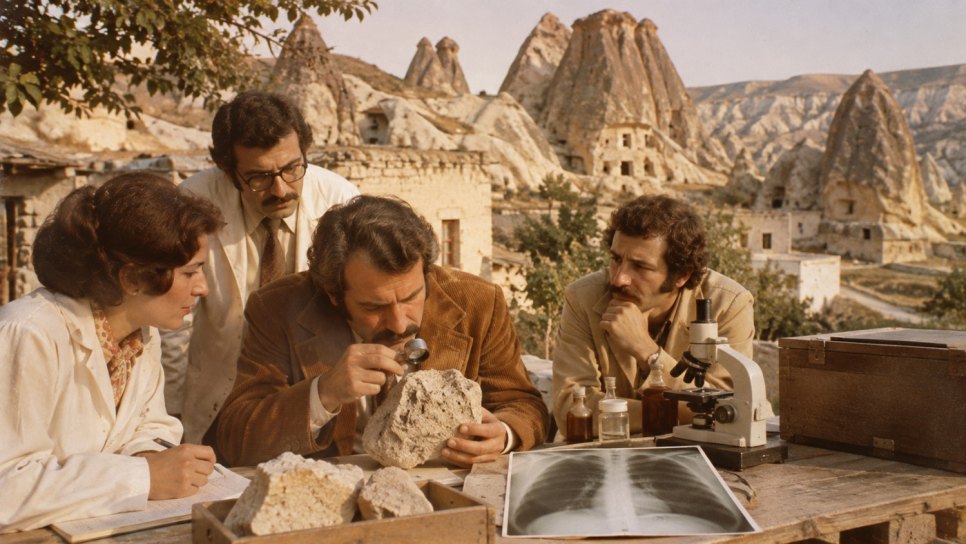
According to the review, the trail to Karain began with a high case count reported by a colleague and with the village headman bringing a patient to Ankara, who was diagnosed with mesothelioma. In October 1975 the team travelled to the village, about five hours from Ankara. Its population was about 800; chest films were taken of about 200 people over the age of 20. Twelve probable mesotheliomas were found, and all were later confirmed by biopsy and histology. The review reports that the incidence was about a thousand times higher than in the other villages examined. The geologist Göktepeli found no excess of asbestos in the village. The next weekend the team went to Tuzköy, about 40 km from Karain with about 3,000 people, and saw a similar picture; Sarıhıdır, between the two, was also affected. Karlık, only 3 km away, showed no excess.
What is erionite?
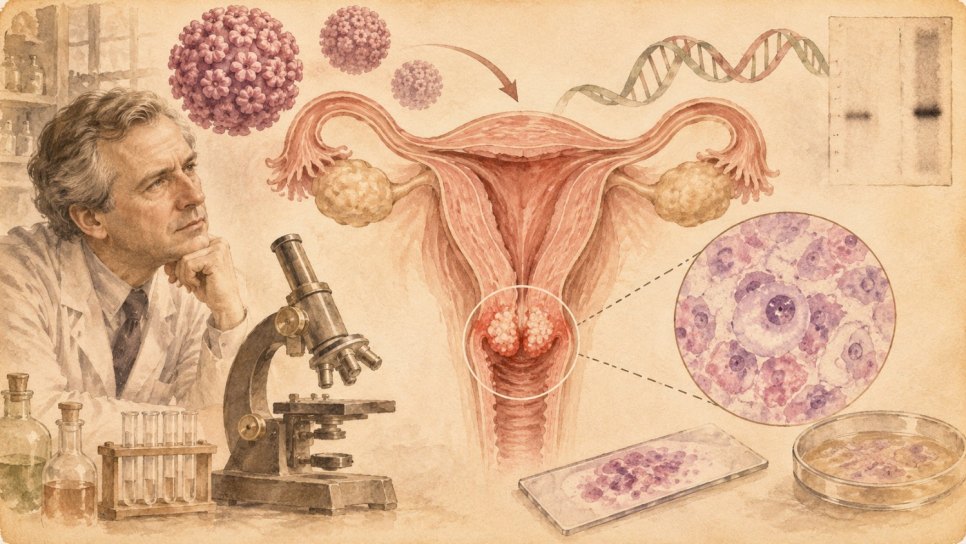
Erionite is a zeolite mineral found in volcanic tuff that can split into thin, long fibres. The abstract of a 2001 Lancet paper says the stones used to build the houses of Karain and Tuzköy were quarried from nearby caves and contain erionite. Like asbestos, inhaled fine fibres can reach the lining of the lung. This is a simplification; the length, thinness and dose of the fibre determine the risk, and I give no measurements here.
Naming the fibre: 1978 to 1987
The first scientific report on Karain appeared in the journal Thorax: Baris and colleagues, "An outbreak of pleural mesothelioma and chronic fibrosing pleurisy in the village of Karain/Urgup in Anatolia", Thorax 1978;33:181-192. The citation I found comes from the reference list of a 2007 Nature Reviews Cancer article; I did not read the paper itself. A correction: the planning file listed this publication as "Lancet 1978"; that was wrong. The same team's 1979 summary in the Annals of the New York Academy of Sciences ("Environmental mesothelioma in Turkey", vol. 330, pp. 423-432) still speaks of asbestos-related disease, and also notes that some villages had no local asbestos deposit. So the first reading was to apply a known pattern (asbestos) to a new place.
The pattern then broke. According to the reference list of the 2007 Nature Reviews Cancer article, Sebastien and colleagues reported zeolite bodies in lungs from Turkey in 1981. In 1982 Rohl and colleagues drew a different picture in Science (vol. 216, pp. 518-520): besides erionite, several asbestos minerals were present in the village environment, and the lungs of patients with mesothelioma contained both zeolite and asbestos fibres; the authors read this as exposure to a mixed fibrous dust rather than a single fibre. This contradiction cannot be considered closed; the later papers I read focus on erionite, but I cannot point to a publication that ended the mixed-dust debate.
Experimental evidence came in 1985. Wagner and colleagues reported in the British Journal of Cancer (vol. 51, pp. 727-730) that erionite from both Oregon and Turkey gave very high tumour rates in rats; the authors say that no other dust they had examined had produced so high a rate (conceptual summary). That the lead author is J. C. Wagner suggests he may be the same Wagner as on Day 138; I could not prove this from the sources. In 1987 Barış and colleagues' four-year study in Cappadocia was published in the International Journal of Cancer (vol. 39, pp. 10-17); in the same year volume 42 of the IARC Monographs stated that there was sufficient evidence for erionite in humans and in experiments.
The same house, but not the same risk
Everyone in the villages lived in houses of the same stone, but the cancer did not occur at the same rate. This distinction became a question when Carbone came to Ankara and toured the villages on 21 November 1997 (Emri review); Carbone asked for samples from houses where families had lost members (conceptual summary). Afterwards Roushdy-Hammady, Siegel, Emri, Testa and Carbone examined a six-generation pedigree of 526 people in the Lancet (2001, vol. 357, pp. 444-445) and proposed that the disease was most likely inherited as an autosomal dominant trait. This was a hypothesis, not proof: a pedigree is a single large family, and the Lancet abstract frames the suggestion as "most likely".
According to Carbone's tribute, Barış was sceptical of this proposal at first; in 2001, after reviewing the pedigrees himself, he changed his mind (conceptual summary; the text is a personal account by a colleague). This is one of the series' familiar motifs: a scientist, looking at evidence, accepts a new idea in his own field. The 2006 paper by Dogan and colleagues in Cancer Research, by its title, argues that genetic predisposition caused the epidemic (vol. 66, pp. 5063-5068); I saw only the citation. In 2011 Testa and colleagues found germline BAP1 mutations in two US families in Nature Genetics (vol. 43, pp. 1022-1025). This finding is a molecular example of inherited susceptibility to mesothelioma, but I have no source showing it in Turkish families.
Cost and limits
The cost is measured first in the losses of a village. The 2007 review by Carbone and colleagues says that about half of the loss of life in three villages was due to mesothelioma; the denominator is all losses of life, including infants and traffic. A 2020 study of regional hospitals in the Istanbul Medical Journal, relying on another paper, gives the losses attributed to mesothelioma as 150 in Karain (76 women, 74 men), 105 in Tuzköy (54 women, 51 men) and 15 in Sarıhıdır (7 women, 8 men), 270 in total; the period is not stated. The second cost was the relocation of the villages: according to Emri, a discussion in Sarıhıdır in autumn 2001 led to a meeting with the Ministry of Health about moving the villages, and Tuzköy's 224 new houses were completed by 2004. Carbone's tribute speaks of more than 300 houses in the new village; I put the discrepancy in the fact-check box. The 2020 study writes that the new settlements were close to the old villages and that exposure may have continued; Emri reports that no erionite was found in the air of new Tuzköy in 2007-08. The two do not contradict each other but do not measure the same place; I found no air measurement for Karain or Sarıhıdır.
The third cost is today's care. In the same 2020 study, of 71 patients followed in eight state hospitals between 2007 and 2019, 66 had pleural and 5 had peritoneal mesothelioma; 91.5% of the patients were diagnosed outside Cappadocia, and the region has no radiotherapy centre. Of the patients, 18 (25.4%) still lived in Karain, Sarıhıdır or Tuzköy. Median survival was 16 months for the pleura and 21 months for the peritoneum (the difference was not significant), and the paper says survival has changed little in about 30-40 years. A last limit: a rat experiment is not generalised to humans. Not everyone who meets erionite develops mesothelioma; the Lancet 2001 and BAP1 work suggest that risk is not evenly spread, but no finding in this article is enough to say who is at risk.
What remained
- Village-by-village field epidemiology: films, biopsies, pedigrees (the Barış team)
- Asking what a "tuberculosis-like" picture really is
- Thinking about environmental exposure and inherited susceptibility together (after 2001)
What fell or was limited
- The assumption that "this region must have an asbestos deposit" (1978-79); the mixed-dust debate in 1982
- The belief that everyone exposed carries the same risk
- The assumption that moving the village alone ended the exposure (the warning of the 2020 study)
Dates of the Cappadocian epidemic: 1973-2011. The axis runs from 1970 to 2015. Green markers are dates confirmed in more than one record; blue markers rest on a single source. Dates known only by year are drawn at mid-year.
A physician going from village to village
The Turkish side of this story is not invented: the central figure is a Turkish physician from Hacettepe, and the events took place in Türkiye's own villages. According to Carbone's tribute, Barış treated villagers free of charge and contributed to a legal change in Türkiye so that relatives of patients could collect prescribed morphine; this comes from a single source, a personal tribute. The same piece says Barış lost his life in Türkiye in the autumn of 2013; I could not verify the exact day. For the general picture, Emri's review cites the Ministry of Health's 2015 data, giving an age-standardised incidence of mesothelioma of 1.1 per 100,000 in men and 0.6 in women; the 2020 study, however, says there is no national mesothelioma registry (I put the discrepancy in the box). So the gap between the concentration in the villages and the national average is very large, but these sources do not allow it to be shown with a single figure.
From 1969 to today
What was verified, what remained uncertain
- Day 158: Köhler and Milstein are still unwritten; the promise in the Day 157 tomorrow box was not kept.
- Planning title: The plan listed "Lancet 1978" and "resettlement in the 1980s". The first publication is Thorax 1978 (citation from the Nature Reviews Cancer 2007 reference list); the relocation was after 2001, not in the 1980s (Emri). The "1975-1978" period in the title was confirmed: Karain in 1975, the paper in 1978.
- Interested parties: Emri and Carbone are colleagues of Barış; Barış himself is among the authors of the 2007 Nature Reviews Cancer review. The field dates come from these sources; I found no independent confirmation. I did not read the Thorax 1978 or Int J Cancer 1987 papers themselves.
- Numbers: "About a thousand times" is from a single source (Emri); the reference population and definition are not given. "About half mesothelioma" is the same in Carbone 2007, Emri and the 2020 study; the denominator includes infant and traffic losses. The village figures 150/105/15 come from a single secondary source, with the period unclear.
- Village name: Mihalıççık is spelled "Mihaliççık" in Emri; I used the current spelling. The Karain cave is an archaeological site; here the village is meant.
- Relocation: 224 houses in Tuzköy by 2004 (Emri); Carbone's tribute says more than 300 houses. The dates and scope may differ; I could not resolve it. No source gives the year of Karain's relocation. I read somewhere that the 2011 PNAS paper reported airborne erionite falling more than a thousand-fold; since I did not read the paper, I left it out.
- The asbestos debate: The 1979 summary speaks of asbestos-related disease and Rohl 1982 of mixed dust. Later papers focus on erionite; I did not read a single paper showing how the debate closed.
- IARC: volume 42 in 1987, sufficient evidence in humans and in experiments; I did not read, and did not write, the group number.
- The rat study: I read the abstract of Wagner 1985; not the text. My assumption that he is the same person as the author of the 1960 Cape study is unproven.
- Registry: The 2020 study says "no national registry"; Emri gives the Ministry of Health's 2015 incidence. A general cancer registry and a mesothelioma-specific one may differ; I did not resolve this. The 2020 study gives the period over which survival has not changed as 30 years in one place and 40 in another.
- Barış: Free treatment and the morphine law are from Carbone's personal tribute; the date of his passing is "the previous weekend" relative to the date of the piece (2 October 2013), unverified. His scepticism and the "accepted it" account come from the same piece.
- Genetics: The pedigree finding is a single large family; "autosomal dominant" is a proposal. The BAP1 finding is in US families. I did not read the content of Dogan 2006.
The first appearance of p53: 1979, before anyone knew what it was
Today we saw that a cancer can draw on both environment and inheritance; tomorrow I will tell the first form of the protein later called the "guardian of the genome", before its identity was known. The plan lists the discovery of p53 as 1979; it may be the independent reports of several laboratories. Before writing I will verify who published it, in which journal and in which month, and explain why it was taken for an oncogene in the early years. The change of identity of the same protein in 1989 is the subject of a separate day.
Author's note: What I watched most closely in this article was building a Turkish link without exaggeration: because most of the main sources come from colleagues of Barış, I said so in the text and in the fact-check box. My second care was to show that the asbestos reading of 1978-79, the mixed-dust debate of 1982 and the erionite experiment of 1985 are separate pieces of evidence, and to leave the pedigree finding as a hypothesis.
Sources and Further Reading
- Baris YI et al. An outbreak of pleural mesothelioma and chronic fibrosing pleurisy in the village of Karain/Urgup in Anatolia. Thorax 1978;33:181-192 (citation from the reference list of Carbone et al. 2007; paper not read).
- Baris YI, Artvinli M, Sahin AA. Environmental mesothelioma in Turkey. Ann N Y Acad Sci 1979;330:423-432 (citation and abstract read from a public record).
- Rohl AN, Langer AM, Moncure G, Selikoff IJ, Fischbein A. Endemic pleural disease associated with exposure to mixed fibrous dust in Turkey. Science 1982;216(4545):518-520 (abstract read).
- Wagner JC, Skidmore JW, Hill RJ, Griffiths DM. Erionite exposure and mesotheliomas in rats. Br J Cancer 1985;51(5):727-730 (abstract read).
- Roushdy-Hammady I, Siegel J, Emri S, Testa JR, Carbone M. Genetic-susceptibility factor and malignant mesothelioma in the Cappadocian region of Turkey. Lancet 2001;357:444-445 (abstract read).
- Carbone M, Emri S, Dogan AU, Steele I, Tuncer M, Pass HI, Baris YI. A mesothelioma epidemic in Cappadocia: scientific developments and unexpected social outcomes. Nat Rev Cancer 2007;7:147-154 (only the abstract and reference list were read).
- Testa JR et al. Germline BAP1 mutations predispose to malignant mesothelioma. Nat Genet 2011;43(10):1022-1025 (abstract read).
- Emri S. The Cappadocia mesothelioma epidemic: its influence in Turkey and abroad. Annals of Translational Medicine, atm.amegroups.org/article/view/15112 (read with a summarising tool; year and volume citation not read; interested party), Malignant mesothelioma in Cappadocia: data from eight regional hospitals. Istanbul Medical Journal 2020 (read with a summarising tool) and Carbone M's tribute to Barış, curemeso.org, 2 October 2013 (personal account).
- IARC Monographs on the Evaluation of Carcinogenic Risks to Humans, volume 42. Erionite summary, inchem.org (1987; read with a summarising tool).
- Mukherjee S. The Emperor of All Maladies: A Biography of Cancer. New York: Scribner; 2010 (general context; the relevant pages were not re-read for this article).
This article is Day 164 of the "365 Days of Cancer History" series and presents the erionite and mesothelioma story in Cappadocia as a historical reading. It is historical-popular content; it is not diagnostic or treatment advice. For decisions about exposure, symptoms or family history, consult your physician. The sources have been verified; details that rest on a single secondary source, on a summary only, on an interested party's account or on a text that could not be read are marked in the fact-check notes.
Was this article helpful?
Your feedback helps us improve our content.