
Genetic Changes and Cancer! What Does It Mean for Cancer to Be Genetic?

In this article
Is Cancer Genetic?
Cancer is a genetic disease at the cellular level; in other words, cancers are caused by certain changes in genes that control how cells function—particularly how they grow and divide.
What Does It Mean for Cancer to Be Genetic?
Cancer does not develop without genetic damage and its accumulation. However, cancer being genetic and being inherited are not the same thing. In cancer, “genetic” and “hereditary” are often confused. All cancers result from genetic damage, but in approximately %10-15 of cancers this damage is passed down from parents; these cancers are called hereditary cancer .
To explain the genetic nature of cancer in more detail;
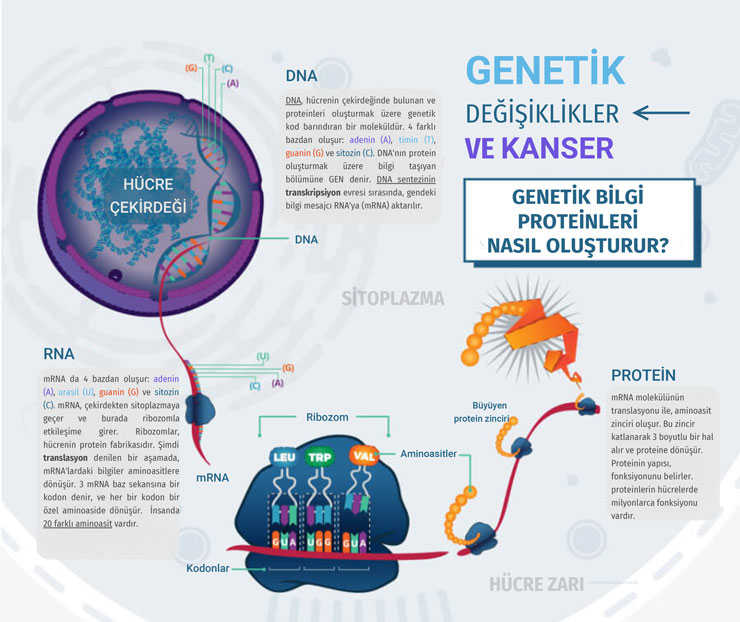
Genes carry instructions for making proteins that do most of the work in our cells. Some gene changes may allow cells to escape normal growth controls and become cancerous. For example, some cancer-causing changes increase production of a protein that promotes cell growth (for example, oncogenes). Others cause a protein that normally repairs cellular damage to be produced in a misshapen, and therefore nonfunctional, form (for example, mutations in DNA repair genes).
Is Cancer Genetic in a Family? Does Cancer Run in Families?
What is actually being asked here is about hereditary cancers. When there is a family history of cancer, naturally one of the main questions family members ask is does cancer run in families ? For certain cancers and certain gene mutations, the answer is “yes.”
Which Types of Cancer Are Genetic (Hereditary)?
Hereditary cancers are a type of inherited condition involving a higher-than-normal risk of certain cancers. They are caused by mutations (changes) in specific genes passed from parents to children. Particular cancer types may occur within families with hereditary cancer. These conditions are assessed in oncology under the heading hereditary cancer syndrome .
Hereditary cancer syndromes share these 3 features:
- several close family members (such as a mother, daughter, and sister) with the same cancer type,
- developing cancer at an early age, or
- developing two or more cancer types in the same person.
Examples of hereditary cancer syndromes include
- hereditary breast and ovarian cancer syndrome,
- Li-Fraumeni syndrome,
- Cowden syndrome, and
- Lynch syndrome.
In summary, people with a widespread family history of breast, ovarian, colon, uterine, pancreatic, melanoma, stomach, and prostate cancer are advised to discuss their hereditary cancer risk with a multidisciplinary oncology team .
What Does “Cancer Gene” Mean?
With the completion of the Human Genome Project in 2003, most cancer-causing genetic mutations (changes) were found to occur in body, or somatic, cells. These are called somatic mutations . In other words, this damage is not inherited by offspring. Less frequently, mutations in reproductive cells are passed to offspring and increase cancer risk. These are called germline / inherited mutations .
Genetically, cancers are divided into 3 groups:
- Sporadic cancers (arise from somatic mutations)
- Hereditary cancers (arise from germline mutations)
- Familial cancers (genetic basis is unclear)
We explained sporadic and hereditary cancers above, but there is also familial cancer. Familial cancers are often confused with hereditary cancers, although their underlying causes differ. Familial cancer means the same cancer type occurs frequently among family members. For example, suppose someone has breast cancers in their family but genetic testing does not detect any “inherited gene abnormalities” that increase their breast cancer risk. If this person develops cancer, it is classified as familial. A good example of familial predisposition is “why smoking causes cancer in some people but not others.” DNA repair genes in these families may not work as actively as in others. However, recent studies using more comprehensive genetic testing have found hereditary cancers to be more common than previously estimated.
Which Are the Cancer Genes?
DNA has a ladder-like, double-helical structure made of 4 types of nucleotide (adenine, thymine, cytosine, and guanine). DNA gives cells instructions about what to do. Human DNA consists of 3 billion nucleotide pairs, and approximately %2 of the helix is responsible for producing proteins, the basic building blocks of cells; these meaningful regions are called genes . Our DNA contains approximately 20 thousand genes , and all genes together are called the genome. Among human genes, more than 500 have been found to be associated with cancer.
Cancer-related genes are examined in 3 main classes:

Some well-known hereditary cancer genes are:
- BRCA1 and BRCA2: Hereditary breast and ovarian cancer syndrome
- MLH1, MSH2, MSH6, PMS2, EPCAM: Lynch syndrome (hereditary non-polyposis colorectal cancer)
- TP53: Li-Fraumeni syndrome
- STK11: Peutz-Jeghers syndrome
- PTEN: PTEN hamartoma tumor syndrome
- CDH1: Hereditary diffuse gastric cancer syndrome
- PALB2: PALB2-associated cancer risk
- CHEK2: CHEK2-associated cancer risk
- ATM: ATM-associated cancer risk
- BRIP1: BRIP1-associated cancer risk
- RAD51C and RAD51D: RAD51C- and RAD51D-associated cancer risk
- BARD1: BARD1-associated cancer risk
- NBN: NBN-associated cancer risk

Genetic Testing for Inherited Mutations
Genetic testing for an inherited mutation (also called “germline genetic testing”) examines DNA in blood or saliva samples for mutations that may cause diseases such as cancer.
Genetic testing can help people understand their cancer risk, make medical decisions, and take steps to reduce cancer risk or detect cancer early. For people already diagnosed with cancer, it can help guide medical decisions about how best to treat their cancer.
How Is Genetic Testing Performed?
If you are considering genetic testing for hereditary cancers and wondering how to proceed, the following steps may help you make an informed decision and move forward with your plan.
- Know the signs of an inherited mutation
- Talk to a healthcare professional specializing in cancer genetics
- Read reliable information sources on this subject
- Consider your personal circumstances
- Talk to your peers and learn about your family’s medical history
Your personal circumstances may affect how and when you proceed with genetic testing.
- If you have a new cancer diagnosis or your cancer has recurred, genetic testing may affect treatment decisions. You may benefit from the information provided in this section about specific cancer types and inherited gene mutations.
- If you have completed cancer treatment, genetic testing may help you understand your risk of a new / second cancer diagnosis and affect decisions about screening and prevention.
- If you have never been diagnosed with cancer, genetic testing may clarify your risk and help you make screening and prevention decisions.
In every situation, testing may give relatives information about cancer risk and options for managing it.
Can Lung Cancer Be Genetic?
As emphasized in detail above, all cancers are genetic diseases at the cellular level. However, the public asks the question “... is cancer genetic?” to learn whether that cancer is hereditary. One of the foremost examples is lung cancer .
Is Lung Cancer Hereditary?
Tobacco and tobacco products alone account for approximately %90 of all lung cancers. Other causes of lung cancer include radon gas, other carcinogenic chemicals (such as arsenic), dietary choices, previous radiotherapy, and familial predisposition.
Having family members with lung cancer is a risk factor. People with affected relatives have approximately 2 times the risk of developing lung cancer compared with those without a family history. Smoking tends to continue within families, and smokers in the family expose others to secondhand smoke. Greater exposure to radon and other lung cancer-causing substances from living or working in the same place may also increase risk. However, there is currently insufficient scientific evidence to say that the increased lung cancer risk in people with lung cancer is due to hereditary causes.
Below, the relationship between genetic changes and cancer can be seen in summary:


Related Topics:
Was this article helpful?
Your feedback helps us improve our content.




Reader comments
Share your comment
Your name and comment are published only after administrator approval. Your email address is never shown to visitors.
Be the first to comment.