How Cancer Changes a Couple’s Sexuality and Intimacy: A Physician’s Voice from NEJM Voices and the Evidence
In this article
Cancer Affects the Couple, Not Only the Patient: On Sexuality and Intimacy
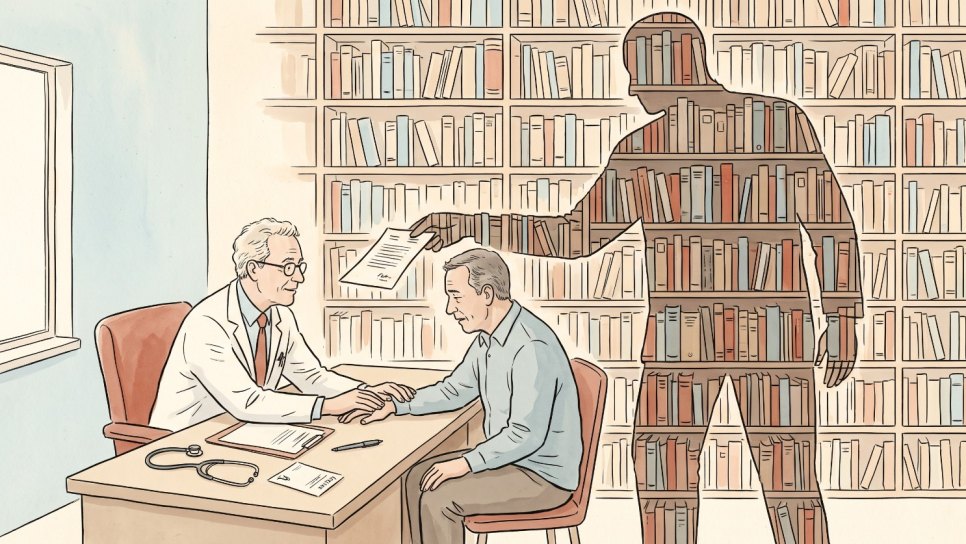
Don Dizon, a US oncologist, has spent years working on sexuality after cancer. In his NEJM Voices essay "Sex, Intimacy, Cancer, and Couples", he describes how clinicians often brush off a couple's sexual problems by saying they should be grateful to be alive, and he stresses that this attitude ignores the deep loss partners experience. The central message is clear: cancer is a social illness, and the partner of a person living with cancer should be seen as part of the care. In this article I explain what Dizon describes, the scientific data on the topic, and what couples and health care teams can do, together with my own experience. I covered the subject earlier in sexuality and sexual life in cancer, 5 things a cancer patient and partner should know and how a cancer diagnosis affects the relationship between partners (all in Turkish).
- The problem: After cancer treatment, a large share of patients develop sexual problems, yet these are rarely discussed in the clinic. The partner's loss, grief and helplessness are almost never seen.
- Why? Every couple has an implicit "script" that runs intimacy without anyone thinking about it. Cancer disrupts that script, and if the changes are not talked about, small cracks grow into chasms.
- Evidence: In a study of 20 partners of people with cancer, 11 could not rebuild intimacy once intercourse was no longer possible, while 9 found a new closeness through open communication and a broader view of sexuality.
- What should be done? The health care team should raise the subject, the partner should be invited to the visit, treatable side effects should be treated, and referral to sex therapy or couples therapy should be offered when needed.
Why does this matter?
Thanks to advances in cancer treatment, many people now live with cancer for years; the number of my patients who live for years even with metastatic disease grows every day. This makes quality of life, sexuality and intimacy more important than ever. Studies suggest that, depending on the cancer type and treatment, 40% to 100% of patients have sexual problems: vaginal dryness, painful intercourse and early menopause in women; erection and ejaculation problems in men; and, in both sexes, low desire, a changed body image and feeling unattractive (how cancer affects sexual life, the sexual life of the cancer patient; Turkish articles).
Even so, this is one of the least discussed topics in the clinic. Patients hesitate to ask, and clinicians do not raise it because of lack of time, lack of knowledge or embarrassment (cancer patients want their sexual lives back, sexual concerns in women who have survived cancer; Turkish articles). Partners are the most invisible victims of this silence: they witness the illness of someone they love, take on the caregiver role, and cannot share the grief for the intimacy they have lost with anyone (the burden on relatives of cancer patients; Turkish article).
How does cancer affect sexuality and intimacy?
Cancer affects sexuality and intimacy through treatment side effects, fatigue, pain, changes in body image and emotional strain. The couple's familiar way of being close is disrupted, and a partner may shift from lover to caregiver. If these changes are not discussed, distance and loneliness can grow; talking openly, redefining intimacy and seeking support when needed help the couple find their way back to each other.
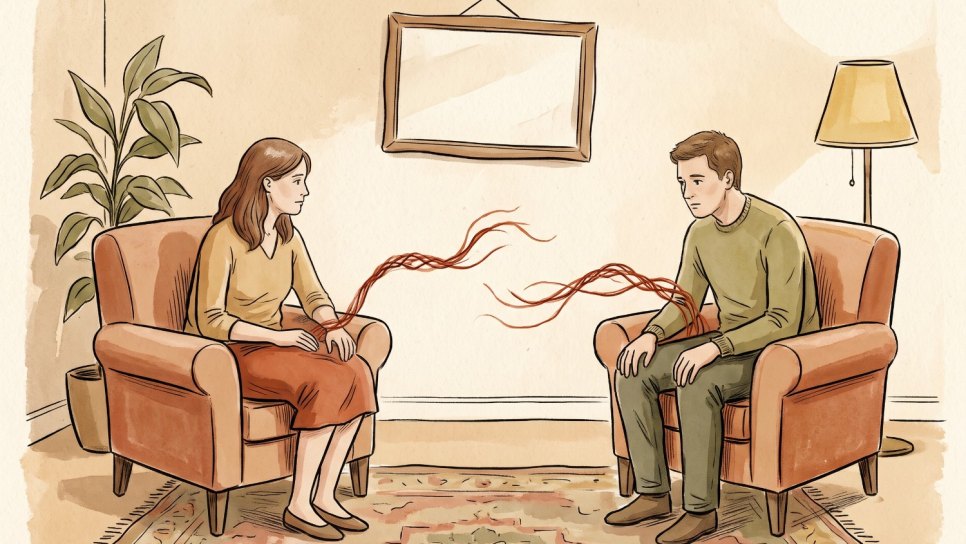
Dizon explains this with the idea of an "implicit script". Every couple develops a script, without thinking about it, that decides who initiates and how the other responds; it happens as naturally as day turning into night. This script exists in every kind of relationship, including those with multiple partners. Nobody notices these steps until a life-changing event such as a cancer diagnosis. Cancer then disrupts the script: the body changes, energy falls, medicines affect desire and function, and roles shift. These changes happen slowly; when they are not discussed, small cracks appear first and then, over time, chasms the couple does not feel ready to repair.
Figure 1 · How does cancer change a couple's implicit script?
Silence and talking again
From lover to caregiver: the story Dizon tells
Dizon describes a patient living with metastatic breast cancer and her husband. After a period in hospital, when the woman wanted to show closeness to her husband, he could not respond. She read this as meaning that he no longer loved her. What her husband was going through was not the end of love but a change of role: as the person who had slept beside her in hospital, tracked her medicines and looked after her wounds, he found it hard to suddenly see the same person as a lover. Neither of them had been able to talk about this, either with each other or with their doctors.
I have heard this story many times in my clinic. It is especially common in women diagnosed with breast cancer at a young age and in their partners: a body changed by surgery, chemotherapy and hormone therapy, early menopause and vaginal dryness deeply affect the couple's intimacy (sexual life after breast cancer treatment, hormone therapy and sexual problems). Erection problems in prostate cancer, and HPV-related guilt and anxiety in head and neck cancers, can create a similar silence (sexual life after prostate cancer, HPV and the social effects of head and neck cancer; Turkish articles).
The evidence: can partners rebuild intimacy?
The sense of loss Dizon describes is supported by research. In a qualitative study published in 2010 in Archives of Sexual Behavior by Gilbert, Ussher and Perz in Australia, 20 partners who cared for people with cancer were interviewed in depth. Of the partners, 11 could not rebuild intimacy once penetrative intercourse was no longer possible, and experienced this as a deep loss. The remaining 9 redefined intimacy: they found a new closeness through touch, hugging, kissing and sexual practices other than intercourse.
Could partners redefine intimacy?
Interviews with 20 partners of cancer patients; percentage of partners.
Two traits stood out in partners who could redefine intimacy: not equating sexuality with intercourse, and open communication. This is a small qualitative study, so the proportions cannot be generalized. Gilbert et al., Archives of Sexual Behavior, 2010.
The study also revealed what separated the two groups. Open communication and a generally good relationship made rebuilding easier. In contrast, seeing sexuality as nothing more than intercourse, relationship problems that existed before the cancer, and seeing the partner merely as a "patient", a child or someone without sexuality made it harder to rebuild intimacy. This is a small qualitative study, and the proportions cannot be generalized. But the message is clear: change is inevitable, loss is not.
Figure 2 · How did partners rebuild intimacy?
Gilbert et al., 2010: facilitating and hindering factors
Couple-based interventions, that is, counselling and therapy programmes in which the patient and partner take part together, have also been studied. In a meta-analysis published in 2020 in Supportive Care in Cancer that brought together 23 studies, these interventions made no significant difference on scales of sexual function, sexual self-perception and mental health. They did improve the sexual relationship quality reported by partners (effect size g=0.52, moderate) and patients' physical health (g=0.42). In other words, these programmes are no substitute for medicine, but they help the couple move closer again. Differences between studies are large and the level of evidence is moderate, so the results need to be interpreted with care.
The partner is a patient too: cancer is a social illness
In my view the most important idea in Dizon's essay is this: cancer is a social illness. The diagnosis is made in one person, but the illness affects the whole family. Partners live with the fear of losing someone they love, the burden of caregiving and the grief of a changed relationship, all at once. Long-lasting anxiety is common in partners of women with breast cancer, and post-traumatic stress symptoms and depression are common in relatives of patients (long-term anxiety in partners, post-traumatic stress in relatives of patients, depression in cancer and early support; Turkish articles). Even so, in the consulting room partners are mostly seen only as an "accompanying person"; nobody asks about their own health, feelings and relationship.
Dizon says care should reach beyond the person living with cancer. I agree. Care that does not see the partner together with their own fatigue, anxiety and loneliness is incomplete care. A patient's adherence to treatment, mood and quality of life depend largely on how well supported the person beside them is (cancer-related distress and its treatment, coping with a cancer diagnosis; Turkish articles).
What can couples and the health care team do?
The guideline that the American Society of Clinical Oncology (ASCO) published in 2018 recommends that the health care team raise the subject of sexual health; invite the partner to the visit where possible; treat treatable causes (vaginal dryness, pain, erection problems, hormonal changes); and refer to psychological support, sex therapy or couples therapy when needed. For example, there are moisturizers and lubricants for vaginal dryness and, in suitable patients, low-dose vaginal estrogen, and there are medicine options for erection problems (is vaginal estrogen safe?, menopausal symptoms after breast cancer; Turkish articles).
Figure 3 · Who can do what to rebuild intimacy?
Suggestions for couples and the health care team
My suggestions for couples:
- Talk: Tell each other what you feel, what you miss and why you hold back. Not responding is often not a lack of love but fatigue, fear or confusion over roles.
- Broaden intimacy: Sexuality is not only intercourse. Touch, hugging, massage and time spent together are also intimacy.
- Separate the roles: If possible, leave some of the caregiving tasks to other family members or professionals, and make room for time with your partner as a lover.
- Ask your doctor: If your doctor does not raise the subject, raise it yourself. Most sexual complaints are treatable (support for sexuality after breast cancer, advice in early-stage breast cancer; Turkish articles).
- Get support: If the problem continues, see a psychologist, a sex therapist or a couples therapist; as a partner, do not neglect your own mental health either.
For clinicians the message is simple: asking tells the patient that "we can talk about this". A single open question, such as "Has your illness or treatment affected your relationship with your partner or your sexual life?", can break a silence that might otherwise last for years (communication between patient, relative and doctor, the effect of patient trust on treatment; Turkish articles).
Questions you can ask your doctor
- How might my treatment affect my sexual desire, function or body, and are these effects permanent?
- What treatment options are suitable for me for vaginal dryness, pain or erection problems?
- Can my partner also join my next visit?
- Can I be referred to a sex therapist, a psychologist or a couples therapist?
- Is there anything I should be careful about during sexual intercourse while I am on treatment?
- "If you survived, the rest does not matter." Wrong. Sexuality and intimacy are part of quality of life, and the question matters even more for patients who live with cancer for many years.
- "If my partner does not respond, they no longer love me." Often not. The caregiver role, fatigue, fear of hurting you or anxiety can make responding difficult.
- "Sexuality means intercourse; if that is not happening, sexuality is over." No. Touch, hugging and closeness without intercourse are also part of sexuality.
- "It is shameful to raise this with the doctor." No. Sexual complaints are known side effects of treatment, and most of them can be treated.
- "The partner's troubles can wait." No. The partner's mental health and the state of the relationship directly affect the patient's quality of life.
Frequently Asked Questions
- Is sexual intercourse safe during cancer treatment?
- For most patients, yes; however, during chemotherapy there is a risk of infection and bleeding, contraception is needed, and some treatments call for extra precautions. It is best to discuss your own situation with your doctor.
- Does sexual desire come back after cancer?
- In many patients it returns partly or fully over time. Fatigue, hormone therapies, body image and mood can all contribute to low desire; most of these causes can be treated or eased.
- As a partner, how can I support intimacy?
- Talk openly about your feelings, do not equate intimacy with intercourse, try to make time as a lover while you are caregiving, and do not neglect your own mental health. If needed, see a therapist together.
- Whom should I see for sexual problems?
- First the doctor who runs your treatment. When needed, you can be referred to gynecology, urology, psychiatry, a psychologist, a sex therapist or a couples therapist.
Glossary
- Intimacy
- The emotional and physical bond between a couple; a concept that includes sexuality but is broader than it.
- Implicit script
- The pattern of behavior, running without awareness, that determines how a couple initiates and responds to intimacy.
- Caregiver
- The partner, family member or close person who takes on the patient's daily care and support.
- Qualitative study
- A type of research that examines experiences and meanings through interviews rather than numbers.
- Meta-analysis
- Research that statistically combines the results of several studies.
- Effect size (g)
- A measure of how large the effect of an intervention is; around 0.5 is regarded as moderate.
- Couple-based intervention
- A counselling or therapy programme in which the patient and partner take part together.
- Vaginal dryness
- Loss of moisture in the vagina because of hormonal changes or treatments; it can cause painful intercourse.
- Erectile dysfunction
- Being unable to achieve or maintain an erection sufficient for sexual intercourse.
- Sex therapy
- Psychological treatment for sexual problems, given to individuals or couples.
DROZDOGAN Academy Commentary
Dizon's essay reminds us of a reality oncology has long overlooked: cancer starts in a body, but it is lived in a relationship.
⚡ Why it matters
As the number of people living with cancer grows, quality of life is moving to the center of treatment. Sexuality and intimacy are important parts of that quality, yet the experience of partners is almost never discussed.
✅ Strengths
The personal observations of a physician with long experience in the field; a concept, the "implicit script", that helps couples understand their own experience; open criticism of colleagues' dismissive attitude; and seeing the partner as part of the care.
⚠️ Limits
It is an opinion piece and presents no research data. The studies I refer to are small, qualitative, or meta-analyses that combine different interventions. The evidence comes mostly from Western, heterosexual couples; cultural differences, same-sex couples and patients who live alone are not adequately represented.
🩺 In practice
I ask my patients, especially at the start of treatment and at follow-up visits, how their sexual life and their relationship with their partner have been affected, and I invite the partners to the visit. In our country this subject is still surrounded by shame, but when the doctor asks, most patients are relieved and want to talk. I treat the side effects that can be treated and, when needed, refer to my colleagues in gynecology, urology and psychiatry.
❓ Open questions
How should couple-based interventions be adapted to our culture? How can partners' mental health be assessed routinely in oncology clinics? How can time and expertise for sexual health be found in short visits?
Bottom line: The aim of cancer treatment is not only to prolong life but to make that life meaningful together with the people we love. Talking about sexuality and intimacy is part of this care, and the partner should be included in it.
- This article was prepared in November 2026.
- Dizon's views and the patient story he tells are summarized from his essay in NEJM Voices; only a short phrase is quoted from the essay and the rest is summarized.
- The study of partners is a qualitative study of 20 people; the proportions cannot be generalized. The meta-analysis results combine different interventions and the level of evidence is moderate.
- The figures are simplified. The Academy commentary is my own. This article is not medical advice; make your health decisions together with your doctor.
References
- Dizon DS. Sex, Intimacy, Cancer, and Couples. NEJM Voices 2026. voices.nejm.org
- Gilbert E, Ussher JM, Perz J. Renegotiating sexuality and intimacy in the context of cancer: the experiences of carers. Arch Sex Behav 2010;39(4):998-1009. doi
- Carter J, Lacchetti C, Andersen BL, et al. Interventions to Address Sexual Problems in People With Cancer: ASCO Clinical Practice Guideline Adaptation of Cancer Care Ontario Guideline. J Clin Oncol 2018;36(5):492-511. doi
- Li M, Chan CWH, Chow KM, Xiao J, Choi KC. A systematic review and meta-analysis of couple-based intervention on sexuality and the quality of life of cancer patients and their partners. Support Care Cancer 2020;28:1607-1630. epistemonikos
Was this article helpful?
Your feedback helps us improve our content.