
Late-Night Eating May Be Linked to Higher Colorectal Cancer Risk

In this article
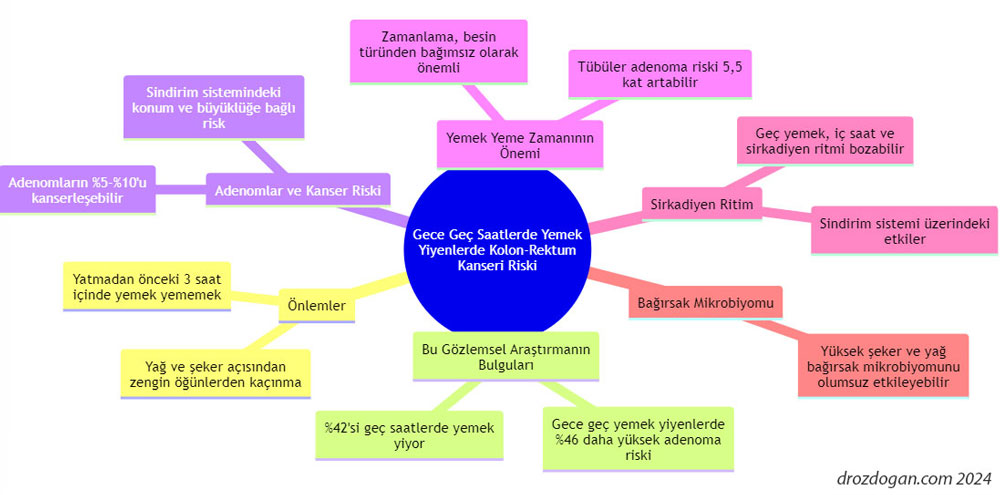
We have long known to avoid eating late at night, especially large meals rich in fat and sugar. There is now another reason to follow that advice: Eating within 3 hours of bedtime on at least 4 days a week may increase the risk of colorectal cancer .
A new study surveyed people undergoing colonoscopy for cancer screening. Of the 664 participants, 42% ate late. Compared with those who did not eat late, these participants had a 46% higher chance of an adenoma (a small, noncancerous lesion) being found during colonoscopy.
Adenomas and Cancer Risk
An adenoma is not cancer, but an estimated 5% to 10% may become cancerous over time. The risk varies with size and location in the digestive tract. Doctors look for, measure and count these lesions during colonoscopy.
"Many other studies look at what we eat, but not when we eat," says principal investigator Edena Khoshaba, a medical student at Rush Medical College in Chicago. "The usual advice is not to eat red meat and to eat more fruit and vegetables—which is great, of course—but we wanted to see how timing affects us."
Khoshaba and colleagues found an effect. Even after adjustment for what participants ate, late eaters were 5.5 times more likely than others to have three or more tubular adenomas. Tubular adenomas are the most common type of colon polyp.
Related topic: Does Polyp Size Affect Cancer Risk? A Colon Polyp Size Chart
What Might Link Late Eating to Colorectal Cancer Risk?
Resetting Your Internal Clock
Eating before bed is associated with disrupting the body's internal clock, or "circadian rhythm." Here, the issue is not the central circadian clock in the brain that releases melatonin to make you sleepy at night. Instead, late eating may disrupt the "peripheral circadian rhythm" that helps other body areas adjust to the transition from day to night.
Part of this peripheral circadian system is in the digestive tract. For example, if you eat late at night, your brain may think it is nighttime while your gut thinks it is daytime.
People also do not always choose healthy foods late at night. Their choices often contain more added sugar and fat, potentially leading them to consume far more calories than they need. Late eating can therefore also cause unwanted weight gain.
Whether late eating has any connection with rising colorectal cancer rates in younger patients remains unanswered.
This was an observational study and is therefore less powerful than research randomly assigning people to late or early eating and comparing outcomes over time. As Khoshaba noted, participants were also asked to recall their diet over the previous 24 hours, which may not always be accurate.
Are You Keeping the Bacteria in Your Stomach Awake?
Some tiny organisms in the gut have internal clocks that follow a daily rhythm. What you eat determines how many different types are active. Eating foods high in sugar and fat late at night may therefore adversely affect your microbiome .
Khoshaba and colleagues next plan to study peripheral circadian rhythms, changes in the gut microbiome and the risk of developing metabolic syndrome .
Sources
2. Late-Night Eaters May Have Increased Risk for Colorectal Cancer - Medscape - May 24, 2024.
Was this article helpful?
Your feedback helps us improve our content.




Reader comments
Share your comment
Your name and comment are published only after administrator approval. Your email address is never shown to visitors.
Be the first to comment.