
New-Generation Breast Cancer Drugs, CDK 4/6 Inhibitors, Are Effective in Both Younger and Older Patients

In this article
For women with hormone receptor-positive, HER2-negative metastatic breast cancer, as first-line treatment, a cyclin-dependent kinase 4/6 (CDK 4/6) inhibitor and aromatase inhibitor combination was evaluated for efficacy and safety in a presented study. Journal of Clinical Oncology published the findings, including data from 3 randomized clinical trials. Older and younger postmenopausal women benefited similarly, but older women experienced more side effects.
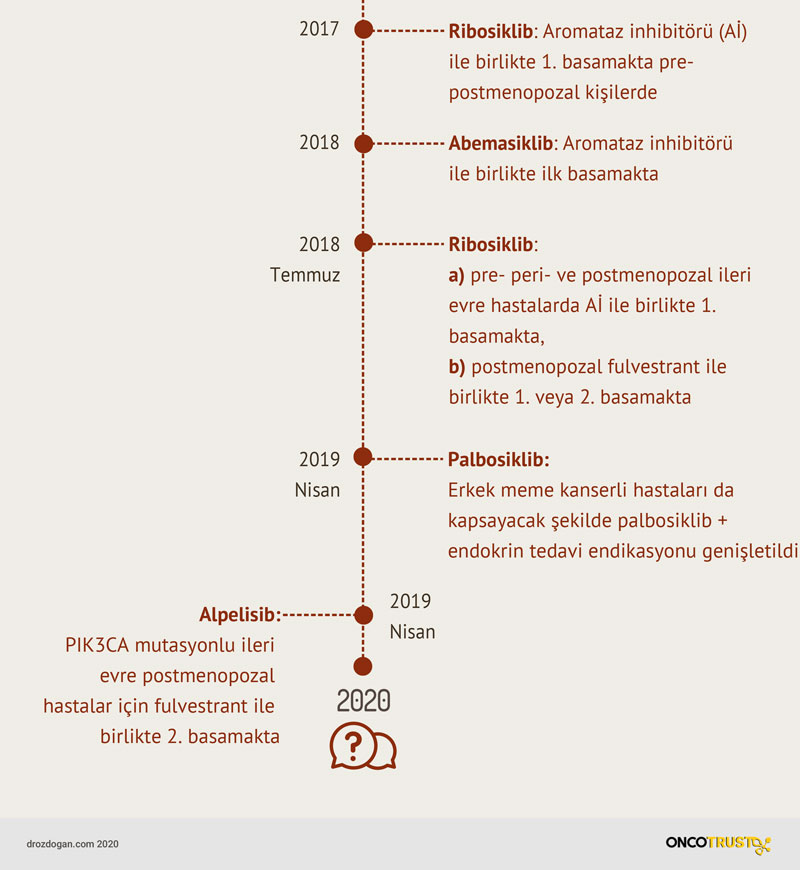
Combining standard hormonal breast cancer treatment with a CDK 4/6 inhibitor is currently considered standard first-line treatment for postmenopausal women with hormone receptor-positive, HER2-negative advanced breast cancer, a breast endocrine therapy regimen consisting of a CDK 4 / 6 inhibitor (such as palbociclib, ribociclib, abemaciclib) given concurrently with an aromatase inhibitor or fulvestrant .
Despite the high proportion of older women with breast cancer, this group—particularly those aged 75 and older—has been underrepresented in clinical trials . Clinical data addressing older patients being considered for endocrine treatment combined with a CDK4/6 inhibitor are therefore limited.
This analysis included 3 clinical trials and a total of 1105 patients:
- PALOMA-2: letrozole with or without palbociclib (Ibrance),
- MONALEESA-2: letrozole with or without ribociclib (Valamor), and
- MONARCH-3: anastrozole or letrozole with or without abemaciclib (Verzenios).
In this population, 456 (25%) and 198 (10.8%) patients were at least 70 or 75 years old, respectively. All 3 trials had progression-free survival as their primary endpoint. All patients were postmenopausal, had not previously been treated for metastatic disease and had a general performance status of ECOG 0 or 1 .
Analysis Results
- For all patients in the analysis, median progression-free survival with an aromatase inhibitor alone was 14.8 months , and for those treated with an aromatase inhibitor combined with a CDK 4/6 inhibitor it was 27.7 months.
- The corresponding results for patients aged 70 and older were 19.2 months and 33.1 months, and for those over 75, 13.7 months and 24.9 months.
- Patients over 75 and those under 75 were compared for side effects , with higher serious (grade 3 and 4) side effects in older patients: 88.8% versus 73.4%.
- In addition, patients aged 75 and older more frequently experienced dose reduction / omission (81.6% – 71.1%) and treatment discontinuation (32.0% – 12.1%).
- Patients aged 75 and older treated with an aromatase inhibitor combined with a CDK 4/6 inhibitor experienced more diarrhea (53.6% versus 45.5%) and fatigue (54.4% – 44.3%).
- For patients aged 70 and older receiving combination treatment, dose reduction / interruption was more common during cycles 1 to 3, and neutropenia, diarrhea and increased creatinine were the most common side effects associated with dose reduction / interruption.
In conclusion, breast cancer patients in older age groups receive similar benefits from CDK 4/6 inhibitors. Supportive care measures and closer side effect management may improve tolerability of this regimen in older patients.
*

Sources
Was this article helpful?
Your feedback helps us improve our content.




Reader comments
Share your comment
Your name and comment are published only after administrator approval. Your email address is never shown to visitors.
Be the first to comment.