
Respiratory Papillomatosis and Tonsil Cancer: Two HPV-Related Cases

In this article
HPV (human papillomavirus) is a virus whose infection is responsible for 5% of all cancers and, among cervical cancers, for 99%. Apart from cancer, HPV plays a role in the formation of papillomas / warts . Below, we share examples of HPV-related cases presented in NEJM on July 25, 2019: 2 cases are described.
Respiratory Papillomatosis (Laryngeal Papillomatosis)

A 63-year-old man presented to the pulmonary clinic with a 3-month history of dry cough and exertional dyspnea (breathing difficulty that worsens with activity). Human immunodeficiency virus (HIV) infection was part of his medical history, and he had been receiving intermittently prescribed antiretroviral therapy for several years. His CD4 count was 81 cells per cubic meter. On lung examination, wheezing was heard during expiration. Chest computed tomography showed multiple polypoid lesions protruding into the lumen of the trachea (windpipe) and into the left and right mainstem bronchi. Bronchoscopy revealed numerous sessile, friable, wart-like lesions on the posterior wall of the trachea and in the left and right mainstem bronchi. Histological examination showed squamous epithelial papillomas with moderate surface dysplasia , and polymerase chain reaction analysis identified HPV type 11 . Respiratory papillomatosis (laryngeal papillomatosis) was diagnosed. The patient underwent laser-assisted mechanical debulking (scraping away the papillomas), and a significant reduction in symptoms was reported. At follow-up 7 months later, his CD4 count had risen to 171 cells per cubic meter. His symptoms recurred, and he continued to undergo debulking procedures for recurrent papillomas.
- Related topic: Recurrent Laryngeal Papillomatosis: What Are HPV, Warts, and Papillomas? (Detailed)
Tonsil Cancer
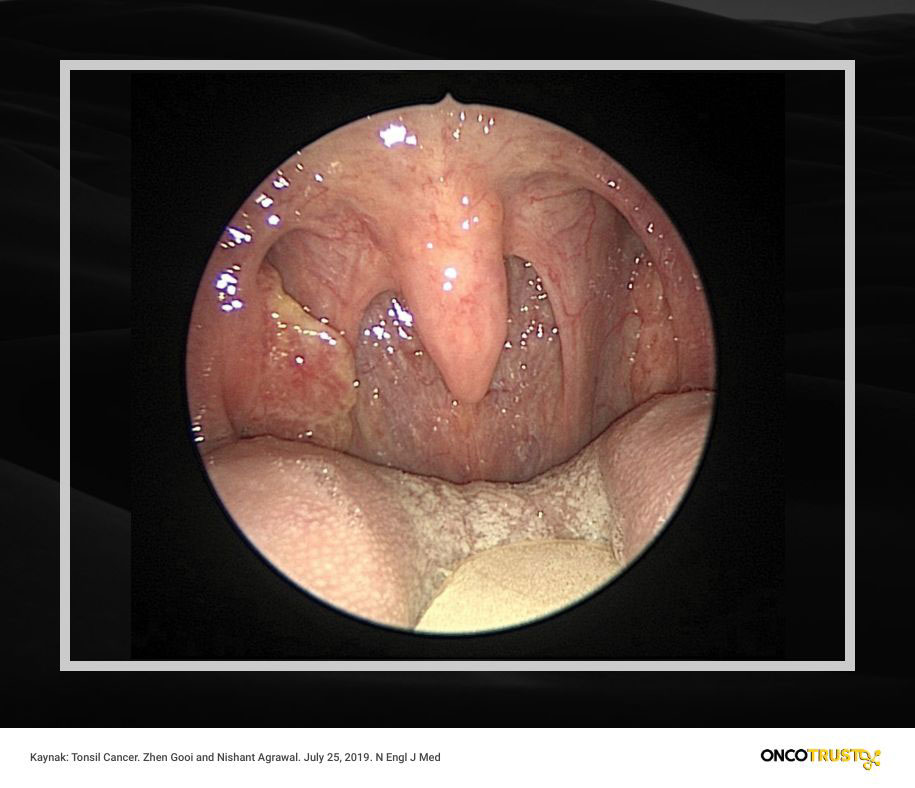
A 60-year-old man presented to the ear, nose, and throat clinic with a firm mass on the right side of his neck that had been present for 2 months. He had no history of smoking or heavy alcohol use. He had no voice changes, pain, or difficulty swallowing. Examination of the oropharynx (the mouth and throat) revealed an asymmetrically enlarged right tonsil. A biopsy specimen was taken from the tonsil and showed invasive, nonkeratinizing squamous cell carcinoma. Immunohistochemical analysis performed to determine the cause of the tonsil cancer detected strong nuclear and cytoplasmic staining for the HPV p16 protein... Not every patient with tonsil cancer has a visible lesion; tonsillar crypts may conceal tumors. The patient began treatment with induction chemotherapy and immunotherapy , after which his cancer became suitable for surgery. Surgery was performed to remove the tumor and the neck lymph node. Radiation therapy was not required. At six-month follow-up, the patient had no signs of cancer, had returned to work, and had begun a healthy diet .
- Related topic: How Does Cancer Develop in the Tonsils? Symptoms and Treatment of Tonsil Cancer (Detailed)
Sources
2. Tonsil Cancer. Zhen Gooi and Nishant Agrawal. July 25, 2019. N Engl J Med
Was this article helpful?
Your feedback helps us improve our content.




Reader comments
Share your comment
Your name and comment are published only after administrator approval. Your email address is never shown to visitors.
Be the first to comment.