
Thickening of the Uterine Lining - What Is Endometrial Hyperplasia?

In this article
Thickening of the uterine lining - Endometrial hyperplasia
The inner lining of the uterus is called the endometrium . Endometrial hyperplasia (thickening of the uterine lining) is among the most frequently reported and asked-about uterine conditions. After an ultrasound or MRI scan, you may read a report stating “endometrial hyperplasia.” The rest of this article covers what this term means, its types and causes, normal limits of endometrial thickness, diagnosis and treatment.
- In the figure below, you can see the gynecological (female-specific) organs.

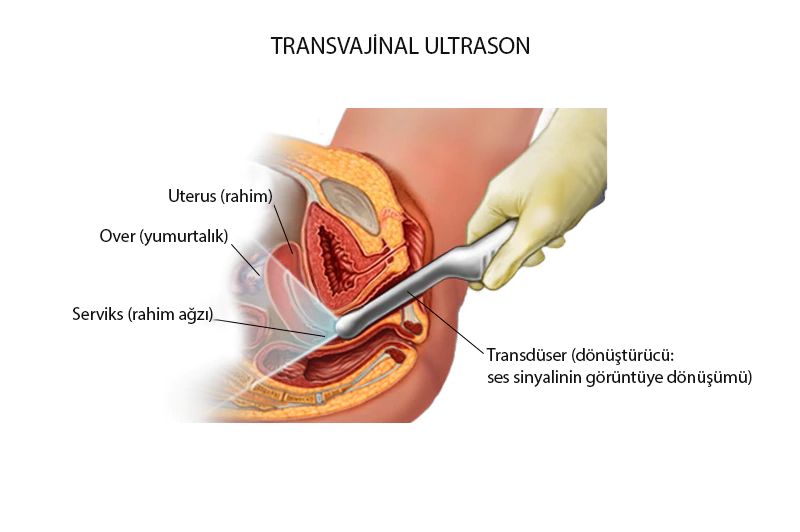
- In the figure below, some terms that will appear frequently in the remainder of this article are labeled on a transvaginal ultrasound (USG) image.

Note: When endometrial cells are found in other parts of your body, this is called endometriosis .
What is endometrial hyperplasia (thickening of the inner uterine lining)?
Endometrial hyperplasia refers to thickening of the endometrium. It is thickening of the layer of cells lining the inside of the uterus for various reasons, most often hormonal. When your endometrium becomes excessively thick, it can cause unusual bleeding.
Although the underlying cause of uterine lining thickening is usually not cancer, this thickening can sometimes be a precursor to uterine cancer, so it is best to follow your doctor’s advice whenever there are signs of a change.
- Related topic: What do dysplasia, metaplasia, atrophy, hyperplasia and hypertrophy, terms frequently seen in pathology reports, mean?
What are the types of endometrial hyperplasia?
Atypia means abnormal-looking cells; there are two main types of endometrial hyperplasia, depending on whether these unusual cells are present:
- Endometrial hyperplasia without atypia: This type of thickening does not contain unusual cells.
- Atypical endometrial hyperplasia: This type is defined by the growth of unusual cells and is considered a cancer precursor. It is called a precancerous change, meaning that it has a chance of developing into uterine cancer if untreated. Various studies estimate that the risk of progression from atypical hyperplasia to cancer may be as high as 52 percent.
Knowing which type of endometrial hyperplasia you have can help you better understand your cancer risk and choose the most effective treatment.
How can I know whether I have thickening of the uterine lining?
The main symptom of endometrial hyperplasia is unusual uterine bleeding.
- The following may be other signs of endometrial hyperplasia:
- Your periods are longer and heavier than usual.
- There are fewer than 21 days from the first day of one period to the first day of the next.
- You experience vaginal bleeding even though you have reached menopause.
Of course, unusual bleeding does not necessarily mean endometrial hyperplasia. It can also result from a range of other conditions, so it is best to see a doctor.
What causes endometrial hyperplasia?
Your menstrual period depends primarily on the hormones estrogen and progesterone. Estrogen helps cells in the endometrium, the uterine lining, grow. When pregnancy does not occur, a drop in your progesterone level after day 21 signals the endometrium to shed. This starts your period and the cycle begins again.
When these two hormones are balanced, everything works smoothly. With a hormonal imbalance, however, things may become unsynchronized.
The most common cause of endometrial hyperplasia is too much estrogen and insufficient progesterone. This leads to growth of endometrial cells. There are several reasons for a hormonal imbalance:
- You have reached menopause. This means you no longer ovulate and your body does not produce progesterone.
- You are in perimenopause (the transition into menopause). Ovulation no longer occurs regularly.
- You have already reached menopause but are taking estrogen (hormone replacement therapy). • You have irregular periods, infertility or polycystic ovary syndrome.
- You are taking drugs that mimic estrogen.
- Obese describes your condition.
- Tamoxifen users have a risk of thickening of the uterine lining and a very low risk of endometrial cancer. An annual gynecological examination is therefore recommended.
Other things that may increase your risk of endometrial hyperplasia include:
- Being older than 35
- Starting menstruation at a young age
- Reaching menopause late
- Having other health conditions such as diabetes, thyroid disease or gallbladder disease
- A family history of uterine, ovarian or colon cancer
How is thickening of the uterine lining diagnosed?
If you have reported unusual bleeding, your doctor will probably begin by asking questions about your medical history.
During your appointment, discuss the following:
- Whether there are blood clots and the flow is heavy
- Whether menstrual bleeding is painful
- All your other symptoms, even if you think they are unrelated
- Any other diseases you have
- Whether you could be pregnant
- Whether you have reached menopause
- Hormonal drugs you are taking or have taken
- Whether there is a family history of cancer
Depending on your medical history, some diagnostic tests will probably follow. These may include one or more of the following:
- Transvaginal ultrasound: This involves placing a small device in the vagina that converts sound waves into images on a screen. It helps your doctor measure the thickness of your endometrium and view your uterus and ovaries.
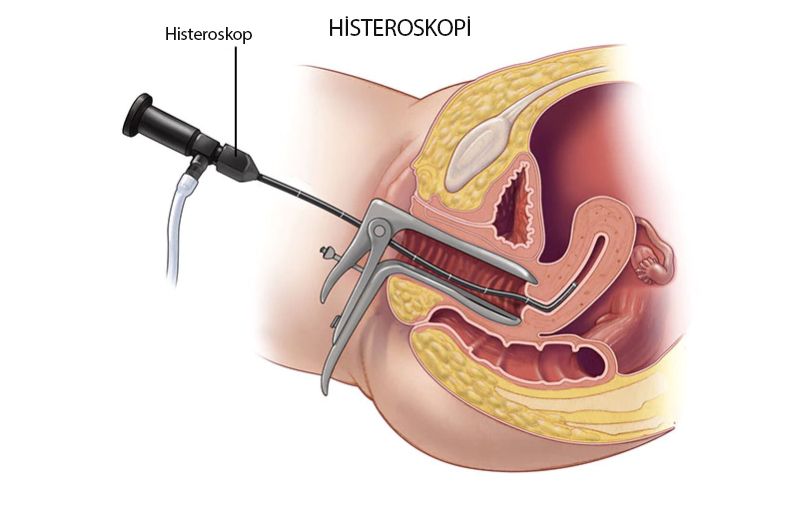
- Hysteroscopy: This involves inserting a small device with a light and camera through your cervix to check for anything unusual inside the uterus.
- Biopsy: This involves taking a small tissue sample from inside the uterus to check for any cancerous cells. The tissue sample may be taken during hysteroscopy or as a simple office procedure (with dilation and curettage). The sample is then sent to a pathologist for analysis.


What is the normal thickness of the endometrium?
Determining normal limits for endometrial thickness is based on identifying the thickness at which endometrial cancer risk increases significantly.
Commonly accepted vaginal ultrasound values are as follows:
Premenopausal (before menopause)
In premenopausal patients, there are significant differences during the various phases of the menstrual cycle.
- during menstruation: 2-4 mm (thinnest)
- early proliferative phase (days 6-14): 5-7 mm
- late proliferative / preovulatory phase: up to 11 mm
- secretory phase: 7-16 mm
Please note that these measurements are only a guide, as endometrial thickness can vary from person to person.
Postmenopausal (after menopause)
In a postmenopausal woman, endometrial thickness is typically less than 5 mm, although different thickness cutoffs have been suggested for further evaluation.
- If a woman is experiencing vaginal bleeding and is not taking tamoxifen; if her endometrial thickness is greater than the normal upper limit of 5 mm, the risk of uterine cancer is %7; if it is less than 5 mm, the risk is % 0.07.
- If there is no vaginal bleeding, the acceptable upper thickness limit is 8-11 mm. Above 11 mm, uterine cancer risk is %7; below 11 mm, it is %0.002.
- If the person is taking tamoxifen for breast cancer treatment, a uterine lining thickness of up to 8 mm can be considered normal.
How is thickening of the uterine lining treated?
Treatment usually consists of hormone therapy or surgery. Your options will depend on several factors, including:
- Whether atypical cells are found
- Whether you have reached menopause
- Future pregnancy plans
- Personal and family history of cancer
If there is simple hyperplasia without atypia, your doctor may recommend observation alone. Sometimes it does not worsen, and the condition may go away on its own.
Otherwise, it can be treated with the following:
- Hormonal treatment: Administration of progestin, a synthetic form of progesterone; it is available as a pill and also as an injection or in an intrauterine device. If a person has a history of cancer or uses hormonal drugs such as tamoxifen to treat cancer, hormonal treatment is not appropriate.
- Hysterectomy: If atypical hyperplasia is present, removing the uterus reduces your cancer risk. Having this operation means you will not be able to become pregnant. If you have reached menopause, do not plan to become pregnant or have a high cancer risk, this may be a good option.
Conclusion
Thickening of the uterine lining, medically called endometrial hyperplasia, sometimes resolves on its own. Uterine cancer is usually not cancerous and is treated with simple interventions. Follow-up is very important to prevent hyperplasia from progressing to atypical cells. If you have thickening of the uterine lining, continue regular checkups and inform your doctor of any changes or new symptoms.
RELATED TOPIC
Sources
What Is Endometrial Hyperplasia and How Is It Treated?
healthline.com - 3 December 2018
2. Chandra V, et al. (2016).
Therapeutic options for management of endometrial hyperplasia.
3. Endometrial hyperplasia and endometrial cancer. (n.d.)
hersfoundation.org/symptoms-and-conditions/endometrial-hyperplasia-and-endometrial-cancer/
4. Management of endometrial hyperplasia. (2016).
rcog.org.uk/globalassets/documents/guidelines/green-top-guidelines/gtg_67_endometrial_hyperplasia.pdf
5. Reed SD, et al. (2009).
Incidence of endometrial hyperplasia.
Was this article helpful?
Your feedback helps us improve our content.




Reader comments
Share your comment
Your name and comment are published only after administrator approval. Your email address is never shown to visitors.
Be the first to comment.