
What is a generic (equivalent) drug? What does biosimilar mean?

In this article
What is an equivalent (generic) drug?
Drugs manufactured using the original of a chemical drug, whose structure is simpler than biological drugs, as a reference are called generic (equivalent) drugs. In our country, these drugs are often referred to as equivalent drugs. Most painkillers, antibiotics and psychiatric medications on the market are of this kind. Generic drugs are products with the same characteristics and effects in patients as the original drugs, marketed after the original drugs’ patent protection expires. A generic drug must have the same efficacy, quality and reliability as the original. For a generic containing the same active ingredient at the same doses as the original but manufactured by a different organization to replace it, its bioequivalence must be demonstrated. Bioequivalence studies are overseen in the United States by the FDA, in the European Union by the European Agency for the Evaluation of Medicinal Products EMEA, and in Türkiye by the Ministry of Health.
What is a biosimilar drug?
Biosimilar drugs are similar versions of original biotechnological products manufactured after their patents expire. Organisms and living systems, rather than chemical compounds, are used in manufacturing biotechnological drugs. The best examples of biological and biosimilar drugs are monoclonal antibodies, which are also frequently used in cancer treatment.
How long do drug patents last?
A patent is a legal right granted to protect the value of an invention and encourages inventors to share their inventions with society.
Patent rights in the pharmaceutical industry provide protection for 20 years from discovery of the molecule. However, considering that it takes pharmaceutical companies approximately 12-15 years to turn a patented molecule into a marketable drug, the period of active benefit from patent protection falls to 5-8 years.

This definition includes certain blood products, various immunological products and products obtained through recombinant DNA technology or monoclonal antibody methods. These are very costly treatments. The substantial economic burden of biotechnological drugs is directing health authorities toward biosimilars. In Europe, after the original drugs’ patents expired, the first five biosimilars were licensed in 2006 and 2007, and Europe is a leader in biosimilars.
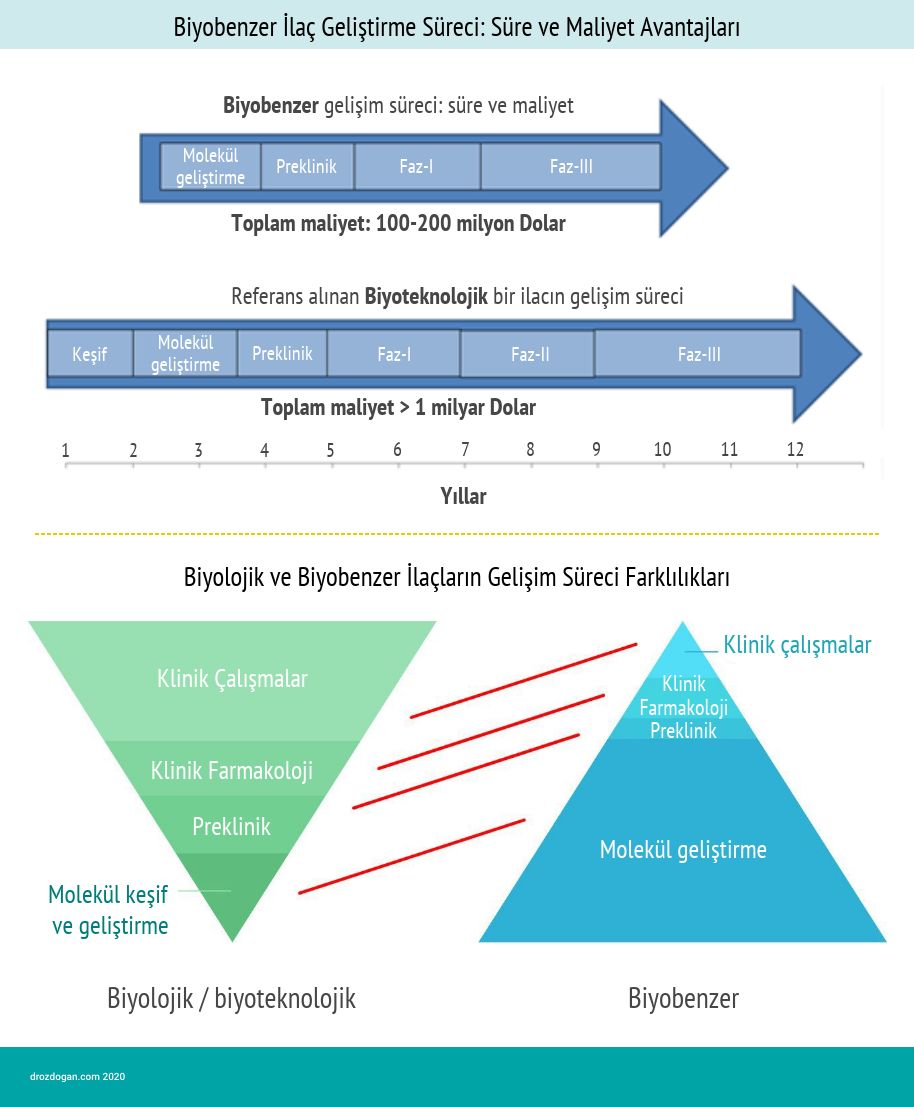
What are the characteristics and advantages of biosimilars?
- Biosimilar drugs are similar, but not identical, to original drugs as biological products.
- To manufacture a biosimilar drug, all research on that product, including clinical trials , must be conducted.
- Some biosimilar products have been found not to exhibit the same side effects as their reference products.
- The lack of long-term safety data for biosimilars has required health authorities to establish various regulations for these drugs. The European Medicines Agency (EMA) made the necessary legal arrangements through published product-specific guidelines and subsequently began granting the first licenses. In Türkiye, the “guideline on biosimilar medicinal products” published in 2008 established licensing criteria for biosimilar drugs.
Conclusion
Generic (equivalent) drugs are small molecules produced by chemical synthesis with chemically stable structures. Biosimilars, by contrast, are biotechnological products manufactured by living organisms. Their molecular structures are very large and complex. Therefore, biosimilars cannot be considered generic products, and the methods for comparing them with original products differ. Increasing numbers of generic and biosimilar drugs will reduce treatment costs and improve patients’ access to medicines.

FDA-approved biosimilar drugs in cancer (through September 2020)
- Zirabev (bevacizumab-bvzr): June 2019: for the treatment of metastatic colorectal cancer, advanced non-small cell lung cancer, recurrent glioblastoma, metastatic renal cell cancer and treatment-resistant recurrent or metastatic cervical cancer.
- Herzuma (trastuzumab-pkrb): December 2018. HER2-positive breast cancer treatment.
- Truxima (rituximab-abbs): November 2018. The first drug approved as a biosimilar for treating adult lymphoma. It is a biosimilar of the anti-CD20 monoclonal antibody rituximab .
- Udenyca (pegfilgrastim-cbqv): November 2018. Treatment of chemotherapy-related leukopenia / neutropenia .
- Nivestym (filgrastim-aafi): July 2018. Treatment of chemotherapy-related leukopenia / neutropenia .
- Fulphila (pegfilgrastim-jmdb): June 2018. The first FDA-approved biosimilar of Neulasta (pegfilgrastim), used to reduce infection risk during cancer treatment.
- Retacrit (epoetin alfa-epbx): May 2018. The first FDA epoetin-alfa biosimilar for treating anemia.
- Ogivri (trastuzumab-dkst): December 2017. The first biosimilar drug approved by the FDA for treating HER2-positive breast and stomach cancers (details).
- Mvasi (bevacizumab-awwb): September 2017. In cancer treatment, the first biosimilar drug approved (details).
- Zarxio (filgrastim-sndz): March 2015. The first biosimilar drug approved by the FDA. It is a biosimilar of the injection named Neupogen (filgastrim), used to reduce infection risk during cancer treatment.
Which biosimilar drugs drugs are available in Türkiye?
The licensed biosimilar drugs available in our country and used in oncology are as follows:
- Zirabev (bevacizumab)
- Canhera (trastuzumab)
- Neulastim (pegfilgastrim)
- Lonquex (lipefilgatrim)
Sources
2. Alper B. İskit. Jenerik ve Biyobenzer İlaçlar. Hacettepe Üniversitesi Tıp Fakültesi, Ankara 2014
Was this article helpful?
Your feedback helps us improve our content.
Reader comments
Share your comment
Your name and comment are published only after administrator approval. Your email address is never shown to visitors.
Be the first to comment.