
What Is a Thyroid Nodule and What Are Its Symptoms? Does It Cause Thyroid Cancer?

In this article
The thyroid is a small, butterfly-shaped, hormone-secreting organ at the front of the neck. The substances secreted by the thyroid gland are hormones affecting many metabolic systems, including heart rate, body temperature and bone calcium balance.
The main hormone secreted by the thyroid gland is T4 thyroxine (90%); T3 triiodothyronine accounts for 10% of secretion. T3 is responsible for the effects of thyroid hormones in tissues.
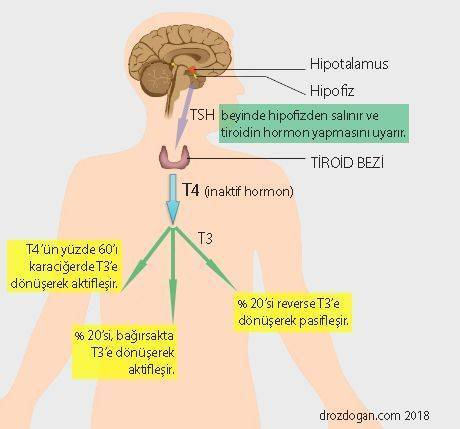
Sometimes, thyroid cells proliferate uncontrollably and form a lump called a thyroid nodule . Thyroid nodules can be solid or fluid-filled (cystic).
General Information About Thyroid Nodules
- Thyroid nodules are actually common. By age 60, half of all people have a thyroid nodule.
- Nodules are usually harmless. Once identified, however, they should be investigated to determine whether they produce excess hormones and, most importantly, whether they are cancerous.
- Only about 5% of thyroid nodules are cancerous.
- Nodule size does not determine whether it is cancerous. However, large nodules can cause shortness of breath or difficulty swallowing through pressure.
- Having one or several nodules generally does not change the likelihood of cancer.
- The number of nodules may increase with age; when there is more than one, this is called multinodular goiter.
- While nodules are detected in 3-7 percent of people during a physician's manual examination, this rises to 20-76 percent with USG (ultrasonography).
What Causes a Thyroid Nodule?
Various medical conditions can lead to thyroid nodules:
- Thyroiditis: This is inflammation of the thyroid. It has 3 main types: acute thyroiditis caused by bacterial infections; subacute thyroiditis following viral infections such as measles and mumps; and chronic/autoimmune thyroiditis, called lymphadenoid goiter or Hashimoto disease.
- Iodine deficiency: A diet lacking iodine can lead to thyroid nodules.
- Thyroid adenoma: This is excessive growth of thyroid tissue for an unknown reason. Most adenomas are harmless, but some produce thyroid hormone. This causes an overactive thyroid (hyperthyroidism).
- Thyroid cyst: This usually results from the breakdown (degeneration) of a thyroid adenoma.
- Thyroid cancer: Most thyroid nodules are not cancerous, but about 5% of thyroid nodules may be cancerous (saying “thyroid nodules turn into cancer” may be inaccurate; “some thyroid nodules are cancerous growths” is a more accurate statement).
Who Is at Risk of Thyroid Nodules?
- Living in an area where the diet lacks iodine,
- Having a family history of thyroid nodules,
- Being male,
- Being younger than 30 or older than 60.
Symptoms of a Thyroid Nodule
Most thyroid nodules cause no signs or symptoms. Large ones may be palpable, visible, and put pressure on the windpipe or esophagus, making breathing or swallowing difficult.
In some cases, thyroid nodules produce too much T4 thyroxine, the main hormone secreted by the thyroid gland. Excess thyroxine can cause symptoms of hyperthyroidism, including:
- Unexplained weight loss,
- Excessive sweating,
- Tremor,
- Irritability,
- A rapid or irregular heartbeat.
Some thyroid nodules are cancerous (malignant), but symptoms alone cannot determine whether a nodule is malignant. Most cancerous thyroid nodules grow slowly and may be small when discovered. Anaplastic thyroid cancer and other aggressive thyroid cancers are much rarer, but these nodules can be large and hard when they appear and can grow rapidly.
How Is a Thyroid Nodule Detected?
Sometimes you may notice it simply by looking in the mirror. There may be swelling under your chin or a lump on either side of your windpipe in the neck. Gently place your fingers on that area of your neck, and if you find a lump, consult your doctor.
Your doctor may order the following tests to confirm:
- A blood test for thyroid hormones
- Ultrasound (USG)
- Thyroid biopsy
How Should Suspicious Nodules Be Approached?
Thyroid ultrasound is preferred in most cases where a nodule is detected or suspected. USG provides valuable information about a nodule's diameter, cystic or solid characteristics and whether its shape is regular. A biopsy is performed if USG detects a nodule larger than 1 cm in diameter or with a shape suggesting cancer.
Thyroid biopsy is performed to determine whether a nodule detected on ultrasound is cancerous and, if so, what type of cancer it is. Fine-needle aspiration biopsy (FNAB) and tru-cut (core needle) biopsy can be used for this purpose. FNAB is the most commonly used biopsy method for thyroid nodules.
Following FNAB, whether a nodule is cancerous can be clearly determined in 85-90% of cases. The result may remain uncertain in the other 10-15% of patients. If FNAB cannot establish whether the nodule is cancerous, surgery is usually recommended. However, the nodules are not cancerous in the vast majority of these patients, resulting in unnecessary surgery. Instead, FNAB can be repeated, a tru-cut biopsy can be performed, or FNAB+tru-cut biopsy can be performed simultaneously, determining whether nodules are cancerous in more than 90% of cases. This avoids unnecessary surgery.
FNAB uses a very fine needle to collect clusters of cells, whereas tru-cut biopsy uses a slightly thicker needle to remove strips of tissue. Tru-cut biopsy therefore has greater diagnostic value than FNAB. However, because FNAB uses a finer needle, it is preferred as the initial biopsy approach for thyroid nodules. For a second biopsy, tru-cut biopsy or FNAB+tru-cut biopsy should be preferred.
Another diagnostic procedure, thyroid scintigraphy , is performed by administering a radioactive substance. Scintigraphy can show cold (hypoactive), hot (hyperactive) and warm (normally active) nodules. Hot nodules are known to have a very low probability of cancer. In cold nodules, the cancer rate varies between 5 and 8 percent. Today, thyroid scintigraphy is preferred in cases with excess thyroid hormone.
How Are Thyroid Nodules Treated?
If a thyroid nodule is benign and small, it can be monitored without intervention. Thyroid ultrasound will be needed to see whether it is growing. Your doctor will also check thyroid hormone levels from time to time. If there is a change, medication can be used to regulate them.
If a cancerous nodule is found, thyroid surgery is required. Nodules producing too much thyroid hormone can be treated with radioactive iodine. Radioactive iodine can be taken as a pill or liquid. It helps shrink the thyroid nodule without harming other tissues. Other treatments may include antithyroid medication and surgery.
Sources
WebMD Medical Reference Reviewed by Melinda Ratini, DO, MS on February 28, 2017
Was this article helpful?
Your feedback helps us improve our content.




Reader comments
Share your comment
Your name and comment are published only after administrator approval. Your email address is never shown to visitors.
Be the first to comment.