
What is meningioma? What are its symptoms and treatment?

In this article
Meningioma is a type of cancer that begins between the skull and the brain or between the spine and the spinal cord; in other words, it is cancer of the membrane surrounding the central nervous system. Brain tumors are included among central nervous system cancers, of which meningioma is the most common type. The outlook for a person with meningioma depends on many factors, including tumor size. Treatment generally involves surgical removal of the tumor. When surgery is not an option, other approaches such as chemotherapy may help.
What is meningioma?
Meningioma is a type of brain or spinal cord cancer located in the meninges. The meninges are a three-layer membrane surrounding the brain and spinal cord. These layers are called the “dura mater”, “arachnoid mater” and “pia mater”. Meningioma is the most common type of primary brain cancer. For a brain cancer to be “primary” means that the cancer originated in the brain. Meningiomas grow along the dura mater, the outermost layer of the meninges.

The cells lining the dura mater are called meningeal cells. When these cells mutate, their genetic code changes, affecting their functions. As a result, they turn into cancer cells. Exposure to radiation, particularly during childhood, is the only known environmental factor for meningioma. Neurofibromatosis type 2 is a genetic condition, and people living with it also have a higher risk of developing meningioma.
What are the types of meningioma?
Some types of meningioma grow slowly and do not spread, while others spread rapidly and are more dangerous.
There are three types or grades of meningioma, assessed according to the following characteristics:
- Tumor location
- Tumor shape
- Extent of spread
- Genetic findings
- The person’s age
- Amount of tumor remaining after surgery
Based on the factors above, a tumor is assigned a grade from 1 to 3:
- Grade one meningiomas: These low-grade tumors are benign and are the most common type of meningioma. In grade one meningioma, tumor cells grow slowly.
- Grade two meningiomas: This intermediate-grade tumor has an "atypical" appearance, meaning it is more aggressive. This grade means that tumors are more likely to recur after surgical removal. Subtypes include choroid and clear cell meningiomas.
- Grade three meningiomas: They have a more atypical appearance compared with healthy meningioma cells. This is considered an "anaplastic" appearance and is malignant (cancerous). This means that these are fast-growing tumors. Subtypes include papillary and rhabdoid meningiomas.
US meningioma statistics can be seen below:
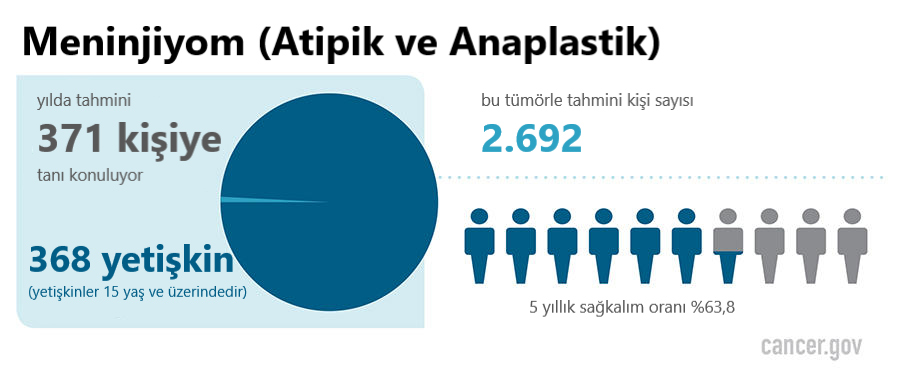
Do atypical and anaplastic meningiomas spread?
Grade two (atypical) and grade three (anaplastic) meningiomas often spread through the fluid surrounding the brain, called cerebrospinal fluid. Grade two meningiomas can metastasize from the meninges surrounding the brain and bone tissue. Grade three meningiomas can spread to the brain and other organs.
The US National Cancer Institute states that meningioma is more common in women, but higher grades occur more often in men. It is also most common in Black people and those aged 60 or older.
Signs and symptoms of meningioma
Meningioma symptoms depend on its location. In general, meningioma symptoms are as follows:
- Headache that is more intense in the morning
- Changes in vision
- Hearing loss
- Loss of smell
- Confusion
- Seizures
Some people with meningioma may have no symptoms, so scans of the brain and spinal cord are necessary for diagnosis.
How is meningioma diagnosed?
While some people with meningioma have no symptoms, others may have neurological problems and headaches. Therefore, the patient’s medical history is reviewed first and any symptoms are assessed.
Then, MRI (magnetic resonance imaging) and CT (computed tomography) may be needed. Contrast-enhanced MRI, performed with a special fluid injected into a vein, is the preferred method. This makes any tumor appear bright and enhanced on the scan.
When meningioma is suspected, another type of imaging that can show whether cancer cells have spread to other parts of the brain or other organs, MRI spectroscopy , may also be used.
Digital subtraction angiography is another imaging method that may help. It shows which blood vessels feed the meningioma.
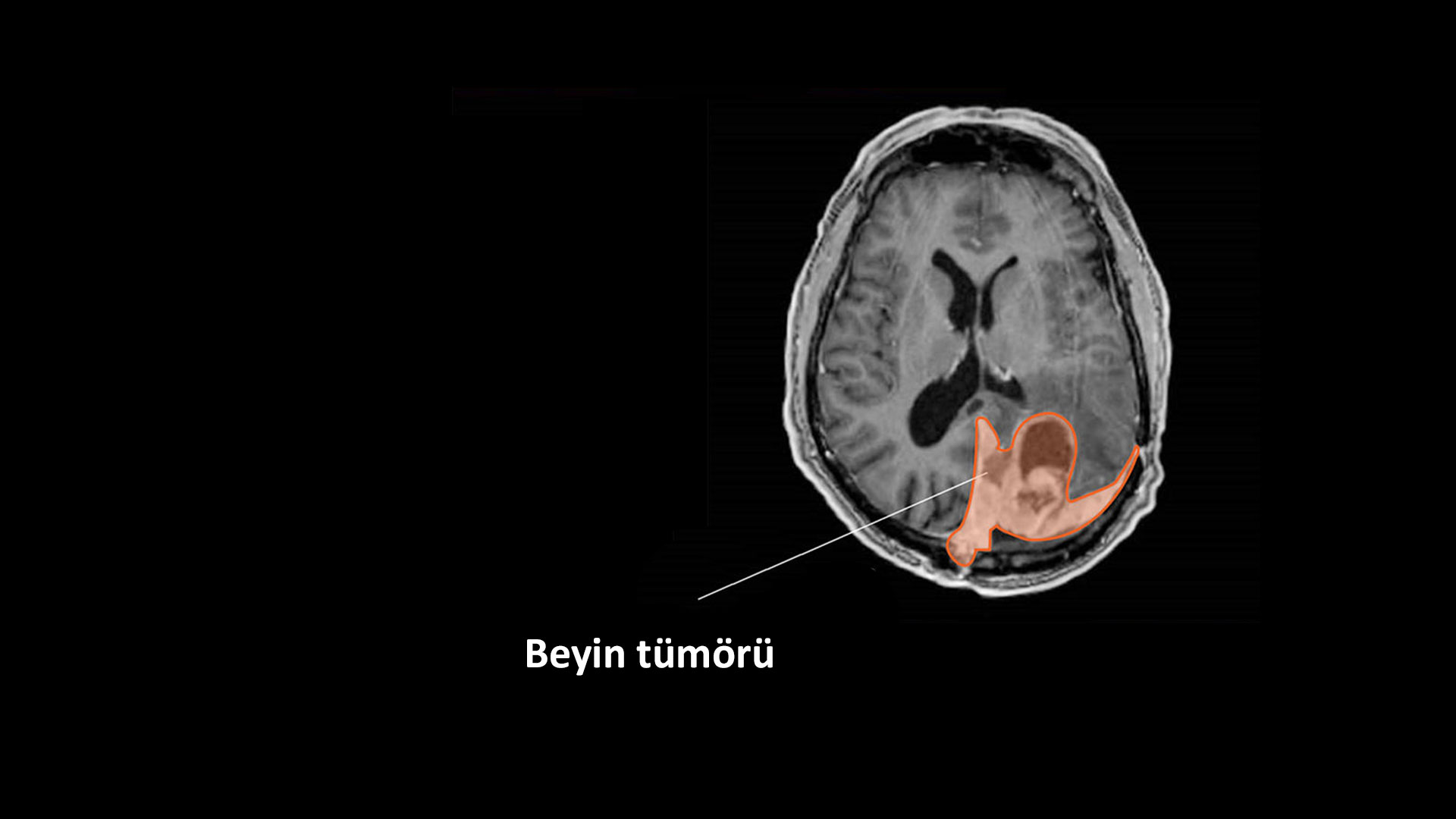
Figure: MRI image of a meningioma in the brain.
Before a diagnosis is made, a piece of abnormal tissue may be removed, in which a neuropathologist will test the cancerous cells. This will then help determine whether the tumor is a meningioma or another type of cancer, as well as assess its grade.
- Related topic: How is cancer diagnosed?
How is meningioma treated?
The most effective approach to cancer treatment depends on the tumor’s characteristics and factors specific to the individual. People with a small tumor causing no symptoms may not need treatment. In this case, the tumor should be checked once or twice a year to see whether it has changed and whether it is still causing symptoms.
- Related topic: What is personalized cancer treatment or a smart drug? How and when should it be used?
If a meningioma is causing symptoms, the first treatment choice is generally surgical removal of the tumor. This also applies to any rapidly growing meningioma. After surgery, the following additional treatments may be recommended to prevent cancer recurrence:
- Radiation therapy (radiotherapy)
- Chemotherapy
- Immunotherapy
- Targeted therapy
If a patient joins a clinical trial, they may receive meningioma-specific targeted treatment and immunotherapy. However, researchers are still investigating the role of chemotherapy, immunotherapy and targeted treatment in this type of cancer. While drug-based treatments for meningioma remain experimental, some of these treatments have achieved promising results in clinical trials involving other cancer types.
What happens if a benign tumor is not treated?
If a meningioma is detected early and is not causing symptoms, immediate treatment may not be needed. In this case, the benign tumor should be monitored regularly, and treatment options should be offered if the meningioma grows or spreads.
If a person’s tumor is successfully removed surgically, their chance of 5-year survival is 90%. However, the cancer may recur, particularly if the tumor grade is higher. Higher-grade meningiomas are more difficult to treat, and people with this type of cancer have lower survival rates. Radiation therapy after surgery may help improve survival rates and reduce the likelihood of cancer regrowth and spread.
Survival rate for meningioma
Survival rates vary according to meningioma grade. People with grade one tumors have the highest survival rate. For people with grade two or three meningiomas, the 5-year survival rate is nearly 64%. It is important to remember that all survival rates are based on averages from historical data and do not account for recent advances in diagnosis and treatment.
In addition, many different factors may affect a person’s disease course:
- Tumor type
- Tumor location
- Other characteristics of the cancer
- The person’s age
- The person’s overall health
- Responses to treatment
Summary
Meningioma is a type of cancer that develops in the meninges—the three membrane layers surrounding the brain and spinal cord. Grade one meningiomas may not require treatment. Instead, the person’s tumor and overall health should be checked once or twice a year.
When treatment is necessary and possible, the tumor can be removed surgically. Some people with higher-grade tumors may need additional treatments to prevent cancer recurrence and spread.
Related topics:
- One of the latest developments in drug discovery – Targeted antibody–chemotherapy conjugates
Sources
2. January 7, 2021. Meningioma Diagnosis and Treatment. National Cancer Institute: https://www.cancer.gov/
Was this article helpful?
Your feedback helps us improve our content.




Reader comments
Share your comment
Your name and comment are published only after administrator approval. Your email address is never shown to visitors.
Be the first to comment.