
Recent Nanotechnology Developments in Cancer Treatment

In this article
One of the leading causes of death and reduced quality of life worldwide, cancer is a group of diseases characterized by uncontrolled cell proliferation that also spreads to other parts of the body. Although various strategies addressing disease spread, improving quality of life and reducing deaths are used in cancer treatment, gaps in diagnosis and treatment remain. Steps toward optimal treatment, early detection of cancer cells and reduced side effects include nanotechnology strategies among the approaches being pursued.
Nanotechnology is the control of matter at the atomic and molecular level and is a relatively new branch of science. It is also defined as “the control of matter with at least one dimension ranging from 1 nanometer to 100 nanometers in size.
1 nanometer is one billionth of 1 meter. 1 nanometer = 0.000000001 or 10-9 meters is another way to express it.

How Is Nanotechnology Used in Cancer?
The Ideal Carrier
Nanotechnology-based immunotherapeutic agents are used in various cancers for purposes such as protecting healthy cells at the target site and reducing cancer-cell invasion. Nanotechnology forms of conventional chemotherapies have also entered oncology practice for similar purposes, for example Abraxane. Because of their biological structures, nanomaterials can easily cross cellular barriers and can be actively or passively targeted. Materials such as nanotubes, polymeric micelles and liposomes are also used in drug design because of their important pharmacological benefits in cancer diagnosis and treatment. This extends beyond cancer: the BioNTech and Moderna companies' coronavirus vaccines carry their active ingredients, mRNAs, in liposomes prepared using nanotechnology.


Commonly used nanomaterials can be classified by diagnosis and treatment as follows:
- Diagnosis:
- Quantum dots
- Nanoshells
- Gold nanoparticles
- Treatment:
- Liposomes
- Carbon nanotubes
- Polymeric micelles
- Dendrimers
- Quantum dots
Nanotechnology Methods in Cancer Gene Therapies
In recent years, many approaches have shown that silencing important drivers of tumor progression in cancer cells, or disabling genes that suppress cancer-associated immune cells, can effectively trigger an immune response against a tumor.
Nanomaterials are used to deliver siRNAs to cancer or immune cells to regulate the immune response, acting like a “Trojan horse”. Tumor-cell-targeted siRNA nanotherapeutics focus on downregulating immune checkpoints (immune checkpoint proteins), “don't eat me” signals, anti-inflammatory cytokines and similar factors to induce antitumor immune responses.
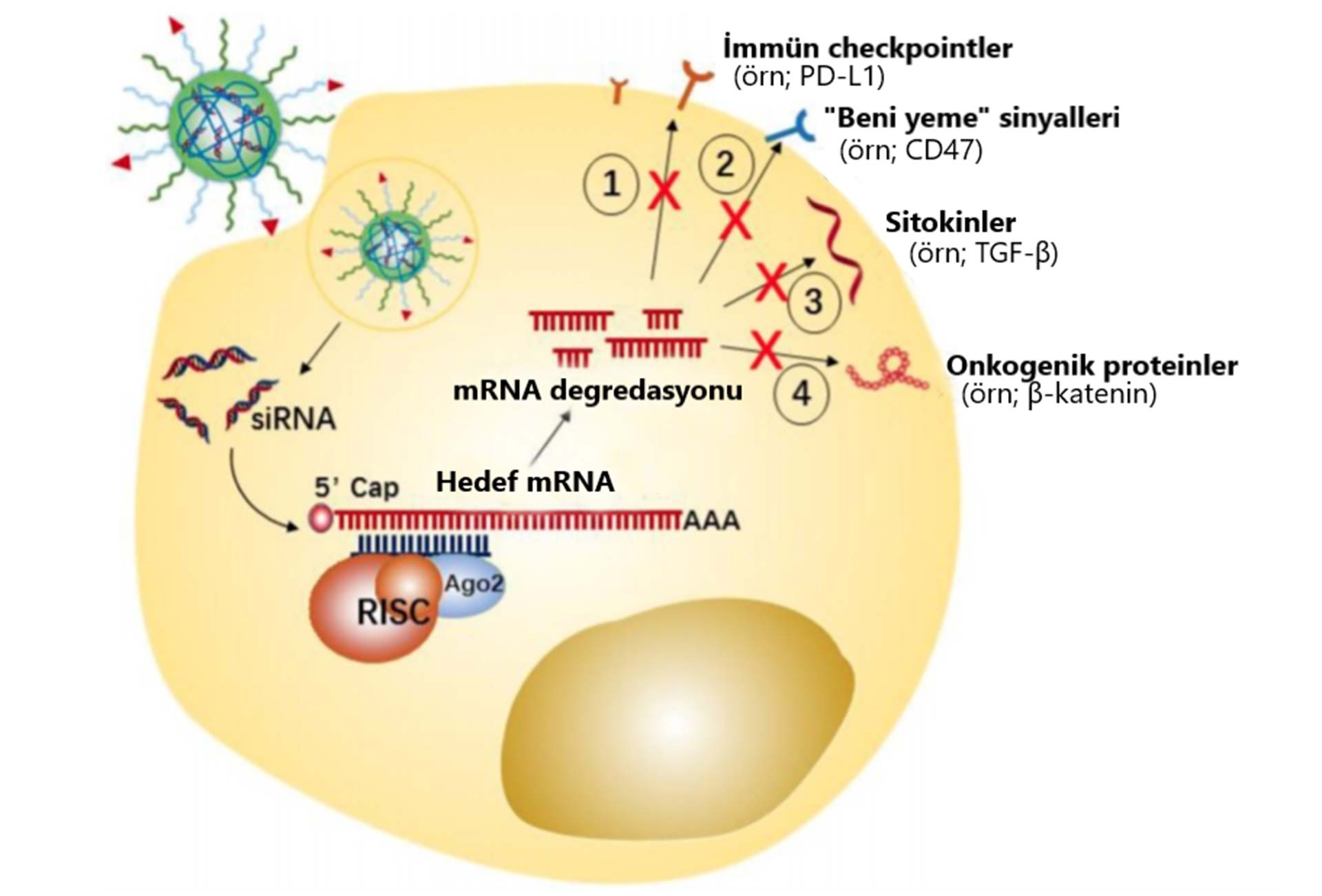
For example, P-glycoprotein (P-gp) triggers drug flow in drug-resistant cancer cells, increasing the required drug dose and damaging normal cells. siRNA targeting P-gp mRNA can therefore be used with anticancer substances to maximize treatment effects. Melanoma treatment has included delivery of the anticancer agent paclitaxel together with siRNA using a liposomal nanocarrier.
Another example from the past few years is siRNA being used to target harmful genes for silencing through delivery in polymer nanocomplexes. A pH-sensitive hydrophilic polyethylene glycol (PEG) shell containing a prostate-specific membrane antigen (PSMA) receptor ligand systemically delivered siRNA and significantly suppressed prostate cancer growth.
In addition, spherical nucleic acids (SNAs) conjugated with gold nanoparticles (AuNP) and siRNA targeted expression of the oncoprotein Bcl2Like12. This nanoparticle successfully crossed the blood-brain barrier to reach the brain and consequently, in the brain, glioblastoma cell apoptosis was observed to increase.
- Related topic: Nanotechnology Targets Brain Cancer Stem Cells
Nanotechnology Methods in Cancer Immunotherapy
During tumor progression, immune cells can recognize and eliminate tumor cells, a process also known as tumor immunosurveillance. However, tumor cells can alter the host's immune system by retraining or reprogramming immune cells and evade immune surveillance. Suppressing immunosuppressive cells or modulating immune cells toward antitumorigenic types is therefore an attractive approach to suppress tumor immune escape and slow tumor growth.
Nanoparticles also play a role in immunotherapy, a treatment focused on enhancing immune-system activation. For example, the innate immune system and the adaptive immune system can be activated to promote defense against cancer cells by CpG-ODN (CpG-OligoDeoxyNucleotides), and studies have observed stronger immune responses when it is carried by gold nanoparticles. Studies have also shown that lipid-calcium-phosphate nanoparticles can trigger specific antigenic immune responses and that liposome-protamine-hyaluronic acid nanoparticles can regulate siRNA delivery.
Macrophages are professional phagocytes that eliminate pathogens and cellular debris. In the tumor microenvironment, tumor-associated macrophages (TAMs) are generally either the protumor M2 type or the antitumor M1 type. Macrophages or monocytes are usually recruited to the tumor site and polarized to M1 in the early stages of tumor formation. As the tumor progresses, macrophages switch from M1 to M2. They help inhibit CD8+ T cells. Delivering targeted therapeutics to target these structures around the tumor and prevent these transitions will be promising strategies for cancer immunotherapy. To activate CD8 + T cells, immune cells whose activation is inhibited, dendritic cells can be stimulated with adjuvants. The nanoparticle polyinosinic-polycytidylic acid (poly I:C) reaches dendritic cells and acts as an adjuvant, allowing immune-cell activation once again through a nanoparticle.
Interferon gene stimulators (STING) are another interesting target requiring a nanotechnology approach for cancer therapeutics. Intracellular STING receptors need to activate the STING signaling pathway, which requires CGAMP (cyclic GMP-AMP). A liposomal nanoparticle that can activate STING by delivering CGAMP may be an option for triple-negative breast cancer treatment.
In another study, polymer vesicles (polymersomes) containing STING-activating nanoparticles were synthesized to help with cytosolic delivery of a STING CDN ligand. In this system, cGAMP was efficiently encapsulated in polymers that separated after endolysosomal acidification. STING nanoparticles then enhanced the therapeutic activity of cGAMP, restricted tumor growth and improved survival, and also responded to immune checkpoint inhibition.
microRNAs (mRNA) can be used to directly inhibit expression of immune-escape factors and proinflammatory cytokines. Several mRNA types have been found to play a role in PD-L1 (an immune checkpoint protein) expression levels in cancer cells. So far, few studies have used nanotechnology to deliver mRNA into tumor cells to trigger an antitumor immune response, but it is a potential nanotechnology strategy for developing cancer immunotherapy. The developers of the German BioNTech vaccine, Uğur Şahin and Özlem Türeci, have carried out important work on mRNA vaccines in cancer treatment.
- Related topic: A Ray of Hope for Treatment-Resistant Cancers: The Use of Micro-RNA
As another new immunotherapy method, CAR-T therapy has been used in leukemia and lymphoma treatment, achieving great success in patients with hematological malignancies (blood cancers). To efficiently disable T-cell receptors in CAR-programmed lymphocytes, genome-editing proteins (CRISPR) were to be transiently expressed using nanocarriers developed to deliver mRNA to the target. The results showed that nanoparticles could effectively carry mRNAs to targeted T cells and subsequently cause the targeted T cells to express the selected proteins.

Nanomaterials Used in Cancer Diagnosis
Early cancer diagnosis can critically affect treatment methods and strategies. Early diagnosis and the early treatment that follows can prevent cancer cells from having an opportunity to grow and spread.
- Related topic: What Are Nanoparticles? Examples and Nanotechnology in Cancer Diagnosis
Today, tools for early cancer diagnosis include positron emission tomography (PET), magnetic resonance imaging (MRI), computed tomography (BT) and ultrasound. However, these imaging systems are limited by not providing sufficient clinical information about different cancer types and stages. This makes it difficult to obtain a full assessment of the disease state on which the provision of optimal treatment depends.
Developing diagnostic methods is therefore as critical as the treatment itself, since it will allow more comprehensive and definitive treatment strategies. Imaging tumor tissue with nanoparticles for cancer diagnosis has made early detection possible. Advances in nanotechnology and the tools used in this field continue to bring new strategies to cancer diagnosis.
- Related topic: How Is Cancer Diagnosed?
Quantum Dots
The inability to penetrate objects limits the use of visible spectral imaging. Quantum dots emitting fluorescence in the near-infrared spectrum were designed to overcome this problem, making them more suitable for imaging colorectal (large bowel) cancer, liver cancer, pancreatic cancer and lymphoma. A second near-infrared (NIR) window with greater tissue penetration depth and higher spatial and temporal resolution has also been developed to aid cancer imaging.
Nanoshells
Nanoshells are dielectric cores, generally made of silicon and coated with a thin metal shell (usually gold), ranging in size from 10 to 300 nanometers. They work by converting plasma-mediated electrical energy into light energy and can be optically tuned flexibly through UV-infrared emission/absorption arrays. Even though they are limited by large sizes, they are preferred in imaging because they do not have heavy-metal toxicity.
Gold Nanoparticles
Gold nanoparticles (AuNPs) are good contrast agents because of their small size, good biocompatibility and high atomic number. Recent research shows they can be used in both active and passive targeting of cells. Passive targeting is governed by aggregation of gold nanoparticles to enhance imaging through the permeability-tension effect in tumor tissue. Active targeting is mediated by combining AuNPs with tumor-specific targeted drugs such as EGFR -targeted monoclonal antibodies to enable active targeting of tumor cells by AuNPs.
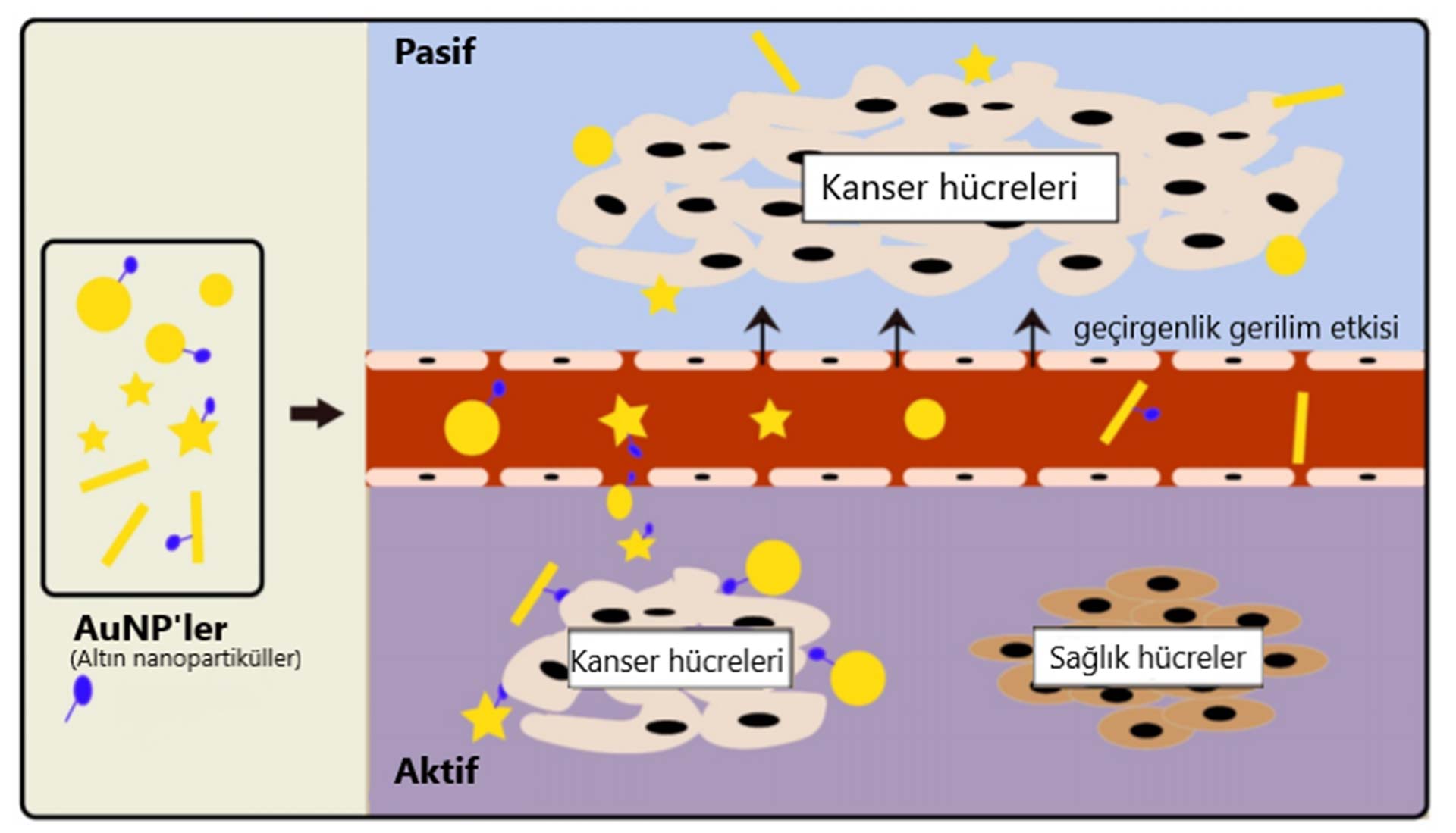
A group of researchers mixed liver cancer cells with AuNPs and, using X-ray imaging, found that liver cancer cells in the gold nanocomposite group produced a stronger image than liver cells alone. These findings could allow tumors as small as a few millimeters across to be detected in the body, which is very important for early diagnosis.
Biomarkers
Cancer biomarkers are biological characteristics whose expression indicates the presence and state of a tumor. Biomarkers may be proteins, protein fragments or DNA. Such markers are used to monitor changes in cancer cells and investigate or identify cellular processes, and the resulting findings can ultimately help improve understanding of tumors. Biomarkers sought in blood, urine or saliva samples taken for cancer screening have not yet been proved fully sufficient, so more research has been needed. Extract patterns of abnormally expressed proteins, peptides, glycans and antibodies in these samples have enabled protein biomarker discovery through the development of proteomic technology.
However, protein profiling tests face obstacles that cause the loss of low-molecular-weight protein biomarkers. Nanotechnology has also been used to address this problem. Two different studies have used nanoparticles to capture low-molecular-weight protein biomarkers. Nanotechnology studies also aim to increase mass spectrometry sensitivity and examine the properties of immune screening or tumor cells. More work on nanotechnology-based biomarker screening is still needed because of false-positive and false-negative results.
Nanomaterials Used in Cancer Treatment
Developments in nanotechnology have also brought advances in cancer treatment. They have made it possible to use small molecular structures and particles as vehicles for drug release.
Liposomes
Liposomes used in drug delivery systems can act actively or passively. Under the permeability-tension effect in tumor tissues, passive targeting allows them to enter tumors through gaps in blood vessels and fuse with cells there. They can then release drugs in the intracellular space. In active targeting, antibodies attached to the liposome target tumor-specific antigens and can subsequently carry drugs to the tumor.
Liposomes can also release drugs actively or passively when suitable conditions such as pH, redox potential, ultrasound and electromagnetic fields are provided. Their ability to penetrate tumors and their half-lives may differ with size. For example, liposomal forms of adriamycin have shown significant clinical benefit and are used for metastatic ovarian cancer treatment.
- Related topic: The Mechanism of Ovarian Cancer Metastasis Has Been Uncovered – Preventing It Is Next
Carbon Nanotubes
Carbon nanotubes are highly suitable nanotechnology candidates for large-scale biomedical applications because of physical and chemical properties such as surface area, metallic characteristics, and electrical and thermal conductivity. Their ability to absorb near-infrared light also allows thermal heating and targeting of tumor cells. For example, in vitro and in vivo studies have examined their use in cancer treatment in combination with drugs such as paclitaxel.
Polymeric Micelles
Polymeric nanoparticles are known as nanocapsules or polymer micelles. They are the first polymers reported for drug delivery systems and are used with hydrophobic drugs. Hydrophobic macromolecules and drugs can be transferred to the center of polymeric nanoparticles and produce a therapeutic effect by injection in an aqueous solution.
Polymeric nanoparticles may offer alternative ways to reduce cytotoxicity (cell killing) in healthy tissues compared with cancer cells. However, cancer nanomedicine still faces challenges in effectively delivering drugs to their target with limited side effects and drug resistance. For example, nanomaterial conjugated with adriamycin has achieved some therapeutic effect and has been used to treat various cancers, but its use has been limited by many side effects, including toxicity and heart problems. Given their benefits, more studies are needed to provide safer drug targeting with polymeric micelles.
Dendrimers
The physical, chemical and biological properties of the polymer—including size, charge, multiple ligand groups, lipid bilayer interactions, cytotoxicity, cellular uptake, plasma retention time, biodistribution and filtration of dendritic macromolecules—have made dendrimers potential nanoscale carriers.
Dendritic drug conjugates are generally formed by covalently attaching antitumor drugs to dendritic peripheral groups. Several drug molecules can therefore attach to each dendritic molecule, and release of these therapeutic molecules is partly controlled by the nature of that attachment. A further advantage of dendrimers is their ability to bind DNA, as seen in DNA polyamides, making them highly effective at killing cancer cells expressing folate receptors.
Quantum Dots
Quantum dots can accumulate in particular regions of the body and transfer drugs there. Their ability to concentrate in a single internal organ makes them a potential solution to untargeted drug distribution and may also allow chemotherapy side effects to be eliminated.
Conclusion
Nanotechnology has offered considerable promise for cancer treatment over the years. Nanomaterials have contributed to improved cancer diagnosis and treatment through enhanced pharmacokinetic and pharmacodynamic properties. Because of their specificity, nanotechnology allows targeted drug release in affected organs with minimal systemic toxicity. However, like other therapeutic options, it is not entirely free of toxicity, which causes difficulties in clinical applications. Given its limitations, more studies are needed to improve drug release and maximize effectiveness while minimizing disadvantages. Improving the interactions among the physicochemical properties of nanomaterials may provide safer and more effective derivatives for diagnosis and treatment in cancer management.
Sources
2. Jun-OJin et al. (2020, May 11). Nucleic acid nanotechnology for cancer treatment. Science Direct: https://www.sciencedirect.com/
3. Lin, Y.-X. et al. (2020, Jan 1). RNA Nanotechnology-Mediated Cancer Immunotherapy. National center for biotechnology information: https://www.ncbi.nlm.nih.gov/
Was this article helpful?
Your feedback helps us improve our content.


Reader comments
Share your comment
Your name and comment are published only after administrator approval. Your email address is never shown to visitors.
Be the first to comment.