
What Is the Glycemic Index Diet? Foods in Its List and Table

In this article
The glycemic index is a measure of a food's effect on blood sugar. In other words, it assesses how much a food raises blood sugar compared with standard sugar. Low-glycemic-index foods raise a person's blood sugar more slowly than high-glycemic-index foods.
What Is the Glycemic Index Diet?
The glycemic index (GI) assigns foods values from 1 to 100, indicating how quickly a food raises blood sugar. GI is calculated only for carbohydrates. Protein and fat have no GI value, so it is not calculated for them. However, not every carbohydrate-containing food has a high GI value. The fiber content of the carbohydrate consumed is directly related to its GI value. For example, healthy, high-fiber foods such as whole grains, fruit, and vegetables are digested more slowly. Their GI values are therefore lower than those of low-fiber foods such as white bread, wafers, and sugar. The glycemic index diet is an eating pattern based on GI values.
US News & World Report, with a large team of scientists and nutrition experts, has been ranking diets according to their characteristics and performance for 10 years. The glycemic index diet ranked in US News & World Report's “Best Diets 2021” list in 20th place. In addition, US News & World Report also evaluates the effects of diets on diabetes. Although the main goal of the Glycemic Index diet is to control blood sugar and prevent diabetes or support its treatment, the Glycemic Index Diet was ranked for diabetes management in 19th place among diet models.
Let's examine the glycemic index diet, which approaches eating from a different perspective, and foods considered to have “high”, “medium” and “low” GI values.
How Are Foods Selected in the Glycemic Index Diet?
People wishing to follow the glycemic index diet need to choose foods with low GI values. They may eat some medium-glycemic-index foods. However, they need to avoid high-glycemic-index foods. As mentioned, foods' GI values are divided into high, medium and low categories, with 3 categories in total. These categories are classified according to the values listed below.
High GI value: 70 and above
Medium GI value: 56-69
Low GI diet: 55 and below.
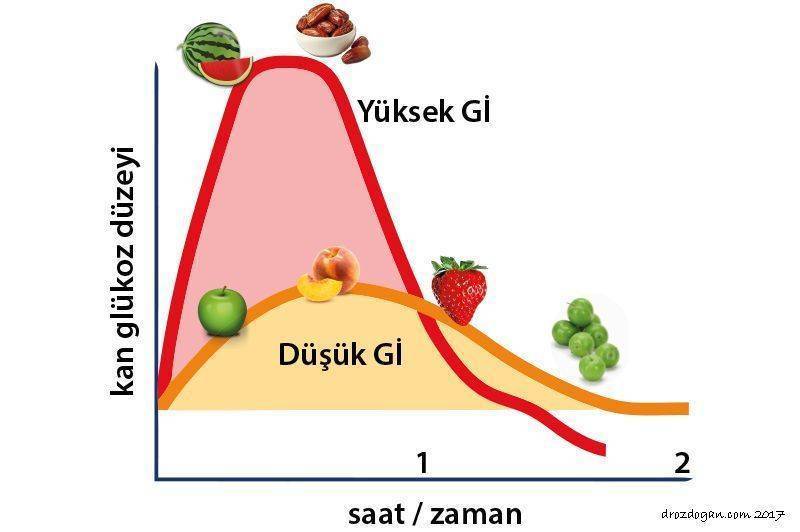
Note: You can learn which foods have the best low glycemic index in our article, What Are the Best Low-Glycemic-Index Foods?.
A food's GI value is calculated according to certain parameters. These include:
The type of sugar in the food: There is a misconception that every type of sugar has a high GI value. For example, the GI value of fructose is 23, whereas that of maltose may be 105. We can therefore say that the sugar in a food changes its GI value.
The structure of the starch in the food: Starch is a carbohydrate consisting of two molecules, amylose and amylopectin. Amylose is difficult to digest, whereas amylopectin is readily digested. Foods with a high amylose content have a lower GI value.
The degree of carbohydrate refinement (processing): The more a food is processed, the higher its GI value becomes. This is why whole-wheat bread has a lower GI value than white bread.
Food composition: Adding protein or fat to a meal may slow digestion and therefore lower the meal's GI value. For example, instead of eating potatoes alone in a meal, eating some potatoes with grilled chicken and yogurt will lower the meal's GI value.
Cooking technique: Preparation and cooking techniques may also affect GI values. The longer a food is cooked, the faster its sugars are digested and absorbed, which raises its GI value.
The food's ripeness: Complex carbohydrates in fruit break down as it ripens, releasing sugar. The GI value of fruit therefore rises as it ripens. For example, the GI value of an unripe banana is 30, whereas that of a ripe banana is 48.
We have explained how food choices are made in the glycemic index diet. Now let's also assess factors such as the speed of weight loss, health effects, and sustainability of this eating pattern.
Does the Glycemic Index Diet Lead to Weight Loss?
To lose weight, the total number of calories consumed during the day must be lower than the number of calories expended.
Foods with low GI values, such as fruit, vegetables, and whole grains, and foods containing high-quality protein, such as eggs, chicken / fish, and yogurt, contain fewer calories than high-GI foods such as sugar, packaged foods, and pastries. However, the glycemic index diet has no calorie restriction. In addition, unhealthy, very high-calorie foods such as fried chicken and processed meat products also have low GI values. The speed of weight loss and health effects of this diet are therefore closely related to the food choices of the person following it.
Glycemic Index Table
Foods with low GI values are generally more beneficial to health.
A summary glycemic index diet pyramid can be seen below.

Examples of foods "allowed" in the Glycemic Index diet include:
- Fruit: apples, strawberries, apricots, peaches, plums, pears, kiwis, tomatoes, and more
- Vegetables: carrots, broccoli, cauliflower, celery, zucchini, and more
- Legumes: lentils, chickpeas, dried beans, beans, borlotti beans, and other legumes
- Pasta and noodles: whole-wheat pasta and whole-wheat noodles
- Rice: basmati rice, brown rice
- Grains: quinoa, barley, pearl couscous, buckwheat
- Products used in place of milk and dairy products: milk, cheese, yogurt, coconut milk, soy milk, almond milk
- Fish and seafood: salmon, trout, tuna, sardines, shrimp
- Other animal products: beef, chicken, pork, lamb, eggs
- Nuts: nuts such as almonds, cashews, pistachios, and walnuts
- Fats and oils: fats such as olive oil, butter, and avocado
- Herbs and spices: seasonings such as garlic, basil, dill, salt, and black pepper
Examples of foods "not recommended" in the Glycemic Index diet include:
- Bread: white bread, simit, pastries, bakery products
- Breakfast cereals: cornflakes and related products
- Starchy vegetables: potatoes, mashed potatoes
- Rice: high-GI rice varieties such as jasmine, Arborio (used in risotto), and baldo
- Milk substitutes: rice milk and oat milk
- Fruit: watermelon
- Savory snacks: high-GI packaged foods such as rice crackers, rice cakes, corn chips, and potato chips
- Cakes and other sweets: high-GI foods such as buns, cakes, cookies, pastries, and waffles
As you can see above, foods freely allowed in the Glycemic Index diet are more beneficial to health. However, remember that foods such as fried chicken and fried zucchini also have low GI values but are unhealthy because they are fried. Therefore, when following the Glycemic Index diet to improve health, attention must be paid to foods' health effects as well as their GI values.
What Does It Cost to Follow the Glycemic Index Diet?
There is no need to register anywhere or pay a fee to follow the Glycemic Index diet. All that is required is knowing foods' GI values. There is therefore no cost to adhering to this eating pattern. However, foods such as vegetables, fruit, high-quality protein, and fat sources may cost slightly more than unhealthy ready-made and packaged foods. On the other hand, we can say it will not be an expensive eating pattern if total calorie intake is restricted.
Is the Glycemic Index Diet Sustainable?
The Glycemic Index diet includes many foods with “low” GI values. Foods in the protein and fat groups are unrestricted. It is therefore sustainable in terms of food choices. However, having to check the GI value of every food can be tiring for some people.
How Much Physical Activity Should You Do on the Glycemic Index Diet?
The Glycemic Index diet is an eating pattern that provides information only about foods' GI values. It therefore gives no information about the duration and intensity of daily physical activity. However, the importance of physical activity in both creating a calorie deficit and improving overall health is already known. People following the Glycemic Index diet would therefore benefit from keeping their physical activity levels high.
Summary
When we look at the foods recommended and prohibited in the Glycemic Index diet, we see that the same foods are similarly recommended in the Mediterranean Diet. However, the Mediterranean Diet also provides many other recommendations, such as which types of fat or meat are harmful or beneficial to health. It also specifies the amounts in which healthy and unhealthy foods may usefully be consumed. Taking a holistic approach to health and nutrition, the Mediterranean Diet also makes recommendations on water intake, physical activity, and social life. Therefore, to lose weight and improve overall health, rather than the Glycemic Index diet ranked 20th, we can say it would be much more beneficial to follow the Mediterranean Diet, which has ranked 1st for years and has been researched the most.
Was this article helpful?
Your feedback helps us improve our content.




Reader comments
Share your comment
Your name and comment are published only after administrator approval. Your email address is never shown to visitors.
Be the first to comment.