
Caring for Every Patient, Learning from Every Patient – CHEMOBOY Tells His Story at the ASCO Opening

In this article
A young medical oncology trainee took the main stage at the opening of this year’s American Society of Clinical Oncology (ASCO) 2019 Congress. The ASCO President introduced him to thousands of audience members during the opening ceremony.
The current ASCO President, Dr. Monica Bertagnolli, "The story he is about to tell you is a true reflection of this year’s ‘Caring for Every Patient, Learning from Every Patient’theme." said.
It also illustrates "the importance of knowing what matters to the patient," a theme discussed later in the session.
The young Dr. Edmond Ang; "I feel privileged to stand here among giants of oncology and to begin this opening session with a humble human story," he began. Dr. Ang is currently training at Auckland City Hospital in New Zealand in early-phase clinical research and breast cancer as part of his residency.
"This story happened about 10 years ago, but I still vividly remember standing at the patient’s bedside with a sea of eyes looking at me—I felt enormous shame, fear and anxiety." he said.
"I was a junior doctor with only 5 months of experience," he recalled of his time working in a hospital’s gynecological oncology ward in Malaysia: "Those were the years when a young doctor’s aspirations and idealism were crushed by long working hours and a heavy workload."
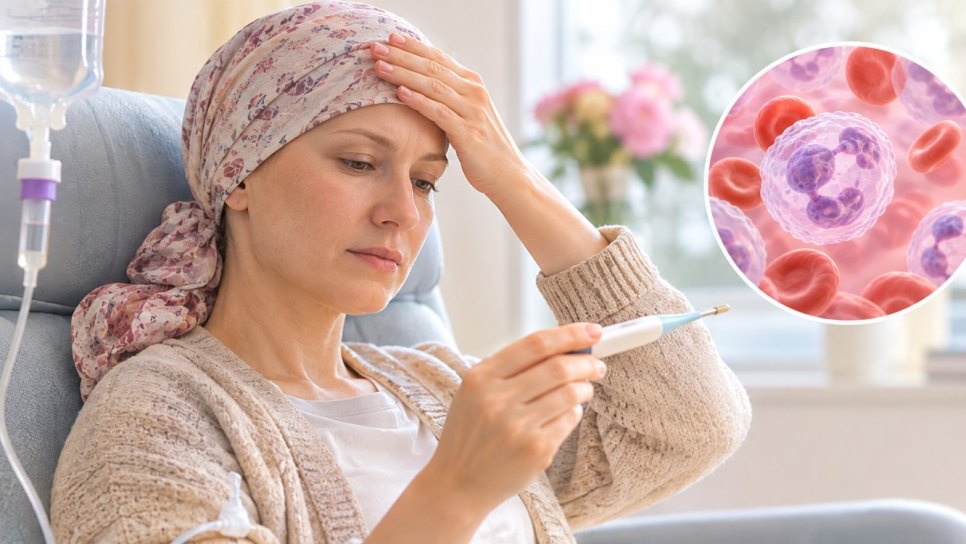
"I was a ‘chemoboy’—a role with no equivalent in the West," he said. This entailed all-encompassing responsibility for caring for patients receiving chemotherapy. "Getting the prescription from the specialist, then going to the pharmacy to have the drug prepared, assessing the patient beforehand in the meantime, checking their blood tests, arranging intravenous access, then returning to the pharmacy to collect the prepared chemo (chemotherapy) and premedications, administering the chemo and dealing with any complications (side effects) during administration... All of this was my job."
"On weekends there was no pharmacist on call, so as junior doctors we had to reconstitute/prepare some of these essential drugs with very little training. We also had no infusion pumps, critical tools for administering chemo, so we had to be very good at calculating doses," he said.
Ang said, "Adding to all the stress, we had a tough senior supervising us who was known for not being particularly kind to junior doctors," . Ang said, "On the morning in question, I had done everything I needed to do and thought I had done quite a good job," . "Instead, during the ward round I was harshly reprimanded by my senior in front of everyone. The problem was that a chemotherapy infusion expected to take more than 4 hours had finished in just 1 hour," he said. Responding to my senior, "I was genuinely surprised, because I thought I had calculated it correctly," I had said.
"I stood there feeling like the most miserable life-form in the galaxy."
"Then, as I was leaving the ward, the patient said: ‘I’m sorry, I’m really sorry, doctor. When you left the room this morning, I turned the infusion to free flow.’"
"You have to understand," she explained. "I have been in this hospital for 2 weeks. I have a young family back in my village in the tropical rainforest of Borneo, at least 6 hours away from here, and I need to go home," she said.
"I held her hand and said: ‘It’s all right. Let’s make sure you’re well, and I’ll do my very best to get you home as quickly as I can—but please don’t do that again,’" I said.
Ang said, "It has been ten years since I was a chemoboy, but I want to remember my patient with a few thoughts—I want to thank our patients for being our greatest teachers…" .
"Our professional careers are not made up solely of our academic titles or the number of scientific publications we have—I believe the essence of professional life is the encounters we have with our patients," he said. "I am the product of hundreds of stories like this chemotherapy story, continuing to teach my practice, and my patients’ voices continue to guide me."
What Matters to Patients?
The theme of what matters to patients was also addressed by a guest speaker, the author of the bestselling book "Being Mortal" and a surgeon at Boston’s Brigham and Women’s Hospital, Dr. Atul Gawande , who also emphasized this theme.
Discussing the difficult moment many oncologists face when a patient with cancer no longer responds to treatment and the question becomes what to do next, Gawande emphasized the role of palliative care . He recalled a palliative care nurse explaining the secret of this work to him: "The aim is to use medicine to give the patient the best day possible today, without worrying too much about tomorrow or the future."
He emphasized that this would mean different things to different patients.
He remembered a male patient telling him, "As long as I can eat chocolate ice cream and watch football on television, I’ll be happy with that, but when I can no longer do it, let me go," .
Gawande also told the story of another patient with cancer, his daughter’s piano teacher: "After reaching a point where standard treatment options had run out but experimental treatment was still possible, she taught her beloved piano students for another 6 weeks and chose to remain at home with palliative care. She had no children of her own and had formed strong bonds with her students."
A combination of pain- and distress-relieving drugs—morphine, gabapentin and Ritalin—allowed her to control her pain while continuing to work; she taught lessons and gave two piano recitals. Gawande showed a photograph of his patient at the piano, proud of her students.
He emphasized that this is what palliative care can do. By asking patients what matters to them and what their priorities are, and using medicine to help them achieve those goals, it may be possible to recreate "a life worth living," even for a short time.
Sources
Was this article helpful?
Your feedback helps us improve our content.
Reader comments
Share your comment
Your name and comment are published only after administrator approval. Your email address is never shown to visitors.
Be the first to comment.