Karnofsky Scale 1948-49: Putting a Number on a Patient's Day, ECOG and Performance Status | Day 113
In this article
Putting a Number on a Patient's Day: The Karnofsky Scale (1948-49)
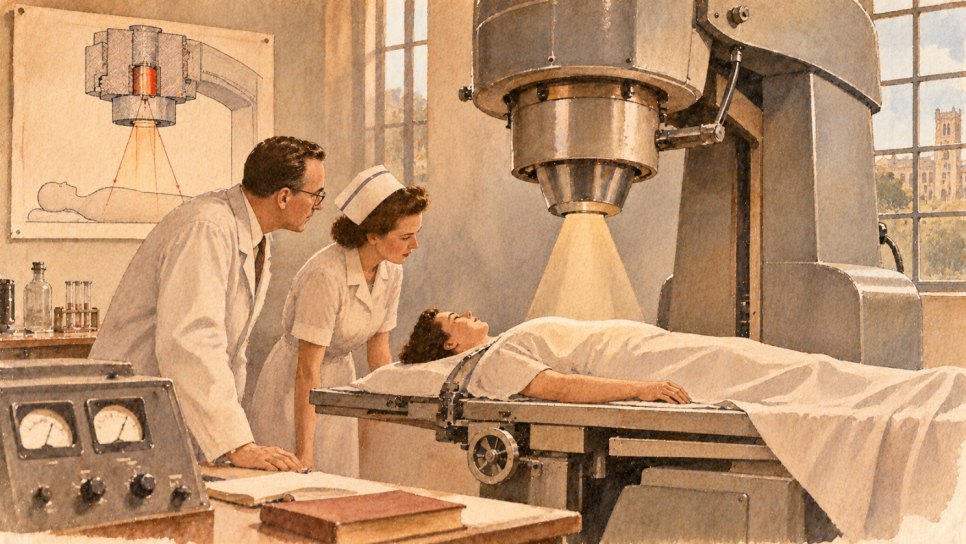
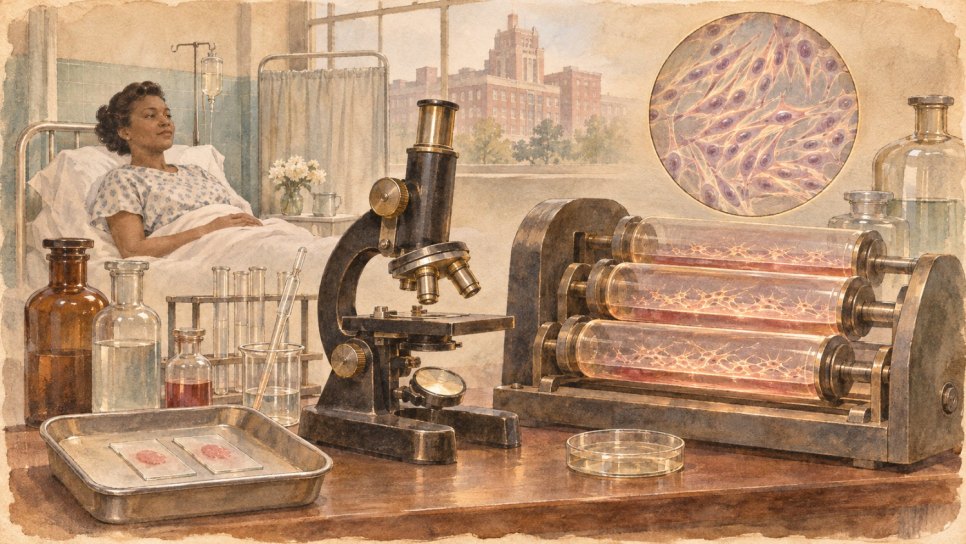
On day 112 we followed a surgeon who measured the effect of a treatment with an enzyme in the blood, and we saw that even that marker was already normal in about 35 percent of those with widespread disease. Today the measure looks not at the blood but at the patient's day: can she dress herself, can he eat, can she go to work? Before saying whether a drug works, one has to know whether the people receiving it resemble one another. This is the story of the scale that put a number on that question, and its date, unlike the one in our plan (1941-43), is 1948-49.
The same disease, the same drug, different people
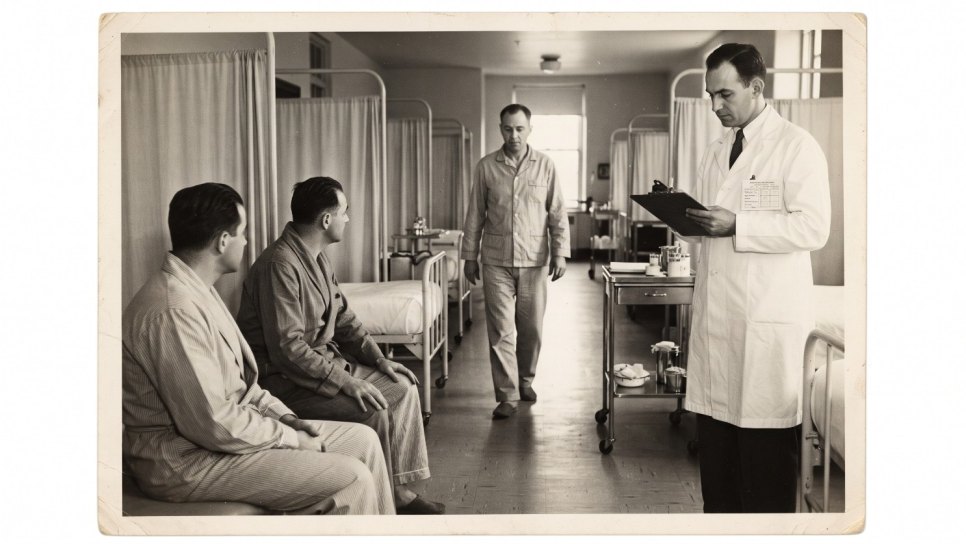
Imagine two patients given the same diagnosis and the same drug. One walks into the clinic and keeps working; the other spends most of the day in bed. If one improves after the drug and the other worsens, is that the drug's effect, or the difference they started with? This is not a historical scene but a thought experiment, and it describes exactly the problem faced by physicians who began to test chemotherapy systematically at the end of the 1940s.
The physician who turned this question into a number, David A. Karnofsky, was born in Los Angeles on 28 March 1914 and took his medical degree at Stanford in 1940. In the same year, as a resident at Harvard's Huntington Laboratory for Cancer Research, he began clinical cancer research. In 1942 he began studying the biological effects of mustard gas at the Mount Desert Island Biological Laboratory in Maine; after moving to the army's service dealing with chemical agents, he became interested in nitrogen mustard (mechlorethamine). We have set that story aside for 1942-43; here we only hold the end of the thread. According to The ASCO Post, in 1945 he joined his commanding officer C. P. Rhodes at the cancer hospital in New York and, with Joseph H. Burchenal, began what is described as the country's first organized clinical chemotherapy program.
Eleven steps: from 100 to 0
"The clinical evaluation of chemotherapeutic agents in cancer"
The most often cited source for the definition of the scale is the piece "The clinical evaluation of chemotherapeutic agents in cancer" by Karnofsky and Burchenal, published in 1949 in the book Evaluation of Chemotherapeutic Agents edited by C. M. MacLeod (Columbia University Press, pages 191-205); one source places the scale on page 196 of that piece. Other sources tie the scale to 1948, to the paper by Karnofsky, Abelmann, Craver and Burchenal in Cancer (volume 1, issue 4, pages 634-656) on the palliative use of nitrogen mustard. I could not read either text; for that reason I wrote "1948-49" in the title and opened the conflict in the fact-check box.
The scale describes what a patient can do on eleven steps between one hundred and zero, in tens. In summary: 100 is "normal, no complaints"; 90 and 80 are normal activity, with effort or with minor symptoms; 70 is able to care for oneself but not to do normal work; 60 and 50 need occasional or frequent help; 40 and 30 need special care, with hospital admission considered; 20 is very sick and needing supportive treatment; 10 is rapidly progressing severe illness; 0 is the end of life.
Its purpose, as the sources describe it, was to let physicians judge more objectively whether a patient could tolerate chemotherapy; also to classify patients by loss of function, to compare treatments and to follow the course of disease. As a conceptual summary: it measured not the size of the tumor but the patient.
PERFORMANCE STATUS: MEASURING WHAT A PERSON CAN DO —
What changed? Until then, the measures describing cancer belonged to the organ, the pathology, the tumor. The Karnofsky scale described not what the disease was doing in the body but what the person could do in the day.
Why did it matter? Because if you give the same drug to patients at two different levels of function and mix the results, you cannot measure the drug's effect. The scale supplied a shared language that made it possible to compare treatments.
Reducing eleven steps to five
The next step was to make the scale simple enough for clinical trial groups to use. C. Gordon Zubrod, who started the first cooperative group of the National Cancer Institute, and colleagues published in 1960 in the Journal of Chronic Diseases (volume 11, pages 7-33) a study comparing nitrogen mustard and thiophosphoramide; the historical note by NRG Oncology treats this work as the forerunner of the ECOG performance status. The ECOG scale then took firm hold in 1982 with its publication by Oken and colleagues in the American Journal of Clinical Oncology (volume 5, issue 6, pages 649-655).
The ECOG scale runs from 0 to 5: 0 is fully active; 1 is restricted in strenuous work but able to do light work; 2 is self-caring but unable to work, up for more than half of waking hours; 3 is limited self-care, in bed or a chair for half or more of waking hours; 4 is completely dependent; 5 is the end of life. One source gives an approximate correspondence validated in lung cancer patients: ECOG 0 corresponds roughly to Karnofsky 90-100, 1 to about 70-80, 2 to about 50-60, 3 to about 30-40, and 4 to about 10-20 (Buccheri et al. 1996; I did not read the original text). The diagram below shows this correspondence; the steps are approximate, not exact.
A number, a gate
Performance status is today one of the most commonly used eligibility criteria in clinical trials. A joint working group of ASCO and Friends of Cancer Research stated in 2021 (Clinical Cancer Research, online 9 February 2021, first author Allison Magnuson) that these criteria are subjective and open to investigator bias, and that restrictive criteria make trial participants unlike the real patient population. The group concluded that making the criteria more inclusive "may be justified in many cases." In one simulation, when the proportion of ECOG 2 participants was small, the effect on the hazard ratio and on power remained modest, even if these patients gained no benefit from treatment.
LIMIT: THE PHYSICIAN'S SCORE, THE PATIENT'S DAY —
Both scales rest on the physician's observation. Agreement between the physician's score and the patient's own report is limited. The 2019 paper by Broderick and colleagues reports these figures from earlier studies: in 206 patients with advanced lung cancer, weighted kappa of 0.53, 0.63 and 0.56 for oncologists, patients and nurses; among three physicians in 100 patients, kappa of 0.44; in 1,636 patients with advanced lung or colorectal cancer, a patient-physician weighted kappa of 0.30 in lung and 0.35 in colorectal, with disagreement linked to shorter survival. Kappa is a measure of agreement, not of treatment effect; it should not be read as a relative or absolute effect.
The same paper's own data are small: a single-arm pilot of 42 patients. Oncologists gave nearly everyone 0 or 1; the correlations between ECOG scores and steps per hour ranged from −0.08 to −0.38, and all the confidence intervals included zero. This is a pilot result; it does not show that the scale is wrong in general.
The cost runs two ways. First, a single number does not summarize a person. Second, the number can become a gate: a patient with a low score may be left outside clinical trials, and the groups in which new treatments are tested then differ from real patients.
What remains
- The idea that a patient's function is a dimension of treatment decisions in its own right
- A simple, shared language: Karnofsky and ECOG are still used side by side
- Its role in making trials and treatments comparable
What falls or is debated
- Treating a single physician's observation as sufficient: supplementing it with patient-reported measures is proposed
- Using the score as a rigid entry gate: more inclusive criteria are under discussion
- Reading the number as if it were the person
The same person, two scales. The eleven steps of Karnofsky and the five steps of ECOG correspond approximately. The limit below the diagram is a reminder that the scale still rests on the physician's score and overlaps only partly with the patient's own report.
How are these scales used in Turkey?
I could not reach verified data on the history or level of use of these scales in Turkey; this part is a general inference. The scales are independent of country and are accepted in common in international trials. The practical inference for a patient or relative is this: "what can I do at home today?" is concrete information to discuss with the physician; this text is not advice but a historical reminder.
FROM 1940 TO 2021
WHAT WAS VERIFIED IN THIS TEXT AND WHAT REMAINS OPEN
- The year conflict: NRG Oncology's historical note shows the scale as developed in 1948 and published in 1949 in the book piece. An encyclopedia entry gives 1948 and the Cancer 1948;1(4):634-656 paper, but the same page notes that the title of that paper concerns nitrogen mustard and that it needs verifying whether it is the source of the scale. The ASCO Post places the scale in 1949. I could not reach any primary text. The "1941-43" date in the plan file was not supported by any of these sources; the text was written as 1948-49.
- Karnofsky's life: The birth date (28 March 1914, Los Angeles), the Stanford education and the date of passing (31 August 1969, Ellsworth, Maine, lung cancer) are from a secondary encyclopedia entry (the date and cause agree with The ASCO Post); his posts (chief of the Medical Oncology Service and head of the Division of Chemotherapy Research at the Sloan-Kettering Institute; professor at Cornell) and the 1942-45 period are from The ASCO Post. The phrase "first organized clinical chemotherapy program" is The ASCO Post's account; it was not independently verified.
- Scale definitions: The eleven-step definitions were summarized from two secondary pages (an encyclopedia entry and Scientific Spine); this is a conceptual summary, not a verbatim quotation. The purpose sentence is from the NRG Oncology note.
- ECOG and Zubrod: The citations for Oken et al. 1982 and Zubrod et al. 1960 are from NRG and an encyclopedia entry; the full title of the Zubrod paper was not verified. The Karnofsky-ECOG correspondence and Buccheri et al. 1996 (Eur J Cancer 32A:1135-1141, 536 lung cancer patients) come from a secondary page; the original was not read.
- Agreement figures: The values for Ando 2001, Sørensen 1993 and Schnadig 2008 are relayed from Broderick et al. 2019; the original studies were not read. Broderick's own study is pilot data from 42 patients.
- ASCO-Friends: Magnuson et al., Clin Cancer Res 2021 (online 9 February), was read from the summary page; the volume and page numbers were not on the page.
- Turkey: No verified source was found on the use of these scales in Turkey.
- Left outside the frame: The children's scale of Lansky (1987) and additional assessments for older patients are not described in this text.
Cancer at the Threshold of 1941: Three Methods, Three Limits
On day 113 we saw how a number describes the patient. Tomorrow we return to the start of the 1940s and draw up a balance sheet: what did surgery, radiotherapy and hormonal treatment have in hand, and where did each one stand? The title in our plan did not fit the series' language rule, so it was renamed in this way. I will verify the dates before writing.
Author's note: This text contains a correction: the plan file placed the scale in 1941-43; the sources point to 1948-49, and so the text stands a little ahead of the plan in the chronology. In the following days we will go back to 1942-43. Because I could not reach the primary texts, in which publication the scale first appeared remains an open question; instead of behaving as though I knew, I showed it in the box.
Sources and further reading
- Karnofsky DA, Burchenal JH. The clinical evaluation of chemotherapeutic agents in cancer. In: MacLeod CM, ed. Evaluation of Chemotherapeutic Agents. New York: Columbia University Press; 1949:191-205.
- Karnofsky DA, Abelmann WH, Craver LF, Burchenal JH. The use of the nitrogen mustards in the palliative treatment of carcinoma. Cancer 1948;1(4):634-656.
- Zubrod CG, Schneiderman M, Frei E 3rd, et al. J Chronic Dis 1960;11:7-33. (Citation: NRG Oncology.)
- Oken MM, Creech RH, Tormey DC, et al. Toxicity and response criteria of the Eastern Cooperative Oncology Group. Am J Clin Oncol 1982;5(6):649-655.
- Broderick JE, May M, Schwartz JE, et al. Patient reported outcomes can improve performance status assessment: a pilot study. J Patient Rep Outcomes 2019;3:41.
- Magnuson A, et al. Modernizing clinical trial eligibility criteria: recommendations of the ASCO-Friends of Cancer Research performance status work group. Clin Cancer Res 2021 (online 9 February).
- NRG Oncology. Performance Status Measures — A Little History (nrgoncology.org). The ASCO Post, 25 August 2020: David A. Karnofsky's early contributions to cancer research (ascopost.com).
- Mukherjee S. The Emperor of All Maladies: A Biography of Cancer. New York: Scribner, 2010. (General frame.)
This text is day 113 of the "365 Days of Cancer History" series. The Karnofsky scale and the ECOG performance status derived from it are parts of the shared language of cancer treatment and clinical trials. The text was prepared from a historical-popular perspective; it contains no diagnosis or treatment recommendation, so consult your physician for your own health. The information rests on primary articles and reliable secondary sources; details that rest only on secondary sources are marked in the fact-check notes.
Was this article helpful?
Your feedback helps us improve our content.