The Long Shadow of Hiroshima: How Radiation Returned as Leukemia and Solid Tumors, 1945-1952
In this article
The Long Shadow of Hiroshima: How Radiation Returned as Leukemia and Solid Tumors, 1945-1952
On Day 118 we saw that the molecule of heredity is DNA; to ask when, at what dose and how damage turns into cancer, that molecule first had to be known. Today we look at the question through the history of a city rather than a laboratory: tens of thousands of people exposed, on a single morning, to a measurable dose of radiation. This piece tells what following those people taught us about cancer, what it could not teach, and the ethical price of the following itself. On Days 92 and 95 we saw the two faces of radiation, healing and harming; here the second face is measured in a single event and a large population.
6 and 9 August 1945
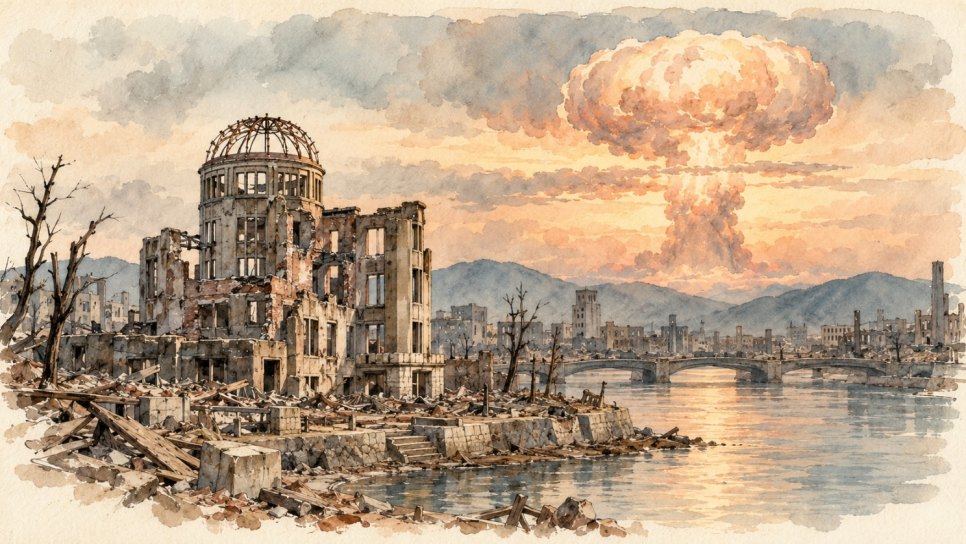
On the morning of 6 August 1945, at about 08:15-08:16 local time, a uranium bomb detonated over Hiroshima. Three days later, on 9 August at 11:02, a plutonium bomb detonated over Nagasaki. According to a Los Alamos report, the yields were about 15 kilotons of TNT equivalent for Hiroshima and about 21 for Nagasaki; the Hiroshima figure was estimated by indirect methods rather than measured directly and carries an uncertainty of about 20 percent.
There is no single number for the loss of life in the first weeks and months. The Radiation Effects Research Foundation (RERF) gives a range of 90,000 to 166,000 within two to four months for Hiroshima and 60,000 to 80,000 for Nagasaki; the city populations were about 340,000-350,000 and 250,000-270,000 respectively. Other sources give narrower or different ranges (see fact-check). This piece does not debate the bombing itself. The question medical history asks is narrower: what did the survivors live through over the years, and what can be learned about cancer from it?
A physician notices an excess
According to RERF's leukemia page, the Hiroshima physician Takuso Yamawaki began to see an unusual number of leukemia cases in his own clinical practice in the late 1940s. That observation led to a leukemia registry and to the first reports of raised risk in the early 1950s. One of the reports on record is the 1952 paper by Folley, Borges and Yamawaki in the American Journal of Medicine, "Incidence of leukemia in survivors of the atomic bomb in Hiroshima and Nagasaki, Japan" (volume 13, issue 3, pp. 311-321). I could not read the full text of this paper; RERF documents cite it in the context that most of the excess leukemia appeared "even before the beginning of the Life Span Study." The page does not claim it was the first report, and I do not write "first" either.
The institution built to follow
In November 1946 the US Secretary of the Navy, James Forrestal, asked President Truman to have the National Academy of Sciences-National Research Council undertake "a long range, continuing study" of the biological and medical effects of the atomic bomb on man; Truman approved on 26 November 1946. The program began in early 1947 as the Atomic Bomb Casualty Commission (ABCC). Formal Japanese participation began in 1948. In 1975 the ABCC became the US-Japan joint foundation RERF.
The backbone of the work, the Life Span Study (LSS), rests on a questionnaire on exposure added to the 1950 Japanese national census; follow-up of vital status began on 1 October 1950. The total cohort is about 120,000 people: roughly 94,000 survivors and roughly 27,000 unexposed comparison subjects. The cancer analyses use 105,427 people with known radiation doses. This is one of the longest and best-documented population follow-ups in medical history; much of what we know about the relation of cancer to dose and time comes from it.
Dose, relative risk and latency
The gray (Gy) is the unit of radiation dose absorbed by tissue. "Excess relative risk" (ERR) says how much higher the risk of disease is in the exposed than in the unexposed: an ERR of 0.5 means a 50 percent increase. A relative increase must be read together with the absolute number: for leukemia the relative increase is large and the absolute number small.
Latency is the interval between exposure and the appearance of disease. The "dose and delay" warning we saw in Lacassagne's mice on Day 105 is measured here in a human population: for leukemia the interval is years, for solid tumors decades.
Leukemia first, solid tumors later
According to RERF, leukemia was the earliest of the delayed effects: excess cases began about two years after exposure, peaked 6-8 years after, that is around 1951-1953, and today little if any excess remains. Between 1950 and 2000, among 49,204 people with a bone marrow dose of at least 0.005 Gy, 204 lives lost to leukemia were recorded; 94 of them (46 percent) are attributable to radiation. The share rises with dose: 72 percent in the 1.0-2.0 Gy band, 6 percent in the 0.005-0.1 Gy band. For a typical survivor with a mean dose of about 0.2 Gy, the lifetime risk of leukemia rises from about 7 in 1,000 to about 10 in 1,000; the relative risk is about 1.5. Acute and chronic myeloid leukemia and acute lymphoblastic leukemia were increased; no increase could be shown for chronic lymphocytic leukemia or adult T-cell leukemia.
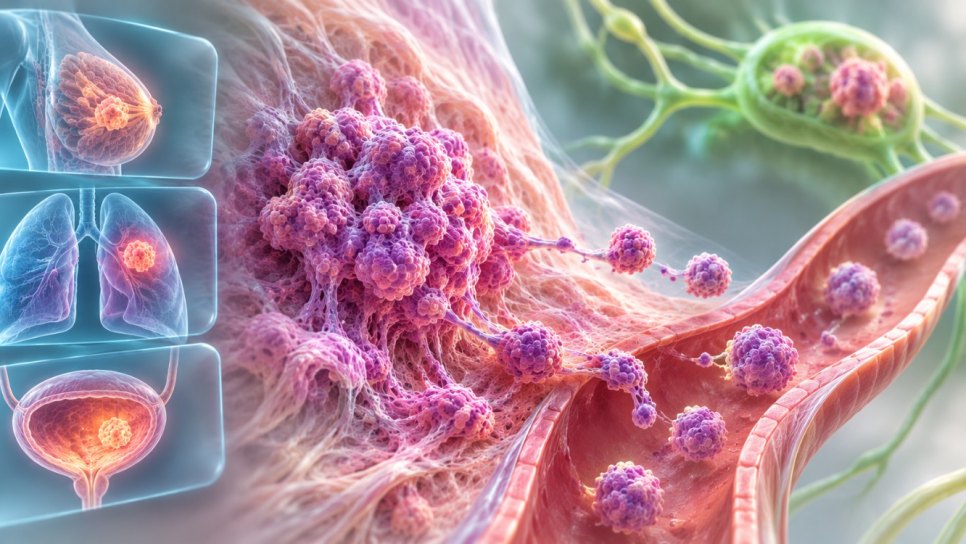
The story of solid tumors is different. Report 12 of the LSS by Pierce and colleagues in 1996 (follow-up 1950-1990) found roughly 420 excess lives lost to cancer, about 85 of them leukemia. The authors note that the solid-cancer excess looks more like a life-long elevation of the natural age-specific cancer risk than a temporary spike: in the last five years of follow-up about 25 percent of the excess appeared, rising to about 50 percent among those exposed as children. In leukemia, by contrast, the excess had been concentrated in the first 15 years. Report 14 by Ozasa and colleagues (1950-2003; 86,611 people) records 10,929 lives lost to solid cancers among 50,620 in all; in the linear model the ERR is 0.47 per gray (95 percent confidence interval 0.38-0.56). RERF states in general that about 10 percent of solid cancers can be attributed to radiation.
The price: survivors who were studied but not treated, and the limits of the lessons
I learned from a book review that the ABCC followed the survivors but did not provide them with medical care: the Kirkus review of the historian Susan Lindee's Suffering Made Real reports that the ABCC studied survivors for nearly three decades without treating them and that the book calls this work "colonial science." I have not read the book myself, so I build no detailed claim on it, but I keep the ethical question in view: knowledge is produced in one community while care is delivered somewhere else.
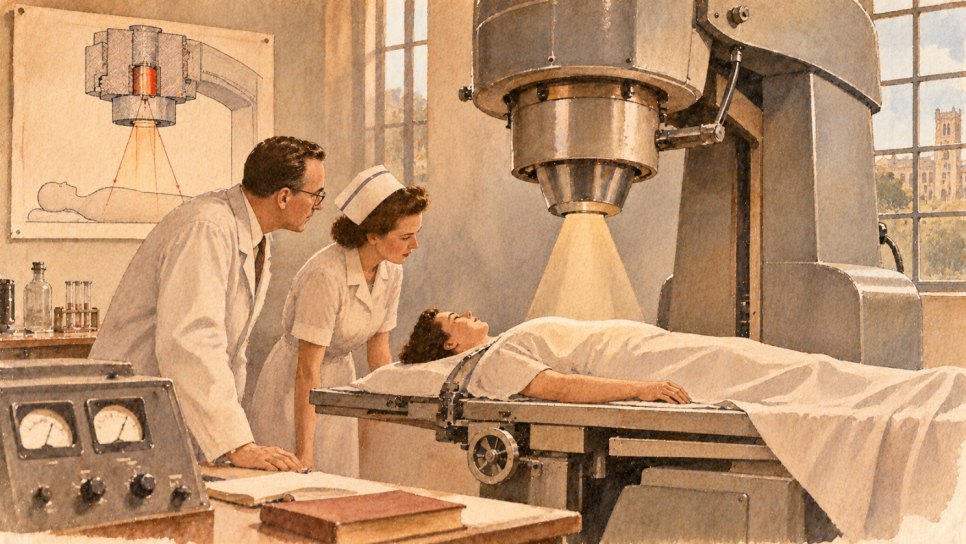
Do not separate the dose from its context. LSS doses were single, high, whole-body doses; the doses of diagnostic imaging are far lower. At low dose the uncertainty is large: for leukemia the ERR at 0.1 Gy is 0.15 and the confidence interval includes zero (-0.01 to 0.31). These data do not directly give the individual risk of an X-ray or a CT scan; an inference would need a separate, dose-specific calculation. And the converse is also true: radiotherapy, delivered in measured, targeted form as we saw on Days 92-95, remains one of the pillars of cancer treatment.
What remains
- A population-level relation, rising with dose, between radiation dose and the risk of leukemia and solid tumors
- The idea of latency: a few years for leukemia, decades for solid tumors
- The long follow-up data on which radiation protection limits rest
What fell or was limited
- The expectation that radiation's effect would run out quickly (the rise in solid tumors appears to last a lifetime)
- The claim to give exact numbers at low dose (the uncertainty is large)
- Treating knowledge alone as enough: the following itself brought ethical questions
From the bombings to the leukemia peak. The axis covers 1945-1953; the ticks mark two-year intervals. Red boxes show exposure and its result, green the ABCC and its follow-up, orange the early report. The scale is approximate; 1975 (RERF) falls outside the axis.
The part of this data that reached us
I could not find a verified source on when and how the Hiroshima and Nagasaki data entered radiation-safety practice in Turkey, so I give no date or institution. The general inference is this: the dose limits and protection rules of a radiology, nuclear medicine or radiotherapy practice in a hospital today rest on risk estimates derived from this kind of population follow-up. The detail of the Turkish history will be taken up, with sources, in the series' Turkey block.
From 1945 to today
What was confirmed and what conflicts
- Loss-of-life figures: RERF gives 90,000-166,000 for Hiroshima and 60,000-80,000 for Nagasaki within 2-4 months. AtomicArchive gives 80,000-140,000 for Hiroshima and 74,000 for Nagasaki without a source; the National Park Service page gives about 80,000 immediate losses of life in Hiroshima and more than 100,000 in the following months, and 40,000-75,000 immediate losses of life in Nagasaki. Differences of scope and date may explain the uncertainty; I used the RERF range.
- Time of detonation: 08:15 is in common use; the National Park Service gives 08:16:02. I wrote "about 08:15-08:16."
- Yield: Los Alamos report LA-8819: Hiroshima about 15 kt (outside uncertainty about 20 percent), Nagasaki about 21 kt (about 10 percent). The year of the report was not in the record page; I did not write one. There are no direct data for Hiroshima.
- Start date of the ABCC: the RERF glossary says "established in 1946"; the 1998 PNAS introduction gives the start of the program as early 1947; formal Japanese participation is 1948. I wrote the three dates as separate events.
- Yamawaki: RERF gives his name and "the late 1940s"; there is no exact year. The authors of the first report are not named on the RERF page.
- Folley, Borges, Yamawaki 1952: bibliographic details (Am J Med 13(3):311-321; doi:10.1016/0002-9343(52)90285-4) are from the record page; I could not read the abstract or full text.
- Cohort sizes: different in different reports: 86,572 in Report 12 and 86,611 in Report 14 survivors with known dose; the whole LSS about 120,000 (120,321); 105,427 in the cancer analyses. The numbers belong to different subsets.
- Report 12 numbers: roughly 420 excess cancers, 85 leukemia; the source is the summary on the RERF page. I did not read the article itself.
- Lindee: through the Kirkus review; the book was not read. The "did not treat" wording comes from the review, not a direct quotation from the book.
- Leukemia dose: the ERR of 0.15 at 0.1 Gy (CI -0.01 to 0.31) is from Report 14; the typical lifetime risk "from 7 to 10 in 1,000" is from RERF's page.
- Not covered in this piece: those exposed in utero, details of breast and thyroid cancer, hereditary effects, the Marshall Islands and other nuclear events. They can be taken up separately in later days.
The Publication That Lifted the Secrecy: Nitrogen Mustard (1946)
After Hiroshima, another secret of those same years comes into the open: when the effect of nitrogen mustard on lymphoma, which we saw on Days 115 and 116, was published, what was said and what could not be said? I will verify dates and sources before writing.
Author's note: What I most tried to avoid in this piece was using a dataset as a consolation or as an accusation. The numbers come from a single, high-dose exposure; transferring them to current medical doses is a separate task. I did not read the reports or the Folley paper in the primary source; the account rests on RERF pages, the 1998 PNAS introduction and secondary sources.
Sources and further reading
- Folley JH, Borges W, Yamawaki T. Incidence of leukemia in survivors of the atomic bomb in Hiroshima and Nagasaki, Japan. Am J Med 1952;13(3):311-321. doi:10.1016/0002-9343(52)90285-4. (Paper not read; citation from the record page.)
- Radiation Effects Research Foundation. "Leukemia Risks among Atomic-bomb Survivors" and Frequently Asked Questions pages; glossary entry "Atomic Bomb Casualty Commission (ABCC)" (rerf.or.jp).
- Pierce DA, Shimizu Y, Preston DL, Vaeth M, Mabuchi K. Life Span Study Report 12, Part I (cancer, 1950-1990). Radiat Res 1996;146:1-27 (RERF summary page; title abbreviated here).
- Ozasa K, Shimizu Y, Suyama A, et al. Life Span Study Report 14, 1950-2003: an overview of cancer and noncancer diseases. Radiat Res 2012;177(3):229-243 (read in the version published by RERF; title abbreviated here).
- Dowling JE. Introduction (symposium "The Atomic Bomb Casualty Commission in retrospect"). PNAS 1998 (PMC33855).
- Los Alamos National Laboratory. Yields of the Hiroshima and Nagasaki nuclear explosions, LA-8819 (OSTI record 1489669).
- Mukherjee S. The Emperor of All Maladies: A Biography of Cancer. New York: Scribner, 2010. (Not separately verified for this piece.)
This piece is Day 119 of the "365 Days of Cancer History" series and tells the history of radiation-related cancer risk. It is historical-popular content and not diagnostic or treatment advice. Consult your physician for decisions about your health. Sources have been verified; details resting on a secondary source alone are marked in the fact-check notes.
Was this article helpful?
Your feedback helps us improve our content.