
The Most Common Carcinogens in Foods – Potential Cancer-Causing Agents

In this article
What Is a Carcinogen?
Carcinogenis the general name for things that can cause cancer. Cancer-causing is its meaning. These cancer-causing “things” may include obesity, radiation, alcohol and smoking, sunlight, radon gas, HPV or chemical substances.
Note: The word carcinogen is frequently misspelled in Turkish as kanserojen . Its origin comes from the term describing the process of cancer development, carcinogenesis.
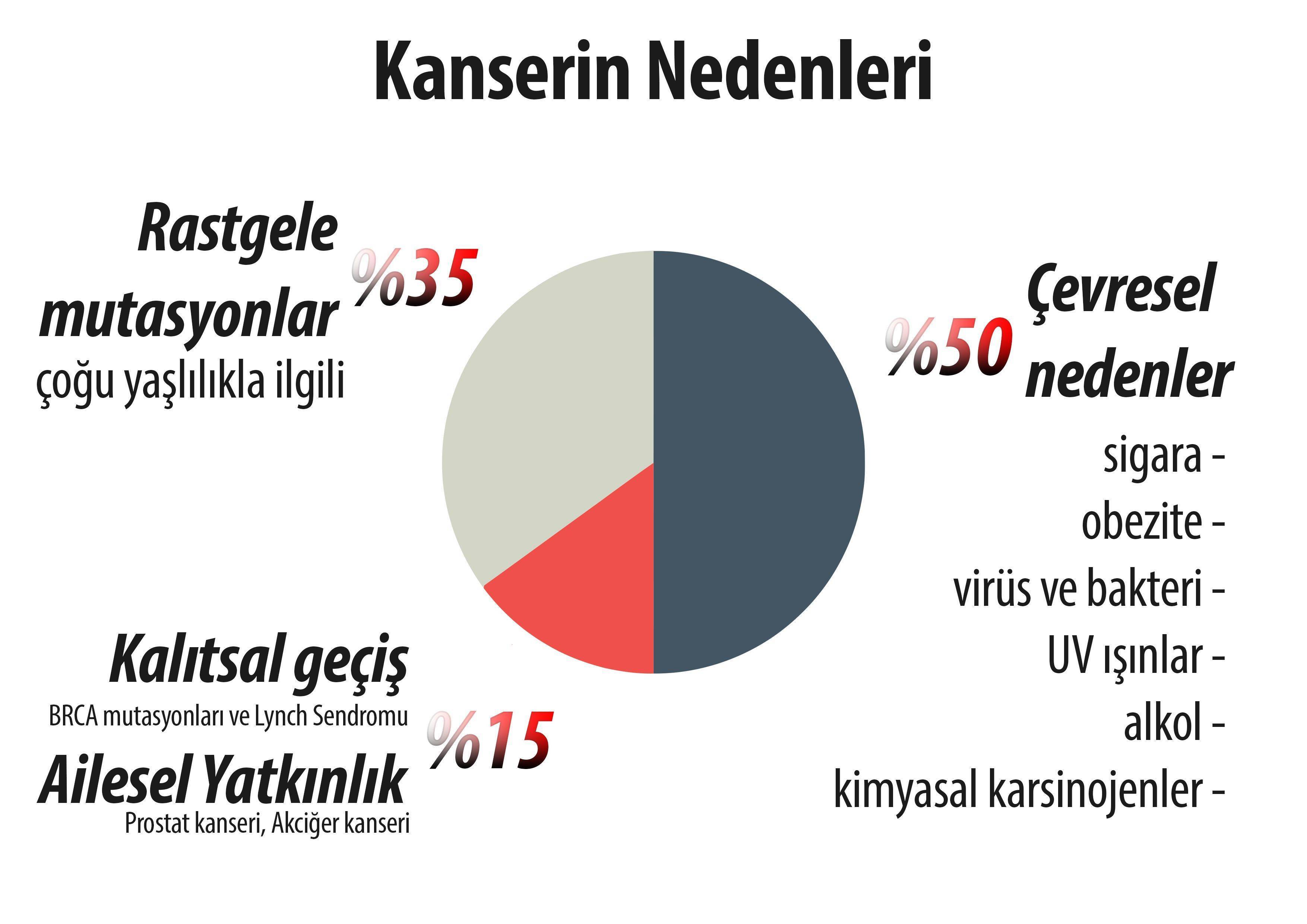
Chemical substances are widely claimed to be the most important cause of cancer. This false statement is used either out of ignorance by people unfamiliar with cancer causes or deliberately by those seeking to shape perceptions for other purposes. Nearly half of all cancers arise from environmental causes, and a smaller part of these from chemical carcinogens.
Everything that exists has a chemistry; whether natural or human-made, everything consists of atoms with neutrons and protons in the nucleus and electrons in orbit.
Chemistry is the science studying matter made of atoms and its properties, its relationships with other matter and energy, and why and how substances combine or separate to form new substances. Thus, all substances are chemical. Why, then, has the term “chemical substance” developed?
Although technically incorrect, human-made (synthetic) substances are called “chemicals.” Yet when a cell encounters a substance, it does not check whether it was human-made; a cell cannot distinguish natural from synthetic and has no need to. Compounds formed from atoms and different arrangements of atoms produce specific effects in cells. Whether an effect is beneficial or harmful depends on the compound, duration of exposure and dose.
Chemical Carcinogens in Foods
Although thought to cause approximately %10 of cancers, chemical carcinogens are important to recognize. We obtain some through foods.
The International Agency for Research on Cancer (IARC -The International Agency for Research on Cancer) and the United States National Toxicology Program (NTP - National Toxicology Program) have listed substances in foods with the potential to cause cancer:
Four food-substance categories that are potentially carcinogenic:
- Unavoidable natural foods
- Avoidable natural food products
- Anthropogenic chemicals (resulting from human activities) that may occur in foods
- Chemicals deliberately added to foods by people
Some Commonly Consumed Foods That May Cause Cancer
Heterocyclic amines (HCA)
Cooking protein-rich foods such as fish and meat at excessively high temperatures may produce HCAs thought to be associated particularly with stomach cancer. Although HCAs are known to be mutagenic (mutation-causing), a clear and direct link to cancer has not yet been established.
Polycyclic aromatic hydrocarbons (PAH)
Red meat cooked at high temperatures or smoked may produce PAHs that can cause digestive-system cancer. They may also enter the body through contaminated food and water. PAHs are known to be capable of altering cellular DNA.
The two substance groups above form particularly after meat is cooked at high temperatures (such as barbecuing) or directly contacts flames. For barbecue techniques preventing their release, see this article .
Alcoholic drinks
All alcoholic drink types may cause oral, gastrointestinal and liver cancer. Although the relationship between alcohol and cancer depends on duration and quantity of consumption, recent studies have shown that even low alcohol intake is associated with cancer.
Salt
Research suggests that regularly consuming highly salted foods (such as salt-preserved foods or pickles) may increase stomach, nasal and throat cancer risk. These salts may occur as nitrates, nitrites and chlorides. High-salt diets erode the stomach lining, making it more vulnerable to viral infections and the known carcinogenic bacterium Helicobacter pylori. There is also no healthy salt; salt use should be limited!
- Related topic: What is Himalayan salt? Effects, misconceptions and health risks
Aflatoxin
Aflatoxin, a mitotoxin, is a toxic chemical produced by fungi called Aspergillus flavus or Aspergillus parasiticus that develops in foods and feed depending on increased moisture and temperature. Mold spores forming in damp environments produce this toxin and contaminate food. Although mold spores alone do not adversely affect human health, when conditions are suitable they multiply on foods and produce a partly harmful chemical. Aflatoxinis a cause of liver cancer. It can also be transmitted to humans through meat from animals that consume it.
In summary, substances called chemical carcinogens occur in both natural and synthetic materials, and whether a product causes cancer depends on duration and dose of use. Precautions can be taken against both natural and synthetic carcinogens, provided we pursue the correct causes.
An important example of a chemical carcinogen in natural products is the proven carcinogen found in 18 different herbs widely used until recently in Traditional Chinese Medicine, aristolochic acid. Using these herbs as part of traditional medicine is cited as one of the most important reasons liver cancer is more common in China and Taiwan than elsewhere in the world.
Note: Responsible for %16 of all cancers, microorganisms have also always existed throughout history and were not made by humans; let us remember this.
Related Topic:
- What is a carcinogen? Known and potential cancer-causing agents for humans
Sources
Aristolochic acids and their derivatives are widely implicated in liver cancers in Taiwan and throughout Asia.
Science Translational Medicine, 2017
2. Sachse, C., Smith, G., Wilkie, M. J. Ve ark.
A pharmacogenetic study to investigate the role of dietary carcinogens in the etiology of colorectal cancer.
Carcinogenesis, 2002
3. Tsugane, S.
Salt, salted food intake, and risk of gastric cancer: epidemiologic evidence.
Cancer science, 2005
4. Sugimura, T.
Nutrition and dietary carcinogens.
Carcinogenesis, 2000
5. Claeys, W. L., De Vleeschouwer, K., & Hendrickx, M. E.
Quantifying the formation of carcinogens during food processing: acrylamide.
Trends in Food Science & Technology, 2005
6. O’Brien, J., Renwick, A. G., Constable, A. Ve ark.
Approaches to the risk assessment of genotoxic carcinogens in food: a critical appraisal.
Food and Chemical Toxicology, 2006
7. Jiang, G. O. N. G.
A Brief Introduction on Carcinogens in Food.
Animal Husbandry and Feed Science, 2009
Was this article helpful?
Your feedback helps us improve our content.




Reader comments
Share your comment
Your name and comment are published only after administrator approval. Your email address is never shown to visitors.
Be the first to comment.