
Treatment of Advanced Prostate Cancer – Its History and the Latest Position

In this article
Treatment of Advanced Prostate Cancer
Prostate cancer treatment is based on eliminating the effects of androgens (male hormones) such as testosterone. In oncology, this is called castration . Metastatic (stage 4) prostate cancer was formerly treated as standard by starting androgen suppression alone. However, recent developments have completely changed the treatment approach. New hormonal therapies and chemotherapy have also demonstrated efficacy early in the course of the disease.
Hormonal drugs used in metastatic prostate cancer treatment can be divided into 5 categories:
- Orchiectomy surgery
- LHRH agonists: goserelin, leuprolide
- Antiandrogens alone: bicalutamide, nilutamide, flutamide, cyproterone acetate
- LHRH agonist + antiandrogen
- New hormonal treatments: abiraterone (Zytiga), enzalutamide (Xtandi), apalutamide (Erleada), darolutamide
Note: LHRH antagonists are not discussed here because they are not widely used and are not available in our country.
What Is Orchiectomy (Surgical Castration)?
Orchiectomy (surgical castration), meaning removal of the testes or cutting the spermatic cord, was formerly standard treatment for metastatic disease. However, its use declined by 94% because of negative psychosocial effects, permanence and inability to offer intermittent treatment. Although medical castration (LHRH agonists) is now used more frequently instead, orchiectomy is still considered the least expensive, most effective gold-standard treatment.
LHRH Agonists (Medical Castration, Chemical Castration)
Drugs called LHRH agonists are available as monthly, 3-monthly and 6-monthly injections. During the first 1 week, they may temporarily raise testosterone levels and cause brief tumor growth (the flare effect). Because of this flare effect, pain from bone metastases may increase. If the cancer has spread to the spine, it may even increase spinal cord compression , worsen obstruction at the bladder outlet and cause difficulty urinating. To avoid the flare effect, antiandrogen treatment (bicalutamide) should be given for several weeks before or concurrently with LHRH agonists.
Antiandrogens: The most commonly used drug in this group is bicalutamide(Casodex, Casomid, Procalut). Its use alone in prostate cancer is not recommended.
Combined LHRH Agonist + Antiandrogen Use: Adding an antiandrogen (bicalutamide, nilutamide, flutamide or cyproterone acetate) to androgen suppression with LHRH agonists alone was found to improve overall survival by at most 2-3%, so long-term combined use has largely been abandoned. In metastatic disease, 5-year overall survival was 25.4% in the combined arm versus 23.6% with androgen suppression alone (Lancet 2000). However, recent studies show that adding new hormonal treatments to LHRH agonists, rather than older treatments such as bicalutamide, clearly improves survival (discussed below).
Current Treatments in Metastatic Prostate Cancer
With androgen suppression alone or in combination, progression develops in metastatic disease after a median of 18-36 months. This indicates that the disease has become resistant to castration and is called castration-resistant prostate cancer . Once castration resistance develops, prostate cancer becomes incurable (cannot be completely cured).
Until 1996, median survival in such patients was around 12 months. Adding chemotherapy to hormonal treatment subsequently brought some improvement. The first chemotherapy drug approval came with mitoxantrone in 1996, followed by docetaxel in 2004. In castration-resistant disease, mitoxantrone achieved approximately 16 months of survival, compared with 18.9 months with docetaxel, making docetaxelthe standard. However, until 2010 there was no survival-prolonging option after progression on docetaxel. Cabazitaxel (Jevtana) received approval in 2010 based on a study extending survival after docetaxel, from the FDA .
Below are the stages at diagnosis of patients with prostate cancer today and survival according to stage:
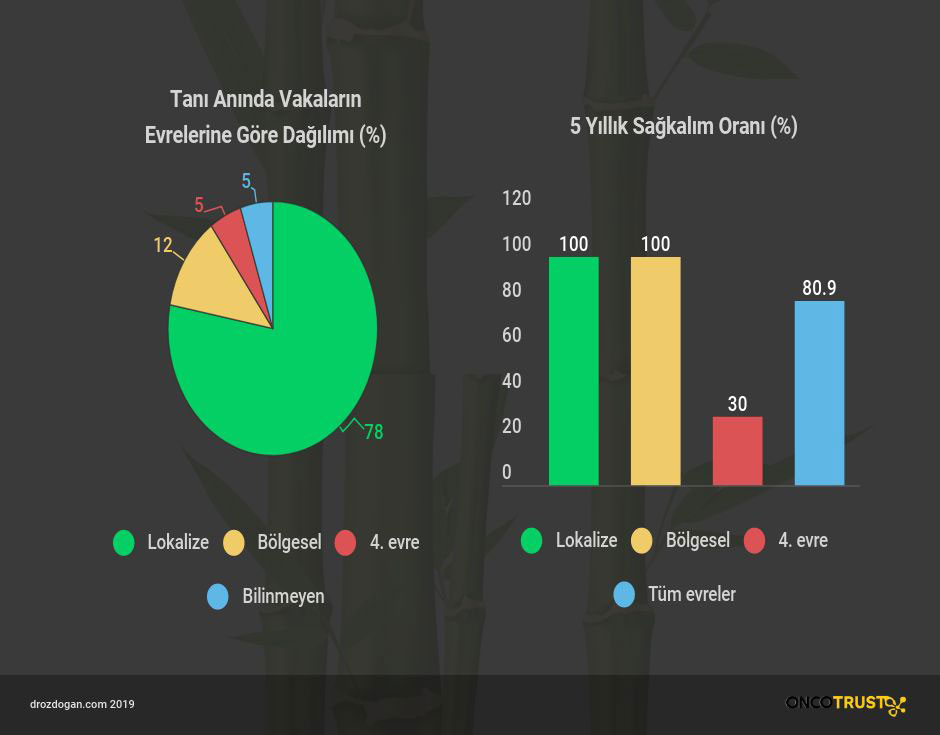
Chronology of FDA Approvals for Advanced Prostate Cancer Treatments


What Is the Best Initial Treatment for Metastatic Prostate Cancer?
Studies in recent years show that in high-risk prostate cancer, starting androgen suppression alone (medical or surgical castration) produces very inadequate outcomes. In this high-risk group, these treatments provide median progression-free survival of only 18-20 months and overall survival of 24-36 months.
Recent developments have demonstrated an overall survival benefit from adding new hormonal treatments or chemotherapy to androgen suppression, particularly in patients with high tumor volume and high-risk features. Therefore, every patient with metastatic disease should be assessed according to tumor volume and risk category and treatment initiated accordingly. If the tumor has high-risk features or tumor burden is high, treatment should not begin with medical or surgical castration alone.
Here, high tumor burden or a high-risk patientcan be roughly defined as follows:
- Gleason score ≥ 8, measurable visceral (internal organ) metastasis, ≥ 3 bone metastases, PSA doubling time <9 months, PSA ≥ 20-40 ng/mL
1. Initial Treatment for High-Volume, High-Risk Metastatic Disease
In this group, docetaxel or abiraterone given alongside androgen suppression (castration) should be considered as 1st-choice treatment because of the significant survival benefit compared with suppression alone. Chemotherapy is approved at this step in our country, but abiraterone and enzalutamide are not yet approved here. The latest FDA approval at this step, based on ARCHER, was granted to enzalutamide in December 2019 (ARCHER has not been added to the graph below because its progression-free and overall survival data are not mature).
2. Treatment of Metastatic Disease That Has Progressed After Castration
a) Patients Who Have Not Received Chemotherapy: If initial treatment for metastatic prostate cancer consisted only of androgen suppression (castration) and progression subsequently developed, treatment options include docetaxel, abiraterone, enzalutamide, Radium-223 and Sipuleucel-T are available as treatment options. Which of these treatments to choose is a decision made for each individual patient.

b) Patients Who Have Received Chemotherapy: If a patient received docetaxel because castration resistance developed, options after progression following docetaxel include cabazitaxel, abiraterone and enzalutamide.

Treatment of Nonmetastatic Prostate Cancer That Has Progressed During Castration
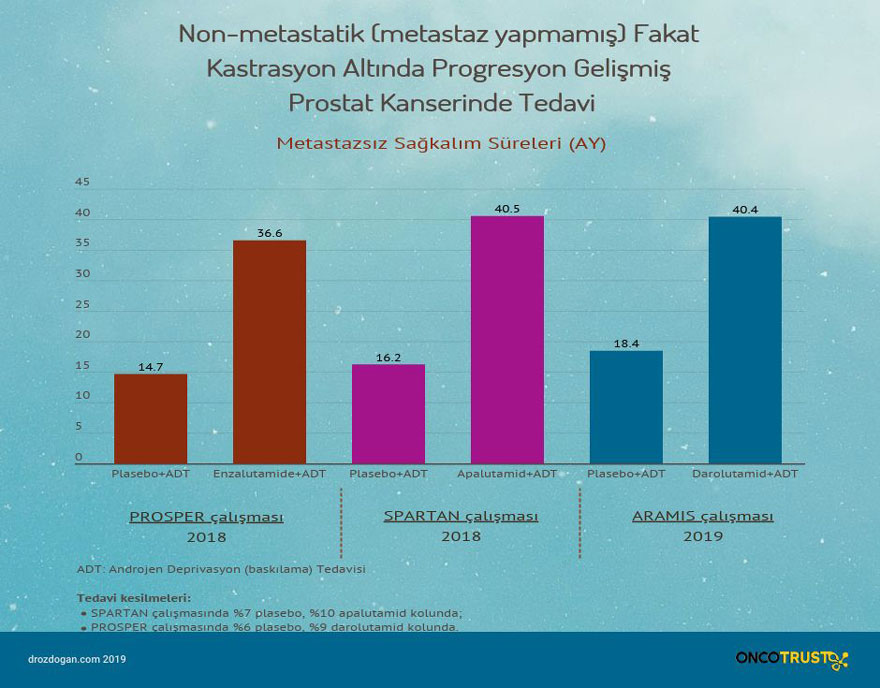
These patients have biochemical or radiological local recurrence after first-line treatment (medical or surgical castration), but no distant metastases outside pelvic nodes. Adding enzalutamide, apalutamide or darolutamide to androgen suppression (castration) overcomes castration resistance, significantly prolongs time to metastasis and clearly extends overall survival.
Related Topic:
Sources
Lancet. 29 April 2000.
Was this article helpful?
Your feedback helps us improve our content.




Reader comments
Share your comment
Your name and comment are published only after administrator approval. Your email address is never shown to visitors.
Be the first to comment.