
What Causes Bladder Cancer? What You Should Know

In this article
The bladder stores and controls urine, and bladder cancer develops within it. It occurs mainly in men and is usually diagnosed at 55 or older. Symptoms include blood in urine, frequent or painful urination and urinary tract infections. Treatments include surgery, radiotherapy, chemotherapy, immunotherapy and targeted drugs.
Smoking is the main cause. Age and exposure to certain chemicals are also risk factors.
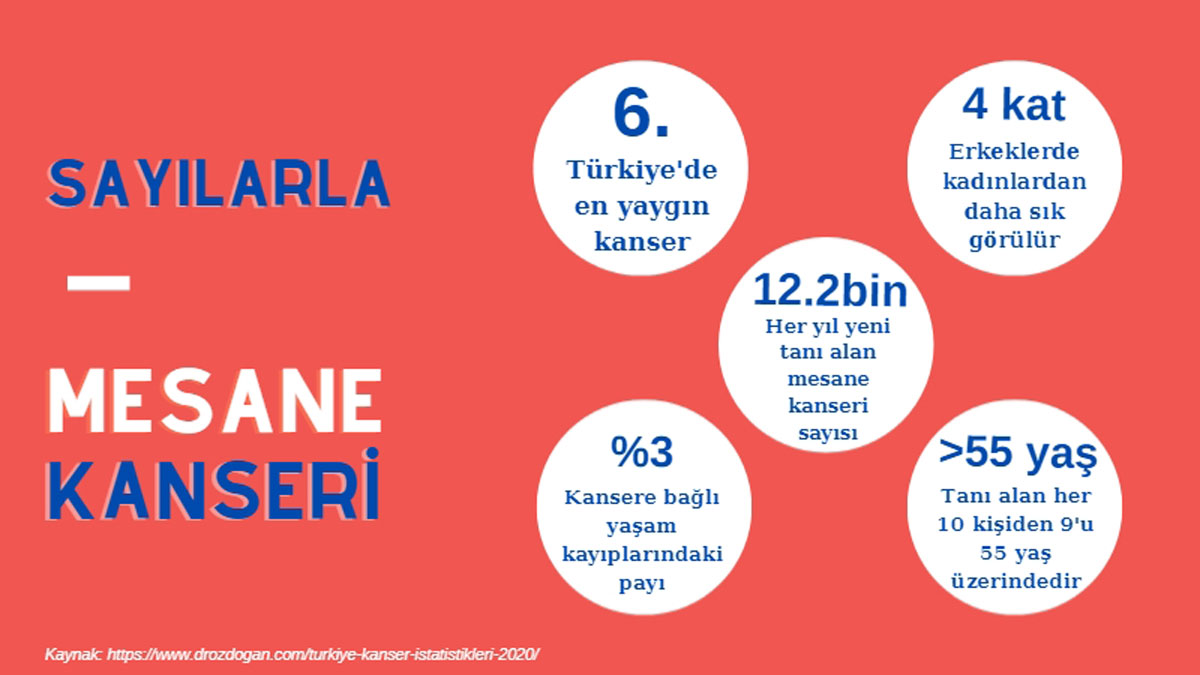
In 2020, Turkey recorded 12,248 cases, accounting for 5.2% of new cancer diagnoses in the country.
US statistics estimate that approximately 2.3% of men and women will be diagnosed during their lifetime.
What Causes Bladder Cancer?
It develops through accumulated DNA damage in epithelial cells lining the bladder. Unusual DNA changes, called mutations , can lead cells to multiply without control and form cancerous tumors in the bladder.
DNA mutations may be acquired or inherited. Acquired mutations arise during a person's life; inherited mutations, in contrast, come from DNA received from biological parents.
Behaviors such as smoking can increase acquired-mutation risk. Bladder cancer is not generally hereditary, so inherited mutations are a less common cause.
What Are the Risk Factors?
Some factors that increase the likelihood of developing bladder cancer can be changed, but this is not true of every risk factor.
Nonmodifiable Factors:
- Age: Approximately 9 in 10 people diagnosed are older than 55. Risk increases with age.
| Age Group | Percentage of Bladder Cancer Cases (%) |
| 20 – 34 | 0.5 |
| 35 – 44 | 1.2 |
| 45 – 54 | 5.2 |
| 55 – 64 | 17.9 |
| 65 – 74 | 31.7 |
| 75 – 84 | 28.8 |
| > 84 | 14.7 |
- Family History: Some people inherit gene changes from their biological parents that increase bladder cancer risk. In particular, an inherited MSH2 mutation resulting in Lynch syndrome increases bladder cancer risk.
- Certain Gene Mutations: Changes called mutations can occur during cell division. GST and NAT are among the genes associated with bladder cancer.
- Sex: Bladder cancer is 3-4 times more common in men. Estimated lifetime risk is 1 in 27 for men and 1 in 89 for women.
Modifiable Factors:
- Smoking: Tobacco accounts for 30% of all cancers. Smoking causes approximately half of bladder cancers, and smokers are at least three times more likely to develop it than nonsmokers. Quitting reduces bladder cancer risk and the risk of many other cancers.
- Occupational Exposure: Some cases are associated with chemicals in industries such as aluminum production, rubber and leather. Examples include 4-aminobiphenyl, diesel exhaust and benzidine. Approximately 10% of cases may result from workplace exposure to carcinogens .
- Medicines or Supplements: Some are associated with increased risk, including pioglitazone for diabetes and supplements containing aristolochic acid.
Can Bladder Cancer Be Prevented?
Nobody with a bladder can eliminate the possibility entirely, but certain lifestyle choices may reduce risk:
Potentially helpful behaviors include:
- Avoiding tobacco, smoking and secondhand smoke
- Limiting chemical exposure
- Drinking more fluids, particularly water
- Eating a fruit- and vegetable-rich diet
Regular screening may also help people with a family history receive earlier diagnosis and treatment.
How Is Bladder Cancer Treated?
It often causes early symptoms, most commonly painless bleeding; painful and frequent urination are also common. US data indicate that approximately 85% are diagnosed at stage 0-1, with relatively high 5-year survival of 77%. Nevertheless, even early-stage bladder cancer tends to recur.

Early-stage treatment involves scraping the bladder lining and administering intravesical medicines such as BCG. If cancer invades the muscle, complete bladder removal is considered. If it spreads elsewhere, chemotherapy, immunotherapy or targeted drugs may be used according to general health and tumor genetics.
In conclusion , the main causes include smoking, certain occupational chemicals and inherited cancer-related mutations. Other risks include older age and family history.
Was this article helpful?
Your feedback helps us improve our content.




Reader comments
Share your comment
Your name and comment are published only after administrator approval. Your email address is never shown to visitors.
Be the first to comment.