Are Carcinogens Mutagens? Bruce Ames and the Salmonella Test, 1973
In this article
Are Carcinogens Mutagens? Bruce Ames and the Salmonella Test, 1973
On day 155 we looked at how a break in a chromosome relates to cancer: a change inside the cell as the trace of a disease. Today we ask the question the other way round: can we tell whether a substance causes cancer in a petri dish, without waiting for animal experiments that take years? On day 98 we told of Boveri's chromosome hypothesis, on day 99 of how Yamagiwa obtained an experimental carcinogen with tar; Ames's 1973 paper tried to bring the idea of mutation and the idea of the chemical carcinogen together in one petri dish. In the "tomorrow" box of day 155 I said I would verify the publication date, the citation and the role of the liver extract; all three are below.
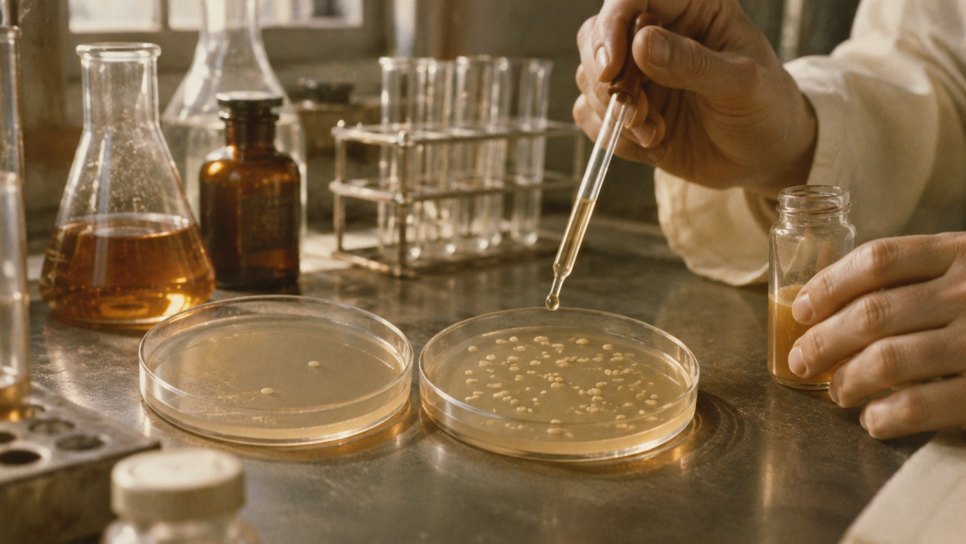
Colonies growing on a plate without histidine
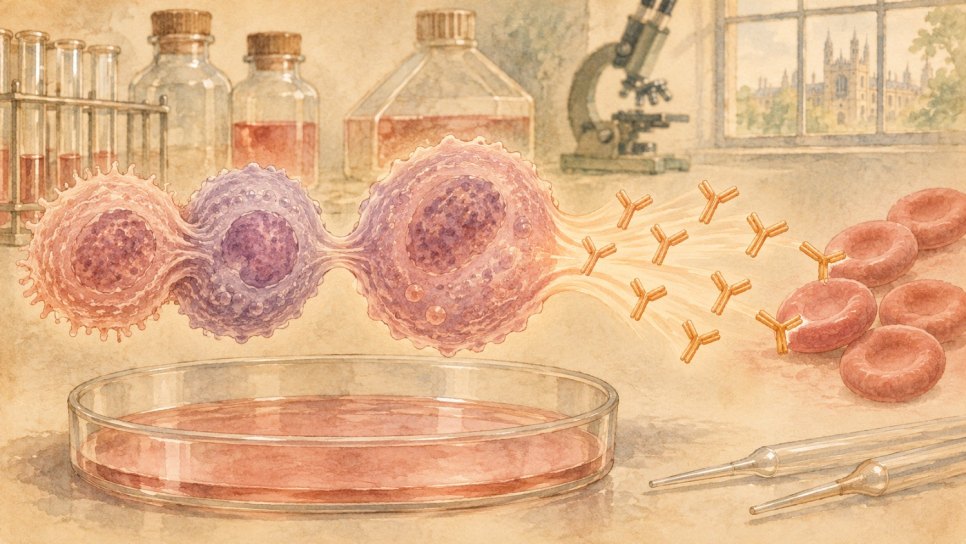
Imagine a petri dish. The medium at its bottom contains no histidine, an amino acid; the Salmonella typhimurium bacteria spread over it are mutants that cannot make histidine themselves. Normally they cannot grow. But if a substance makes a new change in the DNA of these bacteria, some of them regain the ability to make it and colonies appear on the surface of the dish. Each colony is the trace of a mutation; the number of colonies shows how much of a mutagen the substance is (according to the description on the IEC's page on the Ames test).
The road that brought Bruce Ames to this work was histidine. According to the University of California's obituary (1928-2024), Ames had mapped the synthesis pathway of histidine at Caltech with both genetics and biochemistry; in 1962-1967 he was chief of microbial genetics at the NIH, and in 1968 he joined the Berkeley faculty. The same text says the test was developed in the 1960s and 1970s, and that Ames's reasoning was this: mutagens, and therefore probably carcinogens, would cause reversion mutations in these bacteria. Undergraduates tried common foods and household products.
But a bacterium is not a liver. Many chemicals become harmful only after being processed by liver enzymes in the body; this step does not exist on a bacterial plate. The bacterial side of the test was prepared by the paper of Ames, Lee and Durston in issue 3 of volume 70 of PNAS: according to its abstract the authors had earlier developed four Salmonella strains that detect different types of mutation, and had shown that they recognized many carcinogens as mutagens. Because the bacterium's outer lipopolysaccharide coat limits the access of mutagens to the membrane, the team added the rfa (deep rough) mutation and made the strains more sensitive. The abstract says the new strains were very sensitive and convenient. But the liver was still missing.
Bringing the liver to the plate
The idea of activation does not belong to Ames alone. The title of a study Malling published in Mutation Research in 1971 says that dimethylnitrosamine formed mutagenic compounds by interacting with mouse liver microsomes; I saw the title only in one reference list, and I could not verify its results or the organism used. Popper and colleagues also worked with Bacillus subtilis in 1973 in the Proceedings of the Society for Experimental Biology and Medicine (volume 142, pp. 727-729) and wrote that dimethylnitrosamine became a mutagen with microsomes and an NADPH-generating system. Because I could not verify the month of that paper, I do not say whether it appeared before or after Ames's August 1973 paper; there is no room for "first" here.
Eighteen carcinogens, one plate
The paper by Ames, Durston, Yamasaki and Lee appeared in issue 8 of volume 70 of PNAS, pages 2281-2285; the institution was the biochemistry department in Berkeley. Its title is a sentence: "Carcinogens are Mutagens". According to the abstract the authors tested eighteen carcinogens, including aflatoxin B1, benzo(a)pyrene, acetylaminofluorene, benzidine and dimethylamino-trans-stilbene, and showed that liver homogenates converted them into potent frameshift mutagens.
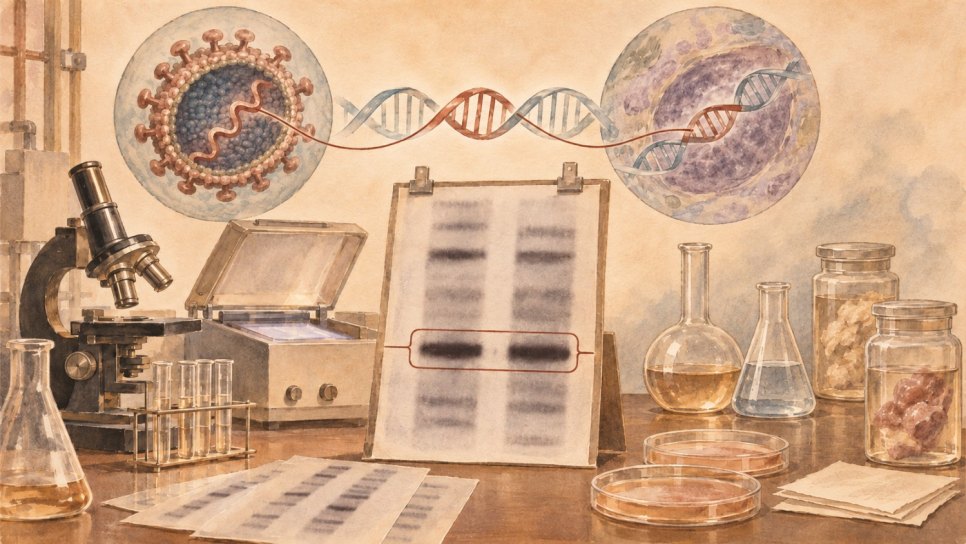
The method: on a single petri plate, a homogenate prepared from rat or human liver, a TPNH-generating system and histidine-mutant Salmonella strains are incubated together. The metabolic activation comes from the liver, the detection from the bacterium. The most active compounds were detectable even at a few nanograms. The authors also put forward a common feature of these carcinogens: a ring system flat enough to stack beside DNA bases, and a part that liver metabolism could convert into a group able to react. They proposed these and many other mutagens as substances that cause cancer through somatic mutation; a proposal, not a chain of evidence.
I read this at abstract level (the PubMed Central page); I could not look at the full text or the "communicated by" line of the paper.
Mutagen, carcinogen, promutagen
A mutagen is a substance that causes a heritable change in DNA. A carcinogen is a substance that causes cancer in animals or humans. The two overlap but are not the same thing. A promutagen is a substance that is not itself a mutagen but becomes one after being processed by enzymes in the body, especially in the liver. The liver homogenate, or the S9 mix as it is called in later papers, stands in for this processing in the test.
This is a simplified definition.
1974-1975: the scale grows
In 1974 Durston and Ames carried the same plate test over to urine (PNAS 71(3):737-741). According to the abstract, adding β-glucuronidase made it possible to detect mutagenic metabolites that are excreted in urine as glucuronides; an effect was seen in the urine of rats given 2-acetylaminofluorene, and the authors suggested that the method could be used to screen human urine for metabolites of drugs and foods.
The big test came in December 1975: McCann, Choi, Yamasaki and Ames tried about 300 chemicals in the Salmonella/microsome test (PNAS 72(12):5135-5139). According to its abstract, 90 percent of the carcinogens (156 of 174) were mutagenic in the test; my inference: 18 of the 174 carcinogens, about 10 percent, did not appear mutagenic in the test (false negatives). Potencies varied over a 106-fold range, and few of the non-carcinogens showed some degree of mutagenicity. The abstract also carries an important caveat of its own: it writes that defining non-carcinogenicity has serious limitations, and that the results also show the limits of the test in detecting environmental carcinogens.
In relative and absolute terms: 90 percent says the test caught most of the known carcinogens; but one in ten carcinogens was missed, which suggests that "carcinogen = mutagen" is a strong tendency and not a rule. One secondary page describes the same study with two different ratios, "90 percent of mutagens are carcinogens, 89 percent of carcinogens are mutagens"; I used only the figure in the abstract itself.
The test leaves the laboratory
According to the same secondary page, in 1975 Ames and colleagues reported that many hair dyes were mutagenic (Ames, Kammen and Yamasaki, PNAS 72(6):2423-2427; I know it only from this page). In January 1977 Blum and Ames, in Science (volume 195, pp. 17-23, 7 January 1977), discussed flame-retardant additives, especially Tris-BP used in children's pajamas: according to its abstract, Tris-BP was mutagenic in the Salmonella test with rat liver enzymes (human liver gave a similar result) and its effect rose markedly with metabolic activation. The authors also wrote down their own limits: animal feeding studies were still under way, and the bacterial test alone did not prove carcinogenic potency.
The Consumer Product Safety Commission (CPSC) banned the sale of Tris-treated children's garments on 8 April 1977; I know this from a reference in a press release dated 18 May 1977. The release does not state the reason for the ban; the weight of Ames's data in the decision appears only on a secondary page. So I report the ban not as a direct consequence of Ames's paper, but as two events within the same year.
Limits and cost
The first limit is that a bacterium is not a human. A positive Ames test does not show that the substance causes cancer in humans; a negative test does not show that it is safe. In the 1975 study 18 carcinogens were missed. According to the IEC page the test catches only base-pair changes and frameshifts; larger genetic changes, for example the chromosome-level rearrangements we spoke of on day 155, are outside this test's field of view.
The second limit is the yardstick. The accuracy of the test was measured by comparison with rodent carcinogenicity; the McCann abstract openly names the limits of defining non-carcinogenicity. The third is natural substances: according to the University of California obituary, in 1978 Ames and Lois Gold set up a public database of animal carcinogenicity studies and found that natural compounds were positive as often as synthetic ones; Ames later called for caution against attributing all cancers to environmental chemicals and criticized regulations on pesticides and pollutants that he considered excessive (according to the obituary). The gist of the opposing view is that the fact that natural substances also carry risk does not make oversight of synthetics unnecessary. This debate does not reduce the value of the test, but it ties the reading of its results to a balance.
The fourth limit lies on the regulatory side. According to the IEC page, in the mid-1970s there was hope that the roughly 60,000 chemicals on the market would be screened with this test, but that hope was not fulfilled; industry lobbying kept the requirement of mutagenicity testing out of the 1976 Toxic Substances Control Act. This is a secondary source. This text is not treatment or product advice.
What remains
- The idea of pre-screening chemicals with a short, cheap test
- Metabolic activation (the liver extract) as part of the test
- Use as a genotoxicity screen in drug development (according to the obituary, still required in first-phase clinical tests)
What fell or was limited
- Reading the slogan "carcinogens are mutagens" as a universal equation
- Counting a positive bacterial test as proof of cancer in humans
- The assumption that only synthetic chemicals are risky and natural ones are safe
From the activation precursors to the Salmonella test and today: 1971-2012. The axis runs from 1965 to 2020. Green marks are publications and events whose citation is confirmed in several sources or in a primary record; blue marks rest on a single source or on a citation alone. In this diagram there is no event whose date the sources dispute; so there is no amber bar. Dates known only by year are drawn at mid-year.
The Ames test of a plant endemic to Türkiye
I could not verify the date of the first use of the Ames test in Türkiye; I draw no Turkish link to Ames or to the birth of the test. I give one example of present-day use: Liman R, Eren Y, Akyıl D, Konuk M, "Determination of mutagenic potencies of aqueous extracts of Thermopsis turcica by Ames test", Turkish Journal of Biology 2012;36(1):85-92. According to the abstract, the study tested aqueous extracts of the leaves, roots, stems and flowers of a plant endemic to Türkiye (T. turcica) with strains TA97, TA98, TA100 and TA102, with S9 metabolic activation and without it.
Findings: with S9 all extracts were mutagenic in strain TA98; at a dose of 3750 µg/plate the leaf extracts were mutagenic in TA102 with or without S9, and in TA102 with S9 the leaf extract increased the frequency of reverse mutation in relation to concentration. I could not verify from the page where the study was carried out (the journal is published by TÜBİTAK; I could not verify the institution from the abstract); I read only the abstract. This finding does not mean that a plant that is mutagenic in bacteria is harmful in humans; it is an example showing that natural substances too can come out positive in the test.
From 1971 to today
What was confirmed, what stayed uncertain
- Publication date and citation (yesterday's promise): The citation of the August 1973 paper (PNAS 70(8):2281-2285, DOI 10.1073/pnas.70.8.2281) and its abstract come from the PubMed Central page; the page has no "communicated by" line. I did not read the full text.
- The March 1973 paper: The title, authors and abstract come from a record page; the volume and issue (70(3)) and the start page (782) were derived from the DOI string (pnas.70.3.782); the page itself gives no journal, volume, page or month (its date field says 2006, most likely an error). I could not verify the end page or the month of publication.
- Role of the liver extract: The abstract says liver homogenate converted carcinogens into frameshift mutagens; the term "S9" does not appear in this abstract, it appears on a secondary page and in the abstract of the Turkish study.
- Precursors: I know Malling 1971 only by its title, from a reference list (Malling and Frantz, EHP 1973); the organism used and the results were not seen. The 1973 study by Popper and colleagues was read on its own, but without month information; its order relative to Ames's August 1973 paper is unknown. A claim of "first" was therefore not written.
- Slogan and hypothesis: The abstract "proposes" that carcinogens cause cancer through somatic mutation; the title is a summary of a claim, not a proven law. The later 1975 result is 90 percent, not 100 percent.
- 90 percent or 89 percent? The figure in the McCann abstract is the rate at which carcinogens turned out mutagenic (156/174). One secondary page gives two different ratios, "90 percent of mutagens are carcinogens, 89 percent of carcinogens are mutagens"; I could not resolve the conflict and used the figure in the abstract. The number of non-carcinogens is not in the abstract.
- The methods paper: I found the record of the Ames, McCann and Yamasaki paper in Mutat Res 31:347 (1975), but the page could not be opened; it was not read.
- Hair dyes: from a secondary page only; the primary citation was not read.
- Tris: The paper by Blum and Ames does not describe a ban; the CPSC release cites the ban of 8 April 1977 but gives no reason. The role of Ames's data in the decision is only on the secondary page. The names "Tris" and "Tris-BP" appear together in the sources.
- Ames's life: Birth 16 December 1928 (New York) and the date he lost his life, 5 October 2024 (aged 95), come from the University of California obituary. The comparison in the same text, "three days and a few hundred dollars against about three years and 100,000 dollars", is a secondary account and is not today's cost.
- The Turkish study: only the abstract was read; the institution where the study was done was not verified.
- Yesterday's box: the publication date (August 1973), the citation and the role of the liver extract were examined; the date was not combined with a claim of "first" in respect of the precursors.
A Turning Point in Testicular Cancer: Larry Einhorn and Cisplatin, 1974
Today we asked whether a substance causes cancer. Tomorrow we ask the reverse: in a cancer common in young men, could a combination of drugs cure most patients? I will verify the starting date of Einhorn's study and the citation of its first publication, and tie it to the cisplatin story of day 148.
Author's note: What I paid most attention to in this piece was reading the title "Carcinogens are Mutagens" as a proposal, not a rule: the result was 90 percent, and the remaining 10 percent was missed. My second point of attention was to leave it clear that the liver-extract idea does not belong to one person, and that a positive result of the test is a pre-screen, not a verdict.
Sources and Further Reading
- Ames BN, Durston WE, Yamasaki E, Lee FD. Carcinogens are mutagens: a simple test system combining liver homogenates for activation and bacteria for detection. Proc Natl Acad Sci USA 1973;70(8):2281-2285. doi:10.1073/pnas.70.8.2281 (read at abstract level; read with a summarising tool).
- Ames BN, Lee FD, Durston WE. An improved bacterial test system for the detection and classification of mutagens and carcinogens. Proc Natl Acad Sci USA 1973;70(3):782. doi:10.1073/pnas.70.3.782 (summary on a record page; end page not verified).
- Durston WE, Ames BN. A simple method for the detection of mutagens in urine: studies with the carcinogen 2-acetylaminofluorene. Proc Natl Acad Sci USA 1974;71(3):737-741. doi:10.1073/pnas.71.3.737 (read at abstract level).
- McCann J, Choi E, Yamasaki E, Ames BN. Detection of carcinogens as mutagens in the Salmonella/microsome test: assay of 300 chemicals. Proc Natl Acad Sci USA 1975;72(12):5135-5139. doi:10.1073/pnas.72.12.5135 (read at abstract level).
- Blum A, Ames BN. Flame-retardant additives as possible cancer hazards. Science 1977;195:17-23. doi:10.1126/science.831254 (read with a summarising tool).
- Popper H, Czygan P, Greim H, Schaffner F, Garro AJ. Mutagenicity of primary and secondary carcinogens altered by normal and induced hepatic microsomes. Proc Soc Exp Biol Med 1973;142:727-729 (read with a summarising tool).
- Malling HV, Frantz CN. In vitro versus in vivo metabolic activation of mutagens. Environ Health Perspect 1973;6:71-82. doi:10.1289/ehp.730671 (used only for its reference to Malling 1971; Mutat Res 1971;13(4):425-429).
- University of California (Academic Senate). In Memoriam: Bruce Ames, senate.universityofcalifornia.edu (read with a summarising tool; secondary source).
- Institut d'Estudis Catalans. The Ames test, sabersenaccio.iec.cat (read with a summarising tool; secondary source).
- US Consumer Product Safety Commission. F.W. Woolworth Co. enjoined from violation of Tris ban, press release, 18 May 1977, cpsc.gov (read with a summarising tool).
- Liman R, Eren Y, Akyıl D, Konuk M. Determination of mutagenic potencies of aqueous extracts of Thermopsis turcica by Ames test. Turk J Biol 2012;36(1):85-92. doi:10.3906/biy-1011-158 (read at abstract level).
- Mukherjee S. The Emperor of All Maladies: A Biography of Cancer. New York: Scribner; 2010 (general context; the relevant part was not re-read for this piece).
This piece is day 156 of the "365 Days of Cancer History" series and presents the birth of the Ames test as a historical reading. It is historical-popular content; it is not diagnostic or treatment advice. Consult your physician for treatment decisions. The sources have been verified; details that rest on a single secondary source, only on an abstract or on a text that could not be read are marked in the fact-check notes.
Was this article helpful?
Your feedback helps us improve our content.