
Cabozantinib Receives FDA Approval for Thyroid Cancer

In this article
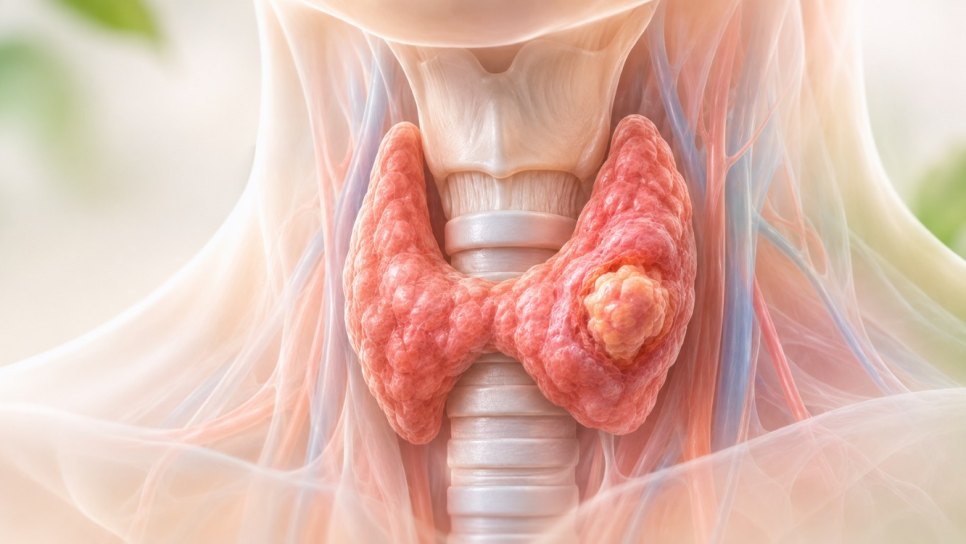
For patients whose disease progressed after prior VEGFR-targeted therapy and who are ineligible for radioactive iodine therapy or resistant to it, with metastatic or locally advanced differentiated thyroid cancer —adults and pediatric patients aged 12 years and older— cabozantinib (Cabometyx, Exelixis, Inc.) received, on September 17, 2021, FDA approval.
Note: Differentiated thyroid cancers include "papillary," "follicular" and "medullary" thyroid cancer.
FDA Approval Based on the COSMIC-311 Study
Efficacy was evaluated in COSMIC-311, a randomized (2:1), double-blind, placebo-controlled, multicenter clinical trial in patients with locally advanced or metastatic differentiated thyroid cancer that had progressed after prior VEGFR-targeted therapy and was resistant to radioactive iodine. Patients were randomized to receive oral cabozantinib 60 mg or placebo once daily, with best supportive care, until disease progression or intolerable side effects.
The primary efficacy outcome measures were progression-free survival (PFS) in the intention-to-treat patient group and overall response rate in the first 100 randomized patients, assessed by a blinded independent radiology review committee according to RECIST 1.1.
Results
Cabometyx significantly reduced the risk of disease progression or death compared with placebo (p<0.0001).
In the cabozantinib arm, median progression-free survival was 11 months (95% CI: 7.4, 13.8), compared with 1.9 months in those receiving placebo (95% CI: 1.9, 3.7).
Overall response rate was 18% (95% CI: 10%, 29%) and 0% (95% CI: 0%, 11%) in the cabozantinib and placebo arms, respectively.
The most common (≥25%) adverse reactions were diarrhea, palmar-plantar erythrodysesthesia (PPE), fatigue, hypertension and stomatitis. A warning for hypocalcemia has been added to the drug’s prescribing information.
The recommended single-agent cabozantinib dose is 60 mg once daily until disease progression or unacceptable toxicity. In pediatric patients (aged 12 years and older, with a body surface area below 1.2 m2), the recommended cabozantinib dose is 40 mg once daily until disease progression or unacceptable toxicity.
What Is Cabozantinib’s Mechanism of Action?
Cabozantinib inhibits cell growth and proliferation by suppressing the activity of the following tyrosine kinase enzymes: VEGFR 1, 2 and 3, which are involved in forming new blood vessels to nourish the tumor; MET; and AXL.
Before this approval, cabozantinib had received FDA approval for:
- first, advanced kidney cancer in 2016,
- previously untreated advanced kidney cancer in 2017,
- previously treated advanced liver cancer in 2019 and
- first-line treatment of advanced kidney cancer in combination with nivolumab in 2021.
Cabozantinib also received approval for the treatment of the rare cancer "medullary thyroid cancer," with FDA approval in 2012, and is marketed under the brand name Cometriq. Cometriq and Cabometyx have different formulations and are not interchangeable.
Sources
Was this article helpful?
Your feedback helps us improve our content.


Reader comments
Share your comment
Your name and comment are published only after administrator approval. Your email address is never shown to visitors.
Be the first to comment.