How Did a Bacterium That Stopped Dividing in an Electric Field Give Rise to a Cancer Drug? Rosenberg, VanCamp, Krigas and Cisplatin (1965-1978)
In this article
How Did a Bacterium That Stopped Dividing in an Electric Field Give Rise to a Cancer Drug? Rosenberg, VanCamp, Krigas and Cisplatin (1965-1978)
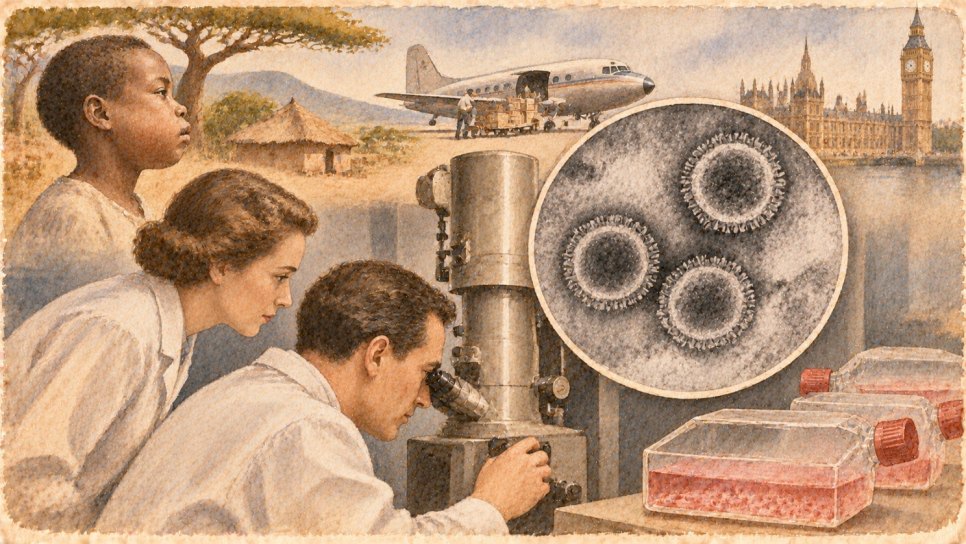
Yesterday virus particles were seen in a cell line, and whether they were the cause was debated for decades (Day 140). Today we follow not a virus but a metal. On Day 96 we described Ehrlich's idea of the "magic bullet": a chemical that strikes the disease selectively. On Day 115 we met the first patient of nitrogen mustard, on Day 122 Farber's aminopterin, on Day 132 Min Chiu Li's treatment of choriocarcinoma. In each case the drug was a relative either of a weapon gas or of a vitamin. Cisplatin came through a different door: a physicist's electrical experiment with bacteria.
A cell that resembled a magnetic field
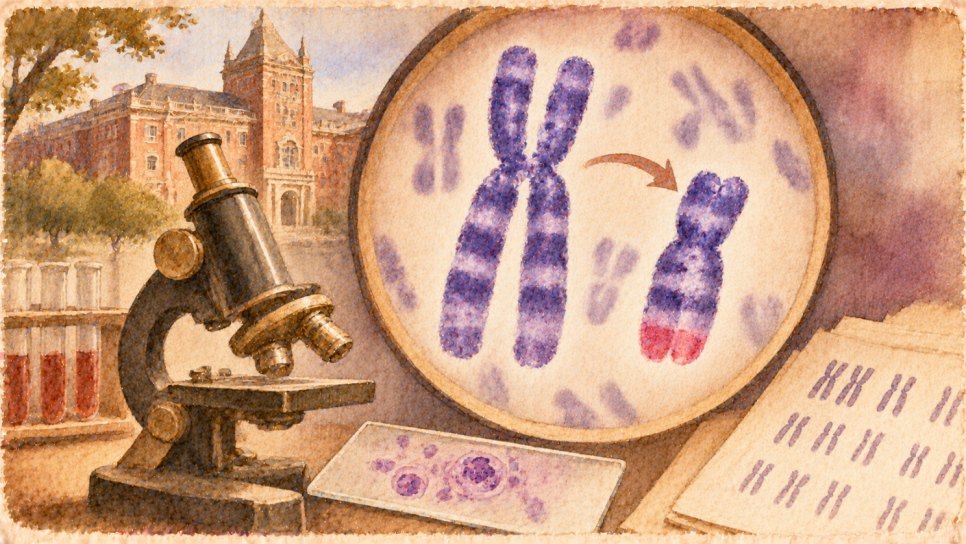
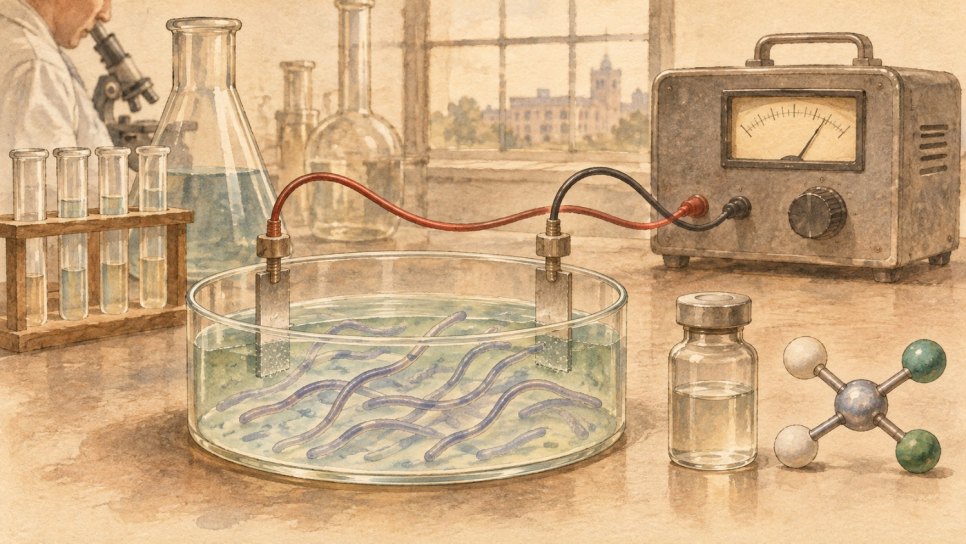
Barnett Rosenberg was a physicist. According to the RSC's obituary, on 1 October 1961 he came to Michigan State University with Leroy Augenstein to found a biophysics unit. According to the Open University's account, a picture of a dividing cell reminded him of the dipole field lines of a magnet; he wanted to see whether an electric field affected division. According to the Golden Goose Award page, in 1963 Loretta VanCamp started the project on the effect of an electric field on dividing E. coli and ran all the experiments; the RSC article also says VanCamp did all the experimental work. Golden Goose calls her the laboratory director, the RSC a laboratory technician.
The electrodes were platinum, considered chemically inert; the medium contained ammonium chloride (Open University). The bacteria stopped dividing but kept growing and became long filaments; Golden Goose and the University of Bristol chemistry page describe filaments up to 300 times normal length. The first explanation that came to mind was the electric field. The truth had nothing to do with the field.
Autumn 1964: what comes off a platinum electrode?
According to Golden Goose, in the autumn of 1964 the chemistry graduate student Thomas Krigas proposed that the platinum of the electrodes was reacting in the medium. The RSC article instead says the electrolysis hypothesis came from an unnamed chemistry faculty member and reached Rosenberg through Krigas; the two sources conflict and I could not resolve it. According to the same obituary, the graduate student James Trosko witnessed the experiment and reports that Rosenberg said before the experiments that he would "cure cancer"; this corrects accounts that the research was not cancer-directed. The piece is a tribute written by colleagues; it should be read as personal recollection.
"Inhibition of cell division in Escherichia coli by electrolysis products from a platinum electrode"
The short paper by Rosenberg, VanCamp and Krigas appeared in Nature volume 205, pages 698-699 (doi:10.1038/205698a0). According to the Golden Goose page, the paper reported that the filaments came not from the electric field but from the electrolysis products of the platinum electrodes. I have not read the paper (the Scilit record has no abstract); I relay its content from secondary sources.
The chemistry is not simple. According to the LibreTexts cisplatin case study, one of the compounds that lengthened the bacteria was the ammonium hexachloro salt of platinum (platinum in the +4 state); under ultraviolet light a neutral Pt(IV)(NH₃)₂Cl₄ species formed. A stable isomer of the same formula synthesised by a chemist had no effect on the bacteria; only the "cis" isomer did. Golden Goose and the Open University instead write that the electrodes gave cisplatin directly; I read this as a simplification and left the conflict for the fact-check box.
Cis and trans: same formula, two arrangements
Cisplatin is a square-planar molecule: platinum in the middle, two ammonia groups and two chlorines around it. If the two chlorines sit on the same side it is called "cis", if opposite each other "trans" (Open University). The atoms are the same; the arrangement differs. According to the sources, only the cis form blocked cell division. The compound itself was not new: Michele Peyrone had made it in 1844 and Alfred Werner worked out its structure in 1893 (Bristol chemistry page). What was discovered was not the molecule but what it did to a living cell.
From bacteria to tumours
According to Golden Goose, in 1968 Rosenberg tried cisplatin in mice carrying Sarcoma 180; the RSC article says they began treatment not the day after tumour implantation, as was standard, but once tumours had reached about a gram, and reported a high percentage of complete cures. The abstract of the paper that appeared in 1969 in Nature volume 222 (385-386) says that certain platinum compounds completely but reversibly inhibit cell division in Gram-negative rods and inhibited Sarcoma 180 and L1210 leukaemia in mice (Springer page; I have not read the whole paper).
What followed was a long road. According to Golden Goose the first Phase I trial took place in England in 1971, while the RSC article says clinical trials began in the USA in 1971; NCI-funded US trials began in 1972 (Golden Goose). In 1973, at a platinum meeting at Wadham College, Oxford, shrinkage was reported in 20 women with advanced ovarian cancer and partial responses in 11 testicular cancer patients in New York, three with complete responses. At the Marsden Hospital Eve Wiltshaw showed activity in ovarian cancer (Open University). An obstacle stood in the way: kidney toxicity. Physicians learned to protect the kidneys with mannitol diuresis, using large volumes of fluid (Golden Goose, RSC).
Lawrence Einhorn, who joined Indiana University in 1973 as its first medical oncologist, combined cisplatin in testicular cancer with vinblastine and bleomycin (PVB). According to IU's 2024 article, John Cleland was among the first patients to accept the trial that began in 1974. According to CureToday's 2004 patient story, the first PVB treatment was given on 7 October 1974; about 10 days later the lung tumours were gone; the word "cure" began to be used after about a year. The abstract of Einhorn and Donohue's 1977 report in the Annals of Internal Medicine says: in 50 patients, 74% complete and 26% partial response; five of the partial responders became disease-free after surgery, giving an overall disease-free rate of 85%; with follow-up of 6 to over 30 months, 32 patients were alive and disease-free. In 1978 the FDA approved cisplatin for ovarian and testicular cancers.
A brilliant jump in survival sits beside a heavy cost and a short follow-up
Relative and absolute effect together: IU describes survival in testicular cancer as 5% in 1974 and, in Einhorn's words, later about 80%; CureToday gives the old cure rate in spread disease as 5-10%, the Open University as about 1 in 10. Today results are far better, but about 25% of advanced patients do not respond to cisplatin (CureToday). Absolute size: the same article mentions testicular cancer as about 1% of cancers in men in the USA; so the leap came in a rare disease, but one that is severe in young men. Cost: the 1977 abstract reports significant toxicity during treatment and two drug-related losses of life. Kidney toxicity had nearly ended the drug (RSC). Hearing loss and severe nausea are also known side effects (single source for both is Wikipedia; only to indicate direction).
Evidence limit: the 1977 report was not randomised and follow-up was 6-30+ months; the word "cure" comes from later follow-up. Labour and credit: VanCamp ran all the experiments; Archie Perstayko and Stanley Crooke are named as those who persuaded Bristol-Myers to license the drug (RSC). Golden Goose writes that companies were still reluctant to market it.
What remained
- A platinum compound's ability to stop cell division, and the importance of the cis arrangement
- Combination rather than a single drug: cisplatin, vinblastine, bleomycin
- Hydration and diuresis to protect the kidney: the support that made the drug possible
What fell or was limited
- The first assumption "an electric field stops division": the agent was electrolysis products
- The "pure accident" story: according to Trosko, the aim was cancer from the start
- The impression that "cisplatin works in every patient": about 25% of advanced patients do not respond
From the discovery of cisplatin to its approval: 1961 to 1978. The axis runs from 1960 to 1980. Green markers are dates found in several sources or in records with verified citations (autumn 1964, 1969, 1977, 1978); the amber marker is a date on which sources conflict (the day of February 1965); blue markers come from a single secondary source or from the year alone (October 1961, 1963, 7 October 1974). Dates known only by year are drawn mid-year, dates known only by month mid-month.
A seminoma series from Edirne
My sources show no link between Turkey and this discovery in the 1960s, and I do not invent one. There is a measurable present-day data point: the retrospective series by Gökyer, Küçükarda and Köstek from the Medical Oncology Department of Trakya University Faculty of Medicine in Namık Kemal Tıp Dergisi (2019;7(2):128-132) covers 125 patients with pure seminoma followed in 2008-2018. Of the 63 patients who received chemotherapy, 25 received BEP (bleomycin, etoposide, cisplatin) and 38 single-agent carboplatin. Five-year overall survival was 95.3% (84 patients) and ten-year 88.9% (45 patients); 97.2% in stage 1 and 66.7% in stage 3, but only 3 stage 3 patients reached five years. The paper has internal inconsistencies (the number receiving chemotherapy appears as 40 and 63); I read the figures as a single-centre table with small subgroups. My inference: the descendants of Indiana's 1974 trial are also in the algorithms in Turkey today; but seminoma is not the main disease of the PVB story, and this data does not prove cisplatin's effect.
From 1844 to today
What is verified, what conflicts
- Reading limit: I did not read the text of the 1965 and 1969 Nature papers; for 1965 only the citation, for 1969 only the abstract on the Springer page. For Einhorn-Donohue 1977 the PubMed abstract was read (citation from the hemonc.org entry). Most of the account is secondary: the Golden Goose Award page, the RSC obituary (2009; by colleagues), the Open University, the Bristol chemistry page, the LibreTexts case study, IU (2024), CureToday (2004), Gökyer et al. (2019).
- Day of Nature 1965: Scilit says "1 February 1965", another paper's reference list "13 February 1965", Golden Goose "February 1965". In the text I wrote only February; amber in the diagram.
- Source of the hypothesis: Golden Goose says Krigas proposed it; the RSC says it came from an unnamed faculty member through Krigas.
- Active species: Golden Goose and the Open University write that the electrodes gave cisplatin; LibreTexts describes first a Pt(IV) species, a neutral compound formed under ultraviolet light, and then the cis Pt(II) compound being strongest in the mouse model. Because I found the second more detailed, I took it as the base.
- Mouse experiment: Golden Goose 1968; the Nature abstract 1969 and mice. Wikipedia's cisplatin page says rats; not used.
- First clinical trials: Golden Goose "1971, England, Phase I; 1972 USA"; RSC "1971 USA". I could not resolve it and gave both in the text.
- Old survival figure: IU "5%", CureToday "5-10%", Open University "about 1 in 10", Golden Goose "10%". Different measures and periods may be involved.
- Cleland: The date of the first PVB treatment (7 October 1974) is in CureToday only; age at diagnosis differs between sources, 22 and 23.
- FDA: "1978" in many sources; 19 December 1978 only in Wikipedia.
- Peyrone's year: Bristol 1844; Wikipedia gives 1844 and 1845 on the same page.
- Side effects: Kidney toxicity in many sources; hearing loss and nausea only in Wikipedia; I used no figures.
- Trakya series: internal inconsistencies (number receiving chemotherapy 40 and 63; the wording "lost"); the stage 3 subgroup is very small.
- VanCamp's title: Golden Goose "laboratory director", RSC "laboratory technician"; that she ran the experiments is common to both.
- Rosenberg: passed away on 8 August 2009 aged 82 (RSC); the birth date 16 November 1926 comes from Wikipedia only and is not used in the text.
- 1999 cervix: Golden Goose only; the studies themselves were not read.
When one drug is not enough: a four-drug prescription
Today we saw Einhorn not leave cisplatin alone but combine it with two other drugs. Tomorrow we go to the origin of that idea, the mid-1960s, childhood leukaemia and the National Cancer Institute: Frei, Freireich and the strategy of using several drugs at once. On Day 122 (Farber) we saw that a single drug was not enough; tomorrow we will see how combination became a principle. I will verify the names, dates and details tomorrow.
Author's note: The easy route for this article was to say "a cancer drug was found by chance in a bacteria experiment". The sources are more tangled: VanCamp, who ran the experiments, stays in the background in most accounts, the origin of the hypothesis is disputed, Rosenberg's cancer-directed intent appears in the obituary as testimony, and the steps that made the drug usable in patients, from mannitol diuresis to Einhorn's combination, are spread over the thirteen years after the paper. I did not read the papers themselves; I say so in the fact-check box.
Sources and Further Reading
- Rosenberg B, VanCamp L, Krigas T. Inhibition of cell division in Escherichia coli by electrolysis products from a platinum electrode. Nature 1965;205:698-699. doi:10.1038/205698a0 (citation; text not read).
- Rosenberg B, VanCamp L, Trosko JE, Mansour VH. Platinum compounds: a new class of potent antitumour agents. Nature 1969;222:385-386. doi:10.1038/222385a0 (Springer page abstract read).
- Einhorn LH, Donohue J. Cis-diamminedichloroplatinum, vinblastine, and bleomycin combination chemotherapy in disseminated testicular cancer. Ann Intern Med 1977;87(3):293-298 (PubMed abstract read).
- Golden Goose Award. Barnett Rosenberg, Loretta VanCamp, Thomas Krigas. goldengooseaward.org (read).
- Royal Society of Chemistry. In remembrance of Barnett Rosenberg. Dalton Trans. 2009, doi:10.1039/b918993a (read).
- The Open University. Cancer therapy: the cisplatin story. OpenLearn, Metals in Medicine (read).
- University of Bristol Chemistry. Molecule of the Month: cisplatin, discovery. chm.bris.ac.uk (read).
- LibreTexts. Cisplatin 8. Discovery of cisplatin. Cisplatin: The Invention of an Anticancer Drug case study (read).
- Indiana University Simon Comprehensive Cancer Center. Einhorn: 50 years of the cure. 16 September 2024 (read).
- CureToday. Cured: the John Cleland story. Winter 2004 (read).
- Gökyer A, Küçükarda A, Köstek O. Pür seminom vakalarının klinik özellikleri ve tedavi sonrası izlemleri: tek merkez deneyimi (Clinical features and follow-up of pure seminoma cases: a single-centre experience). Namık Kemal Tıp Dergisi 2019;7(2):128-132 (read).
- Mukherjee S. The Emperor of All Maladies: A Biography of Cancer. New York: Scribner, 2010 (general context; the relevant section was not read in this session).
This article is Day 141 of the "365 Days of Cancer History" series and tells the discovery of cisplatin as a historical event. It is historical-popular content, not a diagnosis or treatment recommendation. For treatment decisions, consult your physician. The sources are verified; details that rest on a secondary source alone or could not be read are marked in the fact-check notes.
Was this article helpful?
Your feedback helps us improve our content.