How Does a Cell Caught by a Virus Warn Its Neighbor? Isaacs, Lindenmann and the Discovery of Interferon (1957)
In this article
How Does a Cell Caught by a Virus Warn Its Neighbor? Isaacs, Lindenmann and the Discovery of Interferon (1957)
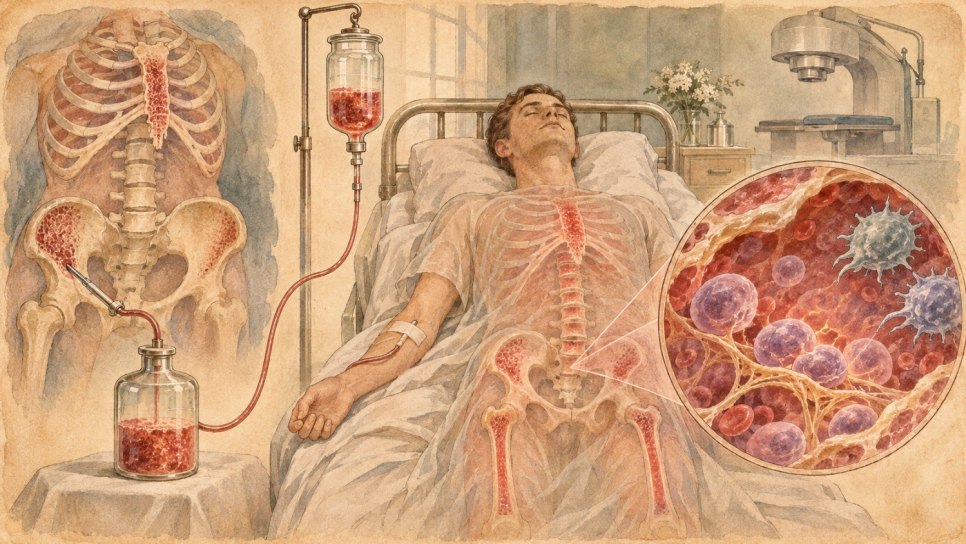
Yesterday we saw that immune cells are themselves the thing being transplanted (Day 134). Today we move to another scene from the same year, 1957: a laboratory with no patients in it, full of chick embryo membranes. There, cells that had met a virus were seen to release a substance that protected not themselves but their surroundings. Let me say at the outset: this story did not begin as the discovery of a cancer drug. The cancer part came later, and for two decades most of its promise turned out smaller than expected.
One laboratory, two outsiders
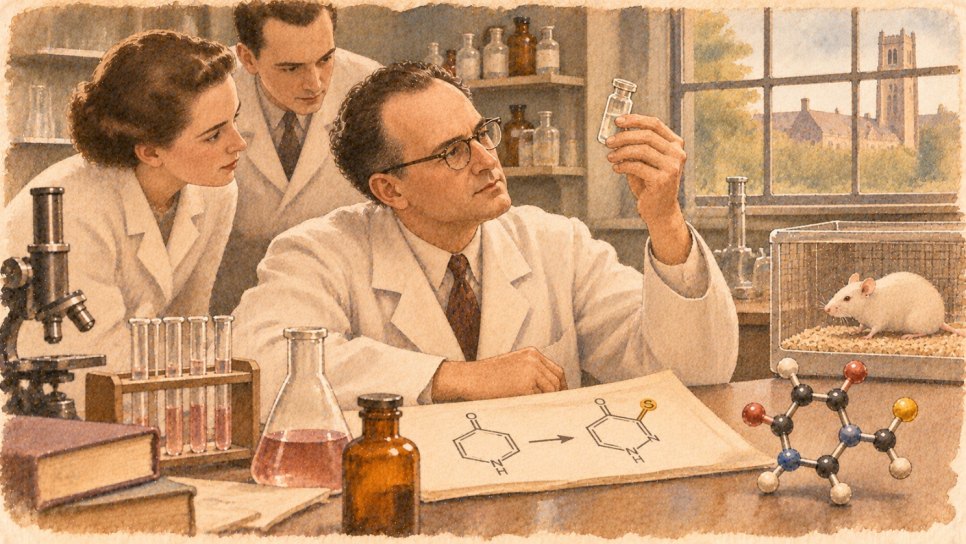
Alick Isaacs (1921-1967) was a Scottish physician and microbiologist. According to a secondary source he studied medicine in Glasgow and did graduate work in bacteriology in Australia under Macfarlane Burnet, so he has a link to Burnet, a hero of Day 133. He returned to England in 1951; in Mill Hill, north London, at the National Institute for Medical Research (NIMR), he headed the World Influenza Centre. Jean Lindenmann was a Swiss researcher, born in Zagreb in 1924, who finished medical school in Zurich in 1951. In 1956 he came to NIMR on a one-year fellowship from the Swiss Academy of Medical Sciences; he first worked on poliovirus, and that project failed. Their laboratories were next to each other.
What they shared was an interest in viral interference: the blocking of one virus's multiplication in the presence of another. According to an obituary of Lindenmann published in 2015, by March 1957 the two had shown that embryonic chick cells exposed to heat-inactivated influenza virus made a protein that stopped live influenza virus from multiplying.
"Virus interference. I. The interferon"
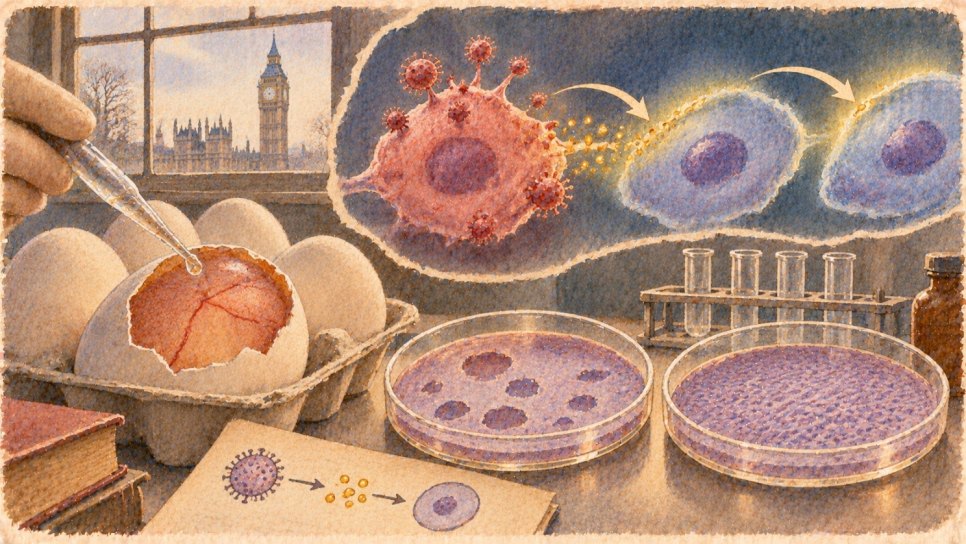
The paper appeared in volume 147, pages 258-267, dated 1957 (citation from the historyofmedicine.com record and the reference list of a Nature Immunology letter). I could not verify the publication day and did not read the full text; I read only a scanned (OCR) fragment on the Royal Society site, which may contain errors. According to that fragment, while studying interference between heat-inactivated influenza virus and fragments of chick chorioallantoic membrane, the team found that "a new factor was released." The factor was recognized by its ability to induce interference in fresh membrane pieces; it appeared in the membranes after a 3-hour incubation, following a lag phase, and passed into the surrounding fluid.
They named the factor interferon. According to Derek Burke's recollection, Lindenmann most likely proposed the name; Lord Hailsham, then chairman of the Medical Research Council, objected that the word mixed Latin and Greek roots (single source, an obituary). The substance's structure was unknown then; it was later found to be a protein or to require one for its action.
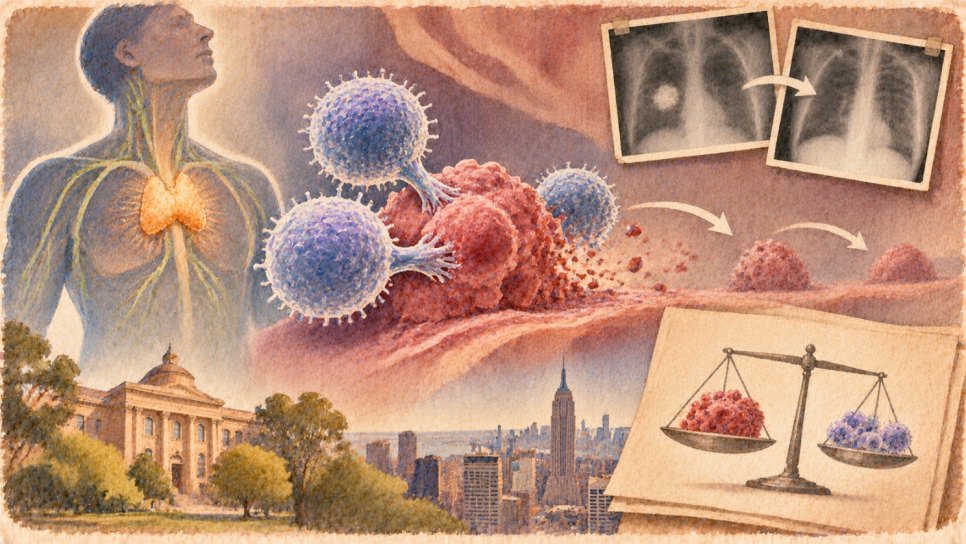
The importance was the idea that a cell could release a soluble message able to prepare neighboring cells against a virus. It was a product of the cell, not of the virus. The story pointed first toward viruses, not cancer.
Interference and interferon
Viral interference is the blocking of one virus's multiplication in the presence of another (simplified definition). Interferon is the factor that Isaacs and Lindenmann saw released from cells and that induced interference in fresh membrane pieces; it was later found to be a protein. "Warns its neighbor" is a simplifying metaphor; I do not describe the mechanism in detail.
One distinction matters: in 1957 interferon was not defined as a substance that directly destroys a virus; it was recognized as a factor that induces interference in cells. So the idea of making it a cancer drug in later years came not from the first finding but from a separate assumption.
A forerunner, an inflated hope and a measured limit
The first caution concerns a forerunner. In 1954, in a French-language journal (C R Séances Soc Biol 1954;148:1700-1702), Nagano and Kojima reported that rabbit tissue infected with vaccinia virus contained non-infectious components that blocked skin infection; the components did not sediment in an hour of high-speed centrifugation. In 1958 (C R Séances Soc Biol 1958;152:1627-1629) they wrote that a cell-free supernatant from ground infected rabbit skin or testis blocked vaccinia infection, and that this did not come from immunity or trace antibodies. Watanabe's 2004 letter says the two groups' work was independent and used very different experimental systems. The 1954 report preceded the 1957 paper; the name, however, became established through the Isaacs and Lindenmann paper. I did not read a source that settles priority, so I call neither one "first."
The second caution concerns hope. Clinical testing of interferon in cancer began in 1971, when Hans Strander at Karolinska Hospital started studies with leukocyte interferon prepared by Kari Cantell in Helsinki; the first disease was osteosarcoma (Gresser's 1989 review). The early studies relied on historical controls; Gresser defends them, arguing that randomization was not considered feasible at the time, but historical controls limit how far the results can be interpreted. Supply was also narrow: according to a 1980 Time article, Cantell separated white cells from blood collected by the Finnish Red Cross and stimulated them with Sendai virus; the product was impure, about one part interferon in a thousand, and in 1979 the laboratory produced 400 billion units a year. The same article says full purification would destroy 99 percent of the interferon and be very expensive.
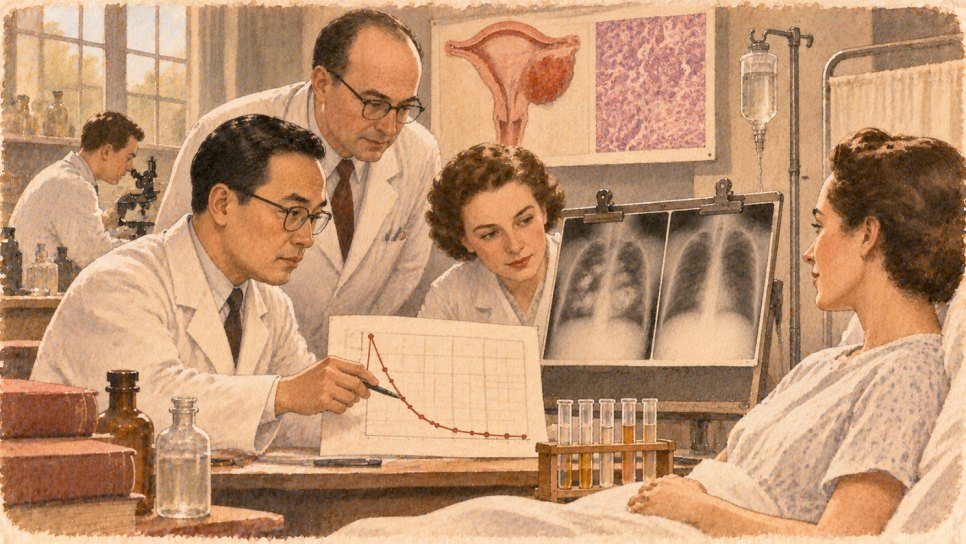
The third caution is that the clearest test of this story came from a randomized trial. In EURAMOS-1, 2,260 patients were registered; 716 who responded well to preoperative treatment were randomly divided: standard chemotherapy plus pegylated interferon alfa-2b (357) or without it (359). The hazard ratio for event-free survival was 0.83 (P = 0.214); three-year event-free survival was 77 percent with interferon and 74 percent without. In relative terms that looks like a 17 percent lower risk; in absolute terms it is a three-point difference that is not statistically significant, and the authors said the results did not support routine interferon maintenance after standard chemotherapy (Bielack et al., J Clin Oncol 2015, from the ASCO Post summary). This is not the same product or the same patient group as Strander's leukocyte interferon in 1971, so it does not refute his results; it shows only that pegylated interferon as maintenance gave no significant difference in a randomized trial.
The fourth is that the ground interferon held was narrow. In 1984 Quesada and colleagues reported alpha interferon producing complete response in three and partial response in four of seven patients with progressive hairy cell leukemia; the responses lasted more than 6 to more than 10 months (NEJM 1984;310:15-18, from the abstract). It was a very small series with short follow-up. The first approval of Intron A (interferon alfa-2b) came on 4 June 1986, for this disease (hemonc.org). According to Gresser, lung, stomach, colon, prostate and breast cancers were not amenable to interferon alone (1989). In Gresser's own account, mouse experiments began in 1965 with virus-induced leukemias and then extended to transplantable tumors; the mechanism was unclear in either mice or patients.
What remains
- The idea that cells release a soluble message against a virus and prepare their neighbors
- The demonstration that interferon works in selected diseases such as hairy cell leukemia
- The lesson that a finding can appear in two laboratories, in two different systems
What falls or is limited
- The expectation that interferon would be a general antiviral drug
- The assumption that alone it would suffice for every cancer
- The thought that it would settle in as routine maintenance in osteosarcoma
The path of the interferon idea: from 1954 to 2015. The axis runs from 1950 to 2020. Green marks are publications with a verified bibliographic record (1954, 1957, 1958, 1984); blue marks are dates taken from a secondary source. Events for which only the year is known are drawn at mid-year.
I did not build a local link in this article
I found no verified history of interferon use in Türkiye and did not invent one. Search results showed many papers in Turkish medical journals on interferon in chronic hepatitis; I did not read them. As a general inference (my own inference), the fact that interferon was widely used outside cancer is important context for its place in cancer history; but the sources this article rests on give no date.
From 1954 to today
What was verified, what conflicts
- The 1957 paper: Proc R Soc B 147:258-267 (1957); citation from the historyofmedicine.com record and the reference list of the Nature Immunology letter. Publication day not verified; full text not read. Only a scanned (OCR) fragment on the Royal Society page was read, which may contain errors.
- Experiment details: "by March 1957 ... they had shown" comes from an obituary (Pharmaceutical Journal); "a new factor was released," the 3-hour incubation and the lag phase come from the OCR fragment. I did not describe the rest of the experiment.
- Names and years: Isaacs 1921-1967, Lindenmann 1924-2015 (historyofmedicine.com record and the obituary). That Isaacs studied medicine in Glasgow, worked under Burnet and returned to England in 1951 comes from a secondary source (EBSCO). Wikipedia lists exact days of birth and of passing; I looked only as a hint and did not write them.
- The name: that Lindenmann proposed "interferon" and Hailsham objected comes from a single source (the obituary, Derek Burke's recollection), which says "most likely."
- Nagano and Kojima: citations from Watanabe's Nature Immunology 2004;5:1193 letter. I read English translations of the 1954 and 1958 works on a Kyoto University page (Watanabe's translation, 23 March 2004); I did not read the French originals. The 1954 paper's title is "Pouvoir immunisant du virus vaccinal inactivé par des rayons ultraviolets"; the inhibitory-component statement is in the summary of that translation. I did not write an institution because two readings conflicted. "First" was not claimed.
- Strander and Cantell, 1971: Gresser's Acta Oncologica 1989;28(3):341 review (based on a June 1988 talk). Patient numbers and response rates are not in that text; I did not write them. The "Strander et al. 1977" citation is from there.
- Gresser's mice: 1965 Friend and Rauscher leukemias, then transplantable tumors, a PNAS 1969 citation; not presented as a first demonstration.
- Time 1980: page 6 of the 11-page article of 31 March 1980 was read; the figures (start in 1961, 400 billion units, one-in-a-thousand purity, 99 percent loss) are from there. The Mary Lasker and American Cancer Society part was not read.
- Hairy cell leukemia: Quesada JR et al., NEJM 1984;310(1):15-18, from the abstract in the MD Anderson record; seven patients, three complete and four partial responses; text not read. No dose was given, on purpose.
- The 1986 approval: hemonc.org (secondary); the FDA document was not read. A Citeline headline says Roferon-A and Intron A were "simultaneous first approvals"; I did not read the text, so I did not say "first interferon approval."
- EURAMOS-1: Bielack et al., J Clin Oncol 2015 (online 8 June 2015), from the ASCO Post summary; I could not reach the PubMed page; the title and volume were not verified; I did not read the paper.
- A conflicting source: the EBSCO summary says osteosarcoma "kills 85 percent" of patients and is now "treated successfully with interferons." That conflicts with EURAMOS-1 and Gresser's warning about historical controls; I did not use it.
- Türkiye: no verified link was found; the Turkish hepatitis papers were not read.
What does a child's jaw tumor show on a map?
Today we followed a clue in a laboratory, in chick embryo membranes. Tomorrow the clue is on a map: a tumor appearing in the jaws of children in Uganda, and the physician who carried it from a hospital to a continent. Denis Burkitt and 1958: I will tell it tomorrow after verifying the name, the year and the "first" claims.
Author's note: The easy road for this article was to say "Isaacs and Lindenmann found a drug against cancer." The sources I have say interferon came out of a study of viral interference, that its cancer use caught on years later and in selected diseases, that its wide promise shrank when tested, and that a Japanese group had earlier reported a similar effect. I could not read the full text of the Isaacs and Lindenmann paper or the French originals of Nagano and Kojima. I did not reduce this to one clean story.
Sources and Further Reading
- Isaacs A, Lindenmann J. Virus interference. I. The interferon. Proc R Soc Lond B 1957;147:258-267 (citation from the historyofmedicine.com record; an OCR fragment on the Royal Society page was read; full text not read).
- Nagano Y, Kojima Y. Pouvoir immunisant du virus vaccinal inactivé par des rayons ultraviolets. C R Séances Soc Biol Fil 1954;148:1700-1702; and Inhibition de l'infection vaccinale par un facteur liquide dans le tissu infecté par le virus homologue. C R Séances Soc Biol Fil 1958;152:1627-1629 (English translations on a Kyoto University page were read; French originals not read).
- Watanabe Y. Fifty years of interference. Nat Immunol 2004;5:1193 (read; short reader letter).
- Jean Lindenmann (1924-2015). The Pharmaceutical Journal (pharmaceutical-journal.com; read; I did not see the author on the page; secondary).
- Gresser I. Antitumor effects of interferon. Acta Oncol 1989;28(3):341- (page range inferred from running headers; read; review).
- Quesada JR, Reuben J, Manning JT, Hersh EM, Gutterman JU. Alpha interferon for induction of remission in hairy-cell leukemia. N Engl J Med 1984;310(1):15-18 (abstract only; text not read).
- Bielack SS et al. Pegylated interferon alfa-2b maintenance in osteosarcoma (EURAMOS-1). J Clin Oncol 2015 (ASCO Post summary, 16 June 2015; paper not read, title not verified).
- Time. The Big IF in Cancer, 31 March 1980 (content.time.com; page 6 of 11 read; secondary).
- hemonc.org. Interferon alfa-2b (Intron-A) (read; secondary).
- Mukherjee S. The Emperor of All Maladies: A Biography of Cancer. New York: Scribner, 2010. (For general context; the relevant part was not read for this article in this session.)
This article is Day 135 of the "365 Days of Cancer History" series and tells the discovery of interferon in 1957 as a historical event. It is historical-popular content; it is not diagnostic or treatment advice; no drug dose is given. For decisions about your health, consult your physician. Sources have been verified; details resting only on a secondary source or not readable are marked in the fact-check notes.
Was this article helpful?
Your feedback helps us improve our content.