
Impressive Activity with Lenvatinib plus Pembrolizumab for Anaplastic Thyroid Cancer

In this article
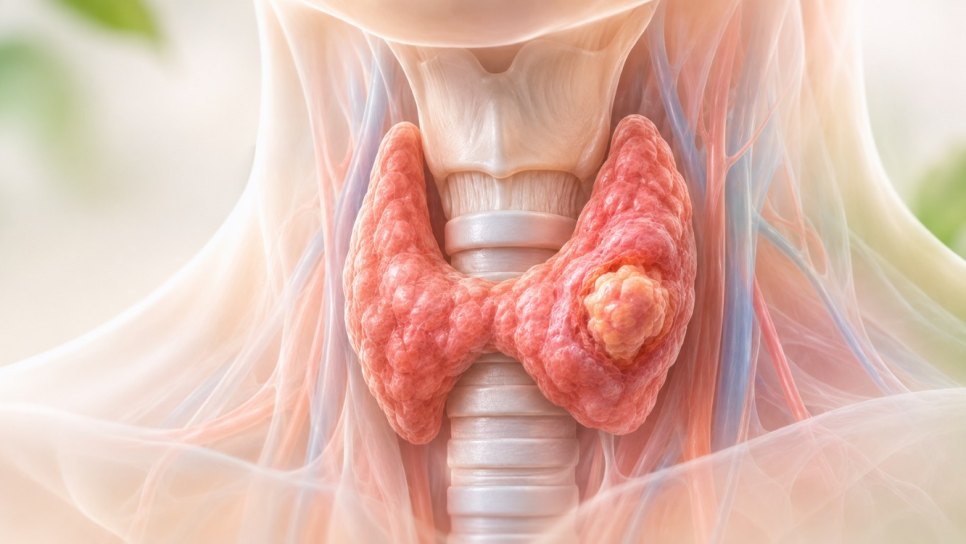
Anaplastic thyroid cancer accounts for approximately 2% of all thyroid cancers but is responsible for 50% of thyroid cancer deaths.
A new combination of nonchemotherapy drugs holds promise for patients with metastatic (stage 4) anaplastic thyroid cancer that has progressed after chemotherapy, a disease known to have a poor prognosis.
The multikinase inhibitor lenvatinib in combination with the immunotherapy pembrolizumab showed durable responses and encouraging survival rates in a small clinical study.
Presenting their findings at the 90th annual meeting of the American Thyroid Association (ATA), the authors said, “Our results show that, in patients with anaplastic thyroid cancer, the combination of lenvatinib and pembrolizumab is safe and effective and produces high response rates, including long-term remissions”
Some patients with anaplastic thyroid cancer in the clinical study discussed in this article had a tremendous response with a long-term effect, and some had a complete response... This makes the study truly encouraging.
Interest in the combination of lenvatinib plus pembrolizumab has been very high in recent years. Lenvatinib may make a tumor more immunogenic, making it easier for the immune system activated by immunotherapy to recognize cancer cells. The combination first received FDA (US Food and Drug Administration) approval for advanced endometrial (uterine) cancer in 2019. It subsequently received FDA approval for first-line treatment of advanced renal cell cancer in 2021.
A Study That Could Change the Course of an Aggressive and Rare Cancer
Even with concurrent or sequential treatment using surgery, radiotherapy and chemotherapy, median overall survival in anaplastic thyroid cancer is only 3 to 5 months.
In recent years, targeted drugs have brought progress. BRAF V600E mutation is present in approximately 25% of patients with anaplastic thyroid tumors, in whom high response rates have been seen with BRAF/MEK inhibitor combinations.
However, for the remaining 75% of patients with anaplastic thyroid cancer who have no identified mutations, response rates to any drug treatment are low, around 10–20%.
ATLEP was a phase II study in which all 26 patients with anaplastic thyroid cancer had stage IVB disease and had mainly been pretreated with chemotherapy/radiotherapy and surgery, but none had the BRAF V600E mutation.
Patients received lenvatinib starting at 20 mg daily for up to 2 years and intravenous pembrolizumab at 200 mg every 3 weeks.
- The overall response rate was 38.5%, with partial responses in 10 of the 26 patients.
- At month 3, the stable disease rate was 57.6% (15 of 26 patients), and only 3.8% of patients had progressive disease.
- Another interim analysis of the first 16 patients with anaplastic thyroid cancer followed for 2 years showed a very high best overall response rate of 68.8%, with partial responses in 11 of the 16 patients.
Response Rates and Progression-Free Survival Higher Than with Other Treatments
These response rates in anaplastic thyroid cancer are markedly higher than those observed with other treatments.
At 2 years of follow-up, the best overall response rates for other systemic treatments, such as doxorubicin monotherapy or carboplatin/taxol, are 10% to 25% — far below the 68% seen with the lenvatinib/pembrolizumab combination.
In 16 patients followed for up to 2 years, median progression-free survival was 10 months, and median overall survival was 11 months. 25% of patients survived for more than 2 years (4 of 16), and the clinical benefit rate was 100%. These data are highly impressive for anaplastic thyroid cancer and represent the best progression-free survival results seen so far; by comparison, the duration with the carboplatin/taxol combination is 5.4 months.
Side Effects
Grade 3 and 4 side effects occurred in 19 of 36 patients (53%), including bleeding after fistula development (11%), sepsis (8.3%), pneumonia (2.7%), aspergillus pneumonia (11%), pulmonary embolism (5.6%), other thromboses (8.3%), and autoimmune hepatitis (5.6%).
Most serious side effects, such as fistulas, bleeding and pulmonary embolism, have also been reported in previous studies using lenvatinib alone and are known complications of this drug.
Similarly, autoimmune hepatitis is a known complication of pembrolizumab.
The fungal infection observed in the study was unexpected but may have resulted from the combination of previous radiotherapy to the neck, prolonged high-dose steroids, and reduced tissue healing caused by lenvatinib.
As a precaution, all patients are now given prophylactic treatment with amphotericin B and Cotrim Forte to prevent fungal infections and specific pneumonia. According to the report, no further systemic fungal infections have occurred since these prophylactic treatments began.
Conclusion
Despite these risks of adverse events, the highly encouraging overall response rate and other results make it clear that this treatment combination is beneficial and that outcomes will improve further with preventive measures.
In addition, there may be a way to identify patients most likely to benefit from this combination. The researchers reported that patients whose tumors had certain genetic features were most likely to respond to treatment. We hope to see their work on this in the coming period.
Clinical trials of other tyrosine kinase inhibitors combined with immunotherapies for anaplastic thyroid cancer are also ongoing.
Sources
2. Lenvatinib/Pembro Combo for Advanced Anaplastic Thyroid Cancer - Medscape - Oct 08, 2021.
Was this article helpful?
Your feedback helps us improve our content.


Reader comments
Share your comment
Your name and comment are published only after administrator approval. Your email address is never shown to visitors.
Be the first to comment.