
What Is Targeted Therapy for Cancer? All FDA-Approved Targeted Drugs

In this article
Which Targeted Drugs Have FDA Approval?
The United States Food and Drug Administration (FDA)is considered the world’s leading institution for approving new cancer drugs, although its decisions are, of course, legally binding only within the United States. Nevertheless, for oncology professionals worldwide, FDA approvals are the most important standard for new cancer treatments.
The FDA has already approved many targeted cancer drugs, and many more are being tested in clinical trials either alone or in combination with other treatments. A list of targeted therapies that have received FDA approval for cancers so far, together with their molecular targets, is provided below.

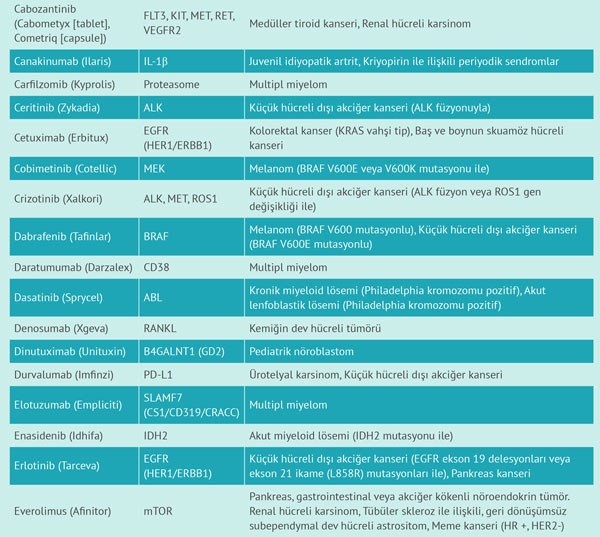
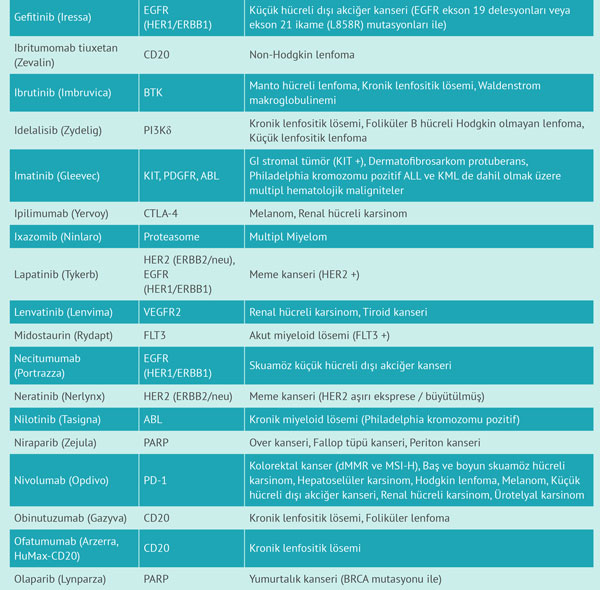
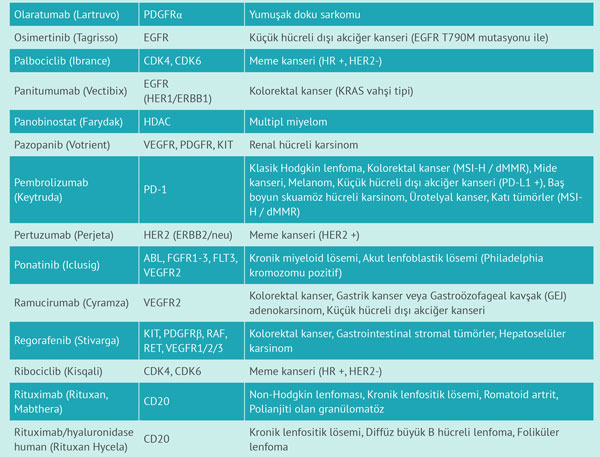

What Is a Targeted or “Smart” Drug?
Targeted cancer therapies are drugs designed to interfere with specific molecules needed for tumor growth and progression.
Conventional cytotoxic (cell-killing) chemotherapiesgenerally inhibit cell division to kill rapidly dividing cells in the body. The main aim of targeted cancer drugs is to provide cancer cells with more precise treatments that potentially have fewer side effects .
What Types of Targeted Therapy Are There?
Targeted cancer drugs are generally classified as monoclonal antibodies or small molecules .
1. Monoclonal Antibodies
Monoclonal antibodies (mAb) are large biological agents—meaning they are produced from living organisms—developed in the laboratory and specifically designed to recognize and bind to targets in the bloodstream. By doing so, they suppress a receptor and cellular signals passing inward through the cell membrane, or indirectly trigger a function such as apoptosis or the activity of the immune system . Some monoclonal antibodies target a specific protein in a cellular signaling pathway , and are therefore considered targeted therapies. Examples include trastuzumab, which targets the HER2 receptor or bevacizumab, which targets vascular endothelial growth factor (VEGF) . The newer-generation immunotherapies described in detail below are also drugs made of monoclonal antibodies, designed to help the immune system recognize a cancer cell as foreign.
Side effects associated with monoclonal antibodies depend on their specific mechanisms of action. However, all monoclonal antibodies can cause allergic responses, such as anaphylactic reactions or infusion-related reactions (during administration into a vein). Most side effects are considered mild.
Because of their large size and because they consist of molecules that typically break down in the stomach’s acidic environment, monoclonal antibodies are administered intravenously (into a vein).
2. Small-Molecule Drugs
Small-molecule drugs are agents small enough to enter target cells easily and exert their effects. Most small-molecule drugs used to treat cancer target specific factors inside cells involved in cell proliferation, survival, migration, and angiogenesis. Because they have specific targets, small-molecule drugs are often called targeted agents. However, other types of drugs, such as monoclonal antibodies, can also be considered targeted agents.
There are many different classes of small-molecule drugs, defined by the factor or process they inhibit. For example, a major class is tyrosine kinase inhibitors: molecules that suppress proteins (tyrosine kinases) found inside or expressed by cells. Examples in lung cancer include drugs targeting EGFR and ALK receptor mutations.
Side effects associated with small-molecule drugs vary according to the drug’s mechanism of action, and most are considered moderate.
Small-molecule drugs are typically administered orally (by mouth), making them convenient for most patients.
Naming
As with any drug, targeted cancer therapies typically have several different names. As a chemical agent is developed into a drug, one or more names are used to identify the chemical compound. If successful, it receives a generic name and then a brand name used by the pharmaceutical company for marketing. For example, a small molecule with the code name STI-571 is known as imatinib (its generic name) and is marketed by Novartis under the brand name Gleevec.
The name of a targeted cancer drug provides clues about its type and cellular target.
Monoclonal antibodies end with the suffix “-mab” (monoclonal antibody). Small molecules end with “-ib” (indicating that the agent has protein-inhibiting properties). Monoclonal antibodies have suffixes indicating the compound’s source, such as “-ximab”for chimeric human-mouse antibodies, “-zumab” for humanized mouse antibodies, and “-mumab” for fully human antibodies.
Sources
mycancergenome.org
Was this article helpful?
Your feedback helps us improve our content.




Reader comments
Share your comment
Your name and comment are published only after administrator approval. Your email address is never shown to visitors.
Be the first to comment.