National Cancer Institute Act (5 August 1937): How U.S. Cancer Research Became a Public Responsibility
In this article
A Nation's Cancer Institute: The National Cancer Institute Act of 1937
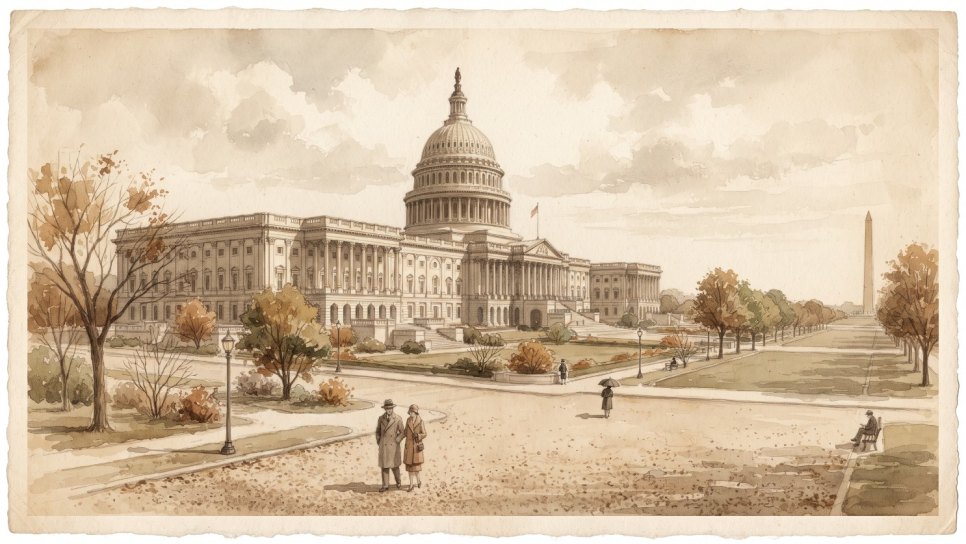
On day 108 we set Bittner's mice beside Graham's operating room and asked what the two had in common: both were ceasing to be the work of a single curious person. This time we open the door in Washington. In 1937 the U.S. Congress decided that cancer research should be the task not of a charity or a single laboratory but of a national institution. In this piece we follow why the decision came that year, what the law did and did not do.
Senator Neely's odd proposal
The story begins not in 1937 but a decade earlier. According to one account, in February 1927 the West Virginia senator Matthew Neely brought the Senate an unusual proposal: a reward of 5 million dollars for whoever supplied information leading to the arrest of human cancer. More than twenty-five hundred letters poured into Neely's office; in the same account, most came from healers who wanted to sell their own remedy. The reward bill went nowhere, but the senator did not give up. In May 1928 he introduced a bill for the National Academy of Sciences to study cancer. The Senate approved this 50,000-dollar study; the bill stalled in the House of Representatives. Georgia's senator William Harris also introduced similar bills in 1929-30, and they too made no progress.
Behind these attempts lay a number. According to a 1922 report in the Public Health Service's journal, in 1920 a total of 72,931 people in the U.S. official registration area lost their lives to cancer, 83.4 per 100,000. The figure was striking, but it did not by itself suffice to found an institution. Federal interest in cancer was not zero: at the Public Health Service's Hygienic Laboratory, a group led in 1922 by the pharmacologist Carl Voegtlin was studying the effect of chemicals on tumors, and in the 1920s the service had opened a special cancer research unit at Harvard Medical School. What was missing was a permanent umbrella, with its own budget, to bring these together.
Congress in the spring of 1937
The year was 1937 and the ground had shifted. This time Neely worked with Senator Homer Bone of Washington State and House members Warren Magnuson and Maury Maverick of Texas. Bone's bill (S. 2067) and Magnuson's identical House bill arrived on 2 April 1937; they gave the Surgeon General authority to control and prevent the spread of cancer and provided 1 million dollars a year. On 29 April Maverick introduced his own bill (H.R. 6767): to promote cancer research, improve diagnosis and treatment facilities, and set up a National Cancer Center within the Public Health Service; 2.4 million dollars the first year, then 1 million dollars a year. The service's legal office had helped with the text, and the suggestions came from Dr. Dudley Jackson of San Antonio.
There was resistance too. According to the same account, the American Medical Association called the bill "socialism" and said it was dangerous for the government to take a dominant position in medical research. James Ewing, a well-known name in cancer pathology, doubted that money could hasten a cure (conceptual summary). The doubt was not empty; we return to it in the "cost" box. According to the same source, on President Roosevelt's advice Bone carried the cancer bill as an addition to an appropriations bill for controlling venereal diseases, a popular health cause.
In the end the two chambers reached a compromise. Report No. 1281 of the Committee on Interstate and Foreign Commerce was dated 25 July 1937, and the committee believed the country did not have enough diagnostic and treatment centers (conceptual summary). The law was approved on 5 August 1937 with President Franklin Roosevelt's signature.
The text of a law
The law entered the record as Public Law 244 of the 75th Congress, and its title was plain: to provide for, foster, and aid in coordinating research relating to cancer. Section 1 created a unit within the Public Health Service called the "National Cancer Institute" and charged it to study the cause, diagnosis, and treatment of cancer, to support similar work, and to speed the passage of effective methods into practice. Section 2 gave the Surgeon General, acting through the Institute and an advisory council, authority to conduct and fund research, to buy and lend radium, to provide technical training, fellowships, expert consultation, and cooperation with state health agencies.
The advisory council was to have six members under the Surgeon General's chairmanship; members would be drawn from leading medical or scientific authorities in the study, diagnosis, or treatment of cancer, serve three-year terms, and be paid 25 dollars a day for meetings. The council would review grant applications from universities, hospitals, laboratories, and individuals and certify those it found suitable. The money was written in too: up to 750,000 dollars for a building and equipment, and apart from that 700,000 dollars for each fiscal year. The law was to take effect thirty days after signing.
RESEARCHING INSIDE, GRANTING OUTSIDE —
The law had two legs. The first was the work and training the Institute carried out in its own laboratories. The second was supporting research in universities, hospitals, and independent laboratories through grants the council reviewed and certified. Today we call this pair "intramural" and "extramural" research.
Why it matters. The idea that public money should be distributed outward, after review by independent experts, was already in the text of this law. It kept a national institution from turning into a single-site laboratory and widened the research.
Carl Voegtlin and Bethesda
Carl Voegtlin was chosen as the Institute's first director. Voegtlin was a pharmacologist and organic chemist born in 1879 in Zofingen, Switzerland, and had headed the pharmacology unit of the Hygienic Laboratory since 1913. According to Wikipedia, he had worked on the pharmacology of arsenic compounds and, with Homer Smith, showed that the active agent of Ehrlich's Salvarsan was mapharsen. We could not verify this from a primary paper; if it holds, then the trace of Paul Ehrlich, whom we met on day 96 with the "magic bullet" idea, also sits in the résumé of America's first cancer director. Voegtlin took office on 13 January 1938 and retired from the Public Health Service in 1943.
The Institute took shape as an independent research body by merging the cancer research office at Harvard with a pharmacology unit of the National Institute of Health (NCI's own account). On 28 March 1938 Congress also passed a joint resolution dedicating April of each year to a voluntary national cancer control program. On 31 October 1940 Roosevelt dedicated the first six buildings of the National Institutes of Health in Bethesda; Building 6 was the Institute's first official building. According to a secondary source, by 1941 the Institute had made grants totaling 61,380 dollars. The Public Health Service Act of 1 July 1944 made the Institute a unit of the National Institutes of Health and lifted the 700,000-dollar annual limit.
The skeleton of the 1937 law. Congress passes the law; the Surgeon General runs both the Institute and the council; the Institute carries out its own research and training, while the council supports outside institutions through the grants it certifies.
COST AND LIMIT: FOUNDING AN INSTITUTE IS NOT FINDING A TREATMENT —
The law brought no treatment. 700,000 dollars a year was a modest budget against expectation; Maverick's first proposal had been 2.4 million dollars for the first year. Ewing's doubt that money alone does not hasten a solution was partly vindicated: what was available in 1937 was still surgery and radium (days 94 and 95), and founding an institute changed the treatment no patient received that year. The law admitted in the committee report that diagnostic and treatment centers were inadequate, but it did not create the centers itself.
The second limit is scope: this was a law the United States passed for its own citizens. Treating cancer research as a national task also made political and social choices unavoidable about which questions the money would go to. The American Medical Association's "socialism" objection may look exaggerated through today's eyes, but public money also brings the question of who sets the research agenda.
What remains
- The idea that cancer research can be supported with public funds
- The outside-grant model approved by a council of independent experts
- The example of a disease-specific national institute (groundwork for later institutes)
What fell or was surpassed
- The fixed annual ceiling of 700,000 dollars (lifted in 1944)
- The objection that "cancer research is not the government's business"
What remains of this story today?
This law has no verified particular connection to Türkiye; the inference is general. A country's cancer institution works somewhere a patient cannot see from the examination room: which question will be researched, who will receive the grant, which study will be supported are decided there. The 1937 story shows that these decisions began with a law, a budget, and an advisory council. For patients and families who want to understand why a treatment exists today, looking at who financed the research behind it often shows the way.
A TEN-YEAR ROAD
WHAT WAS CONFIRMED IN THIS PIECE AND WHAT REMAINS OPEN
- Date of signing: The text of the law (Ch. 565, Public No. 244, 75th Congress, 1st Session) was approved on 5 August 1937; the NCI and NIH pages give the same date. One secondary source (an essay on the University of Minnesota's cardiovascular epidemiology site) writes that the law was enacted "in July 1937." Since the committee report is dated 25 July 1937, the exact day of final passage could not be verified here; only 5 August is used as the signing date. The law takes effect thirty days after signing (Section 8(e)).
- Voting: The vote counts in the two chambers and whether they were "unanimous" could not be verified in any source; the text makes no claim of unanimity.
- Neely's reward proposal and the 2,500 letters: rest on a single secondary source (WETA, "How the Federal Anti-Cancer Effort Began"); Neely's "more insatiable than the guillotine" comparison is given not as a quotation but as a conceptual summary. The 50,000 dollars in the 1928 bill comes from the same source.
- Bone's venereal-disease appropriations tactic, the AMA's "socialism" warning, and Ewing's doubt: rest on a single secondary source (the Minnesota essay drawing on Strickland). Which council Ewing chaired is unclear in the sources, so no title is given.
- Budgets: S. 2067 and its companion, 1 million dollars a year; H.R. 6767, 2.4 million dollars in the first year and then 1 million dollars a year (NCI legislative timeline). The law's own text (Section 7): up to 750,000 dollars for a building, 700,000 dollars for each fiscal year.
- The "first" claim: NCI's own history page says the 1937 law was the first time Congress appropriated funds for a noncommunicable disease; this is NCI's own account and was not cross-verified. Federal cancer research already existed (the Hygienic Laboratory, the Harvard unit); the law institutionalized it, it did not begin it.
- The Harvard unit: The NCI page mentions "the Office of Cancer Investigations at Harvard"; another secondary source says a special cancer research laboratory was opened at Harvard Medical School in the 1920s. The founding year could not be verified.
- Voegtlin: Birthplace and year, headship of the pharmacology unit since 1913, and the mapharsen finding rest on Wikipedia; the mapharsen finding was not verified from a primary paper. 13 January 1938, the start date, comes from the directors' table on the NIH history page; other sources say only "1938."
- 61,380 dollars in grants by 1941: rests only on the Living New Deal page; not verified against a primary source.
- 1920 cancer data: Public Health Reports 37(1), 6 January 1922: 72,931 people in the registration area, 83.4 per 100,000. An equivalent figure for 1937 could not be verified and was not used. Because the coverage of the registration area changed over the years, figures from different years should not be compared directly.
The Shadow of a Synthetic Hormone: DES and Dodds
On day 105 we left Lacassagne's mouse experiment with the warning that "estrogen can feed a tumor." In 1938 in London, the team of the biochemist Edward Charles Dodds introduced an artificial compound resembling the natural hormone. Tomorrow we take up this story of a single molecule that carried both hope and cost, in cancer treatment and afterward in human health, with its dates and its conflicting accounts.
Author's note: This piece opens the series' "institution-building" thread. The efforts we told from Beatson to Bittner were the work of individuals and laboratories; after 1937 the same effort acquired an umbrella with a budget and a review mechanism. To avoid exaggerating the law's effect we kept three things apart: the vote counts could not be verified, the "first" claims rest on the institution's own account, and the situation of a patient being treated in 1937 was not changed by this law.
Sources and Further Reading
- National Cancer Institute Act. Public Law 75-244, Chapter 565, 75th Congress, 1st Session, 5 August 1937 (text of the law in the NIH Office of History archive).
- National Cancer Institute. National Cancer Act of 1937 (cancer.gov, NCI history page).
- National Cancer Institute. Legislative timeline (cancer.gov): entries for S. 2067, H.R. 6100, H.R. 6767, P.L. 75-244, and H.J. Res. 468.
- National Institutes of Health. NIH Almanac: National Cancer Institute (NCI), the directors' table and the 1944 act.
- Living New Deal. National Cancer Institute Act (1937), livingnewdeal.org.
- WETA Boundary Stones. How the Federal Anti-Cancer Effort Began, 24 March 2015.
- Strickland SP. Politics, Science, and Dread Disease: A Short History of United States Medical Research Policy. Harvard University Press, 1972.
- Public Health Reports 1922;37(1), 6 January: cancer statistics for the United States, 1916-1920 (CDC Stacks).
- Mukherjee S. The Emperor of All Maladies: A Biography of Cancer. New York: Scribner, 2010. (General framework.)
This piece is day 109 of the "365 Days of Cancer History" series. The law President Roosevelt signed on 5 August 1937 created the National Cancer Institute within the Public Health Service in the U.S. and provided for supporting cancer research through grants approved by an advisory council. The text is prepared from a historical-popular perspective; it contains no diagnostic or treatment advice, and for your own health you should consult your physician. The information rests on the text of the law, the NCI and NIH history pages, and related secondary sources; details resting only on secondary sources are noted in the fact-check notes.
Was this article helpful?
Your feedback helps us improve our content.