
The Importance of Nutritional Support and Pancreatic Enzyme Replacement in Pancreatic Cancer

In this article
Pancreatic cancer is the 8th most common cancer in Turkey but ranks 3rd among causes of cancer death. More than 80% of patients have substantial weight loss at diagnosis, generally due to malnutrition. This can complicate treatment and adversely affect outcomes and prognosis.
Pancreatic cancer treatment generally aims to control symptoms, prolong life and improve quality of life. This article examines the effects of regimens containing nab-paclitaxel together with nutritional support (NS) and pancreatic enzyme replacement therapy (PERT).
Metastatic (stage 4) pancreatic cancer is often treated initially with nab-paclitaxel-containing chemotherapy regimens. We present findings from a retrospective, observational, single-center study comparing patients who did or did not receive nutritional support (NS) and pancreatic enzyme replacement therapy (PERT).
What Are Nutritional Support and Pancreatic Enzyme Replacement Therapy?
Nutritional support (NS) aims to ensure adequate, balanced nutrition. It may improve general health and treatment outcomes. In pancreatic cancer, pancreatic enzyme replacement therapy (PERT) is also important. It supplements digestive enzymes when the pancreas produces insufficient amounts. For this purpose, lipase-containing capsules are used.
The study notes that a new enzyme formulation containing 35,000 U.Ph.Eur of lipase became available in February 2022. Patients receiving PERT could therefore switch from capsules with lower lipase content (10,000 U.Ph.Eur) to the new, higher-concentration capsules (35,000 U.Ph.Eur). This change may further improve digestion.
Study Details
The study examined patients with advanced pancreatic cancer treated between 2016 and 2022 with a chemotherapy regimen containing nab-paclitaxel. It aimed to investigate the effects of nutritional support and pancreatic enzyme therapy, which helps digestion, on general health and survival.
Nutritional status was assessed using a specific screening tool and a device measuring body composition. Nutritional support was recommended for patients who were malnourished or at risk. It could include dietary advice, oral nutritional supplements and tube feeding when necessary.
Pancreatic enzyme therapy improves digestion through capsules containing enzymes normally produced by the pancreas. These enzymes help the body digest food.
The study used several methods to measure the effects on general health and survival, including assessment of body composition, weight, digestive symptoms and complaints. It also evaluated how well treatment controlled cancer progression and patients' overall response.
At each visit, patients were specifically checked for digestive problems, including loss of appetite, a feeling of difficult digestion, bloating, frequent bowel movements and greasy stools.
Finally, these findings were assessed alongside age, sex, general health, tumor location and other important factors, helping researchers understand which factors most influenced treatment effectiveness.
Results
The study observed that NS and PERT significantly prolonged overall survival and prevented weight loss during chemotherapy. They also improved nutritional status and prevented deterioration in Karnofsky performance status .
The study included 106 patients: 53 in the NS/PERT group and 53 who did not receive these interventions.
Its 3 most notable findings were:
- After three months, weight gain was proportionally greater with NS/PERT than without it. Median weight gain was 1.6 kg in the NS/PERT group, while the control group lost 1.2 kg.
- Patients receiving NS/PERT had significantly longer mean survival than those who did not.
- After 3 months, Karnofsky performance status (KPS) scores were higher in patients receiving NS/PERT.
These results can be presented in a comparative chart:
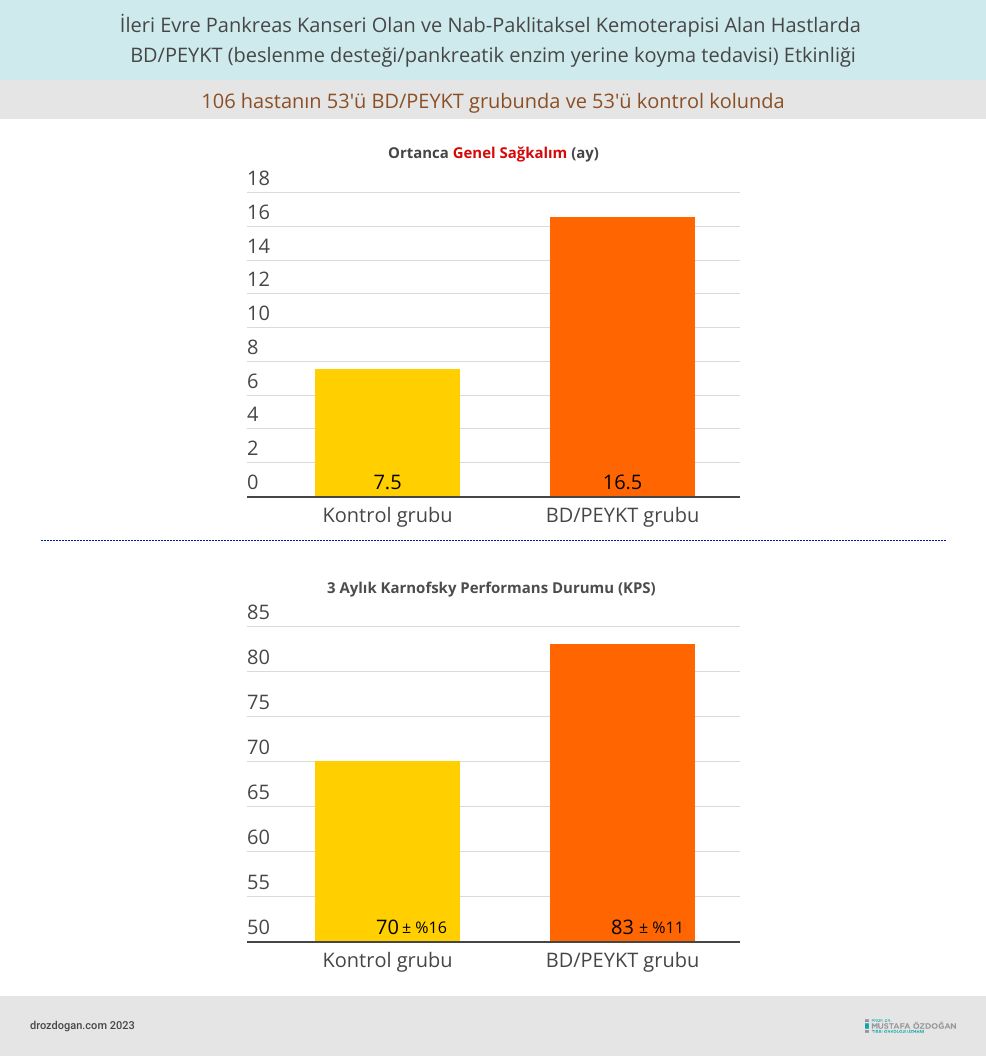
In conclusion, patients receiving NS/PERT gained more weight, lived longer and had higher Karnofsky performance status scores after 3 months than those who did not.
Summary
In patients with pancreatic cancer, nutritional support and pancreatic enzyme replacement therapy may prolong life and improve quality of life. They may improve general health and treatment outcomes. Healthcare professionals should consider these strategies when managing nutritional and digestive problems in pancreatic cancer.
Sources
Was this article helpful?
Your feedback helps us improve our content.




Reader comments
Share your comment
Your name and comment are published only after administrator approval. Your email address is never shown to visitors.
Be the first to comment.