
Can Smoking History Predict Response to Immunotherapy in Lung Cancer?

In this article
The US National Cancer Institute Journal(Journal of the National Cancer Institute) published a study reporting that smoking history, for metastatic non-small cell lung cancer (NSCLC) patients receiving immunotherapy in the immune checkpoint inhibitor class, may help predict response.
Lung Cancers: Those Caused by Smoking and Others
Lung cancer was a rare tumor before smoking became widespread worldwide. It is now the leading cause of cancer-related death in both men and women globally; in 2020, lung cancer caused 1.8 million deaths. Tobacco and tobacco products, led by cigarettes, are responsible for 90% of all lung cancers.
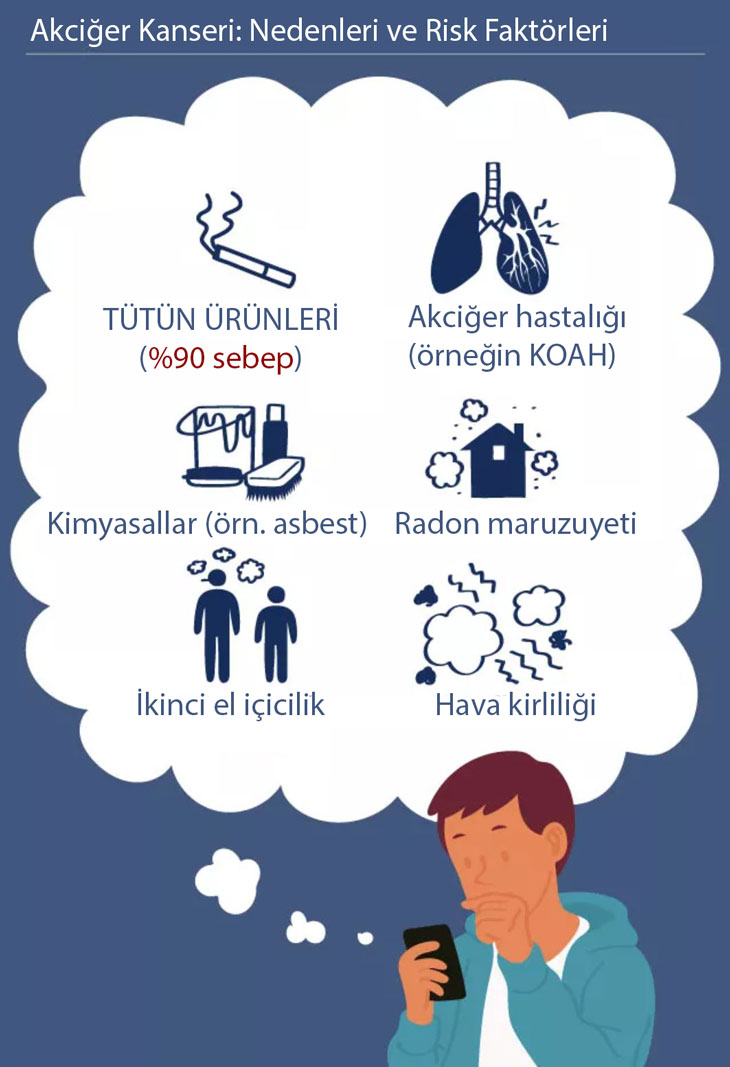
- Related topic: Causes of Lung Cancer Other Than Smoking
Details of the Smoking–Immunotherapy Response Study
Researchers evaluated 644 patients with advanced non-small cell lung cancer (NSCLC) receiving immunotherapy alone:
- 105 had never smoked,
- 375 were former smokers, and
- 164 were current smokers.
Results
- For the 644 patients evaluated, immunotherapy objective response rates;
- were highest in current smokers at 28%,
- 23.5% in former smokers, and
- 11.4% in never-smokers.
- PD-L1 tumor proportion score (TPS) and other characteristics were controlled for, and smoking status was associated with an increased objective response rate significantly. Compared with never-smokers, the odds ratio was 2.07 for former smokers ( P =.04) and 3.04 for current smokers ( P = .003).
- Never-smokers receiving immunotherapy had significantly shorter progression-free survival than former and current smokers. Median progression-free survival was 2.07 months in never-smokers, 3.65 months in former smokers (hazard ratio [HR], 0.74; P =.01), and 3.68 months in current smokers (HR, 0.60; P <.001).
- Similarly, never-smokers receiving immunotherapy had numerically shorter overall survival than former and current smokers. Median overall survival was 9.9 months in never-smokers, 12.9 months in former smokers (HR, 0.85; P =.23), and 13.2 months in current smokers (HR, 0.78; P =.10).
- After adjustment for PD-L1 and other characteristics, doubling smoking pack-years was significantly associated with improved clinical outcomes in multivariable analyses.
The authors say their analyses suggest smoking pack-years may provide additional predictive information.
In conclusion the researchers argued that smoking history might provide even more valuable information than PD-L1, which is routinely assessed to predict immunotherapy response in lung cancer.
Why Do Lung Cancer Patients Who Smoke Respond Better to Immunotherapy?
First, this study should not be interpreted as showing that smoking is advantageous. Lung cancer is difficult to treat even in its early stages, and smoking already causes this proportion of deaths from all cancers: 30%. Smoking status in lung cancer immunotherapy response is therefore not an expression of advantage but a biomarker; smoking status can be considered when predicting which patients will respond better to immunotherapy.
"Why do patients who smoke respond better to immunotherapy?" As for this question, smoking, with its thousands of chemicals and carcinogenic dozens of cancer-causing substances, causes severe mutations in cells. The more a cancer cell differs from a normal cell, the more likely the immune system triggered by immunotherapies is to affect it.
Sources
Was this article helpful?
Your feedback helps us improve our content.




Reader comments
Share your comment
Your name and comment are published only after administrator approval. Your email address is never shown to visitors.
Be the first to comment.