Alcoholic Liver Disease Raises Alarm: Silent Threat Doubles!
🩺 Liver: The Heart of Detoxification
The liver plays a vital role in cancer treatment. The liver is not only a metabolic organ, but also the center of detoxification in the body. However, modern lifestyle and widespread metabolic disorders increase threats to this vital organ. Among these threats, alcohol is a major factor.
Liver Disease Has Doubled
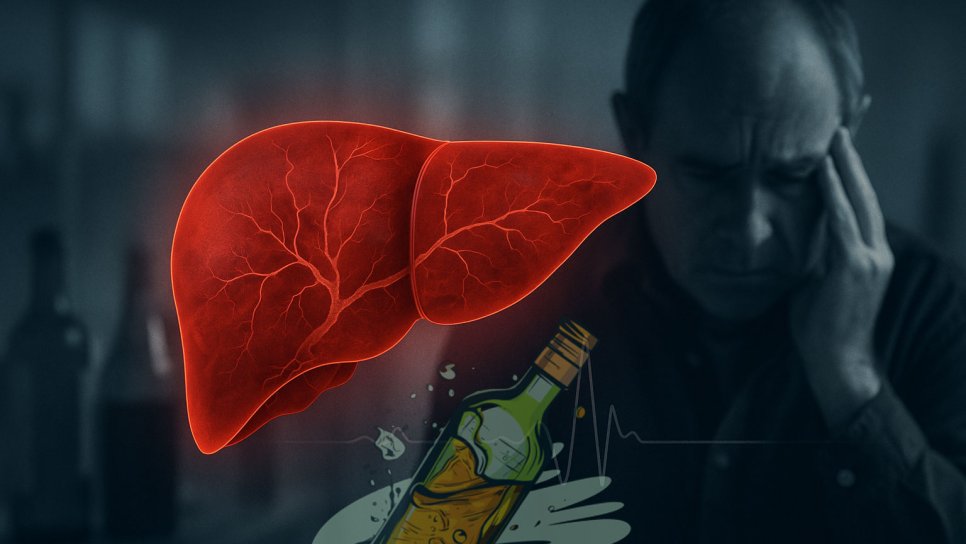
July 23, 2025 — A comprehensive study published in Clinical Gastroenterology and Hepatology revealed that in the US, the rate of advanced liver damage due to heavy alcohol use has more than doubled over the past 20 years. This increase occurred despite average alcohol consumption remaining stable. This surprising trend indicates that the population is becoming increasingly sensitive to alcohol’s effects.
This increase is not unique to the United States. In countries like Turkey, where alcohol use is concentrated in specific groups and metabolic syndrome is highly prevalent, the risk of experiencing a similar trend is significantly high. That’s because comorbid factors like obesity, insulin resistance, and poverty amplify the damage alcohol causes in the liver.
All these findings highlight the critical importance of protecting liver health not only for individual well-being, but also for cancer patients’ treatment tolerance and survival. The study’s conclusions call for urgent awareness, early diagnosis, and management of risk factors regarding alcohol-related liver disease.
🧪 Study Summary: What Was Done?
Researchers analyzed data from the National Health and Nutrition Examination Survey (NHANES) conducted in the United States from 1999 to 2020 to examine the prevalence of advanced liver disease among heavy alcohol users.
To assess liver damage, the commonly used biomarker FIB-4 score was employed. This score estimates the amount of fibrosis (scar tissue) in the liver based on the patient’s age, AST and ALT enzyme levels, and platelet count.
- 🔹 In individuals under 65: FIB-4 > 2.67
- 🔹 In individuals over 65: FIB-4 > 3.25
Exceeding these thresholds is associated with a 25-fold increase in liver-related mortality.
Note: To avoid confounding from other liver diseases, individuals positive for hepatitis B and C were excluded from the study.
Heavy alcohol use was defined as follows:
- 🔸 For women: Average of ≥ 20 grams of alcohol per day
- 🔸 For men: Average of ≥ 30 grams of alcohol per day
(Roughly equivalent to 1–2 drinks per day for women and 2–3 drinks per day for men.)
⚠️ Who Is at Greater Risk?
The study identified specific groups in which alcohol causes greater liver damage even at the same consumption level:
- 🔸 Women
- 🔸 Adults over 45
- 🔸 Individuals living in poverty
- 🔸 People with metabolic syndrome (obesity, hypertension, diabetes, etc.)
📈 Average Alcohol Intake Is Unchanged, But Damage Is Greater!
Perhaps the most striking finding is this:
Over the last 20 years, average alcohol consumption among heavy drinkers did not change, yet the rate of advanced liver damage more than doubled.
👉 This indicates that the liver’s response to alcohol has changed — the population has become more vulnerable.
💬 What Should Be Done? Expert Opinions
“Alcohol-related liver disease is the leading cause of liver-related death. These findings are a serious warning for greater public awareness around alcohol harms.”
— Dr. Brian Lee
Researchers emphasize the need for urgent awareness campaigns and targeted screening in high-risk populations.
📍 Note for Turkey: The Danger Is Not Far Away!
- ✅ Metabolic syndrome prevalence in Turkey has reached 35–40%.
- ✅ Even though alcohol consumption has not increased overall, more individuals are becoming vulnerable to the harms of alcohol.
🔍 Therefore, regular monitoring of liver health, controlling metabolic risk factors, and reducing alcohol consumption are critically important for public health.
Gopalkrishnan K, Dodge JL, Lee BP. Significant Liver Disease among Increased Alcohol Consumers More than Doubled from 1999-2020 Alongside Evolving US Population Demographics. Clin Gastroenterol Hepatol. 2025 Jul 19:S1542-3565(25)00610-X. doi: 10.1016/j.cgh.2025.07.006. Epub ahead of print. PMID: 40712716.