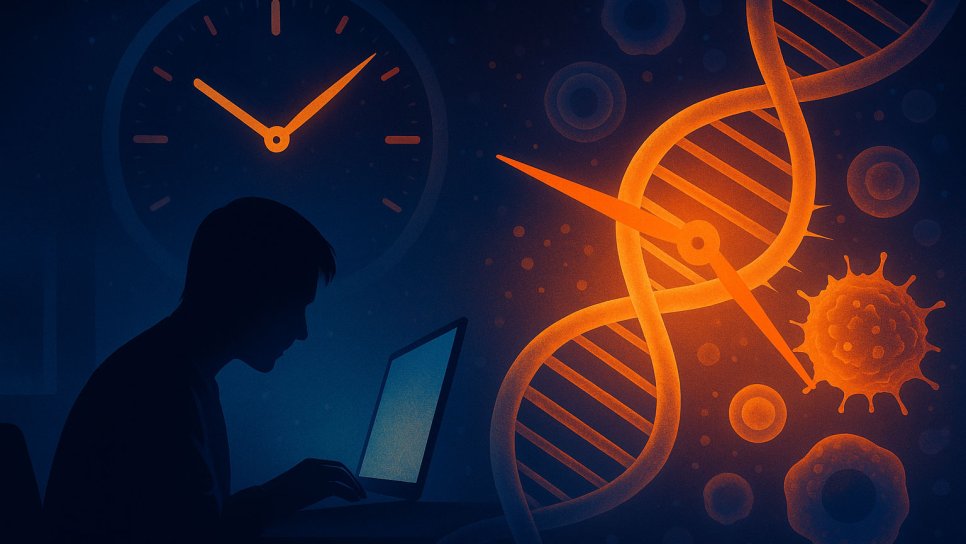
Biological Clock Disruption: The Overlooked Risk Factor for Cancer?
Circadian rhythm not only regulates our sleep but also controls hormones, metabolism, immune responses, and even DNA repair mechanisms at the cellular level.
However, modern lifestyle factors — staying up late, screen exposure, irregular eating — disrupt this internal clock and may lead to serious problems linked to cancer risk.
In this article, we explore the link between circadian rhythm disruptions and cancer, along with the latest scientific insights.
The Silent Alarm of Our Internal Clock
The human body evolved over millions of years with a biological timing mechanism: the circadian rhythm. This rhythm regulates sleep, hormone release, metabolism, immunity, and even DNA repair. But modern life — artificial lights, screens, irregular habits — disrupts this harmony. Growing scientific evidence now shows that such disruptions may significantly increase cancer risk.
New Study: Circadian Disruption and Colorectal Cancer
📄 A Nature Immunology study published on May 26, 2025, by Bridget M. Fortin and colleagues at the University of California explored how circadian-disrupting factors such as sleep disturbances, artificial light at night, and irregular eating impact early-stage colorectal cancer development.
The study also examined whether the timing of therapies such as chemotherapy and immune checkpoint inhibitors (known as "chronotherapy") improves treatment efficacy when aligned with the body’s clock.
What Is Circadian Rhythm and Why Is It Important?
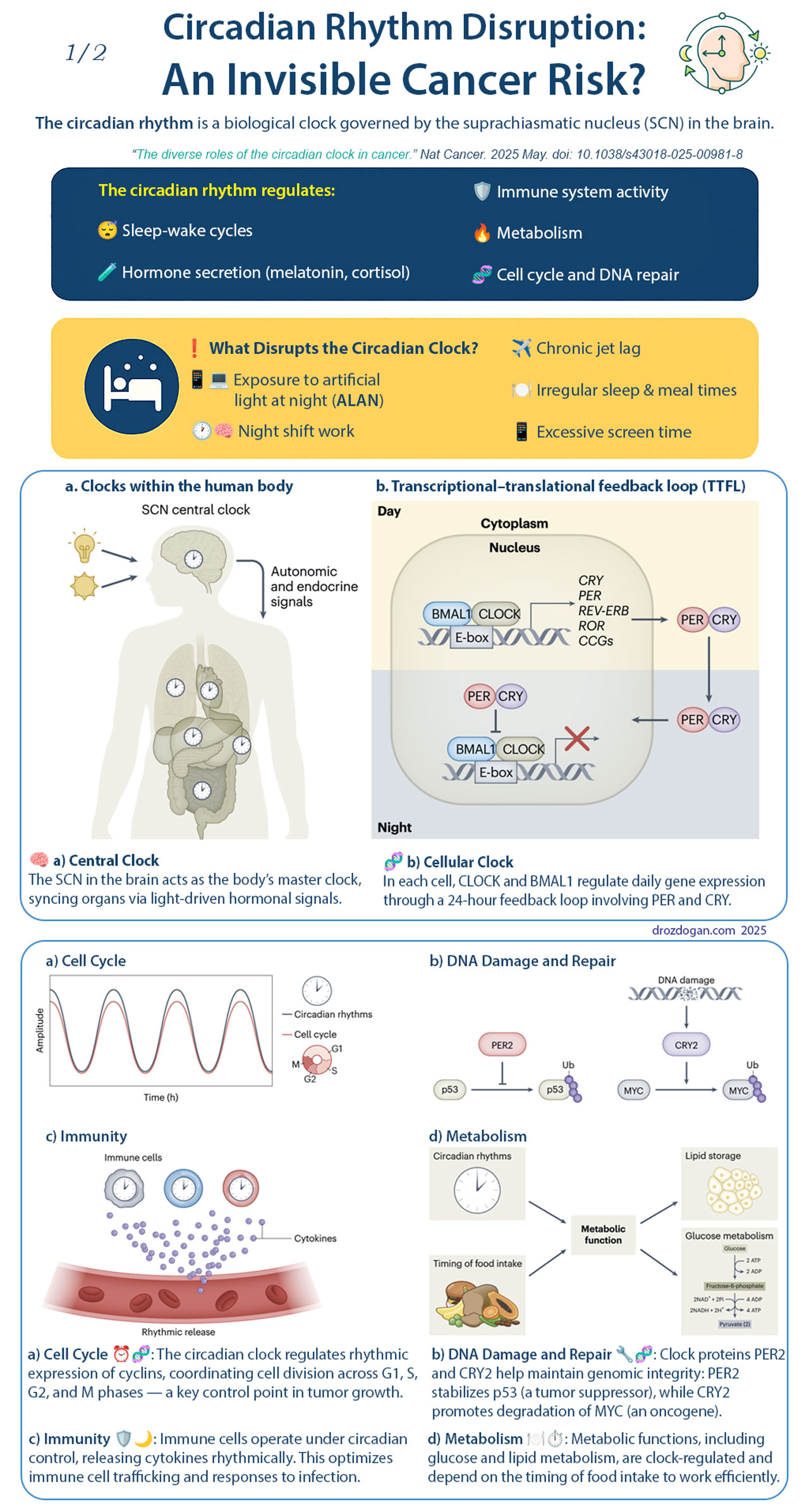
The circadian rhythm is controlled by a brain structure in the hypothalamus called the suprachiasmatic nucleus (SCN), and operates on a ~24-hour cycle. This system regulates:
- Sleep-wake cycle
- Hormone secretion (especially melatonin and cortisol)
- Immune system activity
- Metabolic processes
- Cell division and DNA repair
Disrupting the circadian system may weaken genomic stability, impair immunity, and promote tumor development.
The Cancer Connection: When the Clock Breaks, So Does the Cell
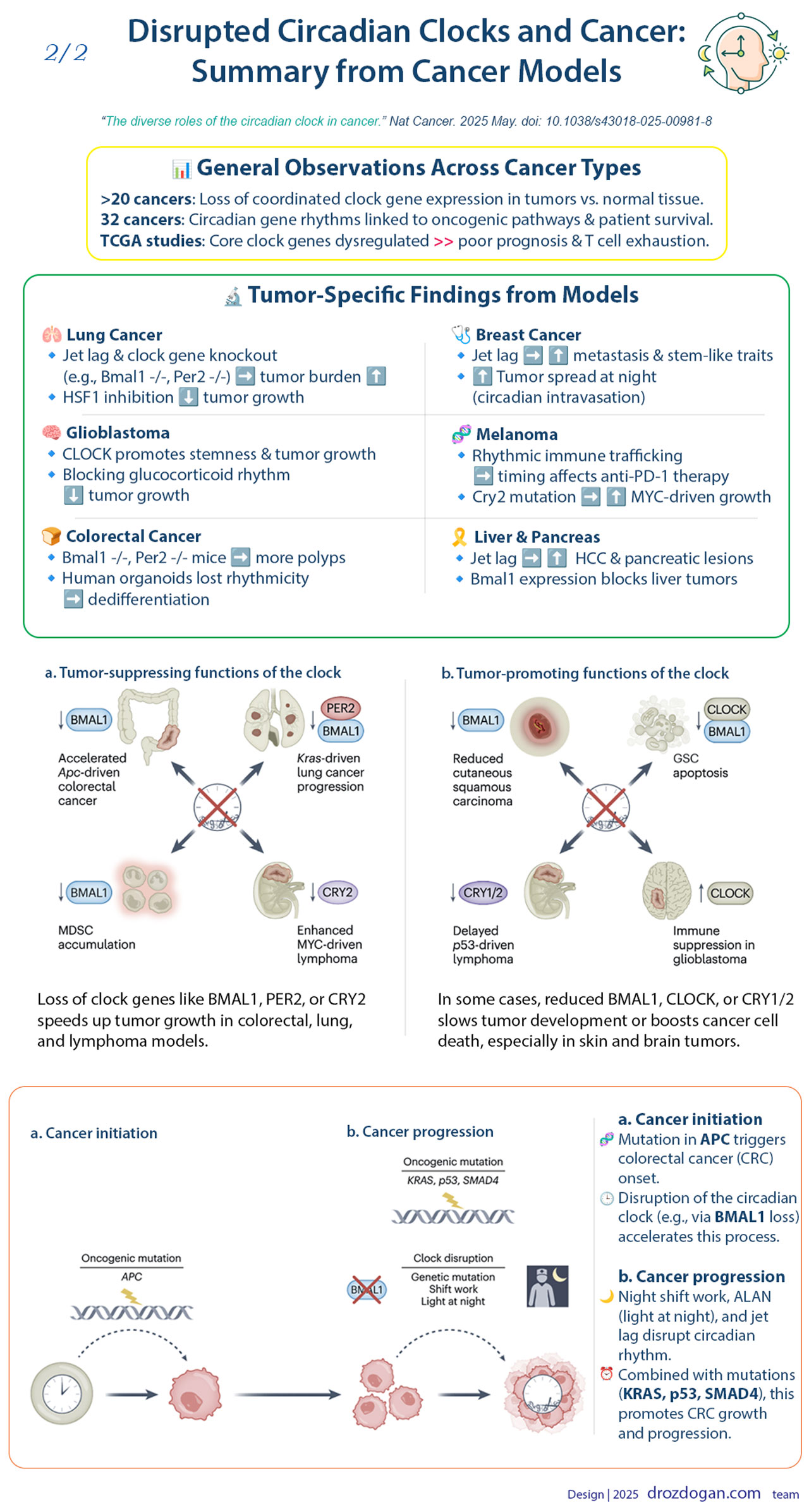
Multiple studies indicate that circadian rhythm disturbances contribute to both the onset and progression of cancer. These disruptions may promote cancer through:
- Downregulation of core clock genes (BMAL1, PER, CRY, CLOCK)
- Impaired DNA repair mechanisms
- Disruption of immune cell rhythmicity
- Mistimed tumor suppressor gene activation
📌 Especially in colorectal cancer (CRC), low levels of BMAL1, CRY1, CRY2, and PER1–3 genes are associated with poorer overall survival.
Evidence Linking Circadian Disruption and Cancer
- Since the 1970s, there has been a rise in early-onset colorectal cancer, especially in people aged 15–39.
- In the same period, exposure to artificial light at night (ALAN) has surged.
- ALAN suppresses melatonin and disrupts rhythmic gene expression.
- A meta-analysis of over 170,000 women linked high ALAN exposure with increased risk of estrogen receptor-positive breast cancer.
- Even jet lag and time zone shifts may impair circadian systems and increase cancer risk.
Most Vulnerable Organ: The Gut
The gastrointestinal system is highly sensitive to circadian disruption:
- Intestinal mucosa renews daily in a rhythmic fashion.
- Gut microbiota responds to light and feeding cycles.
- Irregular meal timing may pose a risk for colorectal cancer.
What Can Be Done?
1. Preventive Measures:
- Maintain regular sleep and meal times
- Special light and sleep support for night shift workers
- Avoid eating outside daylight hours (6–12 hour feeding window)
- Engage in regular physical activity
2. Importance of Treatment Timing:
Chronotherapy involves administering cancer drugs in sync with biological rhythms. This approach may:
- Improve drug tolerability
- Optimize treatment efficacy
- Enhance outcomes in immunotherapy by leveraging immune rhythm
Note: The clinical effectiveness of these strategies is still under investigation and requires further research.
Conclusion: Circadian Health = Cellular Health
The circadian rhythm is not just about sleep — it may also play a key role in cancer prevention and treatment success. Disruptions to this system could be the silent culprit behind rising early-onset cancer cases.
🔍 Protecting circadian health may become a critical pillar of future cancer prevention and chronotherapy-based treatments.
Fortin BM, Mahieu AL, Fellows RC, Kang Y, Lewis AN, Ead AS, Lamia KA, Cao Y, Pannunzio NR, Masri S. The diverse roles of the circadian clock in cancer. Nat Cancer. 2025 May;6(5):753-767. doi: 10.1038/s43018-025-00981-8. Epub 2025 May 26. PMID: 40419761.