Gas or Charcoal? Which Barbecue Is Less Harmful? A Healthy Choice Guide
Grill Pleasure or Health Risk? A Science-Based Guide to Safe Barbecuing
One of the key risks associated with grilling is the formation of polycyclic aromatic hydrocarbons (PAHs) and heterocyclic aromatic amines (HAAs) — harmful compounds created when meats are cooked at high temperatures or over open flames. Another concern is the migration of aluminum into food when acidic or salty ingredients are cooked in aluminum foil or trays, which may pose long-term health risks. Undercooked food and cross-contamination are also major sources of foodborne illness. Lastly, burns and grilling accidents can be serious safety hazards during outdoor cooking.
Because the chemistry behind PAH and HAA formation is complex, many people don’t fully understand how these substances form or how to prevent them. This highlights the gap between scientific knowledge and everyday practices. This guide aims to bridge that gap by explaining the science behind the risks and offering practical, easy-to-apply solutions. The ultimate goal is to help spread safer and more conscious grilling habits.
Formation of Harmful Compounds and Health Effects
Two major harmful compound groups can form when grilling meat: polycyclic aromatic hydrocarbons (PAHs) and heterocyclic aromatic amines (HAAs). Understanding how they are formed and their impact on human health is crucial.
What Are Polycyclic Aromatic Hydrocarbons (PAHs)?
- PAHs are carcinogenic compounds formed by the incomplete combustion of organic substances at high temperatures — especially common with charcoal grilling.
- The most common trigger: fat dripping onto the flame, causing smoke that deposits PAHs onto the meat surface.
- PAHs damage DNA and are linked to several cancer types, including lung, colon, pancreatic, bladder, and breast cancers.
- Factors affecting PAH formation include: fuel type, fat content of the meat, grill height, and cooking time.
What Are Heterocyclic Aromatic Amines (HAAs)?
- HAAs form when muscle meat is cooked at high temperatures for prolonged periods — such as when meat becomes very browned or charred.
- They result from chemical reactions between creatine, amino acids, and sugars in the meat when exposed to high heat.
- HAAs are most concentrated on well-done or burnt meat surfaces.
- They are associated with an increased risk of colorectal, pancreatic, and prostate cancers.
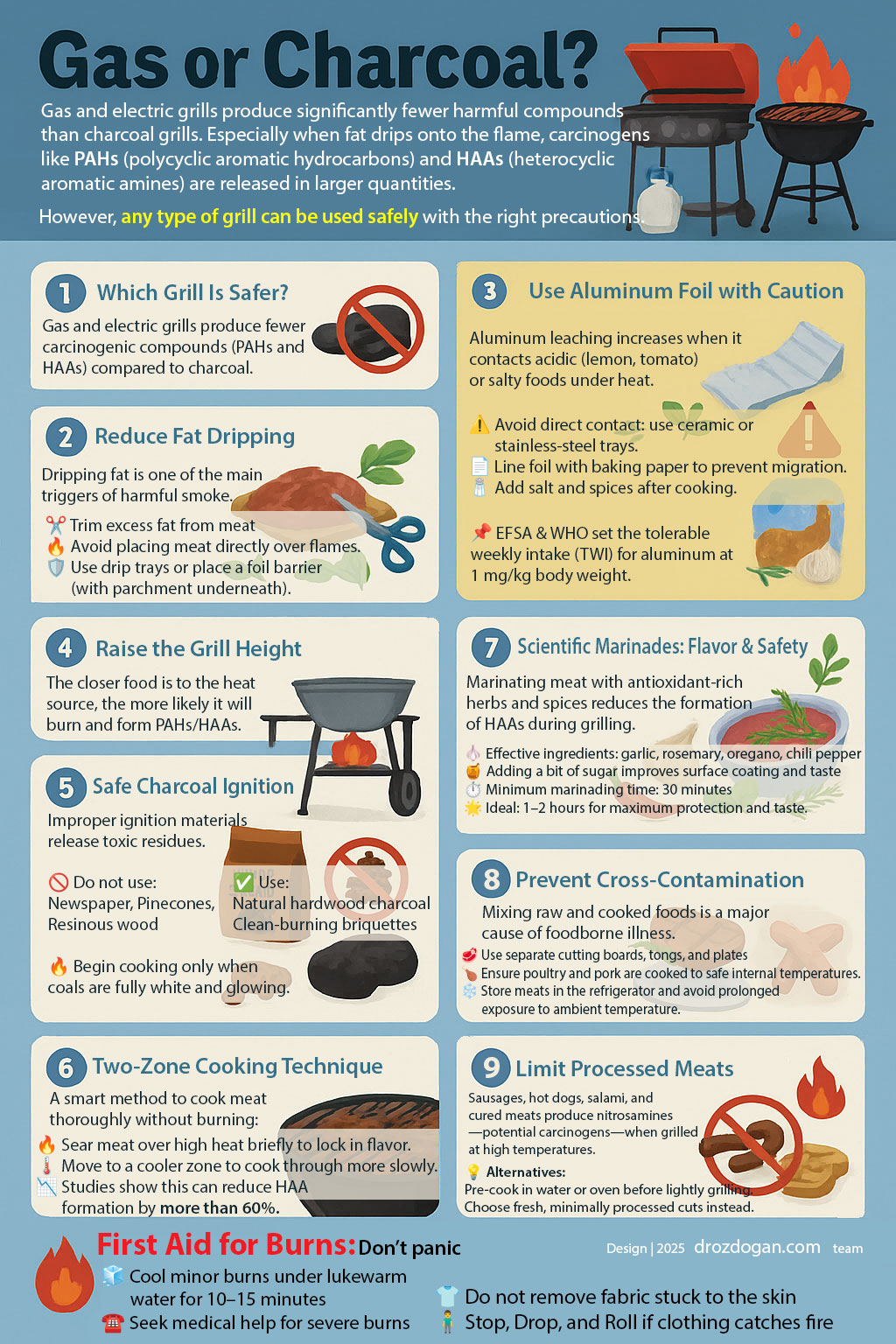
10 Steps to Safe Grilling
Grilling is a beloved ritual for many, but without proper precautions, it can pose serious health risks. From cancer-causing chemicals to cross-contamination, there are several concerns to be aware of. In this guide, you’ll find evidence-based tips for a healthier and safer grilling experience.
1. Gas or Charcoal?
Gas and electric grills produce significantly fewer harmful compounds compared to charcoal grills. Cancer-linked substances like PAHs and HAAs form in larger amounts when fat drips onto open flames—something much more common with charcoal.
However, any type of grill can be used safely if proper precautions are taken.
2. Minimize Fat Dripping
Fat dripping into flames is one of the main causes of PAH formation. Here’s how to reduce that risk:
- Trim excess fat from the meat before cooking.
- Avoid placing meat directly over flames; allow some distance from the coals.
- Use drip trays or grill shields to catch melting fat.
3. Use Aluminum Foil with Caution
When aluminum foil comes into contact with acidic or salty foods under heat, it can leach aluminum into the food. To avoid this:
- Use stainless steel or ceramic trays instead.
- Place baking paper between the foil and food.
- Add salt and spices after cooking when possible.
- Acidic foods like lemon, tomato, and vinegar, or salty dishes, increase aluminum transfer.
- At 180°C for just 1 hour, fish or poultry cooked in foil may absorb 40–42 mg/kg of aluminum.
- Chronic exposure is linked to neurological disorders (neurotoxicity), bone demineralization (osteomalacia), memory issues, and conditions like Alzheimer’s disease.
- The European Food Safety Authority (EFSA) and World Health Organization (WHO) have set the tolerable weekly intake (TWI) for aluminum at 1 mg per kg of body weight.
- Children are at higher risk due to their higher food consumption per body weight.
The German Federal Institute for Risk Assessment (BfR) advises against using uncoated aluminum foil or trays with acidic or salty foods, citing health risks.
4. Raise the Grill Height
Placing the grill higher above the flame reduces direct burning and exposure to extreme heat, which helps minimize the formation of toxic compounds.
5. Use Safe Ignition Materials
- Never use newspaper, pinecones, or resinous wood.
- Choose natural hardwood charcoal or clean-burning briquettes.
- Wait until charcoal is fully ashed over before cooking.
6. Use the Two-Zone Cooking Technique
Sear the outside of the meat over high heat, then move to a cooler zone for gentle cooking. This method enhances flavor and can reduce HAA formation by over 60%.
7. Scientific Marinades
Marinating meat with antioxidant-rich herbs and spices significantly reduces HAA formation.
- Garlic, rosemary, thyme, and chili pepper are among the most effective options.
- Adding a bit of sugar improves both flavor and surface protection.
- Ideal marinating time: at least 30 minutes; preferably 1–2 hours.
8. Prevent Cross-Contamination
Using the same tools or surfaces for raw and cooked meat is a common cause of foodborne illness.
- Use separate knives, cutting boards, and utensils for raw and cooked foods.
- Do not serve chicken or pork unless thoroughly cooked.
- Refrigerate meat promptly and avoid leaving it out at room temperature for long periods.
Common pathogens: Salmonella, E. coli, Campylobacter, Clostridium perfringens
Symptoms: Diarrhea, vomiting, fever, dehydration, kidney damage, and even neurological complications in severe cases.
9. Limit Processed Meats
Processed meats like sausages, salami, and hot dogs can release nitrosamines—carcinogenic compounds—when cooked at high temperatures. Consider boiling or baking them instead of grilling.
10. Disposable Grills and Burn Risks
- Only use on stable, heat-resistant surfaces.
- Avoid placing on grass, balconies, or unsuitable surfaces.
- Ensure the grill is completely extinguished after use.
🔥 First Aid for Burns
- Don’t panic.
- Cool minor burns under lukewarm water for 10–15 minutes.
- Call emergency services (e.g. 911 or 112) for serious burns.
- If clothing sticks to the skin, do not remove it.
- If your clothes catch fire: apply the Stop – Drop – Roll technique immediately.