
Without Adequate Prevention, Gastric Cancer Incidence May Rise Sharply
🌍 Gastric Cancer: A Global Health Challenge
Gastric cancer ranks as the fifth most common cancer globally and remains a significant cause of cancer-related deaths worldwide. This situation underscores the vital importance of effective prevention strategies.
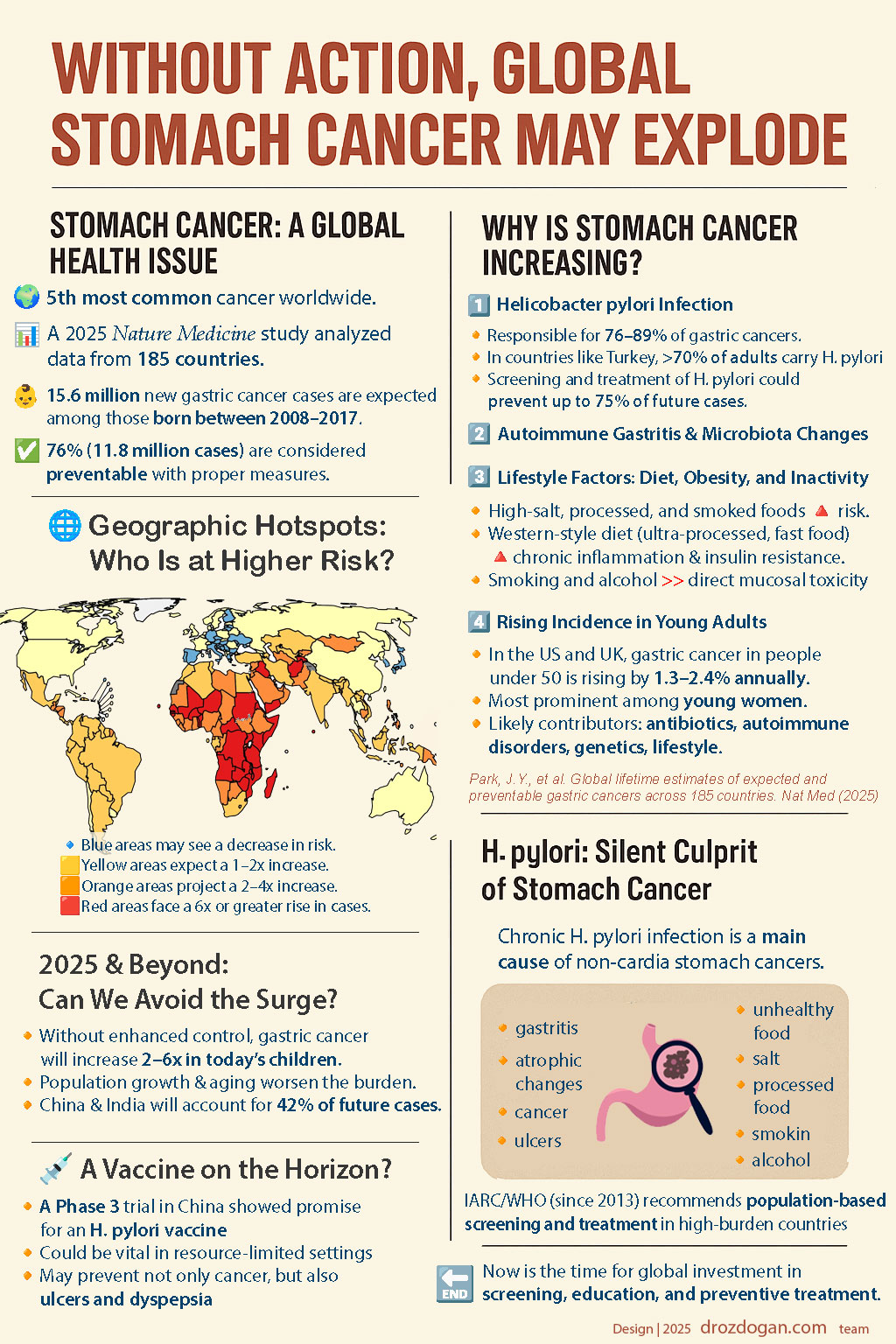
For many years, gastric cancer has been a silently progressing threat to public health. A newly published, massive study covering 185 countries reveals with striking data how much this threat will grow in the future. According to the study published in Nature Medicine on July 7, 2025, 15.6 million lifetime gastric cancer cases are expected in the younger generation born between 2008–2017, and approximately 76% (11.8 million cases) of these are preventable.
In this article, we meticulously examine Turkey's position within this global landscape and the preventive measures that can be taken.
🌐 Geographical Distribution: Who Is at Greater Risk?
- Approximately two-thirds of cases are concentrated in Asia. More than 10.6 million cases are expected in Asia, accounting for 68% of all cases.
- Gastric cancer cases linked to chronic infection with the bacterium Helicobacter pylori account for 67% of the global burden.
- The Americas rank second with 2 million cases (13%), while Africa is third with 1.7 million cases (11%).
- Due to changes in population structures, 42% of gastric cancer cases are expected to occur in countries where the current incidence is relatively low. Particularly in regions with a low human development index, such as Sub-Saharan Africa, the burden is projected to increase by 6 times compared to 2022.
Figure 1: Country-specific gastric cancer case estimates.
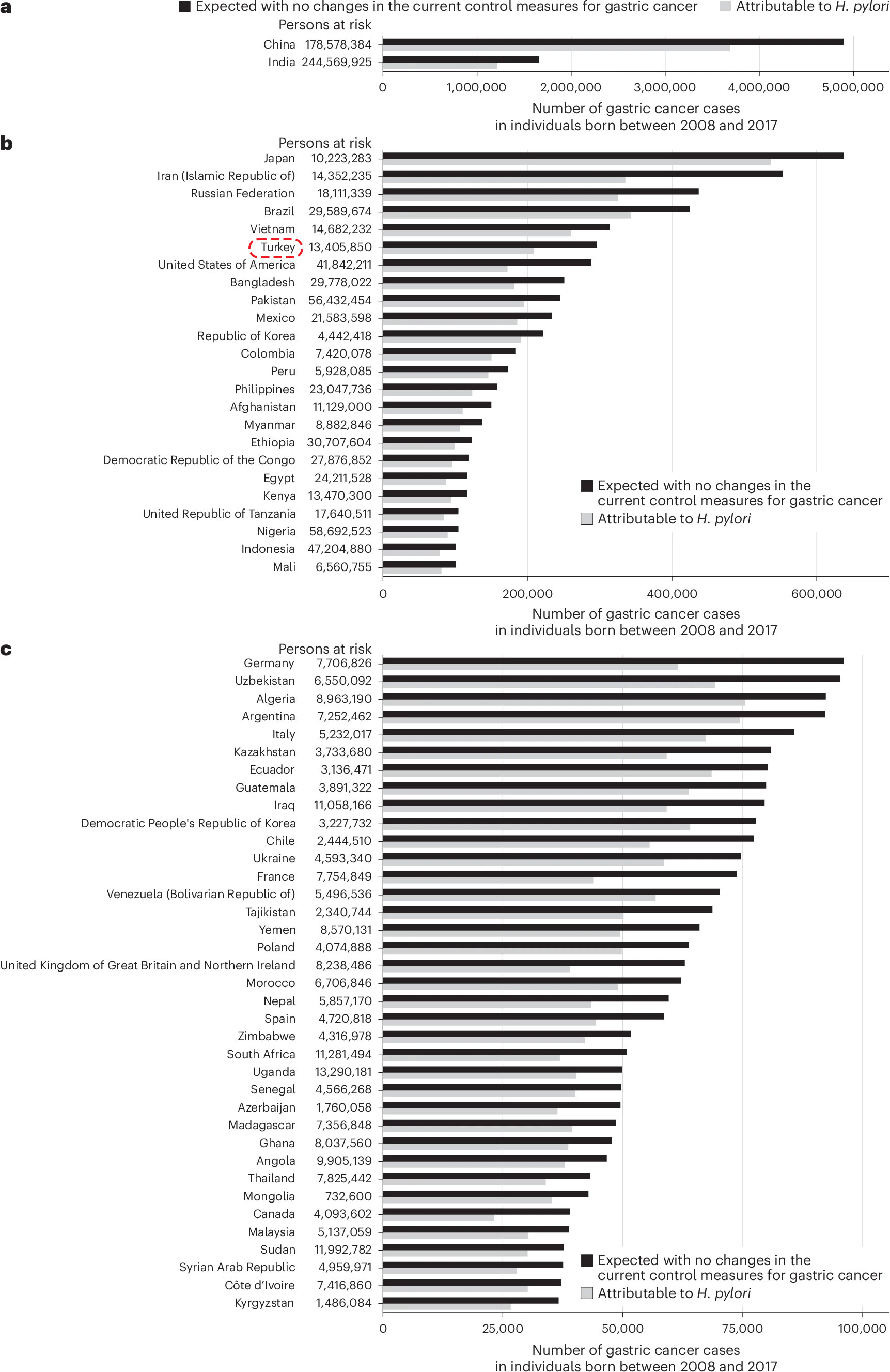
Above, the country-specific number of expected gastric cancer cases among individuals born between 2008 and 2017 is shown, assuming no changes in current gastric cancer control measures, along with cases attributable to H. pylori infection. a–c: Countries are grouped by their contribution to the global gastric cancer burden. Ranking is by the number of expected gastric cancer cases, then divided into the following five categories:
- >1,000,000 cases (Group A; panel a)
- 100,000–1,000,000 cases (Group B; panel b)
- 35,000–100,000 cases (Group C; panel c)
📈 Why Is Gastric Cancer Incidence Increasing?
Although gastric cancer (gastric adenocarcinoma) has been on a global decline for many years, it has recently drawn attention again due to its increase in certain regions and especially among young adults. This increase is associated with many factors, including infection, diet, lifestyle, and the immune system.
🔬 1. Helicobacter pylori Infection
- H. pylori is responsible for 76–89% of gastric cancers.
- It is transmitted through contaminated food, water, or person-to-person contact.
- It prepares the ground for cancer by causing DNA damage through chronic inflammation.
- In Turkey, this bacterium is present in over 70% of the adult population.
- According to WHO and IARC, eradication of this bacterium can significantly reduce the incidence of gastric cancer in the long term.
🧬 2. Autoimmune Gastritis and Microbiota
- While H. pylori is decreasing in countries like the USA, the risk of gastric cancer due to autoimmune gastritis is increasing.
- Widespread antibiotic use after 1950 may disrupt gut microbiota, triggering autoimmune processes.
⚠️ 3. Lifestyle: Obesity, Diet, Sedentary Lifestyle
- High-salt, processed, and smoked foods increase the risk.
- Obesity and Western-style diet (fast food, additives) affect through inflammation and insulin resistance.
- Alcohol and smoking increase the risk by causing toxic effects on the gastric mucosa.
👶 4. Increase in Young Adults
- In the USA and UK, the rate of gastric cancer in individuals under 50 is increasing by 1.3–2.4% annually.
- The increase is more pronounced especially in young women.
- Genetic predisposition, autoimmune gastritis, smoking, alcohol, and antibiotic use may play a role in this increase.
🔢 Summary with Scientific Numbers
| Risk Factor | Scientific Data / Estimate |
|---|---|
| H. pylori infection | 76–89% of gastric cancers are linked to this bacterium |
| Autoimmune gastritis | Increased risk of non-cardia gastric cancer |
| Antibiotic use | May alter microbiota and create susceptibility |
| Obesity and unhealthy diet | Fast food, additives increase inflammation |
| Increase in young adults | Annual increase of 2.43% in women; ≈0% in men in the USA |
Figure 2: Estimated Future Increase in Gastric Cancer Risk (for those born 2008–2017)
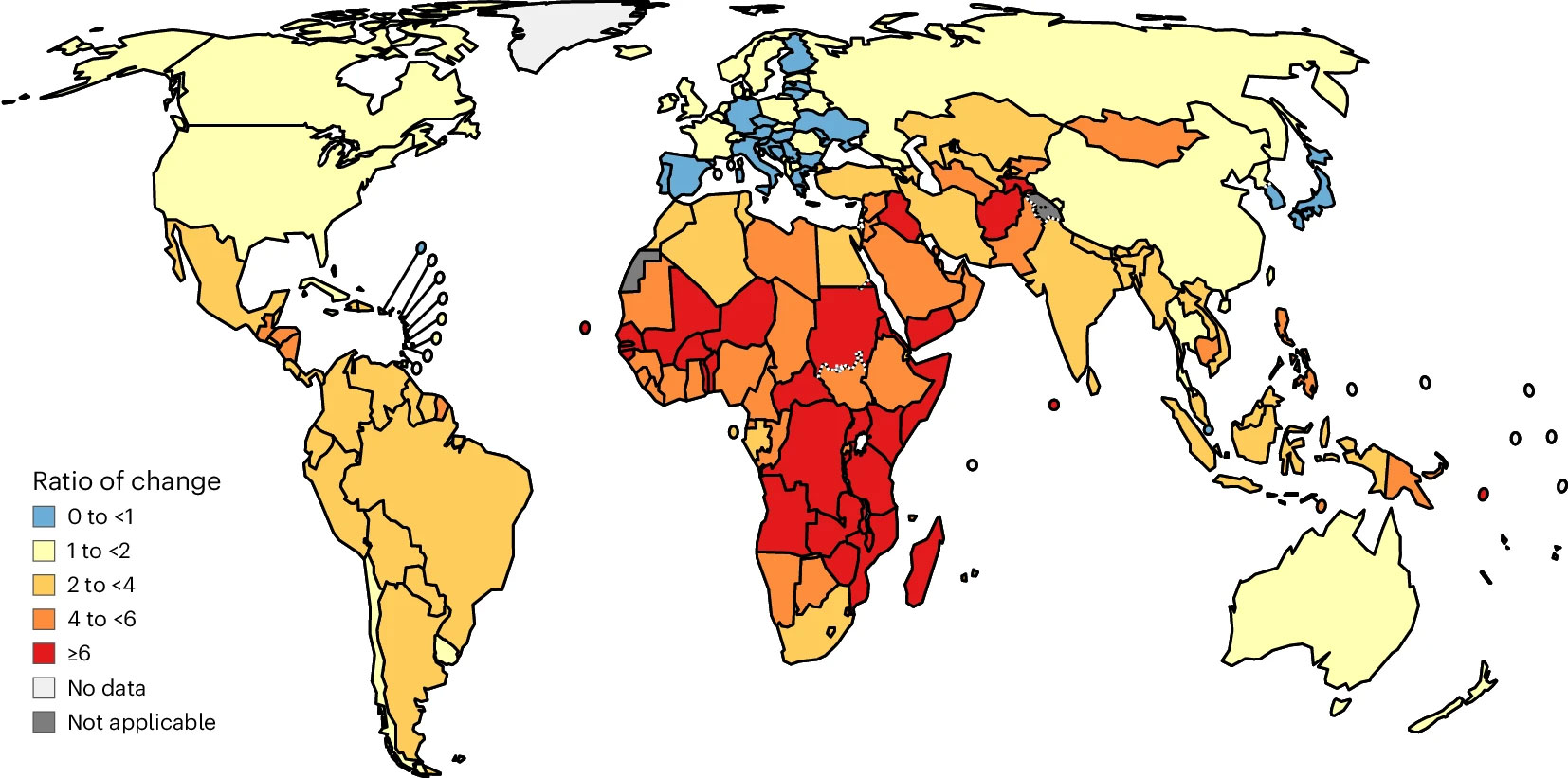
This world map illustrates by how many times the expected gastric cancer cases for generations born between 2008–2017 will increase compared to the current cross-sectional estimates for 2022.
🔷 Blue regions indicate that future risk may be lower than today;
🟨 Light yellow regions indicate countries expecting a 1 to 2-fold increase;
🟧 Orange regions indicate countries expecting a 2 to 4-fold increase;
🟥 Red regions represent countries where an increase of 6 times or more is predicted.
This map reveals that significant risk increases are expected, especially in regions like Sub-Saharan Africa, and that the gastric cancer burden may shift to regions traditionally considered to have a low incidence.
📌 Turkey is among the countries expecting a 2 to 4-fold increase. This suggests that without investment in preventive measures, there could be a significant increase in gastric cancer incidence in our country.
🦠 H. pylori: The Silent Culprit of Gastric Cancer
Chronic Helicobacter pylori infection is the leading cause of gastric cancers—especially non-cardia gastric cancers. This infection can be largely prevented by treatment with antibiotics and proton pump inhibitors.
The International Agency for Research on Cancer (IARC/WHO) has been recommending the initiation of H. pylori screening and treatment programs since 2013, taking into account countries' local disease burden, other health priorities, and cost-effectiveness analyses.
Helicobacter pylori is a spiral-shaped bacterium that can reside in the inner lining of the stomach for long periods without symptoms. However, over time, it can lead to:
- Chronic gastritis,
- Stomach ulcers,
- Atrophic gastritis,
- and eventually, gastric cancer development.
In Turkey, over 70% of adults carry this bacterium. This rate is below 30% in Northern European countries. The widespread but silent infection can persist for years without treatment due to a lack of sufficient awareness.
📈 2025 and Beyond: Is an Increase Inevitable?
According to the study's projections, if current control measures continue as they are:
- The risk of gastric cancer in today's children will be 2 to 6 times higher compared to 2022.
- Rapid population growth and aging will further increase this burden.
- China and India will be responsible for 42% of cases. However, countries like Turkey are also in the high-risk group.
💸 Why Is There Insufficient Investment?
Despite being preventable, gastric cancer stands out as a disease that receives insufficient investment compared to other infection-related cancers like cervical or liver cancer. Some of the main reasons for this include:
- Inadequate cancer registry systems,
- Lack of awareness due to the silent nature of the infection,
- Differing political and budgetary priorities.
Yet, strong scientific evidence shows that H. pylori eradication significantly reduces the incidence of gastric cancer in the long term.
✅ Prevention Strategies: H. pylori Screening and Treatment
Community-level H. pylori screening and treatment strategies can lead to a reduction of up to 75% in future gastric cancer cases. These programs have been found to be cost-effective, especially in regions with currently low to moderate incidence.
Countries like South Korea and Japan implement H. pylori screening and treatment models in addition to endoscopic screening programs. Europe also includes such strategies under the European Cancer Plan.
🛡️ What Should Turkey Do? A Solution Roadmap with 3 Recommendations
1️⃣ H. pylori Screening and Treatment Program
The “screen-and-treat” model, successfully implemented in countries like South Korea, Japan, and Bhutan, can also be applied in Turkey.
📉 This program can reduce gastric cancer cases by up to 75%.
2️⃣ Early Endoscopy in Risk Groups
- Individuals over 40 years old
- Those with a family history of gastric cancer
- Those experiencing chronic stomach complaints
These groups should be prioritized for H. pylori testing and endoscopy at family health centers.
3️⃣ Community-Level Awareness Campaigns
There is widespread lack of information about H. pylori.
Public education campaigns should be organized using platforms such as TV, social media, schools, and mosques.
💉 Is a Vaccine on the Horizon?
A H. pylori vaccine, which has completed Phase 3 clinical trials in China, is preparing to be added to global prevention strategies. This vaccine:
- Could be accessible and effective, especially in low- and middle-income countries.
- Has the potential to reduce not only gastric cancer but also common complaints like dyspepsia and stomach ulcers.
✅ Conclusion: Those Who Stay Silent Will Lose
Nature Medicine data clearly shows that Turkey is at a critical threshold in the fight against gastric cancer.
Hundreds of thousands of cases can be prevented through screening, treatment, and awareness efforts.
Park, J.Y., Georges, D., Alberts, C.J. et al. Global lifetime estimates of expected and preventable gastric cancers across 185 countries. Nat Med (2025). https://doi.org/10.1038/s41591-025-03793-6