Sit-to-Stand Test: Predict Your Quality of Life and Lifespan with a Simple Movement
Why Should We Stay Upright?
Modern lifestyles have placed sedentary behavior at the center of our daily routines. However, the human body is designed to move, maintain balance, and use its strength. As we age, fundamental physical abilities such as muscle strength, flexibility, and balance naturally decline. Yet the rate and impact of this decline are often overlooked.
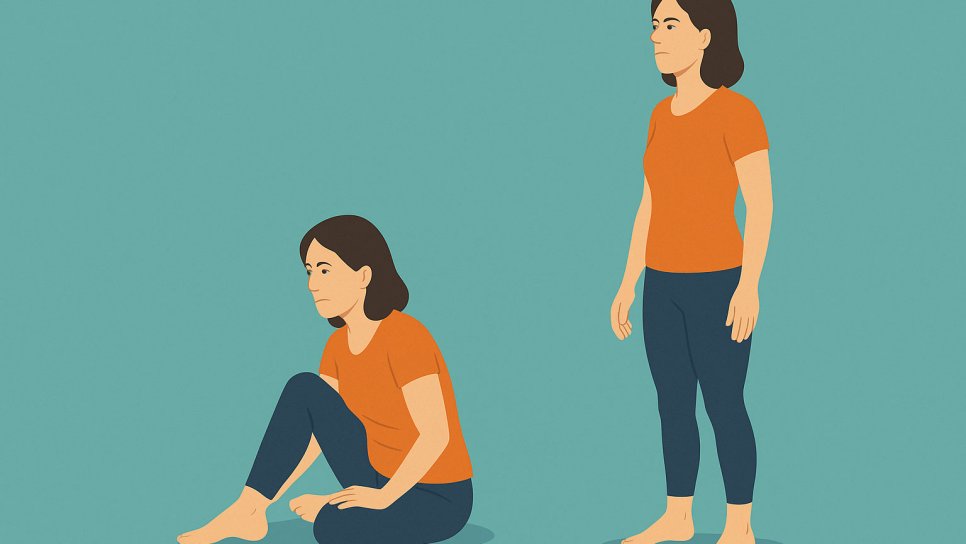
So, can a simple movement that we often perform in daily life—sitting down and standing up from the floor—offer clues about our general health and even how long we’ll live?
A recent scientific study explored this surprising question and showed that physical fitness can be assessed not only in gyms but also through a simple, equipment-free test at home—a tool that may play a critical role in preventing early mortality.
What Is the Sitting-Rising Test (SRT) and Why Does It Matter?
The Sitting-Rising Test (SRT) is a quick, safe, and equipment-free test that simultaneously evaluates four key physical abilities:
- Muscle strength and power
- Flexibility
- Balance
- Body composition
The goal is for an individual to sit down and rise from the floor with minimal or no support. The SRT draws attention to non-aerobic components of fitness, which are often overlooked in cardiology but are highly predictive of survival outcomes.
25-Year Scientific Journey of the Sitting-Rising Test
1998–2001: Foundations Laid
- 1998: The CLINIMEX open cohort study was launched in Brazil.
- 1999: Araújo introduced the Sitting-Rising Test (SRT).
- 2000–2001: Initial studies examined its reliability and the impact of excess body weight.
2013–2016: Clinical Relevance Strengthens
- 2014: SRT scores were found to be associated with all-cause mortality.
- 2015–2016: Non-aerobic fitness components were defined and applied in various cardiac populations.
2019–2021: Global Reach and Age-Specific Use
- Research linked SRT to push-up capacity, fear of falling, and cognitive development in children.
- 2020: Reference values for SRT were published based on age and sex.
2022–2024: Strong Links to Longevity
- Studies connected SRT to single-leg stance, cardiopulmonary exercise testing, and overall lifespan.
- December 2023: Data collection from the CLINIMEX cohort concluded (8566 participants).
- March 2024: Final data cutoff date for vital status and cause of death analyses.
2025: Landmark Publication
- June 2025: A major study confirming that SRT is a stronger predictor than muscle strength was published in the European Journal of Preventive Cardiology.
Scoring System: How Is It Evaluated?
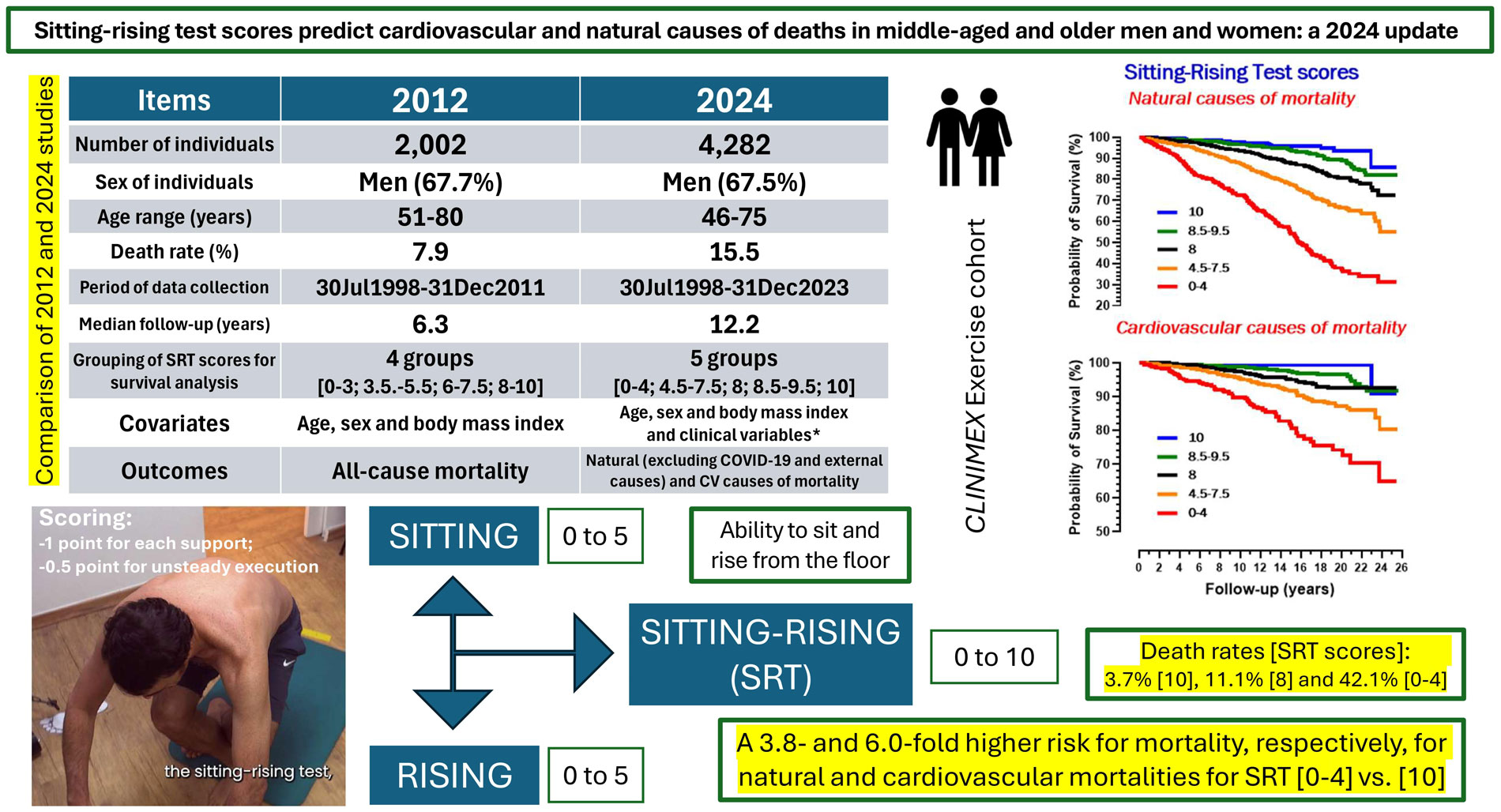
The SRT scoring is quite simple:
- Sitting: 5 points
- Rising: 5 points
Movements performed without any support (hand, knee, forearm, side of the leg) and without imbalance are awarded full points (5). For each support used, 1 point is subtracted, and 0.5 points are deducted for mild imbalance. The total SRT score ranges from 0 to 10.
What Does the Evidence Say? The Surprising Link Between the Sitting-Rising Test and Lifespan
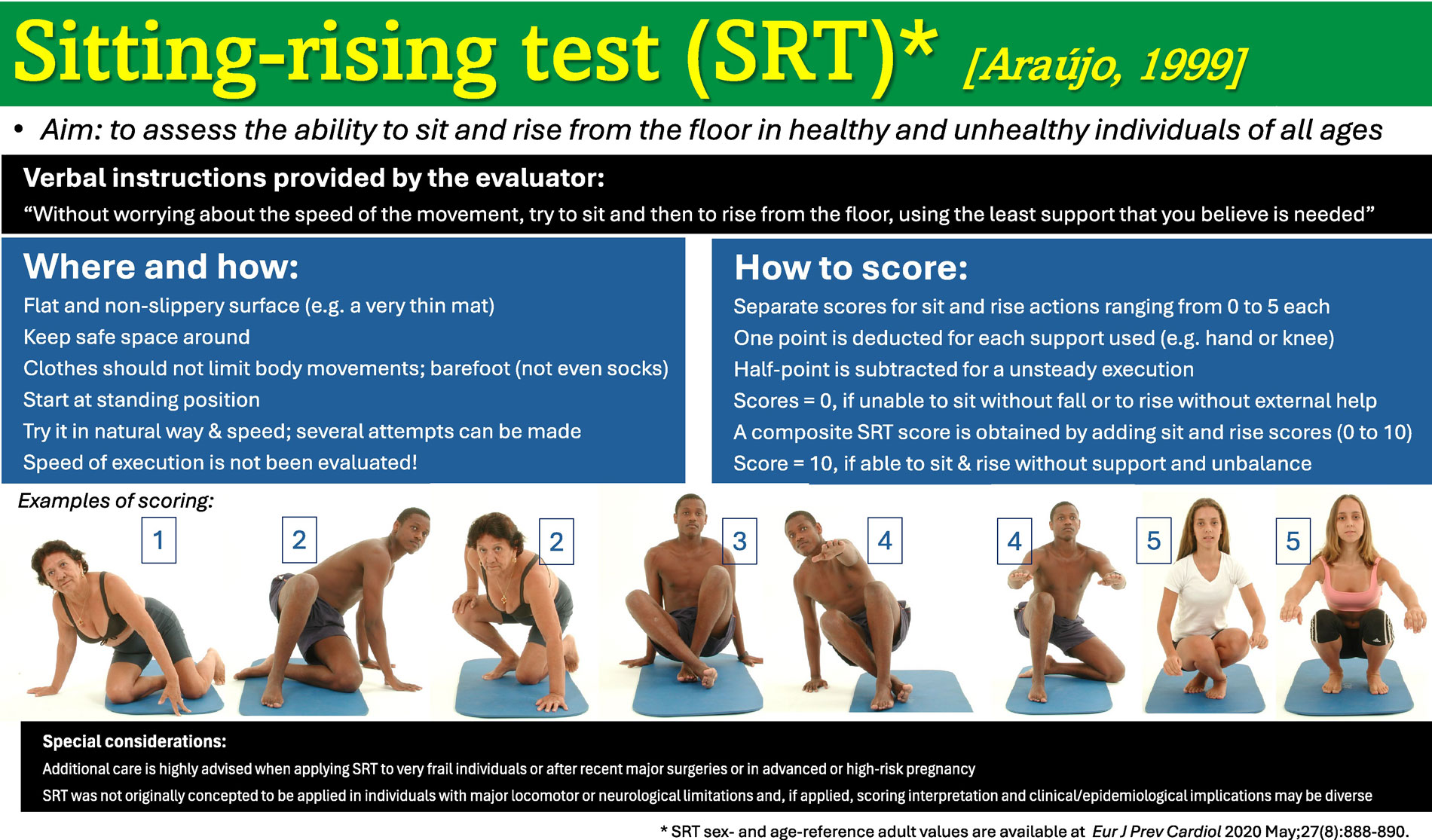
📚 A 2025 study published in the European Journal of Preventive Cardiology tracked 4,282 adults aged 46–75 over a long period. All participants underwent the SRT and were followed for an average of 12.3 years.
📉 Low Score, High Risk:
The mortality rate was 42.1% among those scoring 0–4, compared to just 3.7% for those with a perfect score of 10. This translates to an 11.4-fold higher risk of death.
❤️ Cardiovascular Mortality Risk:
Those with SRT scores of 0–4 faced a 3.84x higher risk of natural death and a 6.05x higher risk of cardiovascular death—even after adjusting for age, sex, BMI, and chronic conditions.
📈 The Power of One Point:
Each 1-point decrease in SRT score was associated with a 33% increase in risk of natural death and a 31% increase in cardiovascular mortality.
Significance for Individuals with Heart Disease
🫀 A strong link between SRT score and mortality risk was also found in individuals with a history of coronary artery disease (CAD). In CAD patients, lower SRT scores were associated with a higher mortality risk.
This shows that the SRT can be a valuable prognostic tool not only for healthy individuals but also for those with chronic illnesses.
Why Is the Sitting-Rising Test So Important?
The predictive power of the SRT comes from its ability to assess multiple physical capacities with a single movement. These include:
- Muscle strength and dynapenia
- Flexibility
- Balance skills
- Body composition (fat/muscle ratio)
Individuals with low SRT scores often exhibit the following risk factors:
- ⚖️ Excess body fat
- 💪 Muscle weakness
- 🧘♀️ Decreased flexibility
- 🚶♂️ Poor balance and higher fall risk
These combinations can limit daily living activities, increase the risk of falling, and negatively impact exercise capacity.
Integration into Clinical Practice and Future Steps
🏥 This study supports integrating the Sitting-Rising Test (SRT) into routine check-ups. This simple test, completed in minutes, provides important clinical and prognostic insights into non-aerobic physical fitness.
💡 It serves as an effective tool for designing personalized exercise prescriptions and making early intervention decisions.
🔬 Future studies should explore the following questions:
- 🏋️♀️ Which types of exercises most effectively improve SRT scores?
- 🕒 Does increasing SRT performance extend lifespan?
- 🏃♂️ Can the SRT offer additional prognostic information beyond aerobic fitness?
Conclusion: Rise for a Healthier Future!
The Sitting-Rising Test (SRT) stands out as a powerful predictor of both natural and cardiovascular mortality in middle-aged and older adults.
This simple, safe, and equipment-free test provides healthcare professionals with valuable insights by simultaneously assessing muscle strength, balance, flexibility, and body structure.
✅ Anyone—healthy or living with chronic conditions—should consider performing this test regularly (if physically capable) to potentially increase lifespan and enhance quality of life.
1. Claudio Gil S Araújo, Christina G de Souza e Silva, Jonathan Myers, Jari A Laukkanen, Plínio Santos Ramos, Djalma Rabelo Ricardo, Sitting–rising test scores predict natural and cardiovascular causes of deaths in middle-aged and older men and women, European Journal of Preventive Cardiology, 2025;, zwaf325, https://doi.org/10.1093/eurjpc/zwaf325
2. Melissa Warburg. Your Moves Might Reflect Your Longevity - Medscape - July 24, 2025.